
For most people in Prague, the air conditioner only comes to mind the moment the first scorching afternoon hits the flat. Until that day, it just sits quietly on the wall, spending the winter collecting dust and drying out unevenly. Then summer finally arrives, you reach for the remote, and instead of a cool breeze, you get a face full of musty air. This is exactly why cleaning home air conditioner units makes so much more sense in late April or May, well before the first heatwave arrives and service companies start turning people away.
I wouldn't look at this as just a maintenance chore. In most homes, it is first and foremost a hygiene issue. We are talking about filters, trapped dust, hidden moisture, and the risk of mold in air conditioner units—the very things that children or allergy sufferers breathe in for hours at a time. While many people can handle the basics themselves, it’s easy to push too far, use the wrong cleaning supplies, and end up with even worse smells or a broken unit. The real question isn't just "Can I clean my AC?" It’s knowing which parts are safe for you to touch and where you should definitely stop.
Why to deal with it before the first hot days
Spring is the natural reset point for your home. By the time the weather warms up, your AC unit has likely been idle for months. In many Prague apartments, the system only really works through June, July, and August. During the long break, dust settles on the outer cover, fine dirt gets trapped in the filters, and any moisture left over from last year can turn into a nasty smell the moment the unit starts running again.
There is also a very practical reason to act early. Once the first truly hot week arrives in the city, service calendars fill up almost instantly. If you wait until it’s 31 degrees outside to notice that the airflow is weak or the air smells like a damp basement, your options are going to be limited. Pre-season AC service is much easier to book and far less stressful when you still have a few weeks of mild weather to get things fixed properly.
For households dealing with allergies, the timing matters even more. Pollen is already thick in the air, windows are being opened, and a dirty AC unit will just keep circulating the very particles you are trying to keep out. I’ve seen many cases where people blamed their symptoms on outdoor pollen, only to find that the dusty unit inside was the real culprit. Once the filters were cleaned, the difference in the room was noticeable within hours.
This is something generic advice often misses. It’s not just about technical efficiency or saving a bit on electricity. For a normal household, the priority is air that smells clean, a bedroom that doesn't feel stuffy after thirty minutes, and starting the summer season fresh rather than with a unit that feels slightly swampy.
What you can safely clean yourself
If you want to know how to clean AC at home without risking a costly mistake, keep your scope modest. The first rule is non-negotiable: turn the unit off and, if possible, disconnect it from the power source entirely. It sounds obvious, but people often skip this step and start opening the cover while the system is still live.
The safest DIY task is definitely the filter. On most wall-mounted split systems, you just lift the front panel and slide out the mesh filters. You will immediately see what you're dealing with. Sometimes it’s just a light grey layer of dust. In smaller flats with an open kitchen, it can be a stickier combination of dust and cooking grease. Clean AC filter maintenance is usually straightforward: vacuum the mesh gently or rinse it under lukewarm water. If they are properly grimy, a drop of mild dish soap is usually all you need.
The biggest mistake people make here isn't the washing—it’s the drying. Filters need to be 100% dry before they go back into the unit. Not "mostly" dry. Not "dry enough." If you put them back while they are still damp, you are essentially giving mold a head start. In practice, it’s best to wash the filters in the morning, let them air dry all day, and only snap them back in once you are sure they are bone dry.
You can also wipe down the outer cover and clear away visible dust around the air outlet. A simple microfiber cloth works best, and a soft brush can help with the corners or vents. This is the sensible line for home cleaning: stick to the accessible surfaces and the removable filters. Don't try to force open hidden panels or soak internal components.
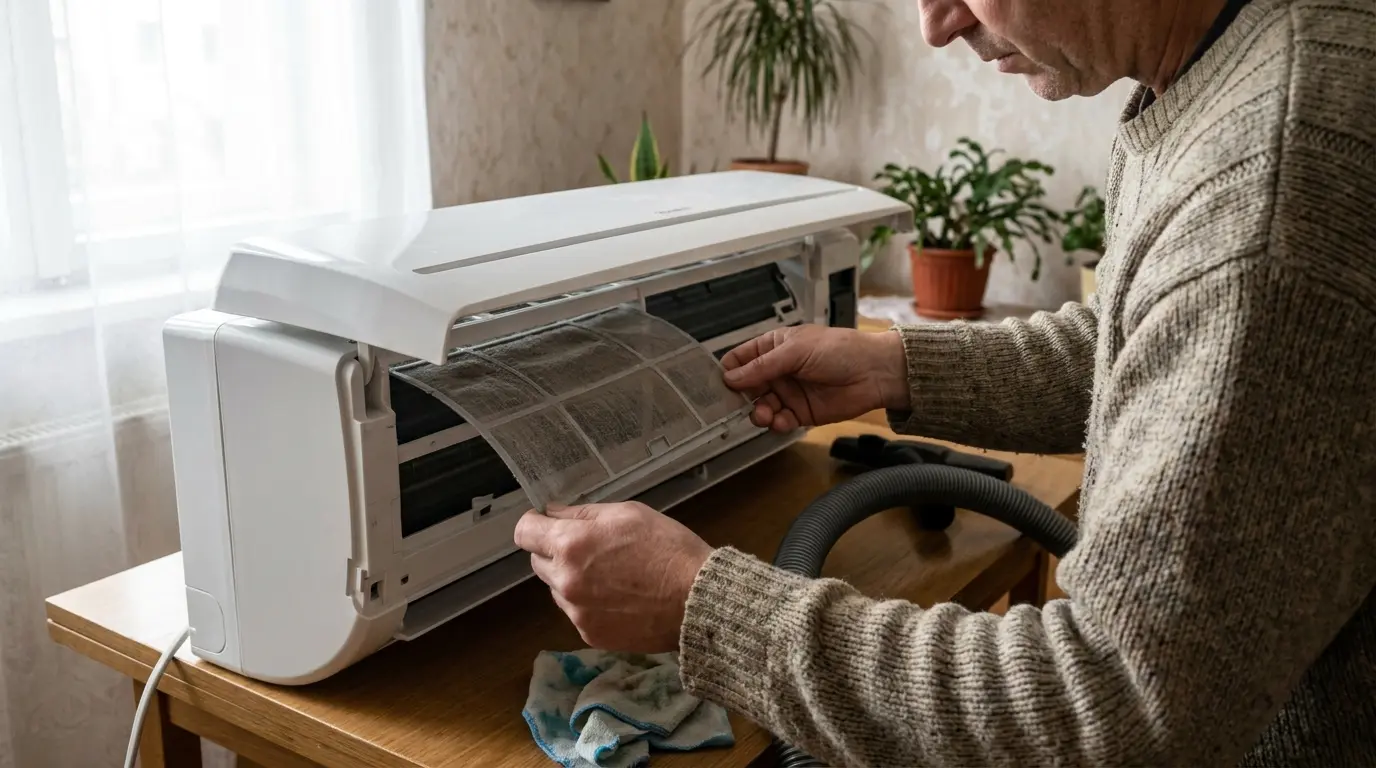
In plain terms, if you can reach it without tools and without taking the machine apart, it’s probably fair game. Once the job requires a screwdriver or partial disassembly, you are no longer doing light housekeeping—you are entering service territory.
What to avoid during home cleaning
A clean-looking filter can sometimes give you a false sense of security. The filter is really just the first line of defense. Behind it sit the evaporator coils, the fan components, the fins, and the condensate drainage path. This is where the real odors tend to build up and where moisture lingers the longest.
If your unit still smells bad after you have thoroughly cleaned the filters, something deeper is going on. A smell like a stale basement or wet laundry is a major clue that basic home cleaning isn't enough. Water dripping where it shouldn't, or the smell returning just a few days after you cleaned the filters, are classic signs that the internal system needs a professional look.
Mold in air conditioner units is another issue that people often underestimate. If mold has started growing deep inside the machine, a surface wipe won't do much. You might make the front of the unit look better, but the source of the problem is likely around the evaporator or the drainage tray. This is when a proper inspection and deep clean make far more sense than repeated DIY attempts with a spray bottle.
Chemicals are another common trap. While there are products made specifically for AC systems, using them blindly can lead to trouble. It’s easy to wet the wrong electronic components or leave behind a chemical residue that you definitely don't want to be breathing in. For most households, the safer advice is to handle the filter and the cover yourself and stop there.
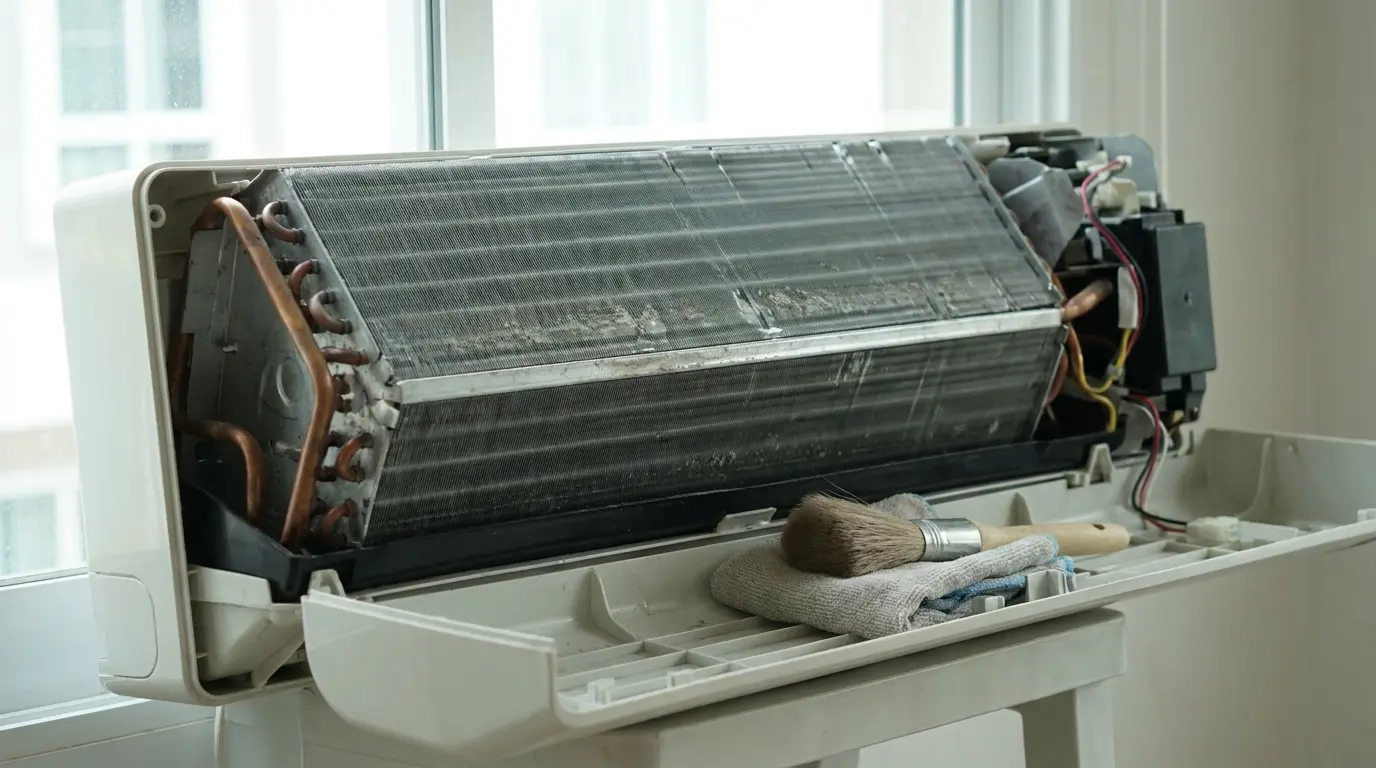
This line is important because a botched DIY cleaning often ends up costing significantly more than a professional visit would have in the first place.
How to tell it's time to call for service
The most frequent mistake is using aggressive chemicals. Bleach, heavy-duty degreasers, or random bathroom sprays have no business being inside a home AC unit. Even if they seem to kill the odor for a few days, they can damage the delicate fins or leave behind fumes that will circulate through your home for weeks.
The second mistake is rushing the drying time. It might seem boring, but it matters. A rushed clean AC filter routine is often why the smell comes right back. People rinse the filter, give it a quick pat with a paper towel, and snap it back in so they can turn the cold air back on. This is exactly how you trap moisture inside the system.
Thirdly, don't pretend that a bad smell is normal. It isn't. Your unit should smell neutral after the first minute of running. If it continues to smell stale or sour, your unit is trying to tell you something. Treat that smell as information, not as a minor annoyance.
Finally, don't leave the whole job until the very last minute. When the first heatwave hits, people tend to clean in a desperate rush because the flat is already too hot. That is exactly when corners get cut and mistakes happen.
How to keep the unit and the area around it clean during the season
One obvious sign is weak performance. If the unit is running full blast but the room is cooling down much slower than it did last year, the problem is likely deeper than just a dusty filter. It could be restricted internal airflow, technical issues, or significant buildup inside the coils.
Unusual noise is another major red flag. While no AC is perfectly silent, new rattling, vibrations, or strange sounds when the unit starts up shouldn't be ignored. If the sound has changed, something is physically different inside the machine.
A persistent smell is perhaps the clearest household signal. If you have already done a safe, basic clean and the odor keeps coming back, then a pre-season AC service is the only smart move. Especially in homes with young children or anyone suffering from asthma or allergies, it really isn't worth the risk of breathing in mold spores.
Lastly, watch for fast re-soiling. If your filters get filthy again within just a few weeks, or if the inside of the unit looks sticky or grey even after you've cleaned the accessible parts, there is likely a deeper issue with moisture and buildup that requires professional-grade equipment to clear out.
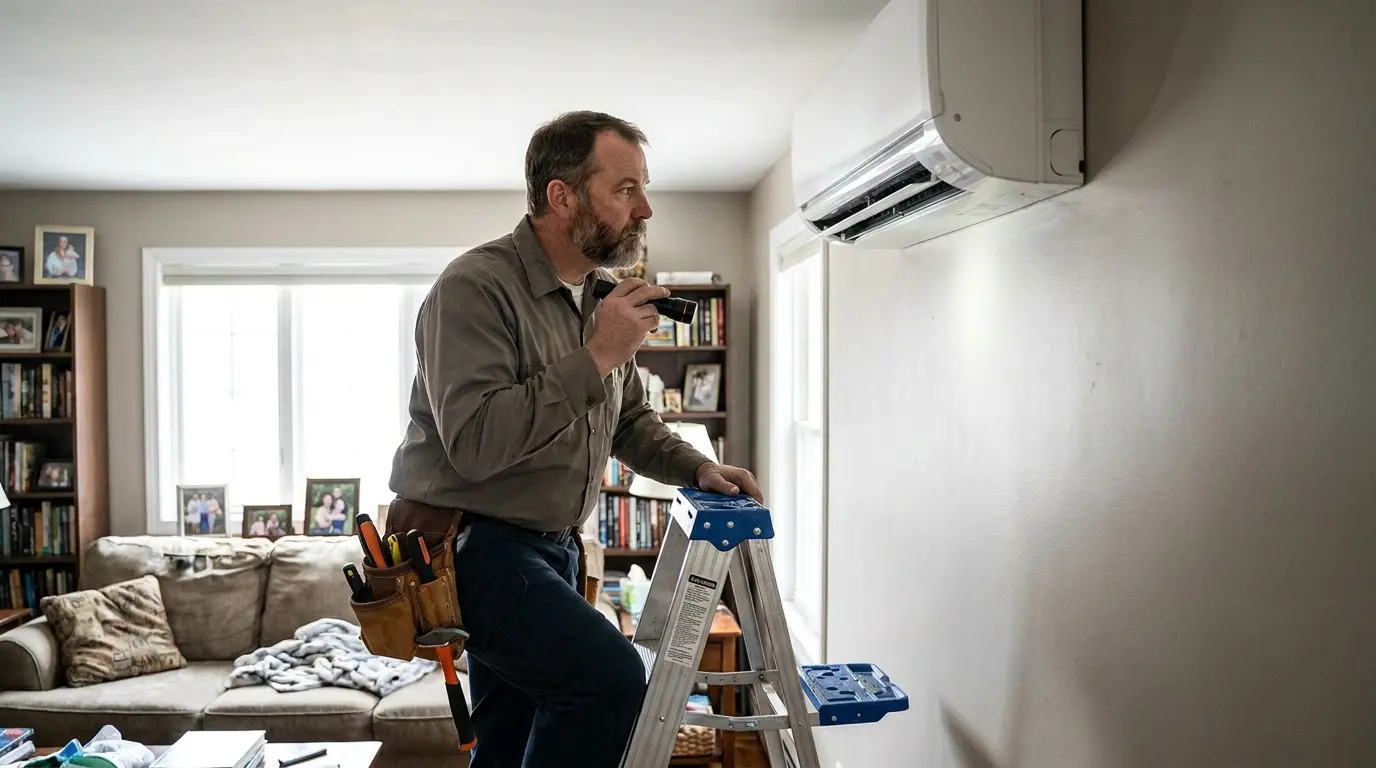
During the season, a simple routine helps more than people expect. Check the filters every two to four weeks, clean them when needed, and keep dust under control around the unit, on top of wardrobes, and on surfaces the system keeps pulling air from. In a flat near a busy road, with an open kitchen, or with pets, you may need to check more often.
I also like tying AC checks to normal summer housekeeping. If you're already wiping window sills, dealing with dust, and freshening up the bedroom, it makes sense to look up at the unit on the wall too. Not after it starts to smell. Before.
If you want a cleaner home overall before summer starts, CistýKout is a Prague-based cleaning option for households that want help getting the rest of the flat in shape too. You can reach out here: https://www.cistykout.cz/kontakt