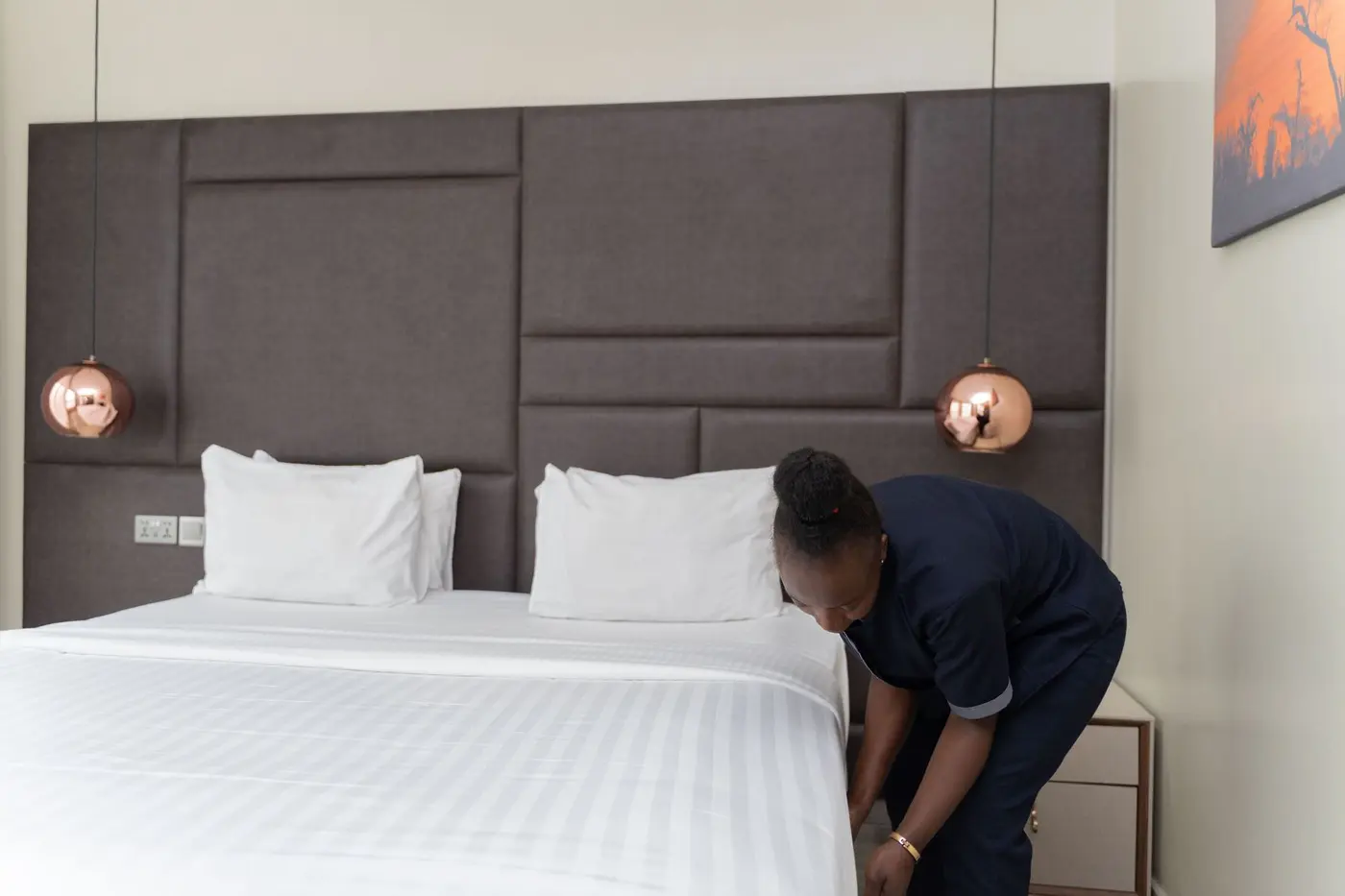
The awkward part of an Airbnb changeover is rarely the mopping. One guest leaves at 10:00, another wants to drop bags at 13:30, and the flat still has to be inspected, cleaned, restocked, photographed and locked. Airbnb turnover cleaning works when all those jobs form one routine. If keys, linen or damage reports sit outside it, they usually become the delay.
A turnover is not a normal home clean
A domestic cleaner can leave a low-priority detail until next week. A holiday flat has no next week. The incoming guest sees the shower drain, the coffee machine and the sofa bed before anyone has time to explain that the last booking checked out late.
So I give each part an owner. The host confirms times, guest numbers and decisions about damage. The cleaner records the arrival condition, resets the flat and sends the closing photos. The laundry partner gets an exact bag count and deadline. Somebody is also responsible for collecting and returning physical keys.
One Vinohrady flat taught me how much time disappears around the cleaning itself. Linen lived in the cellar. Bed arrangements arrived by message halfway through the job. Keys changed hands at a café two streets away. A labelled linen cupboard, next-day bed plan and lockbox cut almost forty minutes from the visit. Nothing about the bathroom changed.
A checklist from entry inspection to locking up
Do not start by spraying the bath. Walk through first. Check windows, furniture, appliances, smells and obvious stains before moving anything. For damage, take a detail shot and another showing its position in the room. A mattress photographed only after the bed has been remade is not useful evidence.
My working order is entry check, linen, kitchen and bathroom, bedrooms, touch points, floors, supplies, then lock-up. The sequence matters. Stripping beds first gets laundry moving while the rest of the flat is cleaned. Floors come near the end because otherwise people walk over them again.
The room standard needs detail. In the bathroom that means a clear drain, clean fittings, a streak-free mirror, fresh towels and the agreed toilet-roll count. In the kitchen it means checking the fridge, dishes, sink, worktop, bin and coffee equipment. Handles, switches and remotes are small, but guests notice sticky ones immediately.
Lost property follows a plain rule: photograph it, store it in one known place, and label it with the booking number and date. Unless work would destroy evidence or worsen a leak or breakage, record the problem and carry on. A cleaner waiting twenty minutes for a host's reply loses the best part of a tight window.
Linen and supplies cause most avoidable delays
For every bed that may be used, I would keep three complete sets: one fitted, one in the wash and one clean spare. Busy properties or external laundries often need four. A cupboard full of unmatched sheets does not count if it cannot dress every booked bed.
Agree the towel standard per person, with bathmats and tea towels counted separately. Mark stains while stripping the bed. Trying to wash and air-dry several loads inside a three-hour turnover is unreliable even in July; in a damp Prague winter it is barely a plan.
I separate visible guest supplies from a locked working reserve. Perhaps the bathroom shows two toilet rolls while the reserve must never fall below six. Apply the same idea to bin bags, dishwasher tablets, coffee, soap refills and sponges. The cleaner reports a count, not “we are running low”. “Four rolls left; add eight before Thursday” tells someone exactly what to do.
Shopping needs a price and an owner. When a cleaner runs to dm during the booking gap, the receipt is only part of the cost. The trip and shopping time also belong to the job.
How to calculate a realistic turnover time
Square metres give a poor answer on their own. A studio with four sleeping places and a sofa bed may take longer than a roomy one-bedroom for two. Count used beds, bathrooms, laundry volume and required supplies first.
For a new property, I allow 20–30 minutes for entry and closing checks, 25–45 for the kitchen, 25–40 for each bathroom and 10–15 for each bed before laundry. Living areas and floors can add 30–60 minutes; waste, stock and keys another 10–20. These are planning ranges, not a promise.
Time the first three to five visits by work block. Use the middle result, not the record day, and add 15–20% breathing room. With less than three hours between access and arrival, a second cleaner or a larger buffer is sensible.
Two people help only where work can split. One takes the bathroom and kitchen while the other makes beds and resets rooms. They cannot shorten a washing cycle or make a missing key appear. For three or more used beds, a linen exchange often beats the washing machine in the flat.
Smoke, vomit, a greasy oven or bags of party rubbish are not a standard short term rental turnover. The cleaner sends photos and a time estimate; the host approves extra work, backup or a revised arrival plan.
What an Airbnb turnover price should cover
The Airbnb cleaning fee needs to cover the actual responsibility: labour, bed setup, laundry or transport, replenishment, travel, photographs and keys. Those final tasks can consume half an hour, although cheap quotes often pretend they do not exist.
Take a Prague one-bedroom sold for four guests. A base price may assume two prepared beds. Opening the sofa bed, carrying two laundry bags and collecting a key elsewhere changes the job. A useful calculation is labour plus linen, travel, shopping, key handling and a small operating buffer.
A fixed price is comfortable once the flat has a stable standard. Write down the included bed count and what “normal use” means. Put late checkout, an express gap, another bed, a supply run and exceptional mess on the surcharge list before they happen. For trial visits, an hourly rate is fair, provided the host gets an estimate and approves extra time.
Key handling deserves its own line. A lockbox can save two journeys. Carrying the property's only set adds security responsibility, so agree what happens if it goes missing instead of improvising in WhatsApp.
How to check quality without visiting the property
Thirty random pictures are hard to check. Ask for the same views each time: every room from the doorway, beds, shower, basin, toilet, kitchen and sink, open fridge, supplies, windows where relevant, and returned keys. Differences then stand out quickly.
Keep the vacation rental cleaning checklist short and specific. “Bathroom done” proves little. “Drain clear, mirror without streaks, two towels, two toilet rolls” defines a finish. Maintenance faults belong in a separate record; a broken socket may be spotless but remains broken.
Agree what the cleaner fixes before leaving. A forgotten bin or missing towel should be corrected at once. A dead dishwasher goes to the host with a photo and a note about the effect on the guest. The closing message can stay simple: finish time, lock and key status, faults, photo link.
That is the point of a reliable Airbnb cleaner checklist. It does not document every hand movement. It removes the blind spots around damage, linen, supplies, keys and last-minute decisions, making the service repeatable even when the host is elsewhere.
For a Prague-based cleaning option, send Čistýkout a no-obligation enquiry. Include the number of beds and bathrooms, the usual booking gap and the key arrangement.