Apartment disinfection has a fairly narrow job. It is useful when someone is infectious, when blood or vomit has contaminated a surface, or when a doctor has recommended extra precautions for a vulnerable resident. For the ordinary week in a healthy home, detergent, water and a bit of physical effort are usually enough. Using more chemical does not make the work more careful.
Cleaning comes before disinfection
Cleaning and disinfection are separate jobs. Cleaning loosens grease, dust and other soil, and removes many microbes with it. A disinfectant acts on microorganisms that remain on an inanimate surface. It cannot do that work reliably through a layer of dried food or bathroom grime.
The CDC gives the same order for household cleaning: clean first, then disinfect if the circumstances warrant it. This is as true in an older panel-built flat in Háje as it is in a recently finished kitchen in Karlín.
The smell test is no help. A room that smells strongly of chlorine is not necessarily cleaner than one washed with an ordinary detergent. I would rather see fresh kitchen cloths, a properly washed toilet and a clean door handle than disinfectant sprayed over an entire floor every morning.
Decide from the situation, not the bottle
If you need to know how to disinfect an apartment, start with the situation rather than the product.
In a healthy household, keep the normal cleaning routine. Deal with spills promptly, wash the bathroom, clean food preparation areas and give frequently handled objects regular attention. Whole-home disinfection adds exposure and work without a clear target.
Illness changes the target. If an infection can spread within the household, clean shared touch points and use an appropriate disinfectant on those surfaces. The diagnosis matters. Advice for one organism may not suit another, so follow the product label and any instructions from the person’s clinician.
Blood, faeces, vomit and juices from contaminated food need a more controlled response. Keep people away from the area, use the protection appropriate to the spill, remove the material, wash the surface and only then disinfect it. Do not carry the same cloth or gloves into a clean room.
A family in Vinohrady offers a simple example. After a child’s common cold, there is little value in disinfecting every bedroom floor. If the child vomits while suffering from a stomach infection, the spill and the route to the bathroom become the focus. Clean the affected spot, the toilet, flush control, tap and handles. Leave unrelated walls and floors alone.
People with serious immune suppression may need a different routine. That can apply after a transplant or during some cancer treatments. Ask the healthcare team which precautions are required instead of improvising a stronger mixture at home. Cleaning after illness should respond to a real risk, not to anxiety alone.
Start with the surfaces people touch
Door handles, switches, taps, the toilet flush and appliance controls deserve attention because several hands reach them. Phones and remote controls count too, although their manufacturer’s care instructions come first. A liquid suited to glazed ceramic may ruin a screen or a coated control.
During an infectious illness, work around the places the sick person actually uses. The toilet and bathroom tap may need targeted surface disinfection. The bathroom ceiling does not. Direct contamination is the exception; then the size and location of the incident determine the boundary.
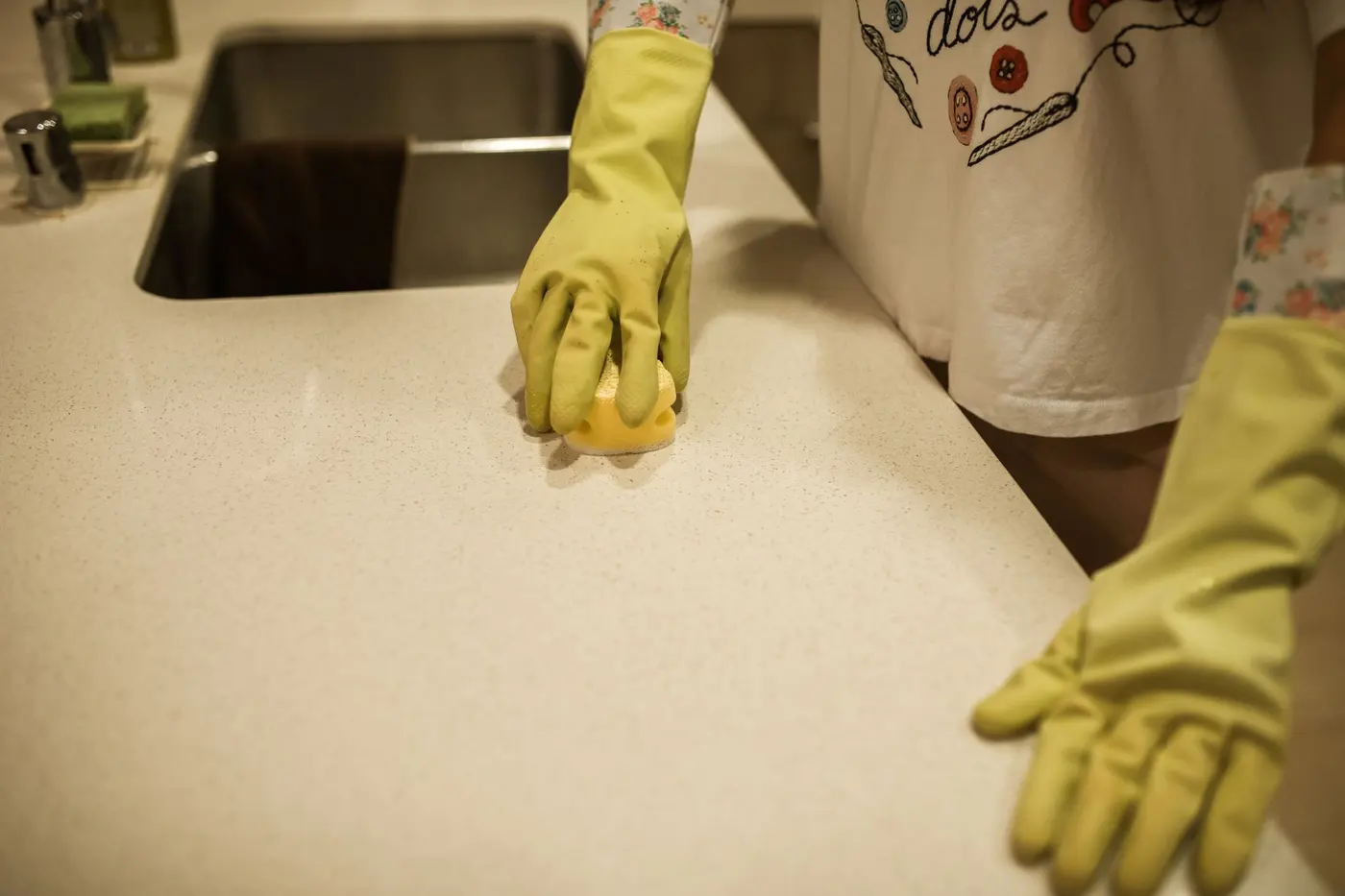
Kitchen worktops need their own judgement. Wash away food residue before applying anything else. If raw meat or a recalled food has contaminated the area, use a product suitable for that surface and purpose. Some labels require food-contact surfaces to be rinsed afterwards. Do it.
Separate cloths reduce a very ordinary error. A cloth used on the toilet should not move to the tap and then the kitchen. Colour coding is useful, but the principle matters more than the colours: clean tools stay away from dirty zones.
Wash, apply and give the product time
Most failed disinfection is rushed rather than underpowered. The work begins with washing the surface and removing visible soil.
Next, read the label. Check that the product is intended for the material, prepare the stated concentration and use the protective equipment specified by the maker. Making the solution stronger on your own can damage the surface and increase exposure without improving the result.
Contact time is the part people tend to skip. The treated surface must remain wet for the period on the label. A quick spray followed by an immediate polish may look neat, but the disinfectant has not been used under its tested conditions. The EPA’s explanation of registered disinfectants is blunt on this point: the full wet contact time is part of the directions.
After that time, wipe or rinse only as instructed. Food-contact areas may require a clean-water rinse. Natural stone, varnished timber and sensitive metal deserve a test on a hidden area before wider use.
Do not invent a chemical recipe
Never combine chlorine bleach with acids or ammonia. Vinegar and acidic limescale remover are acids; they must not meet bleach in a bottle or on a wet surface. The reaction can release dangerous gas.
Open a window, protect your skin as directed and keep chemicals in their original labelled containers. Store them where children and pets cannot reach them. A cleaner poured into a soft-drink bottle is an unnecessary poisoning risk, particularly after everyone has forgotten what the bottle holds.
Do not spray disinfectant into the room air as a substitute for cleaning. It increases the chance of inhalation and does not establish the right dose or contact time on a handle or worktop. Ventilation deals with stale indoor air. A cloth and the labelled procedure deal with a contaminated surface.
Check the finish before you begin. Chlorine can discolour fabric. Some formulas mark stone, timber coatings or screens. A disinfectant claim is not a promise of compatibility with every item in the flat.
Some jobs are not domestic cleaning
A regular cleaning service can wash a home thoroughly and treat agreed high-touch surfaces. Extensive bodily fluids, discarded needles, sewage, an unattended death, unidentified chemicals or severe mould are different. These incidents may require trained decontamination staff, specialist protective equipment and controlled disposal.
Describe the incident before the booking. Say what happened, when it occurred and roughly how large the affected area is. Mention a known diagnosis or source, the products already used, vulnerable residents, pets and whether the rooms have water and ventilation. Photos can help the provider assess the work without walking into an unidentified hazard.
The phrase "deep clean" is too vague for this purpose. One customer may mean soap residue and dust; another may mean a biological spill. A direct description lets the provider accept the work safely or refer it to a specialist.
Good apartment disinfection is selective. Remove the dirt, wash the surface, apply the right product where there is a reason to use it, and wait for the stated contact time. In most healthy Prague homes, regular cleaning remains the main job.
ČistýKout is a Prague-based option when you need help with hygienic home cleaning after an illness or before someone returns from hospital. Send the circumstances through the ČistýKout contact form. The description will help determine whether ordinary cleaning is appropriate or specialist decontamination is the safer route.