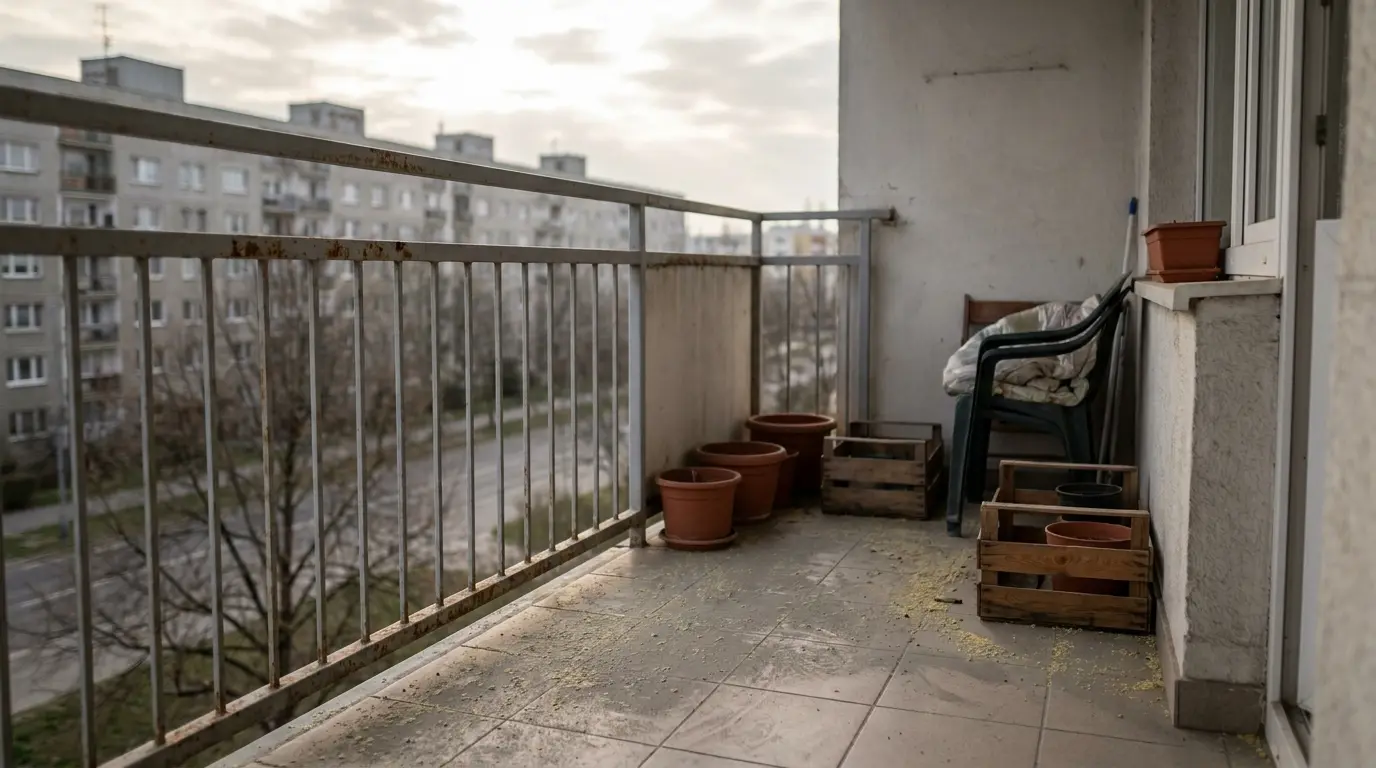
Balcony cleaning after winter in a Prague flat sounds simple until you actually step outside. It's rarely just dust. You get road grit blown up from the street, yellow pollen, soot from traffic, dried soil from old planters, and that sticky city film that makes glass look dull. If you live near a tram line in Prague 4 or a busy road in Brno, you know exactly what I mean. The surface looks matte, the glass is cloudy, and the drain is suspiciously slow.
What usually catches people out isn't one huge mess, but the mix of fine debris. If you just blast it all with a hose, that dirt immediately turns into a grey paste. It runs into the window tracks, clogs the drain, and occasionally drips right onto the neighbour's clean laundry below. That's why cleaning a city balcony after winter needs a different approach than just hosing down a suburban patio.
What stays on a balcony after winter, and why a hose is not enough
A city balcony holds onto winter. It collects leftover grit from treated streets, dust that's been blowing around for months, traffic soot, and eventually a heavy layer of spring pollen. That is exactly what balcony cleaning after winter usually means in Prague or Brno, not one tidy layer of dirt but several. If you have a sheltered loggia in a panel building, those layers often sit there longer because rain doesn't hit the space to wash it away naturally.
That matters because the dirt is complex. Road residue is slightly abrasive. Pollen turns incredibly slick when wet. Soot clings to glass and painted metal. If you are wondering how to clean a balcony properly, this is the point to slow down. Once you throw a bucket of water at the whole mess, it mixes into a paste that's actually harder to remove than the dry dust was.
Then there's the apartment building issue that cheerful spring-cleaning videos always skip. Water has to go somewhere. Sometimes that means over the front edge of the balcony or into a drain that's already half-blocked. You end up with dirty streaks on the facade below, splash marks on a neighbour's railing, or standing water around your own threshold. In a Prague block of flats, that's a fast way to start a pointless argument.
Older surfaces also need extra care. I'm always cautious with painted railings, tired grout, older balcony tiles, and any timber deck tiles that have spent a few freezing seasons outside. Strong degreasers, bleach, or hard scrubbing pads can do real damage. Once the shine is gone or the coating lifts, you aren't cleaning anymore. You are doing a repair job.
Prep first: what to remove, sweep, and sort before washing
Start by clearing the space. Move the chairs, folding tables, cushions, planters, lanterns, drying racks, and anything else small enough to trap dirt. On a compact apartment balcony, floor space is everything. You simply can't clean well if you are stepping over clutter every thirty seconds.
Deal with the dry debris first. This step feels boring, which is probably why people skip it. Don't skip it. Sweep up the leaves, dead plant matter, loose soil, cigarette ash, and those tiny stones that somehow always end up on balcony floors. A hand brush, dustpan, and a vacuum for the corners will help you much more than a wet mop at this stage.
I like to sort things into three piles right away: put back, wash separately, throw away. It keeps the momentum going. It also solves that classic balcony problem where the floor is finally spotless, but the space still looks messy because the same cracked pot, stained doormat, and rusty candle holder went right back in.
Safety matters too, especially higher up. Don't balance heavy items on the railing. Don't leave cleaning bottles where the wind can knock them over. Keep your water use controlled. A renter-friendly, neighbour-friendly clean isn't glamorous, but it works without causing collateral damage.
How to clean tile, concrete, wood, and metal without damage
Different surfaces need different pressure, different moisture levels, and sometimes specific cleaners. For standard balcony tile, lukewarm water, a pH-neutral cleaner, and a soft brush or microfiber mop usually do the trick.
!Gentle manual cleaning of balcony tiles with a soft brush and mild solution If the tile has that greasy city film on it, do a gentle pass a few times instead of trying to win with one aggressive scrub.
Concrete can take a beating, but it stains easily when dirty water sits on it. Clean small sections and wipe away the loosened dirt before it dries. I've seen balconies where the owner scrubbed enthusiastically, left puddles to dry, and ended up with more visible streaks than when they started.
Wood deck tiles are the surface I'd treat most carefully. Too much water is the classic mistake. After winter, outdoor wood can be completely dry in one spot and swollen in another. Use a well-wrung cloth or mop, keep the moisture light, and use a product made specifically for exterior wood. Bleach and strong alkaline cleaners will ruin the finish and the fibers.
Metal railings are more forgiving. Mild detergent, a soft sponge, and proper drying usually get it done. On painted metal, avoid anything abrasive. On stainless surfaces, buffing it dry at the end prevents water marks. If you spot rust, don't just wash over it. Check whether the coating is damaged and needs a touch-up.
Pressure washers sound great in theory, but on a city balcony they are mostly trouble. The spray rebounds, blasts grime into window frames, and sends dirty water everywhere you don't want it. On a neglected balcony they might help at low power, but for most apartment spaces, controlled hand cleaning is safer and often much faster.
Glass, railings, and tracks: where the dirt really builds up
This is where spring balcony cleaning gets annoying. The glass can look completely fine until the late afternoon sun hits it. Suddenly the pollen film shows up, the traffic haze makes the surface look flat, and every dried drip is obvious. The same applies to glazed loggias, where the tracks quietly hide the worst of the mess. In practical terms, dust and pollen on balcony glass and rails are usually what make the whole space still look dirty after the floor is done.
The order matters here. Dust the frames and tracks first. Then wipe those areas with a damp cloth. Clean the glass last. If you do it the other way around, you'll just pull grime from the tracks right back onto the clean pane. A narrow brush, an old toothbrush, or a vacuum attachment is perfect for the corners where damp dust collects.
For the glass itself, strong chemicals are usually overkill. A standard glass cleaner or a diluted alcohol-based solution works fine as long as you don't let it bake on in direct sun. The real trick is technique. Work in the shade if possible, use way less product than you think you need, and finish with a squeegee or a dry microfiber cloth.
Most streaks happen because people use too much water. It sounds too simple, but it's true. On an apartment balcony, flooding the glass rarely gives you a better result. It just means more cleanup later. The same rule applies to loggia cleaning, where trapped moisture in tracks and corners quickly turns a decent result into new marks.
Drain, corners, and grout lines: the spots people miss most often
If one single detail decides whether your balcony survives the spring rain, it's the drain. After winter, it usually holds a quiet mix of pollen, leaves, grit, soil, and sludge. The warning signs are subtle: slower drainage, a shallow puddle that sticks around, or a dark ring around the cover.
Take out whatever you can by hand first. Wear gloves. Then test the flow with a small cup of clean water. If it drains smoothly, great. If not, try a flexible plastic drain tool or something gently mechanical. I would never pour a harsh chemical unblocker into an older apartment drain without knowing the plumbing can handle it. Sometimes the chemicals just make the smell worse.
Corners and grout lines deserve a little patience. This is where winter moisture gets trapped, and where green algae or early mould likes to start. A small brush, mild cleaner, and a quick wipe dry will do more good than a heavy rinse. Ignore the corners, and the balcony will look tired again in two weeks.
The upside is that upkeep is incredibly easy once the first deep clean is done. Sweep once a week, wipe the railings during heavy pollen days, and check the drain occasionally. That's usually all it takes to keep the space usable all summer.
When to clean the balcony yourself, and when it is worth calling a pro
Doing it yourself makes total sense for a normally dirty balcony where you can easily reach all the surfaces and the drain. But professional help is worth considering if the balcony is heavily neglected, the glazing is high and awkward to reach, the surfaces are delicate, or the dirt has been building up in the tracks and frames for years.
It also helps to bundle the work with window cleaning, frames, and exterior sills. In city flats, the balcony isn't just an outdoor space. It's part storage, part mini-room, and part light source for your living area. If it stays grimy, the whole apartment feels a little dull.
If you decide to ask for a quote, include the balcony size, surface types, whether it's glazed, the state of the drain, and a couple of photos. It saves a lot of back-and-forth and gets you a much more accurate offer.
If you'd rather not guess which cleaner is safe for your tile, metal, glass, and half-clogged drain, CistýKout can help out as a Prague-based cleaning option. Just send a quick message through the contact form to get a no-pressure quote.