The awkward part of carpet cleaning is not choosing a bottle or comparing rental prices. It is working out what the carpet can take. Fibre, stain source, suction and drying conditions decide whether a home job is sensible. Coffee on polypropylene? Probably manageable. Old cat urine in fitted carpet over timber? I would not learn by trial and error.
Three options and what they really do
Spot cleaning is exactly that: work on one spot. Blot a fresh spill with white cloths, use a cleaner approved for the fibre and keep the dose small. Scrubbing feels productive, but often spreads colour and roughens the pile.
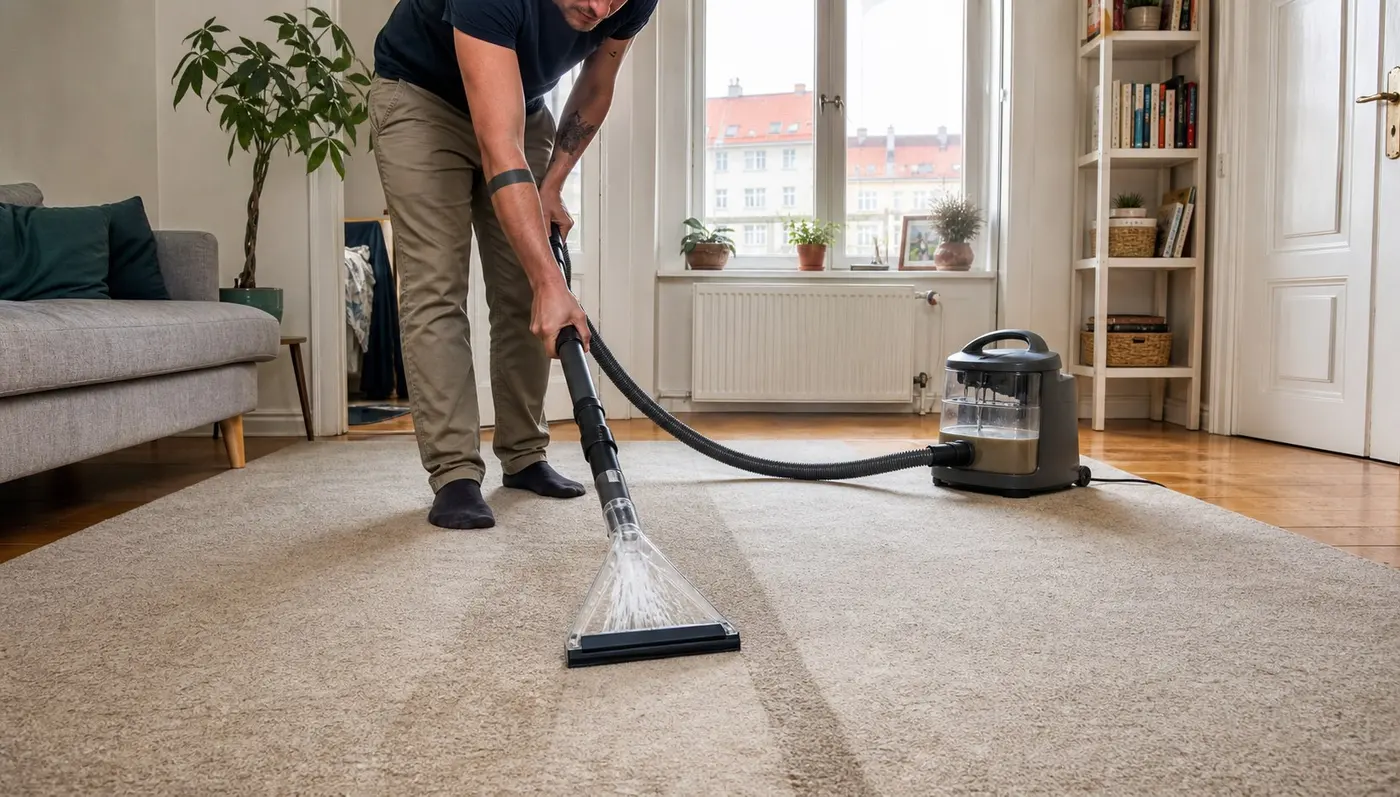
A rental extractor sprays solution and sucks it back out. This is carpet extraction cleaning, not a wipe of the surface. Yet the word “extractor” tells you little about recovery power. I have seen small rental machines lift plenty of brown water and still leave the backing far wetter than expected.
A competent professional first checks fibre and colourfastness. The cleaner then adjusts chemistry, water and extraction passes. That is worthwhile on a large or risky job, though calling somebody across Prague for one fresh tea mark would be hard to justify.
Start with the fibre and the stain
Look for a care label. Polypropylene normally tolerates water better than wool, viscose, jute or a hand-dyed rug. Those materials can distort, shrink or lose dye. Fitted carpet hides another question underneath: felt, glue, timber or absorbent underlay.
Treat mud dry first. Vacuum it, then judge what remains. Grease needs a product that releases oil and can still be rinsed out. For coffee and wine, work from the edge towards the centre. Do not keep adding products to an old mystery mark; residues can react with the next cleaner. Test a hidden corner.
Pet urine goes deeper than the visible patch. Fragrance may cover it until the next humid week. Enzyme products can help if they suit the fibre and reach the contaminated layer. Sometimes the backing or underlay needs attention as well.
A Vinohrady homeowner once showed me a pale wool rug after using a standard synthetic-carpet cleaner. The original mark had disappeared. Around it sat a noticeably lighter ring. No extra rinse could restore dye that had already changed, so the “cheap fix” became permanent damage.
When a rental machine is a fair bet
People who rent a carpet cleaner get the best value from a large, robust synthetic carpet and an empty day. The room needs clearing, the carpet needs a slow dry vacuum first, and nobody should walk across it while damp. A typical living-room carpet in a panelák can fit that brief.
Count the whole job. There is detergent, travel, collection, return, a deposit and perhaps Prague parking. Prices change, so check the final basket. Inspect the nozzle and tanks at pickup too. Rental equipment has a history, even when the listing photographs look immaculate.
During cleaning, use less solution than your impatient side wants. Follow each wet pass with one or two suction-only passes. Take your time. Dirty recovery water proves that soil came out; it says nothing about the moisture still sitting below.
Furniture waits until the carpet is dry. Metal feet can rust and timber may bleed colour. In a breezy flat in July, drying may be straightforward. A ground-floor room in November is another story. If you cannot allow a full day, reschedule rather than rush.
When DIY carpet cleaning is not worth the risk
Overwetting causes more trouble than weak detergent. A user repeatedly squeezes the spray trigger over a stubborn mark, while a modest motor fails to recover the water. By the next afternoon, the surface feels dry. The backing may still smell stale.
Leftover detergent creates its own problem. Fibres feel slightly tacky and collect soil faster. A dark ring can form where dissolved dirt travelled to the edge of the wet area. More cleaner will not necessarily fix it.
I would avoid DIY carpet cleaning on wool or viscose without clear care instructions, on unstable dyes, after a large pet accident, or whenever odour seems to come from below. Glued carpet also dislikes saturation because softened adhesive can leave bubbles.
For allergy-sensitive homes, perfume is irrelevant. Extraction needs to remove loosened particles and most of the cleaning product. Professional carpet cleaning is useful here when the provider can explain the rinse, the suction and likely drying time. A vague promise to “sanitise” the carpet is not enough.
Comparing professional quotes
The rate per square metre is only the opening number. Ask about the minimum call-out, travel, furniture moving, stain treatment and pet-odour work. On a small rug, the minimum may dominate the bill because the technician still travels, unloads and sets up.
Ask which method suits the fibre and whether colourfastness will be tested. Find out how drying time was estimated for your room, not for an ideal showroom. Discuss old stains before work starts. Bleached dye and damaged fibre cannot be extracted, and an honest cleaner will not guarantee otherwise.
For urine, clarify whether the quote covers the pile alone or contamination beneath it. Also ask who carries responsibility if colour migrates or an existing weak area becomes visible. Specific answers tell you more than a glossy machine photograph.
Quick decision table
| Situation | Best starting point | Why | |---|---|---| | Fresh coffee on durable synthetic carpet | Spot clean at home | Small area and low saturation risk | | Two rooms of generally dull synthetic carpet | Rental extractor | Enough area to justify collection and setup | | Wool or viscose rug | Rug specialist | Dye, shrinkage and distortion need control | | Old dog or cat urine with odour | Professional assessment | The affected layer may sit below the pile | | Room needed again that evening | Postpone or call a professional | Better suction helps, but drying still takes time | | Large carpet in an allergy-sensitive home | Thorough professional extraction | Particle and residue removal matter most | | Unknown old stain | Hidden-area test | Fibre, stain and old chemistry are uncertain |
So, begin with two facts: the fibre and the stain source. Then decide how long the room can stay unused. Equipment price comes after those answers. A fresh mark on synthetic carpet is often a safe home task. An expensive rug, recurring odour or damp backing calls for more caution.
For a carpet in Prague, you can send a no-obligation request through the Čistýkout contact form. Include the material, size, stain source and a photo. Čistýkout can then help you judge whether a booked cleaning or a careful home treatment is the better next step.