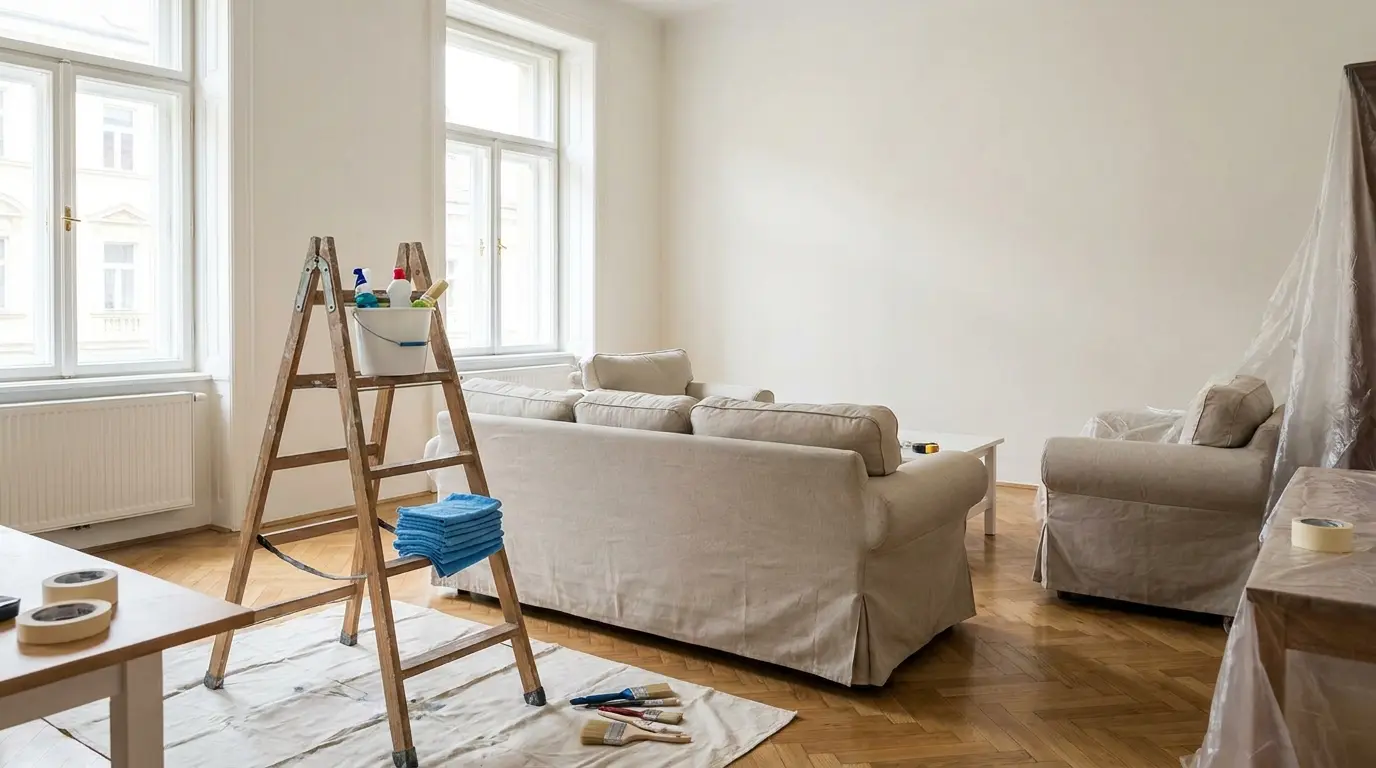
Cleaning after painting sounds easy until you actually start. The walls look fresh, the painter is gone, and then you notice the white film on the windowsill, the tiny drops on the floor, and that dull haze on the glass that was not there yesterday. This is where many people make the same mistake. They grab a wet cloth too early and end up spreading dust and diluted paint instead of removing it.
This article is not about a full post-renovation cleanup after demolition. It is about a very normal Prague apartment problem: you painted a room, maybe two, and now you want the flat back without streaks, scratched laminate, or hours of repeat cleaning. In my experience, the result depends less on expensive products and more on doing things in the right order.
What makes cleaning after painting different from regular cleaning
Regular cleaning deals with ordinary dust, fingerprints, kitchen splashes, bathroom scale. Cleaning after painting is trickier because the dust is finer and the surfaces are less forgiving. Paint dust cleanup is not dramatic, but it is stubborn. You wipe one sill, turn around, and a light layer settles again somewhere else.
Another difference is the risk of smearing. If there is still a bit of wet or semi-dry paint on a frame, skirting board or floor, water can make the mess larger before it makes it smaller. I have seen people clean a single paint drop into a pale streak across half a plank because they went in too fast with a soaked cloth.
Freshly painted walls also change the rules. Right after painting, people get tempted to wipe every corner so the place feels finished. Usually that is unnecessary, and sometimes it makes things worse. A fresh coat can mark easily, especially near switches, edges and door frames.
So the job is less like a normal weekly clean and more like careful finishing work. Start high, move down, remove dry debris before using water, and treat delicate surfaces as if they matter, because they do.
The right order: what to do first and what to leave until the end
The first step is not mopping. It is air management. Ventilate well, but do it in a controlled way. A short burst of cross ventilation helps clear the smell and lets airborne dust move out. Then let the room settle before you begin. If windows stay wide open for too long while you are cleaning, every draft keeps lifting dust back into circulation.
Next comes dry removal of obvious debris. Collect masking tape, plastic sheets, paper covers, dried flakes, and any bits of loose material. Walk the room slowly and check corners, radiator tops, skirting boards and the edges of window frames. If you spot paint on floor surfaces, notice it, but do not attack every mark immediately with water.
A practical cleaning after painting order looks like this:
- upper edges, tops of wardrobes, curtain rails, light fittings
- window and door frames, sills, switches, sockets, radiators, skirting
- glass and mirrors
- floors last
There is no glamour in that list, but it works. Anything you clean overhead will fall lower. If you start with the floor, you are volunteering to do it twice.
How to remove fine dust without sending it back into the air
This is the point where people either save time or lose half a day. If you want to know how to clean after painting without creating more mess, start dry. Fine paint dust behaves badly with too much moisture. Instead of lifting cleanly, it often turns into a chalky film.
A vacuum with decent filtration, ideally HEPA, is the safest first move for horizontal surfaces, edges and corners. Use it slowly. Do not rush over the surface as if you are vacuuming ordinary crumbs. You are trying to collect fine particles, not chase them around.
After that, use microfiber. Not a random old rag from under the sink, and not a fluffy cloth that sheds. A proper microfiber cloth grabs dust without needing much product. Slightly damp is usually enough. The goal is control, not saturation.
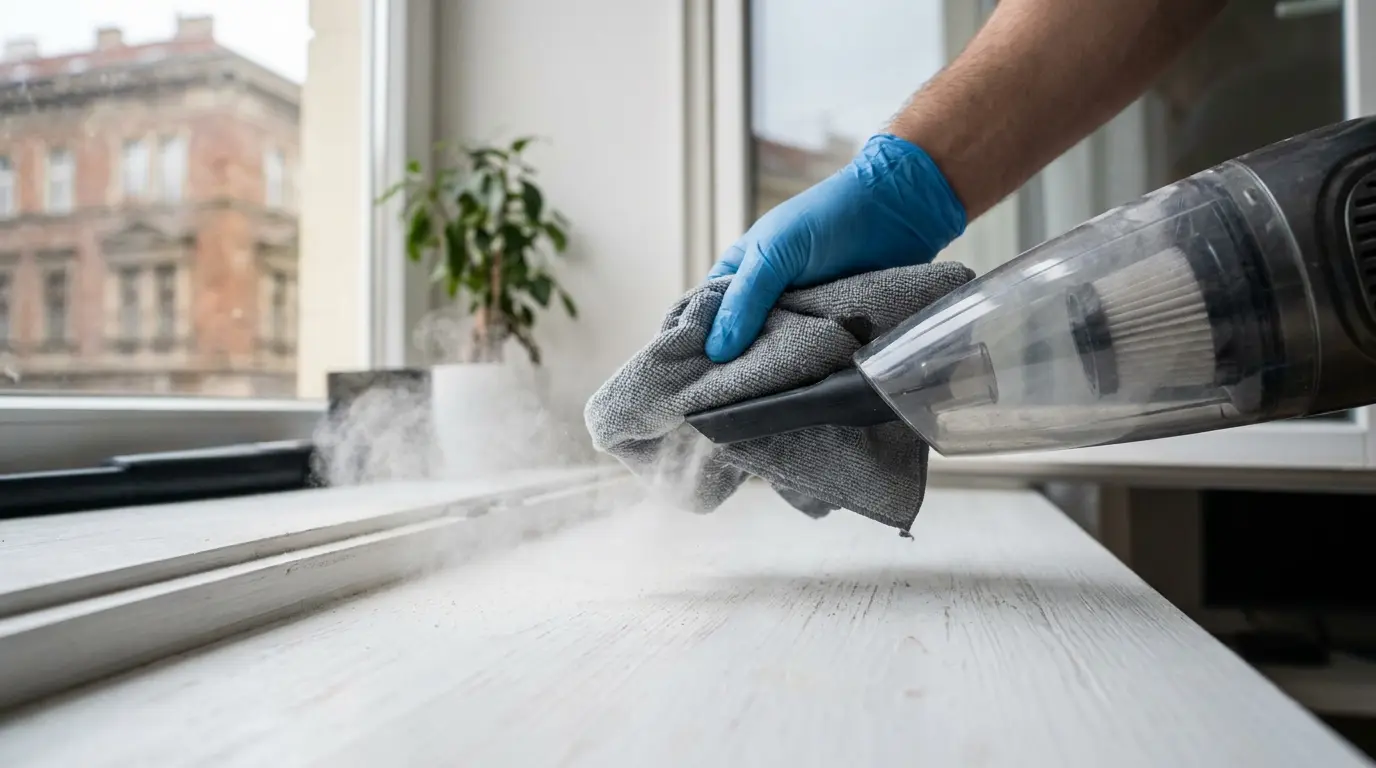
One thing I would avoid is wiping freshly painted walls just because they are there. If the painter worked cleanly and the room only has dust on surrounding surfaces, leave the walls alone. If a corner really needs attention, wait until the paint is properly cured and use the lightest touch possible.
You should also expect repetition. Paint dust cleanup often takes two passes. The first removes most of the visible residue. The second catches what settles later from hidden places like radiator fins, door tops, and the lip behind a sill. That is normal. It does not mean you failed on the first round.
How to clean paint drops from floors, frames and window sills safely
This is where surface type matters more than cleaning enthusiasm. There is no single method for every material.
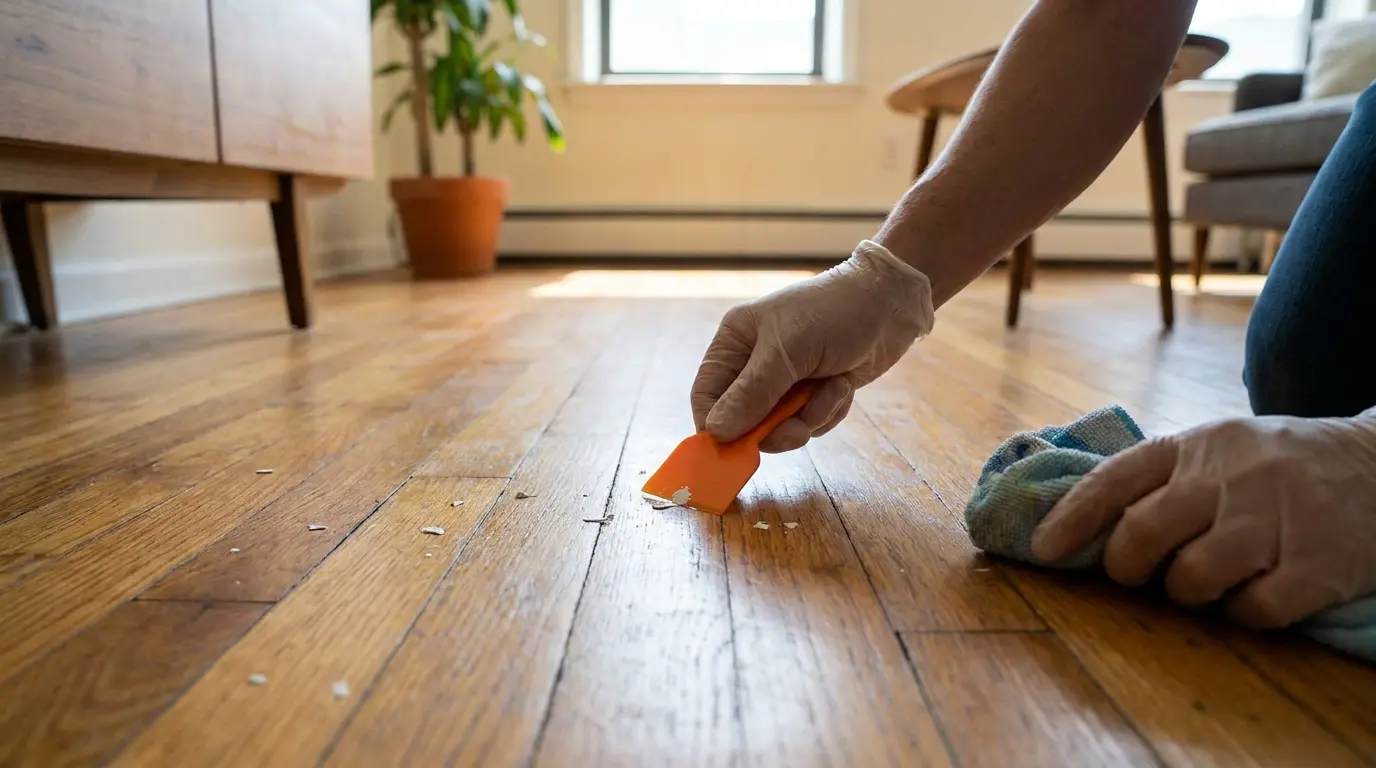
On tile or more durable vinyl, small paint marks are usually manageable. If the paint is water based and not old, warm water with a mild neutral cleaner may be enough. For dried specks, a plastic scraper can help if you keep it flat and gentle.
Wood and laminate need much more care. I would not use abrasive pads, metal blades or aggressive solvents unless you are completely sure what finish you are dealing with. People often search for a miracle method for paint on floor surfaces, but the truth is less exciting: soften carefully, test in a hidden spot, and be patient.
A damp cloth placed briefly over a small dried drop can help loosen it. Then lift, do not dig. If the drop does not move easily, stop and reassess. A scratched board costs more than a cleaning service call.
Frames and sills need the same restraint. On uPVC windows, the usual problem is a mix of dust and tiny paint traces. Warm water, microfiber and repeated light passes work better than strong chemicals in most homes. On painted wood or laminated boards, harsh products can dull the finish or strip the coating.
When does a scraper help? On glass, yes, if it is a proper glass scraper used with care. On wood, laminate, or softer plastics, usually no. A tool that works beautifully on one surface can leave permanent damage on the next.
What people most often forget after painting
Not the big areas. The small ones. Switches, socket covers, skirting tops, the upper edge of doors, radiator grilles, and the side of a sill that faces the window. These details hold enough dust to make an otherwise clean room still feel unfinished.
Glass is another common miss. People clean the frame, feel relieved, and leave the haze on the window until the next sunny morning exposes every streak. Wait until the surrounding dust is gone, then finish the glass once. It is faster that way.
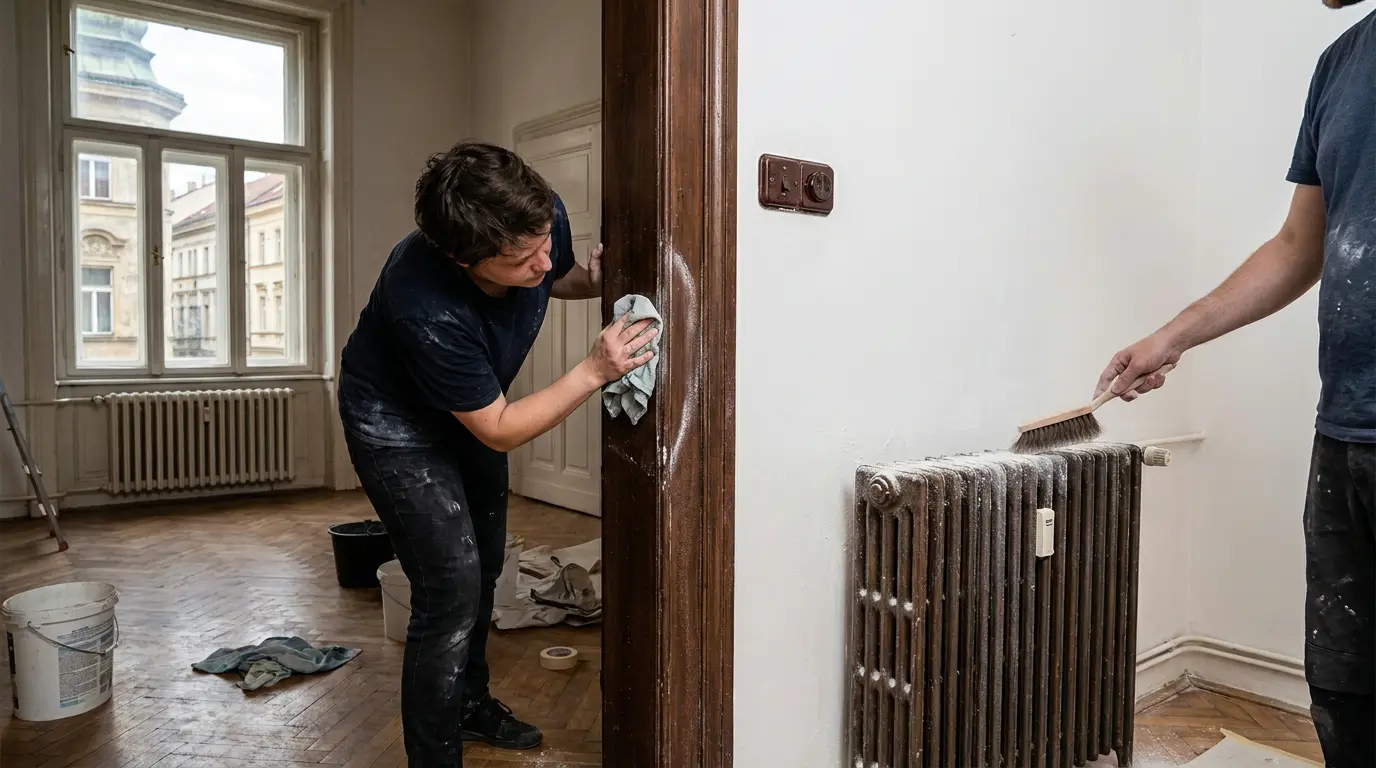
I remember one apartment near Dejvice where everything looked nearly done except the room still felt dull. The floor had been cleaned, shelves wiped, and the furniture uncovered. The problem turned out to be the usual trio: door tops, radiator edges and balcony glass. Once those were cleaned, the flat finally looked finished instead of half finished.
When it makes sense to book a one-off professional cleanup
If you painted one bedroom and have a free evening, you can probably handle the cleanup yourself. If you painted the whole apartment, have multiple rooms, new surfaces, or a move-in deadline, professional help starts to look sensible quite fast.
A one-off service is often worth it when:
- several rooms were painted in the same week
- the apartment needs to be back in use immediately
- there are delicate surfaces such as new laminate, oiled wood or custom sills
- you simply do not want to spend your weekend repeating the same dust pass three times
That is especially common in Prague rentals, move-ins, pre-sale touchups, and those quick refresh projects people do right before family visits or property photos. Apartment cleaning after painting is not the hardest cleaning job in the world, but it is one of the easiest to underestimate.
If you want help with cleaning after painting in Prague, ČistýKout is a local option for one-off residential cleaning. We can suggest the right scope based on the apartment size, the number of painted rooms, and the materials you need to protect. If that sounds useful, use the contact form and send a non-binding request. It is often easier than fixing damage from a rushed cleanup.