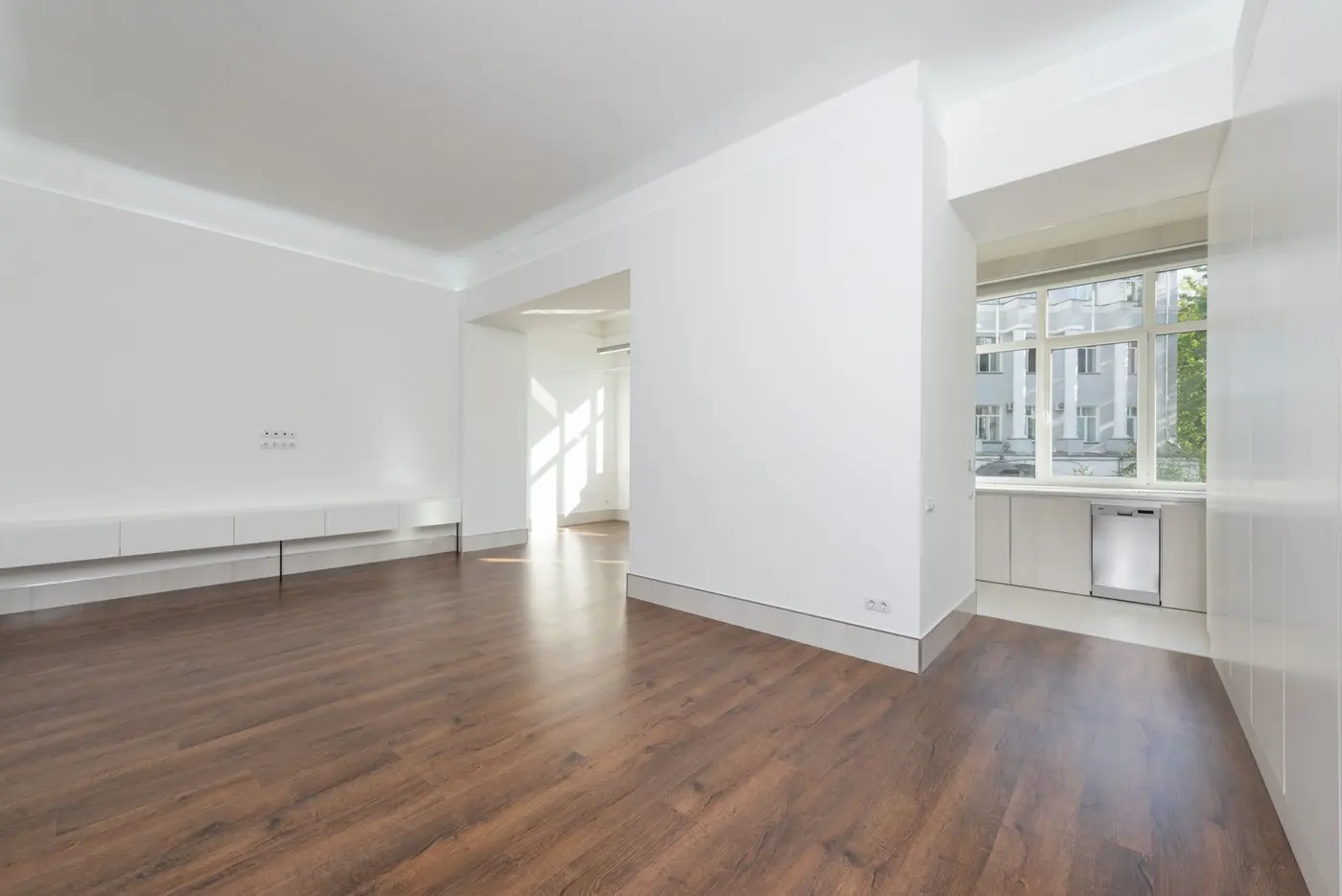
Cleaning an apartment before moving in gives you something you won't have tomorrow: access. No sofa in front of the window. No boxes hiding the skirting boards. If you get the keys on Friday and the van comes on Saturday, forget the usual room-by-room routine. Photograph the flat, deal with dust up high, clean the kitchen and bathroom, and only then touch the floors.
What to check as soon as you receive the keys
Keep the cleaner in your bag for ten minutes. Take pictures first. I mean the dull details too: scratched parquet, a chipped sink, marks inside the oven and the swollen corner of the cabinet below it. Ten minutes with a phone is easier than a deposit argument six months later. A buyer needs the same record before repairs begin.
Now open everything. A flat may smell fine because the windows have been open, while the cupboard below the sink smells damp the moment the door moves. Check silicone, pipe joints and the panel around the bath. Pest droppings, wet chipboard or suspected mould need photographs and a call to the landlord, building manager or a tradesperson. Don't clean away the evidence.
Run the taps and briefly fill each basin. Watch the water leave. Flush the toilet, try the extractor hood and listen to the bathroom fan. In an older Prague flat, a slow waste pipe is a much nastier surprise at 10 p.m. with nowhere else to wash up.
One small habit helps: reserve a dry corner for keys, paperwork, drinking water and unused cloths. Otherwise everything gets mixed together by lunchtime.
Start with jobs that become difficult after furniture arrives
The empty floor will tempt you. Leave it alone. Dust from lights, door frames, rails and cupboard tops still has to come down. Vacuum it with a brush attachment, wipe suitable surfaces and work roughly from ceiling height towards the floor. Any drilling or plaster repair belongs before wet cleaning as well.
Use the access while it's free. Reach behind the refrigerator and cooker, along both sides of radiators and into the top of fitted storage. Wash window tracks and frames now. Doing the same job with a sofa under the glass and six boxes of books nearby is possible, but miserable.
A couple I met in Žižkov once spent an evening making their parquet spotless. The next morning they fitted two shelves. Grey dust dropped from the top of the kitchen units and they vacuumed the room again. Nothing was wrong with their cleaning. They had simply started at the wrong end.
My order is ceiling corners, dry dust, windows, cupboards and fixed fittings. The vacuum and mop come out for the final pass, not the opening move.
Clean the kitchen before buying food or connecting appliances
Remove loose shelves and drawers. Vacuum the corners before using water; wet crumbs turn into paste. Ordinary detergent is enough for cupboard interiors, with a well-wrung cloth on laminated board. Don't leave water sitting along the edges.
Wash handles, worktops, taps and shelves for crockery. Disinfectant has a narrower job than its label sometimes suggests. Use it on relevant touch points, after spoiled food in a fridge or where there was biological contamination. Dust and greasy film need detergent first. Disinfecting dirt doesn't save a step.
Unplug the fridge and let cold glass shelves warm up before putting them in warm water. Sudden temperature changes can crack them. Check the oven manual too; aggressive cleaner can damage catalytic liners. If the kitchen plinth is removable, look underneath. That's where old crumbs, grease and occasional signs of pests tend to wait.
Clean the recess before a dishwasher or washing machine is connected. Check visible hoses and valves while you can still reach them. Moving a heavy appliance back across a clean floor for one forgotten patch is nobody's idea of a good Saturday.
Clean the bathroom without mixing chemicals
Limescale removal and disinfection are different jobs. An acidic bathroom cleaner deals with mineral deposits. Detergent removes ordinary grime and body oils. Give the product the time stated on its label, scrub only with something suitable for the surface, then rinse.
Bleach must never meet acid, vinegar or toilet cleaner. That mixture can release dangerous gas. Rinse the surface, ventilate and wait before changing products. If the labels leave you uncertain, use one appropriate cleaner and stop there. More bottles won't produce a cleaner shower.
Start at the tiles and ledges, then work down to the taps, basin, bath or shower. Look closely at grout and silicone. Surface marks may come off. Silicone that's black through its depth or pulling away probably needs replacement, not another hour with a brush.
Lift the removable hair trap, clear it and run water. A stubbornly slow drain is easier to sort out while the room is empty. Keep a separate cloth for the toilet and never take it back to the basin. Obvious advice, perhaps, but rushed cleaning makes people do odd things.
Leave floors until last and allow drying time
Vacuum the whole flat after the kitchen, bathroom and high surfaces are finished. Then mop. Timber and laminate need very little water, especially at the joints. Vinyl usually copes with damp cleaning, though not with every solvent. Tiles forgive more, but grout holds dirty water. Follow the care instructions for the floor you actually have.
Think about your exit. Start in the furthest room and finish at the front door. I've seen enough buckets stranded across wet hallways to mention this. Give the surface time to dry; a small airy flat may be ready within an hour, while a humid bathroom will take longer.
On moving day, protect one route from the entrance to the main rooms. Fixed painter's felt or rigid floor board is safer than loose plastic. Add a mat at the door and keep the vacuum close for grit from the pavement. You don't need to wrap every centimetre of the flat.
Polishing glasses and arranging cupboards can wait. So can furniture that's still easy to reach. A useful move in cleaning checklist puts the soon-to-be-hidden work first.
When a professional move-in clean is worth booking
One person can prepare a small, maintained apartment in a day. Large windows, an old greasy oven, two scaled-up bathrooms or renovation dust change that calculation quickly. Sometimes the keys are available for only a few hours, and you also have to meet the internet technician and deal with the movers. That's a real limit, not poor planning.
Be precise when asking for a quote. Routine cleaning assumes a home that's been maintained. A deep or general clean covers built-up dirt and awkward areas. Post-renovation work includes fine construction dust and residues from filler or paint, often with different equipment.
Send pictures of the kitchen, bathroom, windows and floors. Include the area, window count, appliances, floor types and the number of hours before the van arrives. Say whether you expect cupboard interiors, the oven, the space below the kitchen plinth and window cleaning. "Almost empty" tells a cleaner very little.
If the gap between keys and boxes is too short, send Čistýkout a no-obligation cleaning enquiry. We're a Prague-based option for move-in cleaning, and photos let us agree on the hidden work before furniture blocks it. Your new home should be ready to use, not merely given a fast mop five minutes before the van arrives.