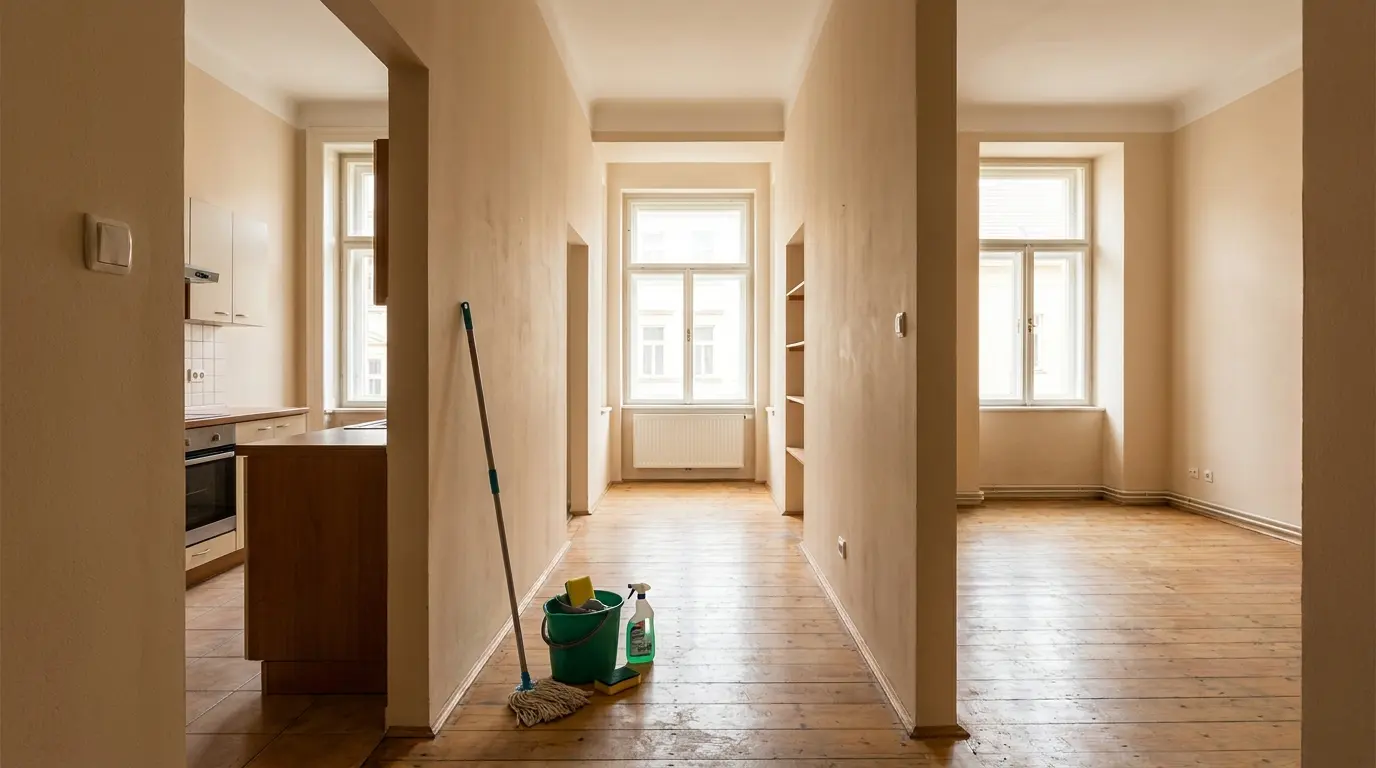
The moment you get the keys, your brain usually jumps to internet setup, movers, parking permits, and whether the sofa will fit through the stairwell. Fair enough. Still, cleaning an apartment before moving in is the one job that is genuinely easier right now than it will ever be again. The flat is empty, every surface is visible, and the dirt left by the last tenant cannot hide behind a coffee machine, shoe rack, or stack of moving boxes.
Around Prague, I see the same pattern all the time. A handover looks decent at first glance. The floor was mopped, the bathroom tap shines, the owner says it was cleaned last week. Then you open the upper kitchen cabinet and your fingers come back dusty and slightly greasy. Or you slide out the drawer under the oven and realize nobody has done a proper deep clean in ages. That is why this moving cleaning checklist focuses on the real post handover moment, not generic moving advice.
What to check right after apartment handover
Before you start wiping anything, take photos. Not just wide shots for your records, but close detail shots too. Photograph the grout in the shower, the inside of wardrobes, the oven racks, fridge seals, scuffs on the floor, corners of window frames, and the area around switches and handles. If a dispute shows up later, photos save time and nerves. In rentals across Prague, that matters more than people think.
I would check four things first: smell, grease, limescale, and cabinet dust. Smell is often the fastest clue. A stale odor can point to an issue behind a wardrobe or under the sink. A sweet-ish drain smell in the bathroom usually means an old trap or residue in the siphon. A heavy kitchen smell tends to be a mix of grease in the extractor hood, baked residue in the oven, and old buildup on top of upper cabinets.
People often tell themselves the flat looks "good enough" and postpone the apartment handover cleaning until after the move. Bad idea. The dirt left by the previous tenant usually sits in the spots nobody checks during a viewing: above the fridge, behind the toilet, inside sliding door tracks, under the washing machine seal, on the shower head, around window handles, and along the bottom edge of kitchen drawers. In one Prague 4 rental, we opened what looked like a neat pantry cabinet and found a fine layer of dust mixed with spice powder and crumbs so old it had basically become part of the furniture.
It also helps to separate dirt from actual damage. Limescale on a faucet is a cleaning issue. A swollen kickboard under the sink, mold behind the silicone, or a warped cupboard from an old leak is not. Make a quick list while the apartment is still empty. Later, once your things are inside, it gets messy fast.
Kitchen and appliances: top priority before you unpack
If you only have energy for one zone on day one, make it the kitchen. Not because it photographs well. Because it affects hygiene immediately. The first thing people do after moving is plug in the kettle, stock the fridge, and heat something simple in the oven. That is exactly why pre move in cleaning matters most here.
Start with the fridge. Remove the shelves, wash them separately, wipe the grooves, clean the seal, and check the drain hole at the back. A fridge can look fine until you touch the rubber seal and realize it is sticky. The oven deserves a proper look too, not just a quick glance at the glass door. Check the side walls, racks, lower tray, hinges, and the space where crumbs and grease settle. Extractor hoods are another classic Prague rental problem. They often look acceptable from below and turn out grim once you pull the filter.
Disinfect contact surfaces only after removing ordinary dirt and grease. Otherwise you just spread grime around. I like to work top down: upper cabinets first, then lower fronts, worktop, sink, faucet, handles, switches, and the wall area close to the cooking zone. In older apartments around Vinohrady or Holešovice, the dirtiest part is often the underside of upper cabinets and the side of the fridge. It is the kind of greasy film you do not notice until your cloth turns gray in one wipe.
Before using anything, I would also clean the dishwasher, microwave, washing machine if it sits in the kitchen, and the cupboard under the sink. Check the siphon and smell there too. If the whole kitchen smells faintly of drains right after handover, do not ignore it. One more practical thing: only put dishes into cabinets once the shelves are fully dry. Trapped moisture creates that unpleasant stale smell people then waste an hour trying to identify.
Bathroom and toilet, with no blind spots
Bathrooms are masters of false reassurance. The tap shines, the mirror was wiped, the toilet bowl looks white, and the room seems done. Then you notice limescale around the aerator, residue on the lower edge of the shower screen, grime inside the drain, or buildup behind the toilet base. When you are cleaning an apartment before moving in, this room decides whether the place actually feels clean or just looks temporarily polished.
In the shower or bathtub, check the grout, silicone lines, drain, trap, screen frame, and the lower edge of doors or curtains. Old limescale usually needs an acidic cleaner and more than one pass. In parts of Prague with harder water, that is normal. If the faucet still feels rough after two rounds, the surface may be etched already. At that point, scrubbing harder will not fix it.
The common blind spots are easy to miss: the underside of the sink, the back edge of the toilet, the toilet brush holder, the bottom of the bathroom cabinet, the sink overflow, and the ventilation grille. People skip them because they want to move on and start unpacking. I get it. But once towels, cosmetics, laundry baskets, and toilet paper are in place, access gets worse and the job takes longer.
Sometimes the issue is no longer cosmetic. If grout stays dark after cleaning, silicone is crumbling, the drain runs slowly, or the smell comes straight from the trap, you are past the point of cloth-and-spray solutions. That is when you contact the owner, property manager, or a tradesperson. Cleaning has limits. Pretending mold will disappear because a citrus product smells fresh is just wishful thinking.
Wardrobes, floors, windows, and skirting boards: do this before your belongings come in
This part decides whether you keep dust under control or drag it across the whole apartment. Clean from the top down and room by room. Start with shelves, wardrobe tops, door frames, built-in storage interiors, and sliding tracks. Then move to sills, windows, skirting boards, and finally the floors. Reverse that order and you will vacuum twice.
Shelves and tracks sound minor, but in real life they matter a lot. If you place clean clothes into a wardrobe before wiping the interior and the runners, you transfer old dust and greasy residue straight onto your own things. We saw exactly that in a Žižkov apartment. The landlord said the built-in wardrobe was ready. It looked ready too, until we pulled the lower track and found a gray layer of dust mixed with hair and grit. Ten minutes later it was obvious why the bottoms of brand new moving boxes were already dirty.
Windows do not need to be polished to showroom perfection if time is tight. What I would not skip are handles, frames, lower grooves, and window sills. That is where you find fine construction dust, pollen, and traffic residue. In apartments close to heavier roads, the dirt shows up fast. Floors depend on the material. Laminate needs less moisture than wood. Tile can handle more. The sequence, though, stays the same: vacuum corners and skirting first, then mop.
One small operational tip saves a lot of frustration. Do not bring boxes back into rooms you have already finished. Once one room is done, leave it alone and move belongings in last. It sounds obvious, yet people ruin half their work in twenty minutes by treating the clean bedroom as temporary storage.
When to book professional cleaning instead of spending your weekend with a cloth
Not every flat needs a professional crew. If the apartment is in genuinely decent condition, with a usable kitchen and a bathroom that only needs a standard refresh, you can handle it yourself. Just be honest about the time. A proper clean of a two-room Prague apartment can easily take four to six hours for two people. Add the oven, fridge, detailed bathroom work, wardrobes, windows, and full floors, and you are looking at most of a day before you have unpacked a single box.
A deep apartment cleaning service makes sense in three situations. First, the place is clearly neglected. Second, the apartment is new or newly handed over but still full of construction dust and post-contractor residue. Third, you simply do not want your first weekend in a new home to involve scrubbing somebody else's oven and toilet base. Honestly, that last reason is enough for plenty of people.
What should be included in the service? For apartment handover cleaning, I would expect the kitchen with appliance exteriors and interiors, a detailed bathroom and toilet clean, wiping wardrobes and shelves, switches, skirting boards, sills, thorough corner vacuuming, and mopped floors throughout. In worse cases, the service should also cover limescale, grease, and drain odor treatment. If a company promises a full move-in ready deep clean of the entire flat in two hours, I would be careful. Usually that means something important gets skipped, and it is almost always the part you notice later.
If you want the apartment ready without turning key handover day into an improvised cleaning marathon, CistýKout is a Prague-based option worth considering. You can send a no-obligation request through the contact form and get help with kitchens, bathrooms, wardrobes, and the kind of move-in cleaning details that are easy to underestimate until you are already standing in the middle of the mess.