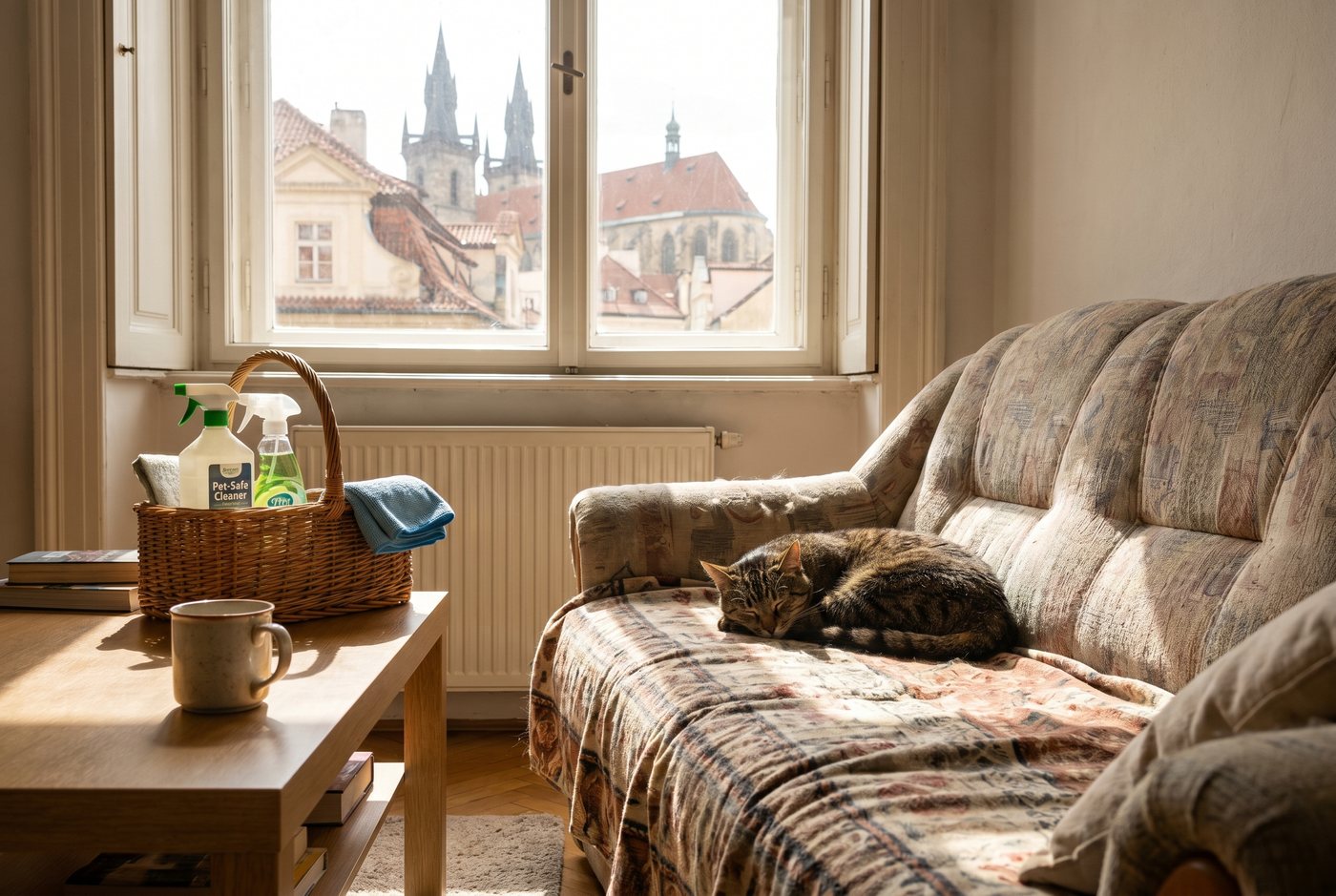
Cleaning an apartment with a cat is not the same as cleaning a normal flat and adding a lint roller at the end. Cat hair gets into textiles, litter dust travels farther than seems fair, food crumbs dry around bowls, and a faint litter box smell can sit in a small hallway even when the floor looks clean. The aim is not a showroom. A real home with a cat will always have a few signs of life. The point is to keep the apartment fresh, safe and easy to maintain without fighting your cat every Saturday morning.
Why a flat with a cat gets dirty differently
Cats make quiet mess. They do not leave muddy shoes by the door or plates in the sink. They step out of the litter box, cross the bathroom, jump onto the sofa, rub against a curtain and settle on a blanket. Nothing dramatic happens. Still, by the evening there is dust on the floor, hair on the cushion and a little trail of litter near the hallway.
That is why cleaning an apartment with a cat works better when you think in routes, not rooms. Follow the cat's daily path: litter box, favourite sleeping spot, feeding area, sofa, windowsill, scratching post. Most of the mess starts there. In a Prague studio or a panelák flat with one bathroom and not much ventilation, those small sources add up quickly.
Blaming the cat does not help. Better routines do. Once you understand where the hair, dust and smell actually come from, the cleaning stops feeling random. You do not need to clean everything harder. You need to clean the right places more often.
Cat hair: start with textiles, not the floor
Cat hair in an apartment has a nasty habit of coming back five minutes after you vacuum. The reason is usually simple: the floor was not the main source. The main source was the sofa throw, the blanket on the bed, the cat bed by the radiator or the lower part of the curtains.
Start with textiles. Use a slightly damp rubber glove or a rubber window squeegee on fabric. Pull in one direction and the hair will gather into little rolls you can pick up or vacuum. It looks too basic to work, but it works. Keep sticky lint rollers for clothes and last-minute fixes. They are not a serious plan for a whole sofa.
Only after that should you vacuum the floor. Work from top to bottom: windowsills, shelves, textile surfaces, then floors. If someone at home has allergies, a vacuum with a decent filter matters. It does not have to be the most expensive machine in the shop. What matters is cleaning the brush, emptying the container and washing or replacing filters when needed. A clogged vacuum mostly redistributes the problem.
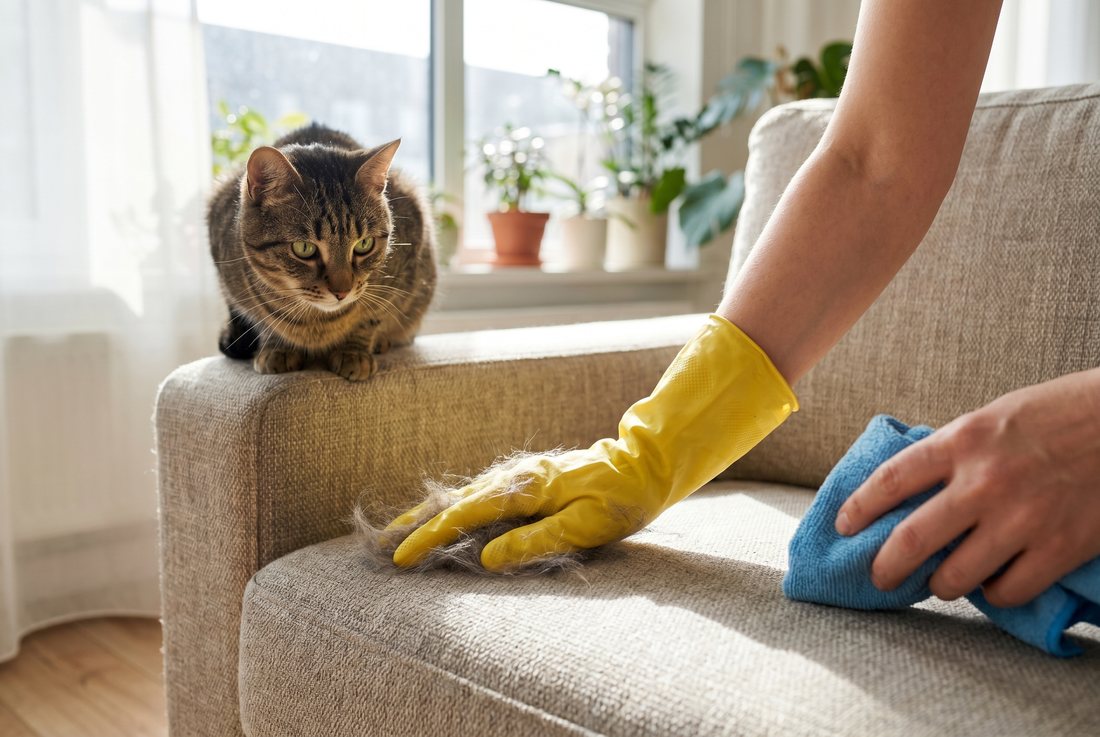
Wash the blanket or cover where your cat sleeps most often once a week. During shedding season, twice a week may be more realistic. Brushing the cat is part of cleaning too. Five minutes with a brush over an old towel can save ten minutes of vacuuming. Some cats enjoy it. Some act as if you have personally betrayed them. For the second group, keep it short and repeat often.
A small real-life example: a client in Vršovice kept blaming her dark sofa. Hair appeared on it every day. The actual culprit was a fleece throw folded over the backrest, where the cat slept every afternoon. After switching to a washable cotton cover and brushing the cat twice a week, the sofa stopped looking hopeless. A stronger vacuum would not have solved that.
Litter box smell and dust
Litter box smell is not fixed with perfume. Strongly scented litter, sprays and air fresheners often create a worse mix: urine plus artificial lavender. Cats have sensitive noses, and some will avoid a box if the smell bothers them. That creates a much bigger problem than a slightly plain-smelling bathroom.
Scoop every day. With more than one cat, do it twice if you can. Once a week, empty the box, wash it with warm water and a little mild detergent, rinse well and dry it before refilling. Plastic holds residue in scratches, so an old tray can keep smelling even when you clean it properly. At that point, replacing the box may be cheaper and saner than testing another deodorizer.
Placement matters in Czech flats. The bathroom is practical because the floor is easy to clean, but many bathrooms have weak ventilation or no window. A hallway can be better for airflow, but litter travels farther. A large litter mat in front of the box helps. Shake it out or vacuum it daily, otherwise it becomes a second litter box in slow motion.
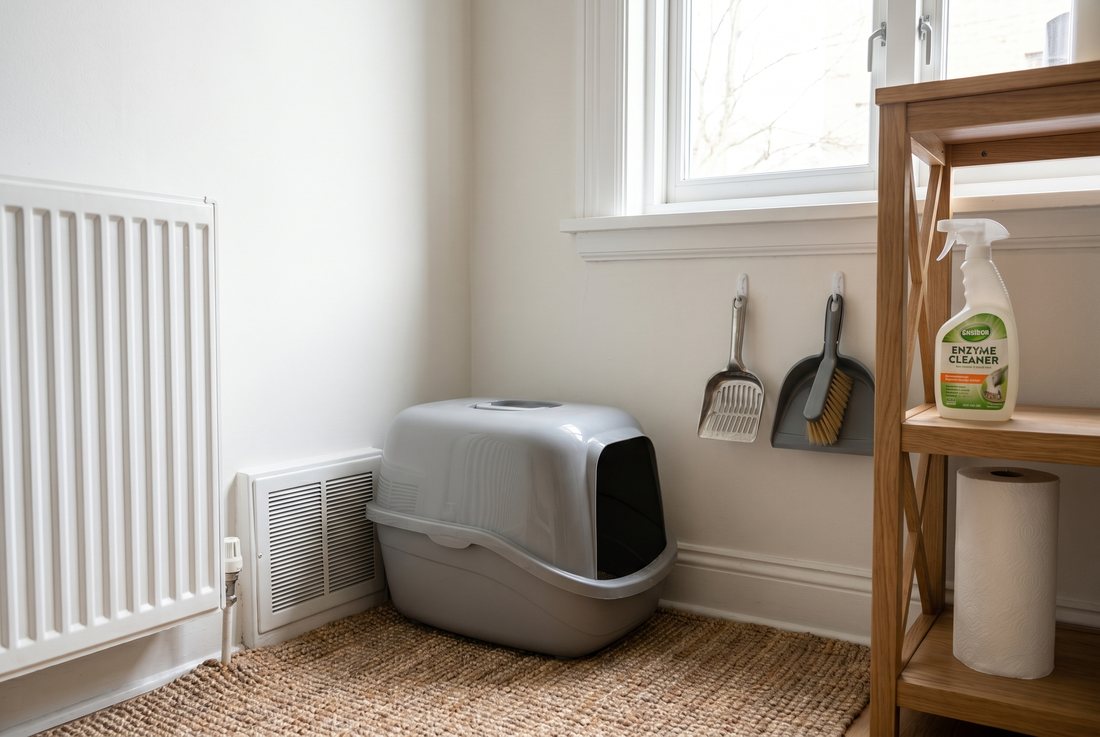
Fine clumping litter can create dust. After topping it up, ventilate for a few minutes. Do not sweep dry dust aggressively with a broom. You will send it into the air and breathe it in. Vacuum it or wipe it with a lightly damp cloth. If the smell keeps returning, check the surrounding walls, skirting boards and floor edges. Sometimes the box is clean but the area around it is not.
Pet-safe cleaning products: what to avoid
Pet-safe cleaning products are not just a label for nervous owners. Cats walk across wet floors, lie on windowsills and lick their paws. Anything left on a surface can end up on fur and then in the cat's mouth. Be careful with bleach fumes, harsh disinfectants, phenol-based products and essential oils. Tea tree, eucalyptus and strong citrus oils are especially poor choices around cats.
You do not have to clean with plain water only. For everyday surfaces, warm water, microfiber and a small amount of mild detergent are often enough. If the cat walks or sleeps on the surface, wipe it once more with clean water. Keep the cat away until the area is dry. This matters for floors, kitchen counters, windowsills and bathroom surfaces.
Read labels with the cat in mind. If a product promises heavy perfume or no-rinse disinfection and you want to use it where your cat sleeps, pause. Strong smell is not cleanliness. Cleanliness is removed dirt, fresh air and no chemical residue where paws go.
Kitchen, bowls and the feeding corner
Wet food starts to smell fast, especially in summer or in a warm kitchen. Wash bowls daily, and after every wet-food meal if possible. Ceramic and stainless steel are easier to clean than scratched plastic. Put bowls on a washable mat, not a fabric rug. Fabric absorbs water and smell, then quietly keeps both.
Use a separate cloth for the feeding area. Not the same one you used near the litter box. It sounds obvious, but in a hurry people do it. Colour coding helps: one cloth for kitchen surfaces, one for the litter area, one for floors. Simple systems are the ones people actually keep.
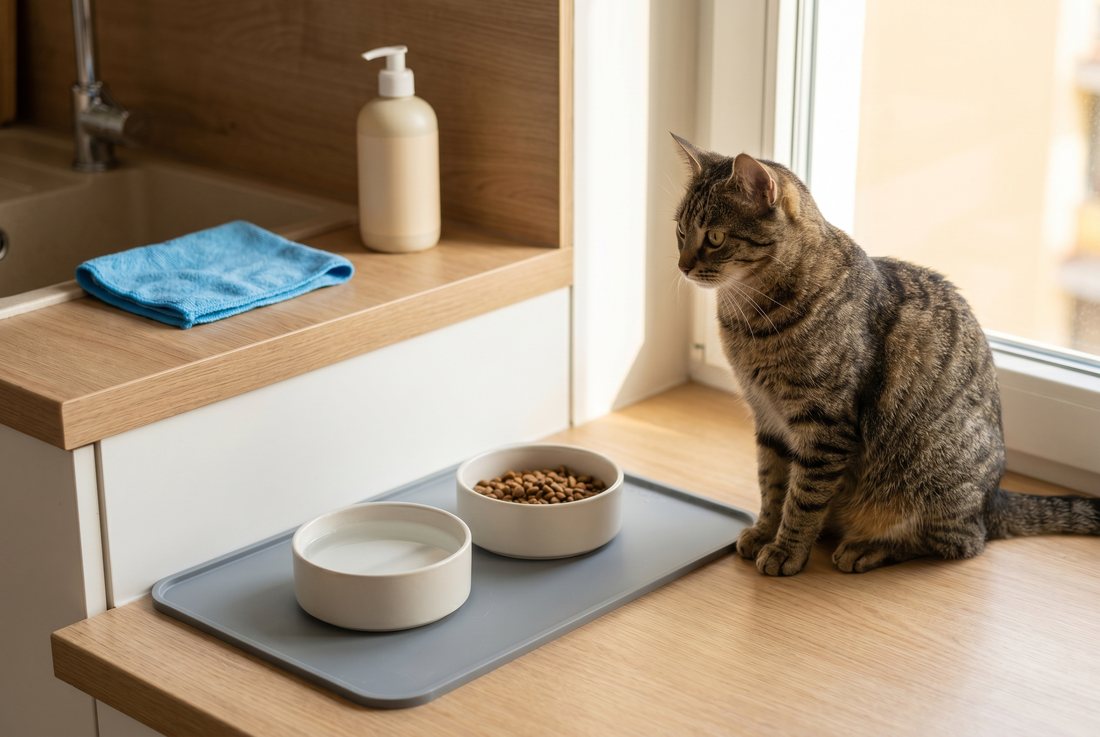
Do not scrape dried wet food aggressively if you can avoid it. Wet it, wait a minute, then wipe. If you see ants or small flies near the bowls, check under the cabinet edge and behind the kickboard. Cats push dry food out of bowls with their paws and then lose interest. The kitchen may look clean while a few hidden crumbs keep causing smell.
Sofa, scratching post, cat bed and curtains
Textiles hold cat odour longer than hard surfaces. The sofa, scratching post, cat bed and curtains are basically the smell map of the apartment. A lint roller removes visible hair, but dust and odour stay deeper in the fabric.
Rotate washable covers. One set is in use, one is clean and dry. Wash the cat bed according to its label, but go easy on perfumed laundry products. Cats often return to a place because it smells familiar. If the bed suddenly smells like a detergent aisle, the cat may abandon it and move to your clean laundry instead. Annoying, but very cat-like.
Steam can help on some fabrics, but test first. Some sofas develop water marks or warped texture after steam cleaning. Use a hidden spot before doing the visible parts. Vacuum the scratching post with an upholstery attachment, then pull remaining hair away with a glove. For scratched furniture, cleaning alone will not fix the behaviour. Protect corners physically with a throw or furniture guard and give the cat a better scratching option nearby.
Curtains are easy to forget. The lower edge collects hair as the cat passes by. Once a month, vacuum curtains on low power or wash them if the fabric allows it. In flats near a busy road, the difference is obvious. Dust from traffic and cat hair make a stubborn pair.
A simple daily and weekly routine
The best routine for cleaning a home with pets is boring. Ten minutes a day, one deeper reset a week. It works better than waiting two weeks and then trying to rescue the whole flat in one exhausting session.
Daily: scoop the litter box, wipe the feeding area, remove hair from one or two hotspots, and air the flat for a few minutes. Usually the hotspots are the sofa and the cat bed. If you have a robot vacuum, use it between bigger cleans, but do not expect it to manage the litter area or upholstery on its own.
Weekly: wash the favourite blanket, vacuum under the sofa and behind doors, clean the litter box properly, check the scratching post, and wipe skirting boards near the litter area. Monthly: look under the bed, behind the washing machine, behind the shoe cabinet and under the kitchen unit. That is where lost litter, dry food and hair go to retire.
Keep a small cleaning kit close to where the mess happens: rubber glove, microfiber cloths, waste bags, mild detergent, a handheld vacuum if you have one. If everything lives in a cupboard at the other end of the flat, you will postpone the job. If the tools are nearby, the job takes two minutes.
When to ask for cleaning help
Sometimes the routine is not enough. Multiple cats, allergies, a baby at home, moving flats, guests coming after a long busy period, or a deep clean that has been postponed for months. Asking for help is not failure. A professional clean can reset the apartment so your daily routine becomes manageable again.
If you post a request on ČistýKout, mention the cat from the start. Say where the litter box is, whether the cat should stay in one room, which products you do not want used, and what bothers you most: hair, litter dust, smell, textiles, kitchen mess or a neglected deep clean. A cleaner or cleaning company can then arrive prepared.
This is especially useful for nervous cats. Some hide from the vacuum. Others supervise every cloth and bucket. When the cleaner knows this in advance, the visit is calmer for everyone. The goal is not a home without a single hair. The goal is a home where you can breathe, relax and still love the cat after it kicks litter onto a freshly wiped floor.
If keeping up with cat-related cleaning is too much, post a request on ČistýKout and find a cleaner or cleaning company experienced with pet households. You will save time, and your cat will probably appreciate a home that does not turn into a once-a-month chemical storm.