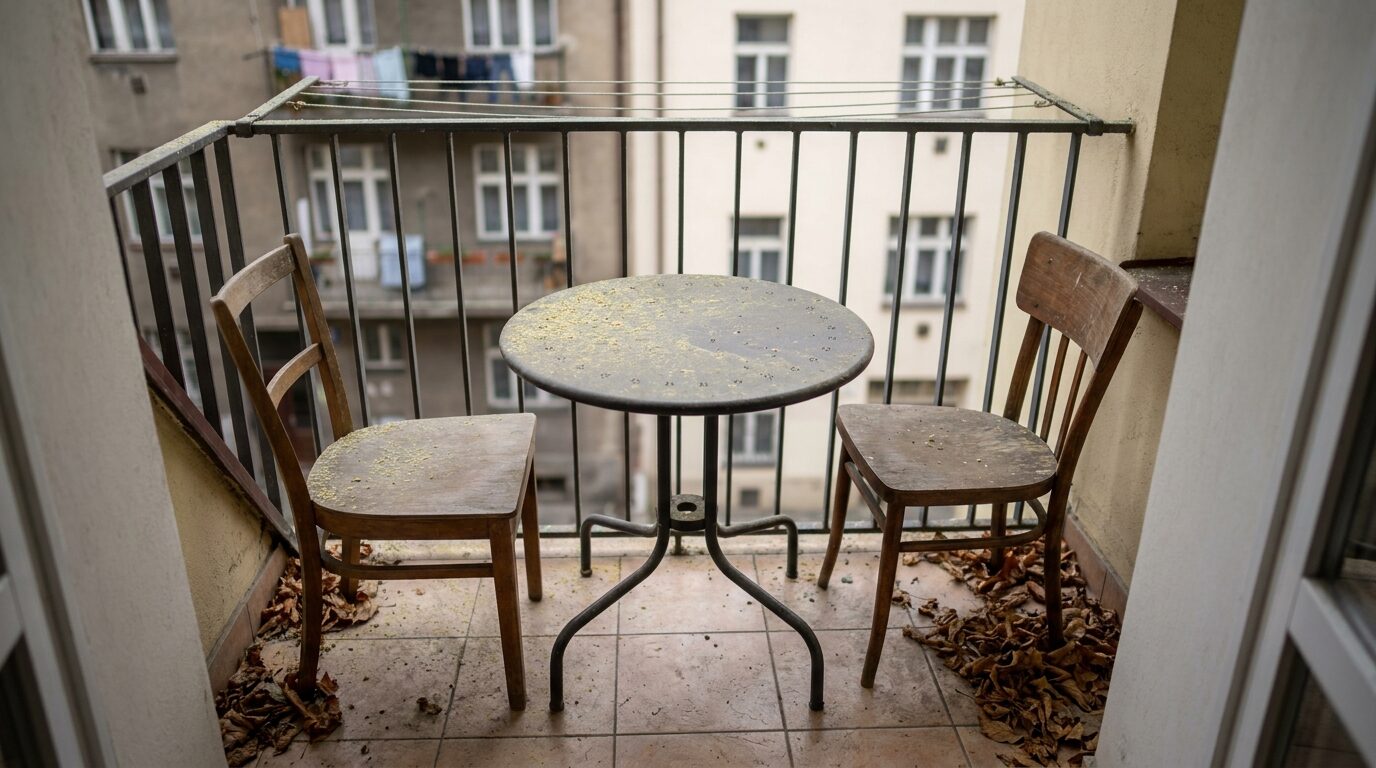
Open a city balcony in May and the dirt shows up fast. Balcony cleaning in Prague is usually not about a few dry leaves, and cleaning balcony after winter rarely stays a five-minute job. It is more often a layer of pollen, fine dust from the street, dried rain marks, and sometimes pigeon mess on the floor, railing, or furniture. That mix is exactly why a quick splash of water rarely fixes the problem.
Why the balcony looks dirtier than it first seems
A balcony in the city collects dirt in layers. Pollen lands first. Fine grey dust settles on top. Then light rain turns both into a thin film that sticks to the floor, the table, the railing, and the corners near the wall. In Prague you notice it even more if the flat faces a busy street, tram line, or a building site nearby.
At first glance it can look like ordinary dust. Wipe one spot with your hand and you see the real state of it. The surface feels sticky, not just dirty. That is the point where many people realise the balcony was not only unused through winter, it was slowly gathering a season's worth of residue.
Normal dust is unpleasant. A hygiene issue starts somewhere else. Pigeon droppings, damp corners, blocked drains, feathers, and old grime under planters need a more careful approach. The obvious middle of the floor is rarely the worst part. The real mess is usually at the edges, behind furniture, and around the places nobody touched since autumn.
In Czech cities the pattern is familiar. A balcony in Karlín, Smíchov, Nusle, Brno-střed, or near a main road in Ostrava gets dirty in a different way than a quiet terrace by a garden. Traffic dust and pollen keep returning. If birds also use the railing as their regular stop, the first spring clean becomes much bigger than people planned.
What to prepare before you start cleaning
You do not need expensive products for how to clean balcony surfaces well. You need basic tools and the right order. Put together sturdy gloves, a bucket, a soft or medium brush, microfiber cloths, paper towels, rubbish bags, and a mild cleaner. Lukewarm water with a gentle surface product is enough for most jobs.
Go carefully with strong chemicals. On a small balcony the smell stays with you, and harsh cleaners can damage painted metal, fabrics, wood, or grout. Mild and controlled works better here.
Think about the material before you start scrubbing. Tile is usually forgiving. Wood is not. Painted metal railings look durable but scratch more easily than people expect. Plastic chairs and tables are easy to wash, yet they dry with marks if you leave them in hot direct sun.
If you live in an apartment building, keep the setup neighbour-safe. Dirty water should not run over the edge onto somebody else's windows, laundry, or balcony floor below. That sounds basic, but every year someone learns it the hard way.
Clear the space first. Move planters, folding chairs, lanterns, mats, and boxes. A lot of the dirt sits exactly under the things that stayed outside all winter.
How to remove pollen, city dust, and droppings step by step
Start dry. That one step saves time. If you pour water over pollen and street dust straight away, the whole balcony turns into grey paste. Sweep or vacuum loose dirt first. Pick up leaves, feathers, and debris from corners. Use a smaller brush around the drain and along the wall.
Treat pigeon droppings separately. For pigeon droppings cleaning, dampen the area lightly, wait a few minutes, then remove the residue with paper towels or a cloth that goes straight to a hot wash. Do not scrub it dry. Do not use the same cloth on the table or chair arms after that.
Once the loose dirt is gone, move to wet cleaning. Start with the railing because anything from above will drip down anyway. Rinse the cloth often. A dirty cloth only spreads the grime around.
On the floor, clean in smaller sections. A brush, a little cleaner, and controlled water are usually enough. You are not trying to flood the balcony. You are trying to loosen the film and remove it without making a mess for the flat below.
Do not ignore the drain. During spring patio cleaning this is one of the spots people skip most often. Pollen collects there. Fine grit from the street does too. Add a bit of potting soil and the drain can block surprisingly fast. If you leave it like that, the next stronger rain sends dirty water back across the balcony floor.
For a badly neglected balcony, split the work into two rounds. The first removes the heavy dirt. The second handles stains, marks, and the final finish. It sounds slower, but it is usually faster than fighting years of build-up in one go.
How to clean balcony furniture and textiles without damaging them
Furniture needs its own pass. Plastic tables and chairs respond well to a soft sponge, a mild cleaner, and a wipe dry at the end. Metal furniture collects dark dust around joints and screws. Wood needs a gentler hand. Use a slightly damp cloth and a product suitable for outdoor wood, not a strong kitchen degreaser.
Cushions and seat pads often hold more dust than people expect. They may look only lightly dirty. Shake them out or vacuum them and the amount of trapped pollen becomes obvious. Treat spots locally instead of soaking the whole insert.
Let textiles dry in shade with airflow. Direct afternoon sun can leave marks and make the fabric feel stiff. Anyone who has rushed this once usually does not repeat it.
I would not underestimate the textiles. They often decide whether the balcony feels truly clean. You can wash the floor well and still ruin the result by putting back a dusty cushion and a dirty mat.
If you want pollen on balcony surfaces to return more slowly, keep the maintenance simple. Wipe the table and railing once a week. Check the corners after rain. Do not leave cushions outside uncovered for long stretches. That small routine matters more than people think.
The most common mistakes during spring balcony cleaning
The first mistake is using harsh chemistry for everything. It is unpleasant in a small space and it can damage finishes. The second is washing dirt away without thinking where it goes. What leaves your balcony may land on your neighbour's below.
Another mistake is treating the drain and corners as minor details. They are not. Those are the places where the old dirt stays longest.
People also rush the timing. Wind blows dust back while you work. Strong sun dries cleaner too fast and leaves streaks. Late morning or early evening is usually easier.
One more thing. Do not use one cloth for droppings, railings, the table, and soft furniture. Separate the risky parts from the ordinary wipe-down. It is a small habit, but it makes the whole cleanup more sensible.
When professional help is worth booking
Some balconies are simply past the quick DIY stage. If there are thick layers of dirt, a lot of pigeon contamination, neglected textiles, stained flooring, or a larger terrace combined with window cleaning, professional help can save both time and energy.
The same applies when you want the balcony, windows, frames, and outdoor elements cleaned together in one seasonal visit. That kind of reset is hard to do well in a rush, especially on a higher floor.
If you are booking help, describe the job properly. A short message saying "I need my balcony cleaned" is too vague. Include the size, floor material, furniture type, whether there are pigeon droppings, whether you need the drain cleared, and whether the work also includes windows or blinds. A couple of photos usually make planning much easier.
This is exactly the point where many households in Prague decide not to spend half a Saturday scrubbing corners and carrying dirty cloths in and out of the flat. Fair enough.
If you want the space ready for summer without guessing what to tackle first, Čistýkout is a Prague-based cleaning option you can contact through a no-pressure enquiry form. A short description and a few photos are usually enough to tell whether a standard clean will do or whether the balcony needs a more thorough seasonal reset.