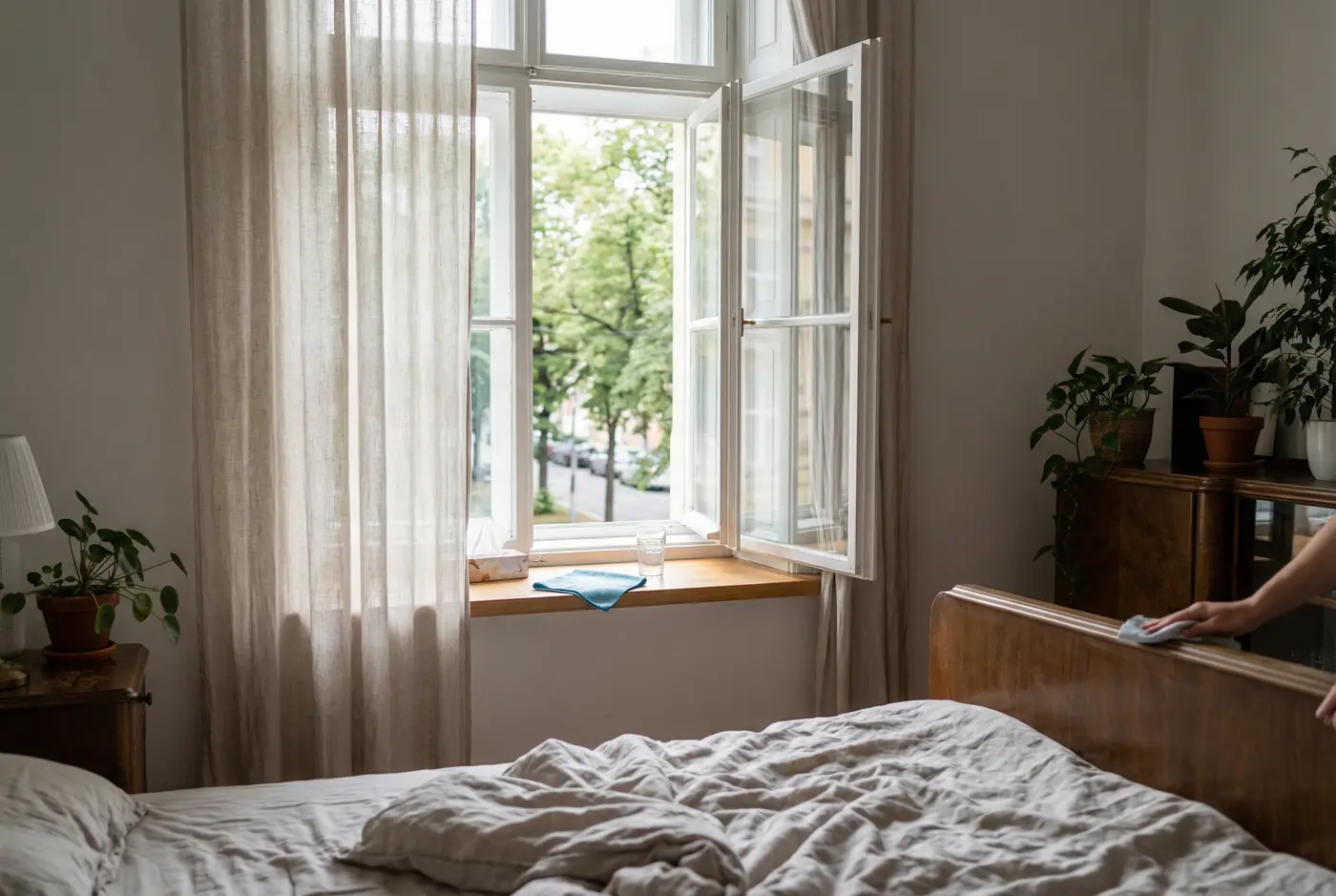
Cleaning during pollen allergy season follows a different logic from ordinary spring cleaning. If birch, grass, or other pollen hits you hard, the goal at home is not just to make things look nice. It is to reduce how much pollen you keep bringing in, where it lingers longest, and whether your cleaning routine removes it or simply throws it back into the air. That is a very different problem.
A lot of people open the windows in the morning to air the flat out, and that does make sense. During allergy season, though, fresh air can quickly become another layer of pollen on the windowsill, the bedding, and every soft surface nearby. In one apartment in Dejvice this happened almost every evening. The living room looked fine, but the bedroom kept triggering sneezing. The problem was not a lack of cleaning. It was cleaning the wrong zones in the wrong order.
Why pollen stays inside longer than most people expect
Pollen does not enter only through an open window. It clings to clothing, hair, shoes, pet fur, bags, and laundry drying close to outside air. Then it settles into curtains, bedding, the headboard, carpets, and sofas. If you go over those areas with a dry duster, a large share of the particles simply rises again and spreads through the room.
That is why allergy season often calls for a smart rhythm rather than a heroic one-off effort. You do not need to deep-clean every corner of the flat every day. You need to know where each bit of effort has the biggest payoff.
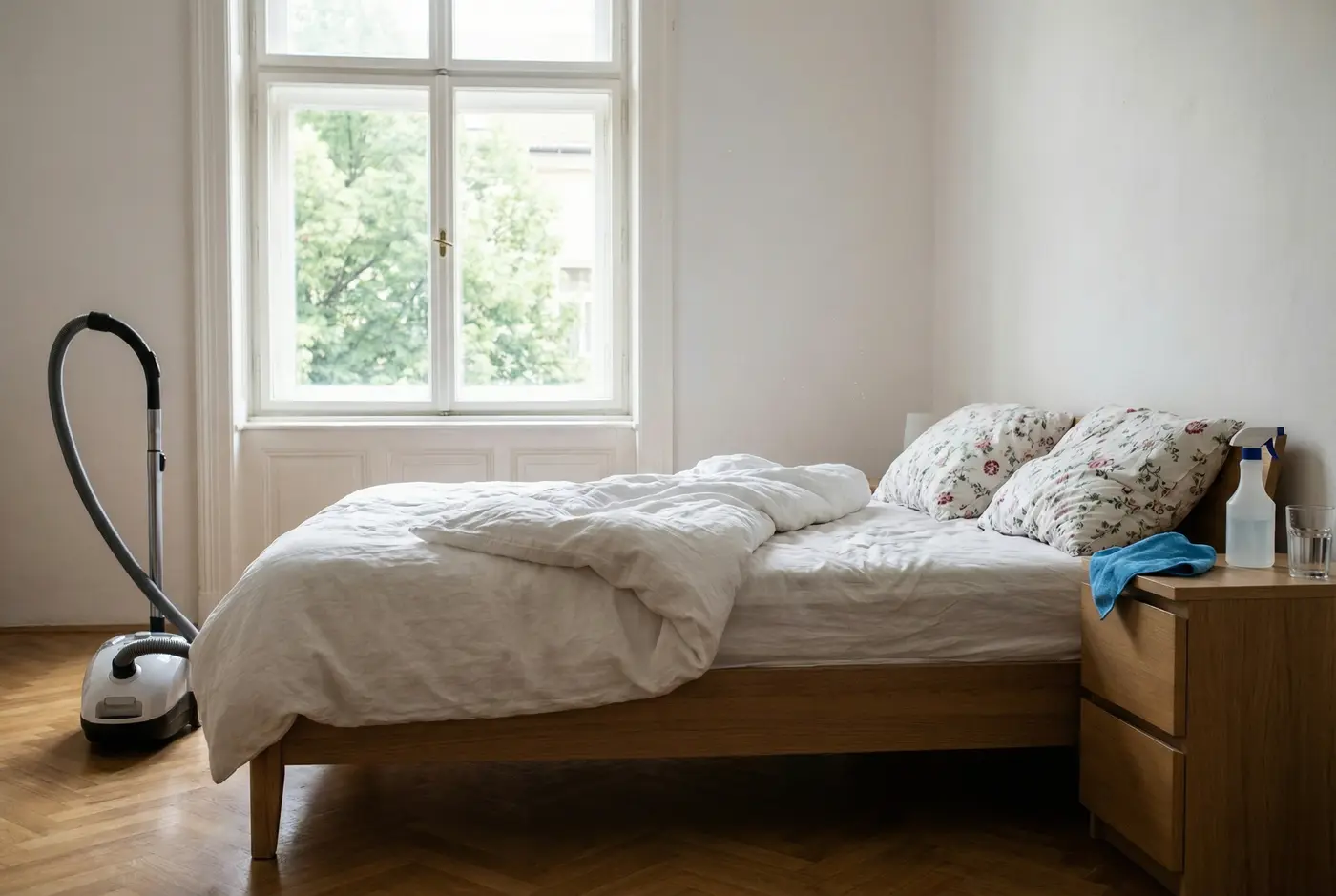
Which zones matter most when allergies are part of the picture
Bedroom first
Start with the bedroom. If pollen is sitting in the bedding, pillows, curtains, or on the floor around the bed, you will notice it most at night and first thing in the morning. People wake up tired, congested, and irritated even though the rest of the flat may look perfectly tidy. With allergies, the first priority is not the area that photographs best. It is the place where you breathe for hours without a break.
The entry zone
The second important zone is the entrance area. Shoes, jackets, bags, sports clothes, and anything else that comes in from outside often brings more pollen with it. If those layers are left to spread deeper into the flat, you end up fighting the problem across a much larger surface area. Sometimes the helpful change is wonderfully ordinary: not dropping outdoor clothes over a chair in the bedroom or on the sofa.
Textiles and soft surfaces
Curtains, throws, blankets, upholstery, and carpets are storage for pollen during the season. You may barely see it, but your body notices fast. In homes with children, the same goes for soft toys, sofa blankets, and fabrics that get washed when they start to look dirty instead of when the season demands it.
Window sills and floors
Window sills, the area around windows, and the floor path from the entrance to the bedroom are other priority spots. Regularity matters here. A short, well-timed wipe and vacuum usually help more than a giant Saturday cleaning attack that just kicks half the pollen back into the air.
How to clean without stirring everything back up
Dry dusting is risky when allergies are involved. A slightly damp microfibre cloth, sensible vacuuming, and working from high surfaces down is usually safer. If you vacuum the floor first and then disturb pollen on the sill or shelf above it, part of the job has to be repeated. Ventilation timing matters too. Sometimes a short, intense airing period when outside pollen is lower works better than leaving the window open for the whole afternoon.
The same caution applies to home hacks. Not everything that sounds simple or eco-friendly is useful for allergy relief. Some tricks only move pollen from one surface to another. Weekdays also need a routine people can actually sustain. A short evening reset in the bedroom, regular bedding changes, a quick wipe in the entry area, and sensible textile care do more than one exhausting cleaning marathon.
What is worth washing, changing, and checking more often
Bedding, throws, light curtains, sofa blankets, doormats, pet textiles, and the spots where outdoor items land deserve more attention during the season. You do not need to wash everything every other day. Hardly anyone can keep that up for long. But for items that stay close to your face or hold pollen especially well, shortening the interval makes a real difference, especially when someone in the home is sleeping badly or waking with symptoms.
In some households only one person is allergic. That can be surprisingly tricky because everyone else feels the flat is still broadly fine. But the gap between "it is manageable" and "I sleep badly every night" is huge in practice. In those homes, it helps to spend less time debating and more time shaping the routine around the bedroom and the entry zone.
When professional cleaning can take some of the spring pressure off
If pollen keeps circling back indoors, the home is heavy with fabrics, your weekends disappear into washing and wiping, and you still do not feel real relief, it may be time to hand part of the workload over. CistýKout helps with regular cleaning in a way that makes allergy season less punishing at home. This is not about perfect presentation for guests. It is about a calmer bedroom, an easier week, and fewer evenings spent feeling as if you are still fighting the air after you have already shut the door behind you.