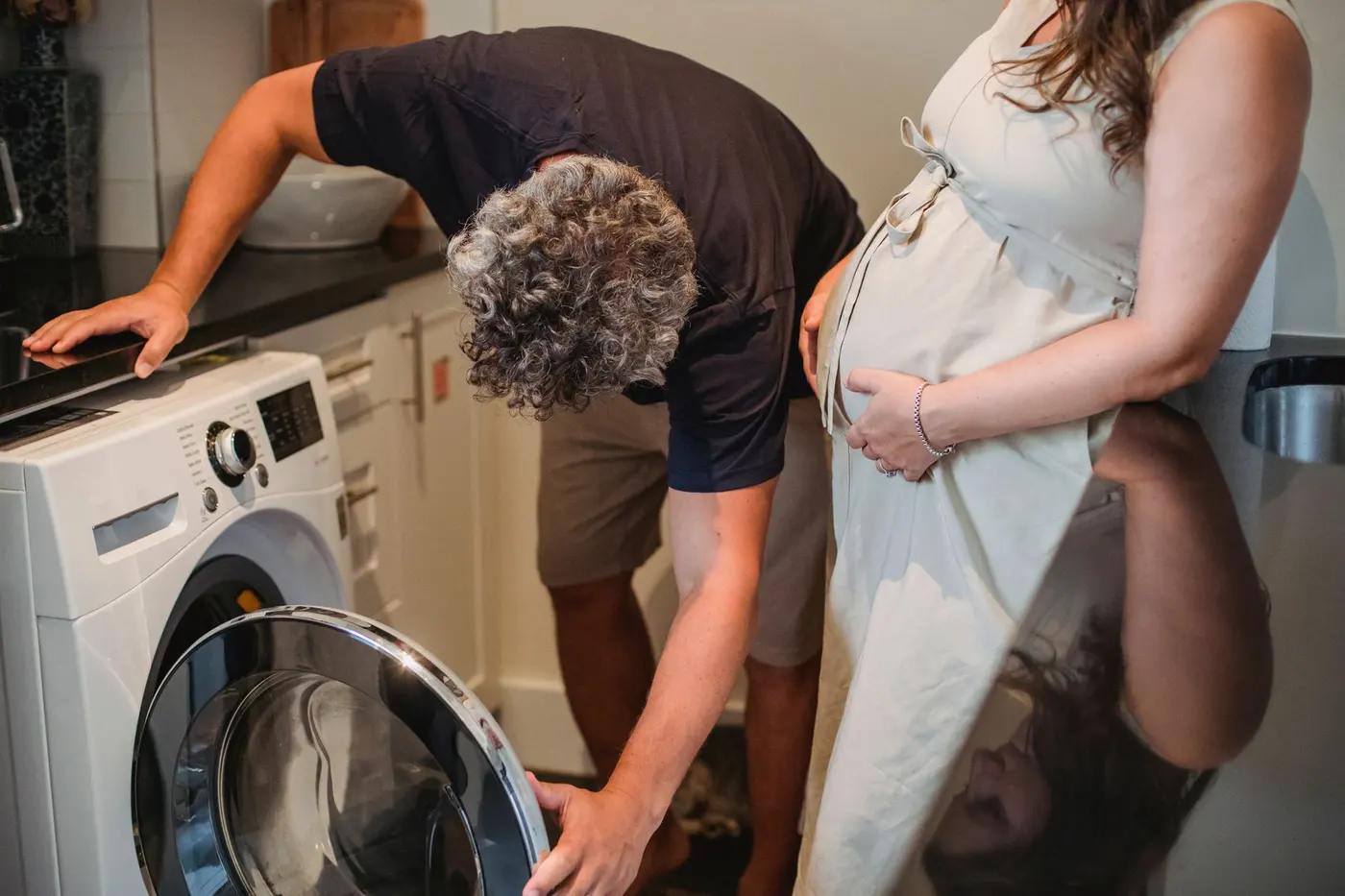
Cleaning during pregnancy does not have to begin with a catalogue of products you should avoid. In the third trimester, a more useful question is: which jobs drain you now, which rooms need to work every week, and what can wait without guilt? A clear answer gives a house cleaner a realistic scope instead of the impossible instruction to “do everything.”
Which jobs should you hand over first?
Start with the work that leaves you sore or forces you to stop halfway through. Floors, bathrooms and the kitchen usually come first. Vacuuming under a bed, mopping around chairs, scrubbing a bath and reaching low cupboards all involve bending, kneeling or carrying equipment. Those are better candidates for delegation than folding laundry while seated or sorting a small drawer.
I once helped a client in Prague's Vršovice district turn “I can't keep up with the flat” into an actual booking. She did not need every room perfected. She wanted a clean bathroom, wiped kitchen surfaces and floors without crumbs. Her partner took over the cat litter and bins. Two hours covered the chores that had been taking most of her energy. That distinction matters: you are not buying an ideal home. You are buying relief.
A first visit can include a catch-up job such as limescale around taps, greasy splashbacks or dusty skirting boards. Regular home cleaning should then become lighter: vacuuming and mopping, plus the bathroom, toilet and kitchen surfaces. Windows, the inside of the oven, the tops of tall cupboards and moving heavy furniture normally need a separate agreement. The cleaner may need more time or different equipment.
I would hand over anything that requires a chair or stepladder without hesitation, including ceiling lights, high shelves and curtains. Personal limits differ, though. Ask your midwife or doctor about restrictions relevant to your pregnancy rather than relying on a general online checklist.
Describe the result, not an endless set of instructions
A useful brief fits on half a page. Divide it into “every visit” and “if time remains.” The first group might cover the bathroom, toilet, kitchen worktop, vacuuming and accessible floors. For the optional group, choose one rotating job: doors and switches, a bookcase, cabinet fronts or a more detailed clean of the shower enclosure.
Use ordinary language. “In the bathroom, please clean the basin, bath, toilet, mirror and floor” works better than ten instructions about sponge choice and the precise order of work. Micromanagement tires both people. Exceptions do matter: no degreaser on the wooden worktop, no acidic product on brass taps, and leave the cot alone for now.
Standard cleaning often excludes windows, ironing, laundry, cupboard interiors, the oven and fridge, decluttering, and removal of bulky rubbish. Every independent cleaner or service draws the boundary slightly differently, so check before booking. Adding “and perhaps the oven if you have time” at the door can extend both the visit and the bill.
Here is a message a cleaner can actually use: “Two-room flat, 58 m², Prague 7. Priorities are the bathroom, kitchen and floors. Vacuum the bedroom; skip the study. If time remains, please wipe the kitchen cabinet fronts. No windows or oven.” Nobody has to read your mind.
Your products or the cleaner's equipment?
Settle this before the first visit. Some cleaners bring products and cloths; others expect to use the client's vacuum, mop and cleaning supplies. Either arrangement can work. Improvising in the hallway because the vacuum bag is full or there is no limescale remover does not.
If smells bother you during pregnancy, be specific: no perfumed spray, no chlorine-based product, and open the kitchen window while working. “Use only eco products” means different things to different people. Keep products in their original labelled containers and never mix them. Questions about a particular product or a medical symptom belong with your doctor, not a cleaning blog.
Before the baby arrives, move household chemicals from an open cupboard beneath the sink to a higher, secured cabinet. This does not need to become another exhausting weekend project. At the first visit, discard empty bottles, check the caps and agree where supplies go after use.
Preparing for the first visit without cleaning first
You do not need to clean for the cleaner. You do need to make the areas accessible. Put clothes, cables and loose toys from the floor into one basket. Load the dishwasher or move dishes to one side of the worktop. This is not about hiding mess. You are paying for cleaning, not for ten minutes of deciding where every receipt belongs.
Allow five to ten minutes for a quick tour. Point out delicate surfaces, a loose socket, the supply cupboard and rooms that are off limits. Mention a dog frightened by the vacuum, a cat that slips into the corridor, or a balcony door that must stay shut. An older Prague flat may have vulnerable wooden floors; a new-build may have fussy matt-black taps. One warning is easier than an argument afterwards.
Confirm the order once more. If time runs short, should the bathroom and kitchen be completed, or should the whole flat at least be vacuumed? That choice is yours. The cleaner should not have to guess which unfinished task would bother you most.
Being at home, handing over keys and protecting privacy
For the first visit, I recommend being home for at least part of the appointment. You do not need to follow the cleaner around. Stay available for a couple of questions, then check the result together at the end. If you are working in the study, make that room off limits for the day instead of carrying your laptop from room to room.
Later, a house cleaner during pregnancy can work while you are out. Key access needs simple rules: who holds the key, whether it may be copied, how the alarm is handled and whom to call if something goes wrong. Do not label keys with the full address or post the alarm code in a group chat. Agree on what happens if either side cancels at short notice.
Privacy is not an embarrassing subject. The bedroom can be excluded. Drawers and wardrobes can remain closed. Put documents, jewellery, medication and personal papers together in a secure place. If you use an indoor camera, disclose it before the visit and never point it towards a place where someone may change clothes. You can also prohibit photos of the flat or before-and-after posts on social media.
What should change after the baby arrives?
The same plan may stop working within a week of the birth. That is normal. Perhaps polished mirrors matter less, while the floor around the sofa, the bathroom and the bin need more attention. One household moves from fortnightly to weekly visits; another keeps the frequency but limits the work to two essential rooms.
Agree on quiet tasks and noisy blocks. Vacuuming can happen during a pram walk, with dusting, the bathroom and kitchen handled during a nap. No schedule will work identically every Thursday. A short morning message is enough: “Please start in the bathroom today; the baby is asleep. We'll leave vacuuming until after eleven.”
After two or three visits, review scope, time and price. Has folding laundry crept in? Does the kitchen take longer because of bottles? Decide what fits in the booked time and which existing task a new one replaces. The workload should not expand automatically just because a baby is home.
Pregnancy household help is not an admission that you have failed to manage your home. It is a sensible redistribution of work while your body, energy and daily rhythm are changing. Begin with three priorities, agree the boundaries and treat the first appointment as a trial that can be adjusted.
If you need a Prague-based option for cleaning before baby arrives, send a no-obligation enquiry through the Čistýkout contact form. Include the flat size, neighbourhood, three priorities and preferred frequency. That is enough to start a useful conversation.