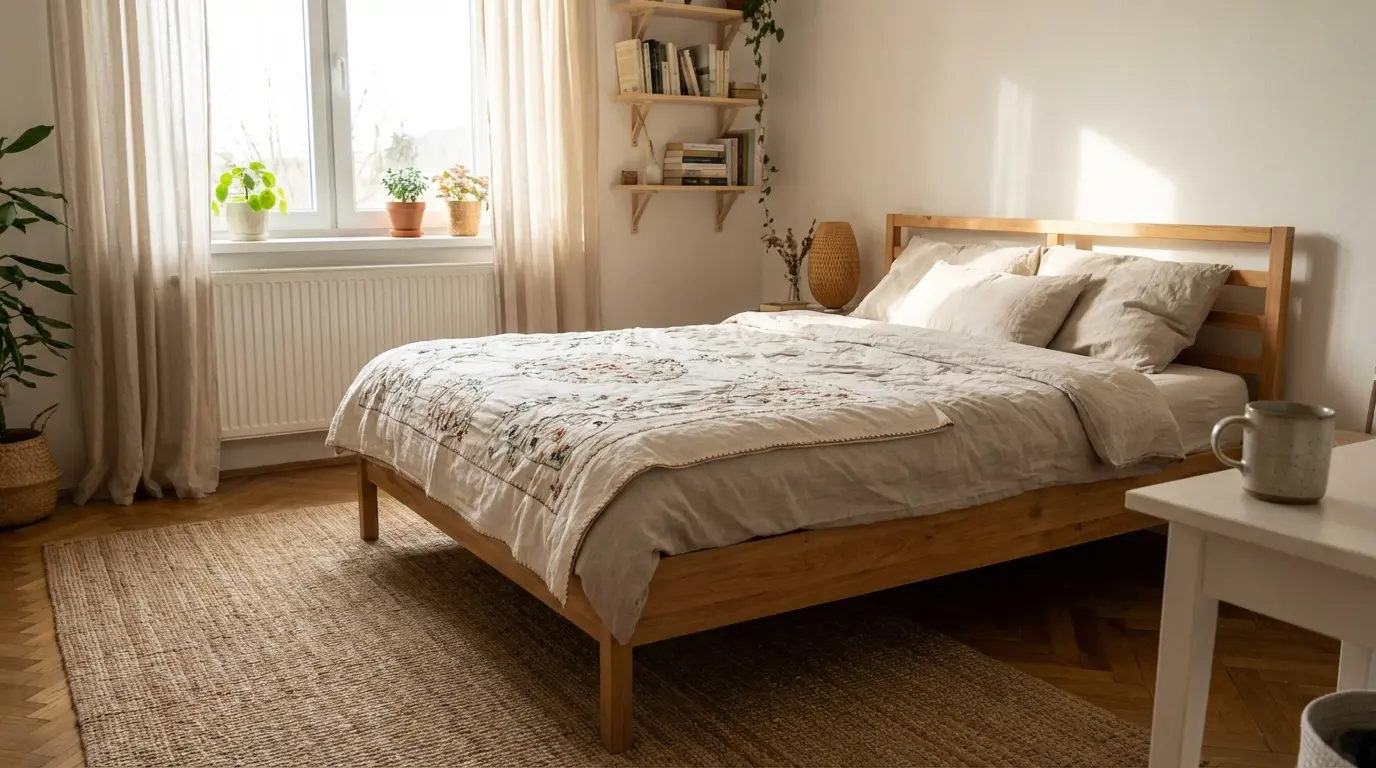
If you live with dust allergy symptoms, the pattern is frustratingly familiar. You clean on Saturday, wipe the shelves, vacuum the floor, maybe even spray something that smells fresh, and then Sunday morning starts with sneezing anyway. That is exactly where cleaning for allergy sufferers becomes different from ordinary tidying. The goal is not a sterile home. That would be unrealistic. The goal is a lower allergen load, less dust moving back into the air, and a routine that actually helps without leaning on harsh chemicals.
Most households are not doing anything absurdly wrong. They are just chasing the visible mess. The shelf looks dusty, so it gets a quick swipe. The floor has crumbs, so it gets vacuumed. Meanwhile the fine dust stays in the mattress, the curtains, the upholstered headboard, and the spots behind furniture that nobody wants to deal with on a Wednesday night. Dry dusting can fling particles back into the air. A weak vacuum can do the same. And the bedroom usually gets less thought than it deserves.
Why ordinary cleaning often is not enough for allergy sufferers
Most people think the answer is simple: clean more often. Sometimes that helps, but not nearly as much as changing the method. Dust is not just the layer you notice on a black shelf or TV stand. It settles in curtains, mattresses, upholstered chairs, headboards, rugs, blinds, skirting boards, lamp shades, and under the bed where many people barely look until a full seasonal clean.
A very normal example: someone quickly wipes furniture with a dry duster every evening because the room looks better immediately. But the next morning they still wake up congested and sneezing. That makes sense. Fine particles were lifted, not removed, and the bedroom textiles kept holding onto the real source of irritation.
This is also why people sometimes waste money on too many products. Relief often comes from changing the routine, not from buying ten bottles with promises on the label. For allergy-friendly cleaning, technique matters more than perfume, foam, or a stronger scent that makes the room feel "clean."
Here is the catch: people judge a room fast. Looks tidy? Good enough. Allergy symptoms are less polite. A room can look perfectly fine and still be full of dust in the places nobody notices on a quick walkthrough.
How to remove dust without sending it back into the air
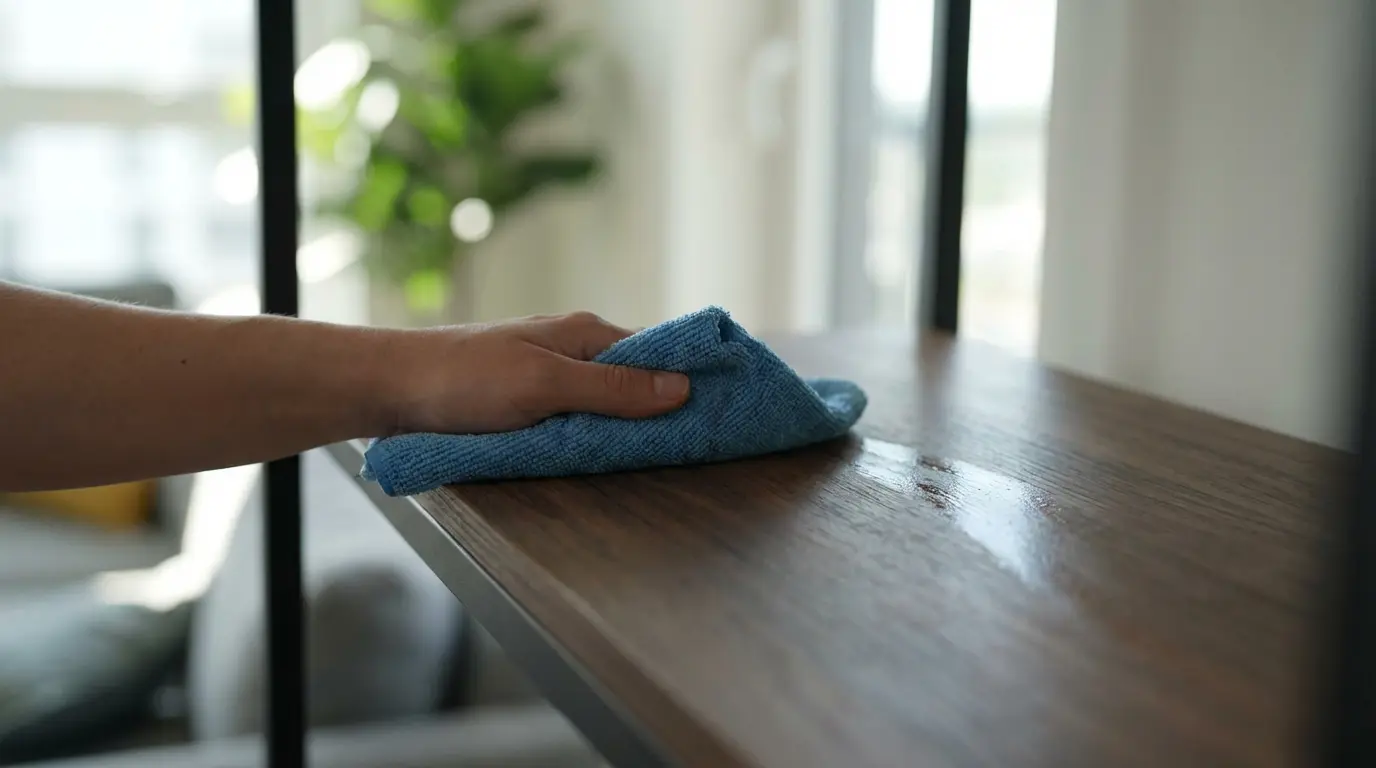
One simple change does a lot of heavy lifting: swap the dry duster for a damp microfiber cloth. Wet dusting usually works better because it grabs the dust instead of batting it around the room. You do not need soaked surfaces for this. A lightly damp cloth is usually enough, often with plain water or a mild unscented cleaner.
Order matters too. Work from top to bottom. Start with the highest shelves, lamps, wardrobe tops, picture frames, and blinds. Then move to tables, bedside cabinets, windowsills, and lower surfaces. Finish with skirting boards and the floor. If you start at floor level and then dust the upper surfaces, you just create extra work.
A practical weekly routine might look like this:
- air out the room briefly with a stronger burst of ventilation,
- wipe surfaces with a damp microfiber cloth,
- cover the obvious spots and the easy-to-forget ones like lamps, shelves, skirting boards, and bedside tables,
- vacuum the floor edges, under the bed, under the sofa, and around upholstered furniture,
- mop hard floors at the end.
Then every two to four weeks, go deeper:
- vacuum behind and around radiators,
- wipe blinds or washable shades,
- clear dust from wardrobe tops,
- vacuum upholstery and the mattress surface,
- check decorative textiles and storage baskets that silently collect dust.
Timing also makes a difference. Try to vacuum right after dusting instead of hours later. If dust is already disturbed, it makes sense to remove it in the same session rather than letting it settle somewhere else.
The bedroom is the main battleground against dust mites
If one room deserves priority, it is the bedroom. An allergy-friendly bedroom is usually more important than a spotless hallway or a shiny kitchen worktop. You spend long uninterrupted hours there, breathing close to the mattress, pillow, duvet, curtains, and any nearby fabric that can hold dust and allergens.
This does not mean stripping the room until it looks cold. It means being selective. Heavy curtains, decorative throws, extra cushions, open textile storage, thick rugs beside the bed, and unused blankets can all make the room harder to keep under control. In a smaller flat, that clutter builds up quickly.
The basics are not glamorous, but they work:
- wash bed linen regularly,
- ventilate sensibly,
- reduce unnecessary fabrics near the bed,
- vacuum under the bed and around the headboard,
- clean the mattress and upholstered pieces from time to time.
For many households, this is where the biggest improvement starts. People focus on living room surfaces because guests see them. Allergy symptoms often point to the bedroom instead.
This is also the point where professional cleaning can make sense. Deep cleaning a mattress, an upholstered bed, or a sofa is not always easy to do well with ordinary home tools. If symptoms keep returning despite a decent routine, professional help can fill that gap.
What equipment is worth it: HEPA vacuum, air purifier, steam cleaning
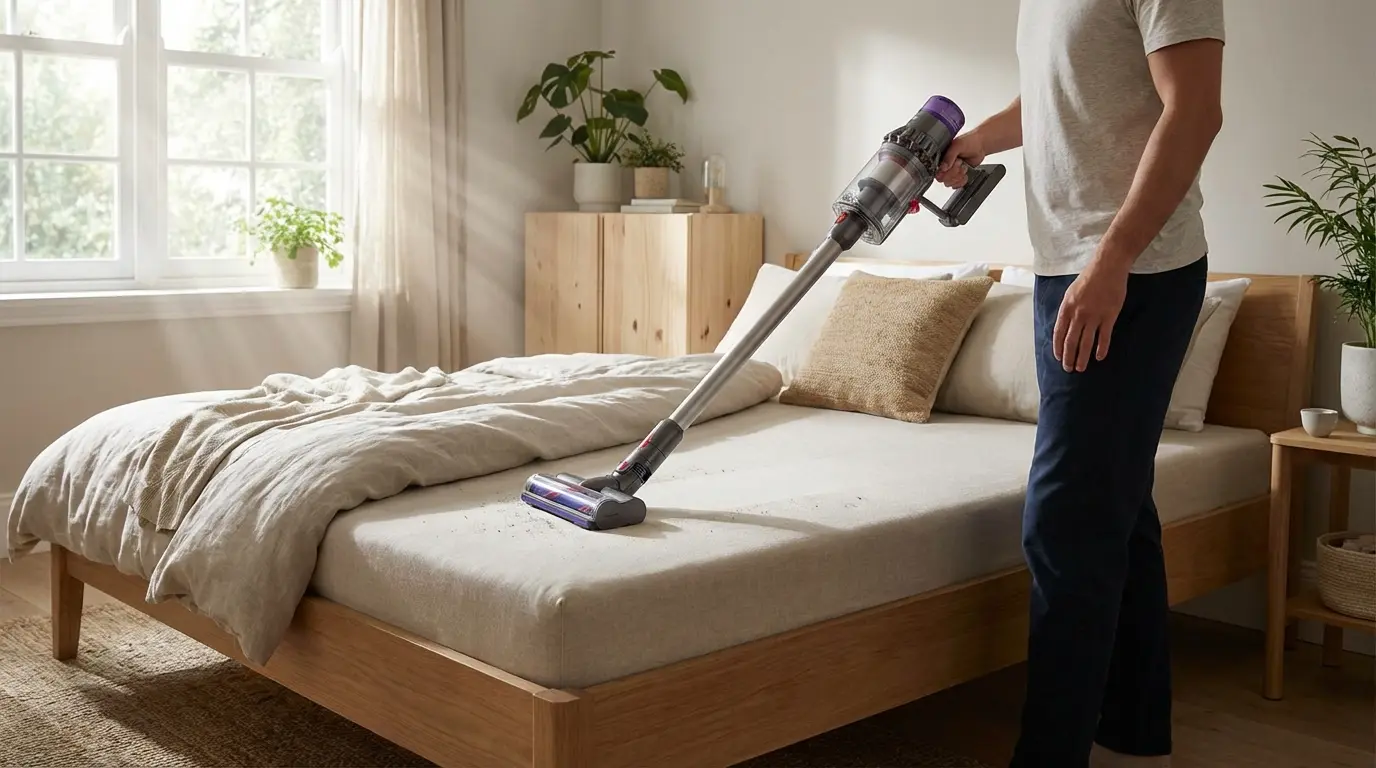
There is a lot of marketing in this category, and honestly, plenty of it is noise. If one tool deserves priority, it is a vacuum with effective filtration. A HEPA vacuum matters for a boring but important reason: it helps keep fine dust from blowing straight back into the room while you clean.
Still, the label alone is not magic. Filter condition, seals, and maintenance matter. If the filters are tired and the machine leaks, the nice label does not save you. Plenty of people learn that the annoying way after vacuuming a room and feeling the dust in their nose ten minutes later.
An air purifier can be useful, especially beside the bed, but it is backup. It cannot make up for dusty curtains, neglected skirting boards, or bedding that is overdue for a wash.
Steam cleaning can help on some surfaces and some fabrics. On others, it is more trouble than benefit. Material matters. Moisture matters. So does time. In most homes, the basics still carry the job: proper vacuuming, damp dusting, regular laundry, and fewer heavily scented products.
Common mistakes that make dust allergy worse at home
The same mistakes keep coming back.
Quick dry dusting is one of them. It feels efficient because it takes two minutes, but it often just shifts particles into the air. Another is vacuuming with poor filtration. If the machine leaks fine dust back into the room, the whole routine becomes less useful for someone with allergy symptoms.
The third issue is an overheated, fabric-heavy bedroom. Thick curtains, extra throws, rugs, decorative cushions, stuffed toys, open baskets with blankets. None of them is dramatic on its own. Together, they create a room that keeps holding dust.
The fourth mistake is trusting sprays, fragrances, and stronger chemicals too much. If dirt and dust are not physically removed, the problem is not solved. It is only disguised. The fifth is ignoring the places that are out of sight: under the bed, behind bedside tables, on top of wardrobes, around radiators, inside upholstery, along skirting boards.
Then there is the boom-and-bust routine almost every home knows. One big deep clean happens, everyone is exhausted, and then the next few weeks slide back into shortcuts. For most allergy sufferers, a calmer routine you can actually repeat works better than the occasional heroic Saturday.
When home routines are not enough and professional cleaning makes sense
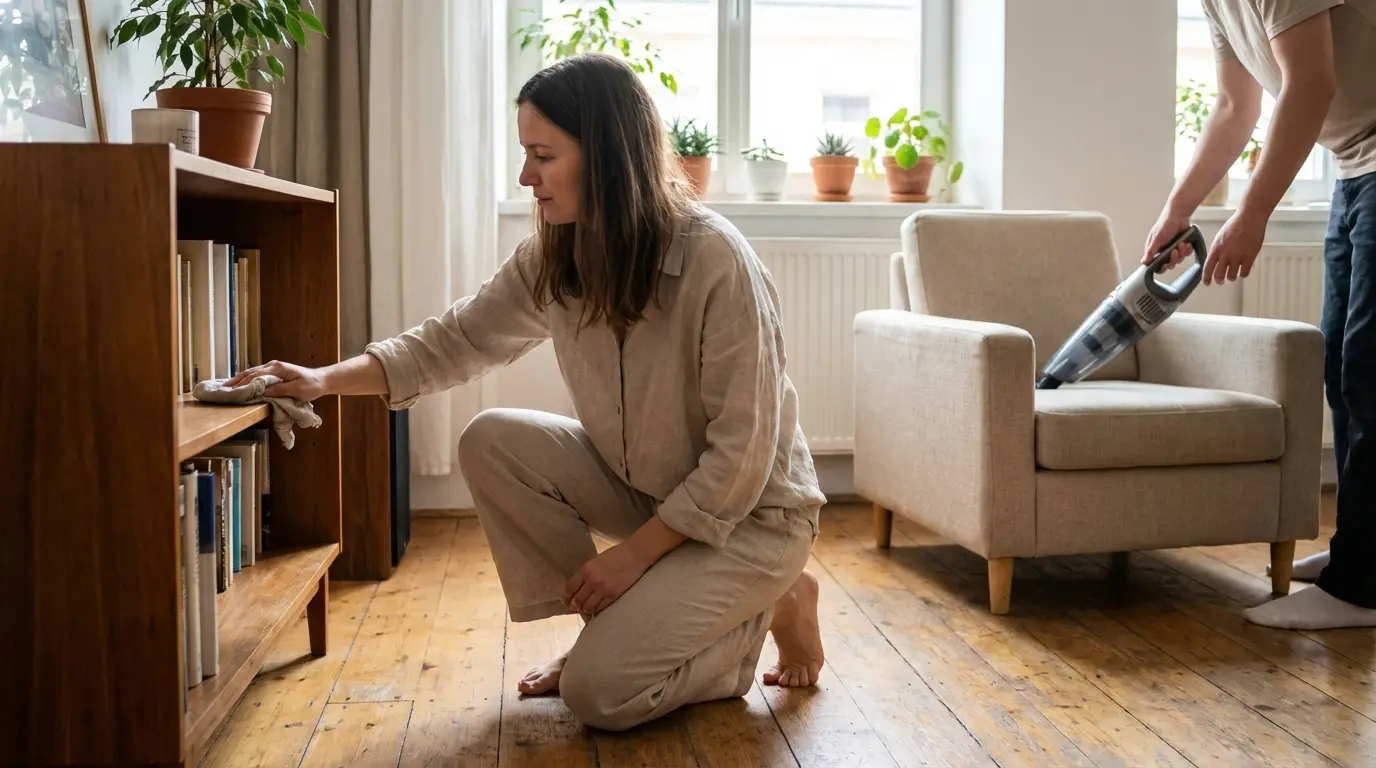
A sensible home routine can lower the allergen load quite a bit, but it still has limits. Professional cleaning is worth considering after renovation work, after moving, in a long-neglected home, or when someone still struggles indoors even though regular cleaning is already happening.
The biggest value usually comes from deep cleaning mattresses, upholstery, carpets, and the hard-to-reach places where dust keeps collecting. Think behind a large bed frame, inside detailed radiators, on top of tall wardrobes, or deep in a sofa used every day.
That does not mean your home routine has failed. Some jobs are simply hard to do properly with ordinary time and ordinary equipment. In those cases, bringing in a professional cleaner is practical. Nothing dramatic about it.
If you want to reduce dust at home more thoroughly, it can help to combine a steady weekly routine with professional support where the buildup is deeper. On CistýKout, you can choose a cleaning service for both regular maintenance and deeper home cleaning.
Frequently asked questions
Does it help more to clean more often, or to clean differently?
In many homes, cleaning differently matters more. Better technique, a stronger focus on the bedroom, and attention to hidden dust traps often do more than simply increasing frequency.
How often should bed linen be changed and washed for dust allergy?
Consistency matters more than random bursts of effort. The exact rhythm depends on the household, the severity of symptoms, and how much fabric is in the bedroom. If symptoms are strong or persistent, it is sensible to discuss the situation with an allergy specialist.
Is a steam cleaner useful in a home with allergies?
Sometimes, yes. It can be a helpful addition for selected surfaces and fabrics, but it is not a replacement for systematic cleaning, proper vacuuming, fabric care, and reducing dust traps.