Once the virus finally leaves your home, most people swing to one extreme or the other. They either spray disinfectant over the entire flat like they're fighting a biohazard, or they change the sheets and call it a day. Honestly, neither approach is great. When you're cleaning home after illness, a calmer and more targeted routine works better. Not every surface carries the same risk, and not every room needs harsh chemicals. In Prague flats, where one bathroom serves everyone and the dining table doubles as a school desk, work zone, and dinner spot, that distinction matters even more.
The practical question is not "How do I disinfect everything?" It is "What actually needs attention now, what can be cleaned normally, and when should I be more careful?" A mild cold is not the same as a stomach bug. A family with two small children is not the same as one healthy adult living alone. And a mattress that got soaked during a night of fever or vomiting is not something you solve with one scented wipe and wishful thinking.
What makes sense to clean right away, and what can wait
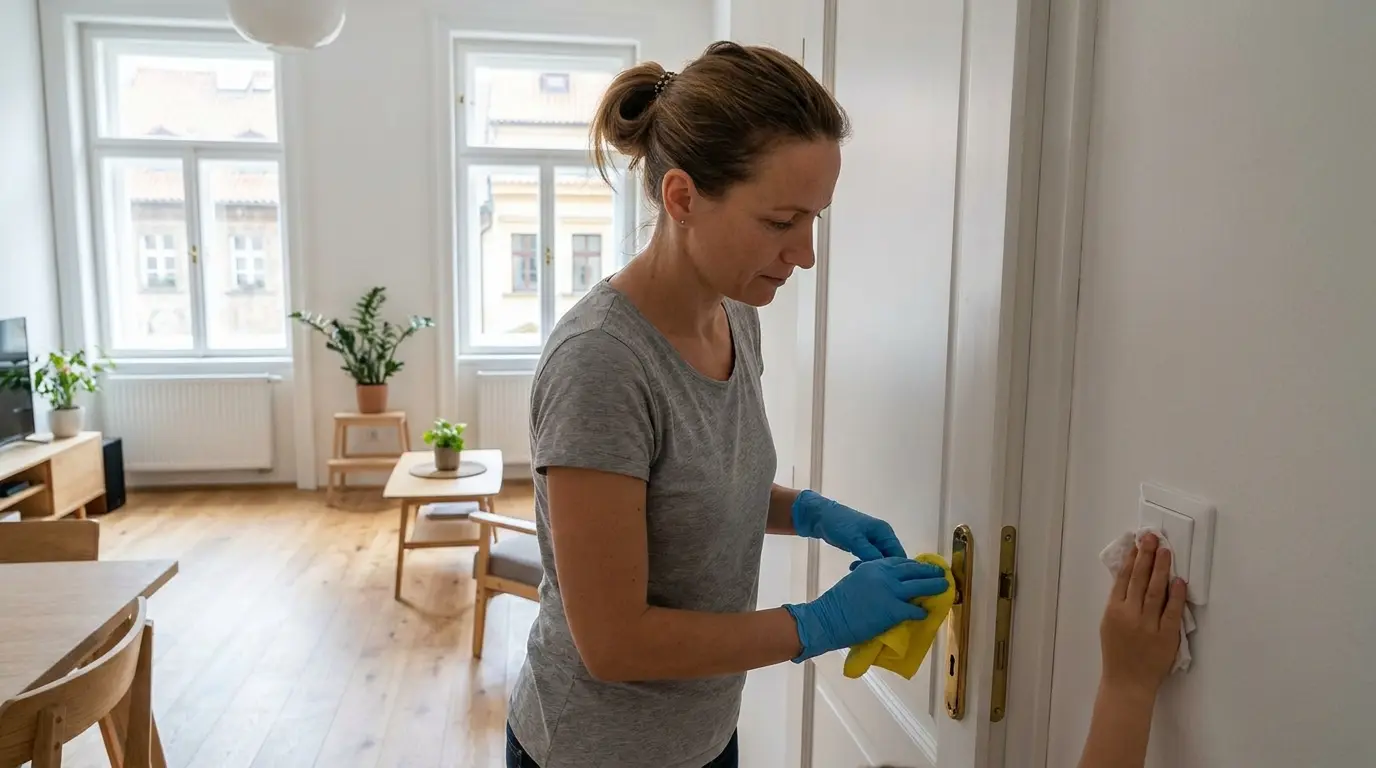
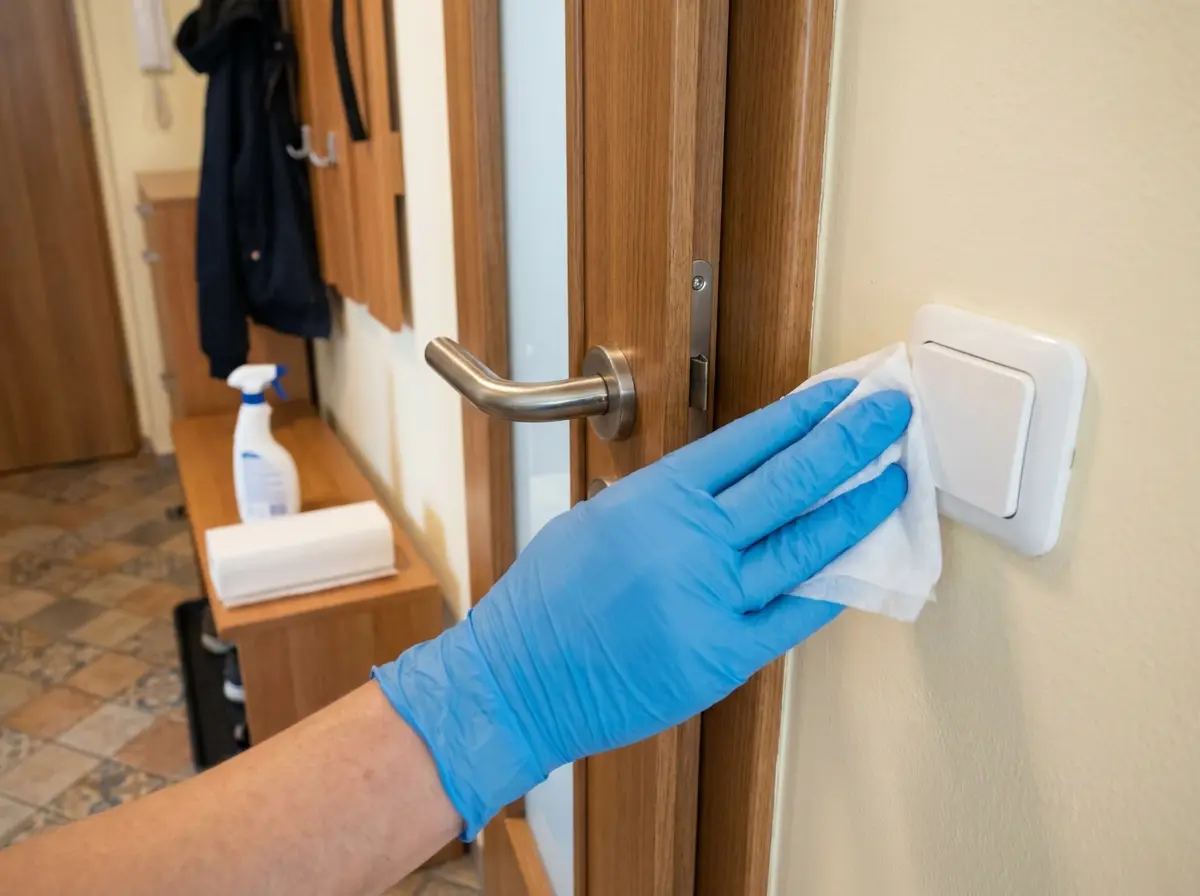
Start with surfaces that were touched often, not with random corners of the flat. Door handles, light switches, toilet flush buttons, sink taps, the phone, the TV remote, the fridge handle, the bedside table. These are the places where germs move around the fastest because hands keep returning to them.
What can wait? Shelves, decor, walls, the top of a wardrobe, and most low touch surfaces. If you're wondering what to clean after illness, the answer is usually not "everything." It is bedding, towels, rubbish, the bathroom, and the handful of shared touch points everyone uses without thinking.
A realistic first pass usually looks like this:
- throw away used tissues, medicine packaging, and bathroom rubbish,
- remove bedding, towels, and worn sick day clothes for washing,
- clean and, where needed, disinfect high touch surfaces,
- wash the bathroom and toilet properly,
- air out the home with short, strong ventilation instead of leaving one window cracked all day.
For an ordinary cold or flu, that routine is usually enough. If symptoms are gone and nobody in the household is especially vulnerable, standard cleaning plus selective disinfection makes more sense than trying to sanitize the entire apartment. The internet loves the drama of full scale disinfection. Real life does not need that much theatre.
The places that usually matter most
People often focus on big surfaces because they look dirty. Germ transfer after illness is usually a small-surface story.
Door handles, switches, remotes, and phones
These are the quiet troublemakers. They are handled constantly and almost never cleaned thoroughly during regular weekly cleaning. A remote control in a family home can go from the sofa to the child's room to the kitchen table in a few hours. The same goes for a phone that was used in bed, in the bathroom, and while making tea.
This is where disinfect home after virus advice actually becomes useful. First remove visible dirt and grease. Then use an appropriate disinfecting product for the material and let it sit for the contact time on the label. People often spray and immediately wipe. That feels efficient, but it defeats the point.
Bathroom surfaces
Bathrooms deserve special attention, especially after a stomach virus. The toilet seat, flush plate, tap handles, sink edge, nearby door handle, and the little strip of counter where people drop medicines or toothbrushes all matter more than the floor on the far side of the room. If the illness involved vomiting or diarrhoea, cleaning after stomach flu needs more care than cleaning after a cold. That is not fear mongering, just basic hygiene.
Bedding and towels
Bedding gets underestimated all the time. Pillowcases, duvet covers, blankets, the throw on the sofa, the towel used by the person who was ill. These hold sweat, skin contact, and the general messiness of being sick for several days. You do not need to panic about every textile in the home, but you should not ignore the obvious ones either.
How to disinfect without turning the whole flat into a lab
Cleaning and disinfecting are not the same thing. Cleaning removes dirt and a large amount of contamination. Disinfecting is a second step for selected surfaces when there is a good reason for it. If a surface is greasy or visibly dirty, disinfectant alone is not doing much. Clean first, disinfect second if needed.
Targeted disinfection means choosing the surfaces with the highest likelihood of repeated hand contact or contamination. Bathroom fittings, the toilet, handles, switches, phones, remotes, the bedside zone, and maybe the fridge handle or kettle switch in a shared home. It does not mean spraying curtains, books, wood furniture, and every square metre of flooring.
This is where many households overdo it. Strong chlorine products can be effective, but they are also easy to misuse. In a small flat with poor ventilation they can be miserable to work with. They may damage surfaces. They can irritate the lungs. And mixing products is a terrible idea. Bleach and acidic cleaners are a combination worth avoiding completely.
A sensible home setup is usually enough:
- a general cleaner for routine washing,
- a disinfectant for the toilet, bathroom fittings, and selected touch points,
- alcohol based wipes or a suitable electronics cleaner for phones and remotes,
- microfiber cloths you can wash straight after use.
If you are asking yourself whether a surface truly needs disinfection, I would use one simple test. Was it touched repeatedly by the unwell person or by multiple people in the same short period? If yes, it is worth prioritising. If not, normal cleaning is often fine.
How to wash textiles and refresh the air after illness
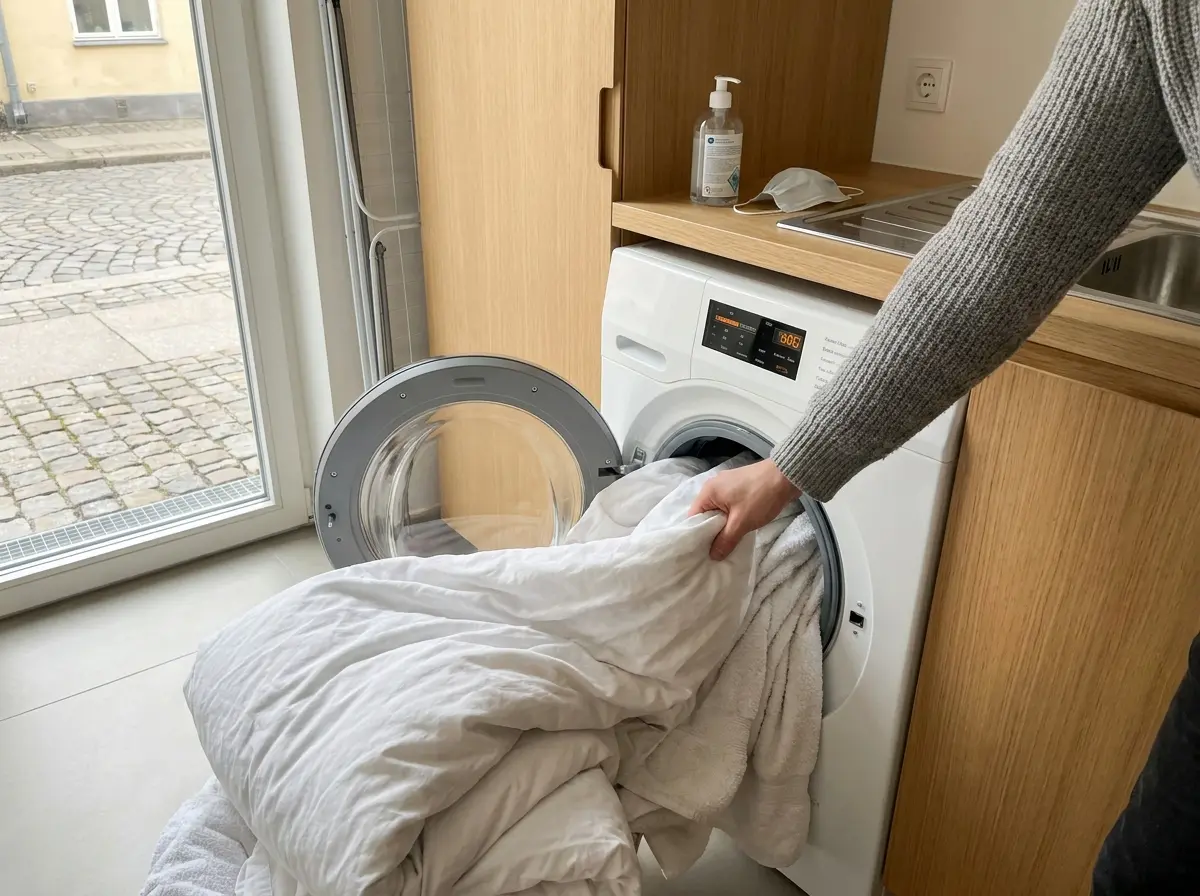
Bedding, towels, blankets, and washable covers should be dealt with early. Follow the care label, but use the highest safe temperature the fabric allows. For sheets and towels, 60 °C is common and useful. If anything was soiled during a stomach illness, handle it carefully, avoid shaking it around, and wash it separately.
The sofa blanket is one of those things people forget. Same for the cushion cover behind the sick person's back, the hoodie worn for two feverish days, or the duvet dragged to the couch. None of this is dramatic, but it adds up.
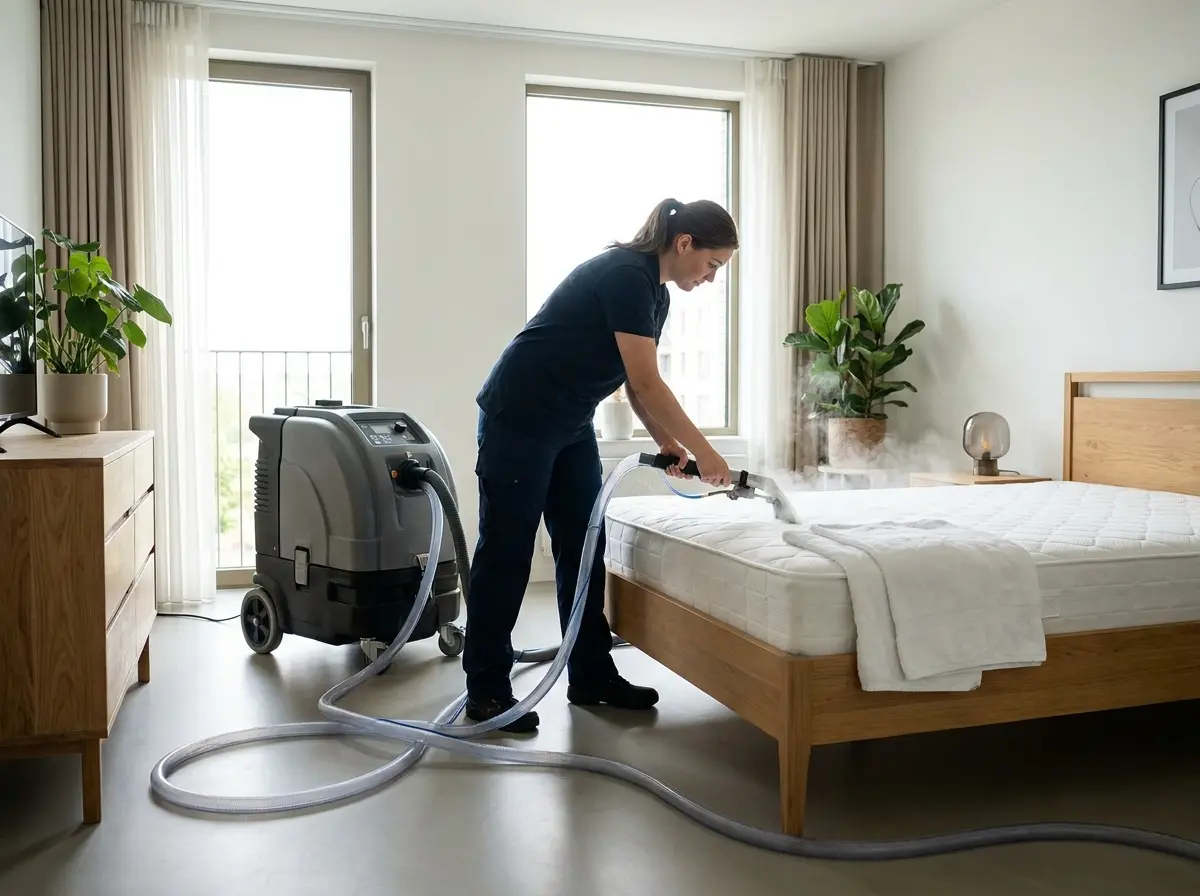
For non washable items, you have a few realistic options. Air them out well. Spot clean when suitable. Use steam cleaning on appropriate upholstery. If a mattress or upholstered chair was heavily affected, a deeper professional clean may be the more sensible choice.
Fresh air matters too, although not for mystical reasons. Ventilation helps remove stale air, humidity, lingering odours, and the heavy feeling a home gets after several days of illness. Short bursts of cross ventilation usually work better than a window left cracked for hours.
And then there are sponges and dishcloths. I am not sentimental about these after illness. If a sponge was used around the bathroom or sick room, replacing it is often the easier and cleaner option. Dishcloths should go straight into a hot wash.
When to be more careful with children, older adults, and shared homes
This is where context really matters. A home with small kids, older adults, or someone with reduced immunity needs a slightly stricter routine. Not a paranoid one, just a cleaner one. Children touch everything and then touch their faces. Older adults may have a harder recovery if another bug circulates through the home. Shared apartments create a different problem altogether: one person can be almost fine while everyone else still moves through the same kitchen and bathroom.
In those cases, a few boundaries help:
- separate towels,
- a separate glass and cutlery during the illness period,
- more frequent wiping of taps, handles, and flush buttons,
- faster turnover of pillowcases and hand towels,
- better discipline with rubbish and ventilation.
For children, toys and devices deserve a bit of thought. Hard toys can be wiped down. Soft toys depend on the fabric and whether they can be washed. You do not need to disinfect the entire toy box. Focus on the few favourites that were in constant use.
In shared households, a simple task split helps more than vague good intentions. One person handles laundry, another takes the bathroom, someone wipes shared touch points, someone takes rubbish out. That sounds obvious, but after a draining week people often skip the basics because everyone assumes somebody else has done them.
When professional cleaning or deeper treatment is worth it
Sometimes the issue is not whether you could manage it yourself. It is whether you still have the energy, time, or right tools after being ill. This is common in larger family homes, in flats where illness moves from person to person, or when a mattress, sofa, or upholstered dining chair needs real cleaning rather than surface wiping.
A typical Prague scenario looks like this: small family flat, one bathroom, two tired parents, one child finally back to school, another still coughing, and a sofa that now smells faintly medicinal and stale no matter how many windows you open. At that point, a professional clean is not a luxury fantasy. It is a practical shortcut back to normal life.
Professional help makes sense when you need:
- a larger home reset after a week or two of illness,
- mattress or upholstery cleaning after an accident,
- a properly cleaned bathroom and shared touch points in a busy household,
- a deep clean that saves your energy for recovery instead of using it all on scrubbing.
The job description does not need to be dramatic. Just say you need cleaning home after illness, with attention to the bathroom, high touch surfaces, laundry related reset, and possibly mattress or upholstery cleaning. That is a normal request.
The goal after illness is not a sterile show home. It is a home that feels safe, fresh, and back in working order. Clean the obvious risk points. Wash the textiles that matter. Ventilate properly. Use disinfectant where it earns its place. Skip the panic.
If you want a Prague based cleaning option to help you get the flat back into shape faster, ČistýKout is a practical choice for a soft reset after illness. You can send a no pressure cleaning enquiry through the contact form here: /en/contact