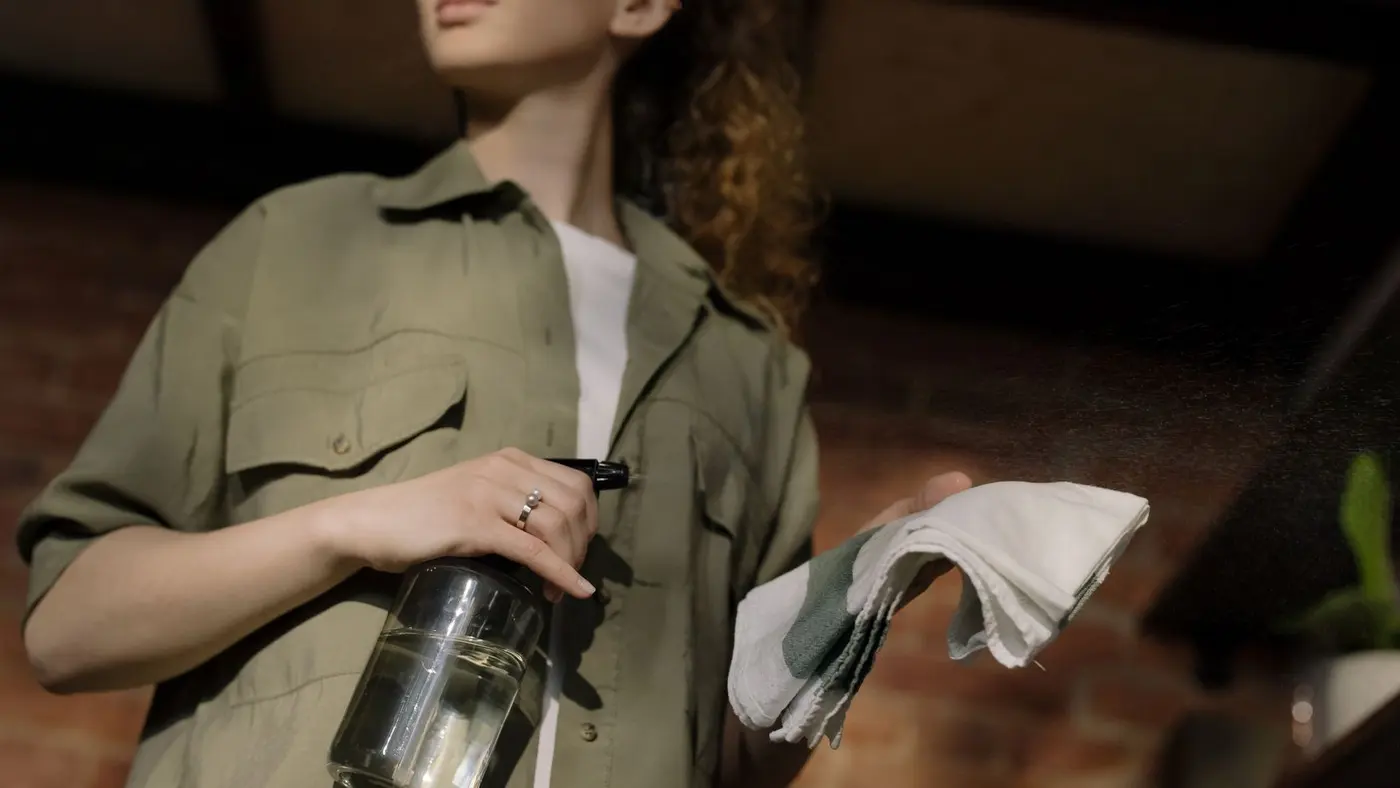
Cleaning in hot weather should not look like your usual Saturday routine. When a Prague flat without air conditioning is already at 29°C before lunch, polishing taps and vacuuming under the sofa can wait. Deal with food residue, rubbish, damp fabric and the few surfaces everybody touches. That is enough to keep a home sanitary without turning housework into heat stress.
Why cleaning priorities change in a heatwave
Heat drains energy. Ten minutes with a mop in a warm panel flat in Jižní Město feels very different from the same job in April. Bending, carrying a full bucket and standing in a steamy bathroom can make you tired or light-headed sooner than expected. A deep clean is not worth that risk.
A few household messes do become more urgent as the temperature rises. Think of cut melon left on the counter, milk in a toddler's cup, wet cat food in a bowl or a damp towel crumpled on the bathroom floor. They spoil, smell or stay clammy. A quick response now saves a much more unpleasant job tomorrow.
I use a blunt test on very hot days. Some mess looks bad but can sit safely: dust on a shelf, toys in the sitting room, fingerprints on a mirror. Other mess can rot, attract insects, become sticky or remain wet. I handle the second group and leave the first alone. The aim is a safe hygiene minimum, not a flat ready for an estate-agent photo.
Five jobs that come first on a hot day
Have a drink before you start and set a timer for ten or fifteen minutes. Stop when it rings. The innocent thought that you might “quickly do the floor as well” is how a small task becomes half an hour of sweaty work.
1. Take out food and mixed waste
The bin does not need to be full. Empty it if it contains meat or fish scraps, eggs, fruit, nappies or pet waste. A small bag removed daily is often more useful in summer than a large sack that sits in the kitchen for three days. Once the bag is out, wipe the rim and lid. Unless something leaked, washing the whole bin can wait.
2. Put food away and wipe the preparation area
Return chilled food to the fridge, close bread packaging and pick up crumbs. Wipe the part of the worktop where food was prepared, plus the chopping board and dining table. There is no need to wash every cabinet door. Clean the fridge handle only if it is sticky.
3. Rinse dishes and the sink
Food left on plates starts smelling quickly in a warm kitchen. Load the dishwasher or at least rinse dishes with cool or lukewarm water. A drop of washing-up liquid on a sponge is enough for the sink. Boiling a kettle solely for this job adds heat you do not need.
4. Do one fast bathroom round
Flush the toilet, wipe the seat and clean the area around the flush button that gets touched most. Rinse toothpaste and soap residue from the basin. If a shower squeegee is within reach, use it after showering. Follow the label on disinfectants and never mix cleaning products, particularly chlorine-based cleaners with acidic products.
5. Hang every damp item properly
Towels, swimwear, cleaning cloths and freshly washed clothes need space around them. Do not pile them together or leave a wet load shut inside the washing machine. In a small Prague flat, spreading towels across several rails of an airer works better than folding them over one bar. Wring out the sponge and hang the cloth. A wet bundle at the bottom of a bucket will smell stale by morning.
What you can postpone without guilt
Leave the windows. The same goes for scrubbing the entire bathroom, cleaning the oven, shifting furniture and vacuuming behind heavy cupboards. These jobs raise your pulse and keep you standing, reaching or bending for too long.
Carpet and upholstery extraction can wait too. Wet cleaning increases indoor humidity, and thick fabric may dry more slowly than you expect when the windows remain closed against the afternoon heat. A sofa that stays damp can develop a stale smell. Postponing the job is sensible, not lazy.
Here is the distinction I find useful: cosmetic clutter bothers your eyes; a hygiene problem may spoil, stick, smell or remain wet. A pile of clean laundry on a chair is cosmetic. Wet clothes forgotten in the washer need attention. Pet hair under the coffee table will usually survive another day. Leftover wet food in the cat's dish should go.
The order changes for people with allergies, babies crawling on the floor or pets that shed heavily. In those homes, vacuuming one busy zone may matter more than dusting every shelf. Do the kitchen floor, the area under the table and the child's play space. Skip the bedrooms.
When and how to clean without heating the flat further
During a Prague heatwave, early morning is often the easiest window, perhaps between six and eight. Late evening can also work once the outdoor temperature has actually fallen. Check a thermometer or weather app rather than opening every window by habit. If it is hotter outside than indoors, afternoon ventilation may warm the flat further.
Set out the few things you will use: one cloth, washing-up liquid, a small rubbish bag, a squeegee and perhaps a light cordless vacuum. Fetching supplies from four different cupboards wastes energy. Nor do you need a bucket filled to the brim. A little water will handle one dirty patch.
Several jobs can be done sitting down. Sort post, fold dry laundry or wipe washable toys at the table. Sitting on a stool while loading the dishwasher is perfectly reasonable. For an older person or somebody with limited mobility, I would make that the plan from the start rather than wait until fatigue hits.
Appliances matter as well. The oven, tumble dryer and long cooking sessions release more heat indoors. Run the dishwasher later in the evening if you can, and leave it closed while the contents cool. Labour-saving equipment should not turn the kitchen into a sauna.
A fifteen-minute plan for a rough day
Some days even a “quick clean” sounds optimistic. Try three five-minute blocks and sit down between them if you need to.
First five minutes: kitchen
- Put perishable food in the fridge.
- Scrape plates and rinse them or load the dishwasher.
- Wipe the areas of the worktop and table used for food.
- Wring out the cloth and hang it up.
Second five minutes: bathroom
- Rinse the basin.
- Wipe the toilet seat and flush button.
- Spread out towels, swimwear and damp clothing.
- Remove any standing water from the floor with a squeegee or one cloth.
Final five minutes: rubbish and the walking route
- Tie up waste containing food, nappies or litter and take it out.
- Clear objects from the main route through the flat so nobody trips.
- In a home with a cat or dog, check feeding bowls and the litter or toilet area.
- With small children, wipe the high chair and the patch where food landed.
This is not a fitness challenge. Stop if you feel dizzy, sick, unusually weak, develop a headache or simply feel worse. Move somewhere cooler and put your health first. Older adults, pregnant people, young children and anyone with a chronic condition need extra care during extreme heat. Medical guidance belongs with a clinician; the sink can wait until tomorrow.
Adjust the minimum to the household in front of you. A family with a crawling baby will put the high chair and nearby floor near the top. A cat owner may prioritise the litter tray and food bowl. If you live alone and barely cook, the kitchen could take two minutes and the bathroom eight. That still counts.
When it is better to book help
Outside help makes sense when the backlog has built for weeks, your health limits what you can do, or you return from a long absence to a closed, overheated flat. Imagine coming home from holiday to a sour fridge, dried kitchen spills and a bathroom that needs more than a rinse. Trying to catch up in one muggy evening is a poor bargain.
You do not have to order a deep clean for the whole home. Ask for priority zones only: kitchen surfaces and sink, toilet and shower, bins, and the main floor routes. A narrow brief keeps the time and price under control. Tell the provider that the flat has no air conditioning, when ventilation is possible, where water is available, and whether children or animals will be present. The person doing the cleaning also needs safe working conditions.
If you are in Prague and would rather hand over the urgent part, send ČistýKout a no-obligation enquiry listing only the rooms and tasks that need attention. A smaller, clearly bounded visit is often more useful in a heatwave than paying for every surface to shine.