Cleaning industry trends 2026 sound futuristic until you watch a cleaner lose twenty minutes looking for access instructions in WhatsApp. That’s the real test for technology. Does it give the time back? Does it stop the awkward call to a client in the middle of a meeting? If it can’t do either, I don’t care how clever the demo looked. Prague clients paying for careful, reliable work won’t care for long either.
Cleaning 4.0: the future is in the data
I still remember a cleaning rota taped inside a service cupboard. Four names, six floors and so many handwritten changes that nobody knew which version was current. It worked, more or less, while the building stayed quiet. Then Tuesday’s conference filled the ground floor. The team kept checking empty rooms upstairs because the rota said so.
IoT for a cleaning business can fix that particular kind of waste. A fill sensor calls for a bin collection or a dispenser refill. It doesn’t ask a cleaner to walk the building and confirm that nine other bins are fine. In a family flat, this would be overkill. In a Pankrác office block, a coworking space or a group of short-let apartments, those saved rounds become real working hours.
Air sensors need more careful language. A CO2 or particle reading doesn’t certify a room as clean. It may prompt ventilation, a filter check or an extra pass on a dusty entrance. The cleaner still has to look, think and decide. Grease on a worktop has never sent a push notification.
I’d pilot one busy washroom or reception for a month. Write down the old labour minutes and call-outs first; otherwise there’s nothing useful to compare. A box of sensors bought on enthusiasm alone is a very expensive clipboard.
Smart tools worth considering in 2026
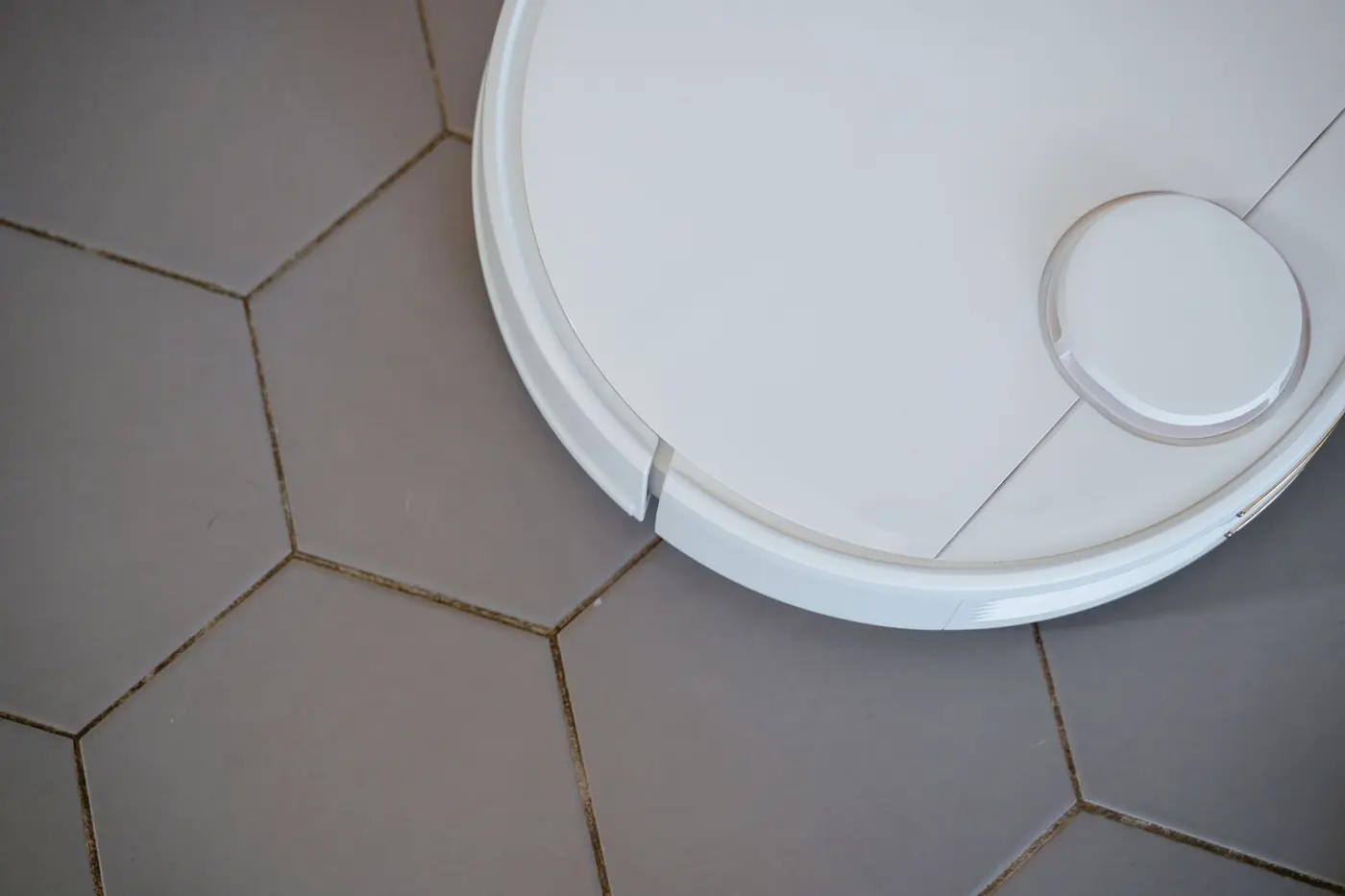
Robotic floor equipment likes repetition. Long corridor, open floor, predictable route: good. A Malá Strana flat with thresholds, loose cables and twelve dining chairs: less good. Modern cleaning tech maps rooms and avoids obstacles, while professional machines may also upload a run record for the supervisor.
Here’s the bit sales videos skip. The robot won’t notice thumb marks around a light switch. It won’t inspect the limescale behind a tap or wonder whether an old parquet floor has already had too much water. Cleaning automation is useful because it gives the boring square metres to a machine and leaves the judgement calls to a person. That’s a better division of work than pretending a robot is another cleaner.
UV-C belongs in the specialist category. It can disinfect air, water and non-porous surfaces, but only with the right dose, distance and exposure. Shadows matter. So does operator safety. The US FDA found consumer UV wands emitting unsafe radiation, which rather ruins the easy “wave it around and everything is sterile” pitch. A provider needs suitable guarded equipment, the manufacturer’s method and trained staff. Start with the FDA’s UV-C safety guidance, not an influencer video.
Digital dosing doesn’t photograph as well. I’d still put it ahead of several fancier purchases. The right dilution cuts waste and stops staff working with needlessly strong mixtures. It also gives the owner a believable stock figure at the end of the month. Quietly useful beats spectacularly idle.
Mobile apps: the heart of a cleaning business
Small firms don’t need a software empire. They need the date, address, access note, scope and checklist in the same place. A cleaner heading to Vinohrady should see that the hall is stone, the agreed product is neutral and the cot stays where it is. No searching through old messages on the tram.
Photos are trickier. They help document damage or an agreed result, but a camera also catches family photographs, paperwork and whatever is lying on a bedside table. Decide in advance what may be photographed, where it goes and when it is deleted. Wealthy clients tend to value discretion precisely because they have more to keep private.
A ČistýKout profile can hold the useful public facts: services, experience, insurance, training and reviews. Communication stays tied to the job instead of being scattered across three chat apps. That is the unglamorous benefit of a platform. It reduces the number of places where an instruction can disappear.
Ask for reviews quickly, and ask for detail. “All good” is pleasant but weak evidence. “They arrived at eight, warned me about the travertine and finished without moving the cot” tells the next client how the provider behaves. Premium work is easier to price when previous clients have described the difference.
Green cleaning is now a working standard
Green cleaning trends have outgrown the little leaf printed on a bottle. A provider should be able to name a certification, explain the dilution and show how packaging is reduced. The EU Ecolabel includes criteria for indoor cleaning services, including hazardous substances, water, energy and waste. The European Commission’s cleaning criteria give clients something firmer than “eco-friendly”.
Steam is useful on the right material. Not on every material. Old timber, waxed finishes, some laminates and electronics can turn a confident demonstration into a claim for damage. Check first. In my view, knowing when not to bring out a machine is one of the clearest signs of a professional.
Ozone is not a fresh-air shortcut for an occupied home. It irritates the lungs, and the US EPA says levels within public-health limits are generally ineffective against many indoor contaminants. Its ozone-generator guidance is worth reading before adding the service to a price list. Controlled treatment of an empty space is specialist work. Ordinary odours call for source removal, ventilation and moisture control.
How to start without wasting money
Pick the annoyance you can measure. Two hours lost to rescheduling? Fix the calendar. Repeated checks of empty meeting rooms? Test one sensor. Too much staff time on a wide, uncluttered floor? Trial a robot on the actual contract, not in a showroom.
Give the pilot four weeks. Track labour minutes, product use and rework before and after. Train the person using the tool, including privacy and safety, and ask the client what changed from their side. If the numbers are flat, stop. Sunk cost is not a strategy.
Then put the result on your ČistýKout profile in plain language. “Our mapped floor machine saved 40 minutes on this site” is credible. “We use revolutionary AI” says almost nothing. Prestige comes from a cleaner who can choose a method, protect the surface and explain the decision without hiding behind a gadget.
For clients who want a Prague-based cleaning option, a no-obligation request through ČistýKout’s contact form is a simple place to start. Providers can use the same platform to show their experience, equipment and verified reviews.