Cleaning service rates 2026: what to charge and what clients now expect
Setting a cleaning price list is no longer just about matching whatever someone nearby is charging. In 2026, most clients do not look only at the number. They also look at what is included, how clearly the service is explained, and whether extra fees appear halfway through the process. This transparency is often the real moment when a booking is won or lost.
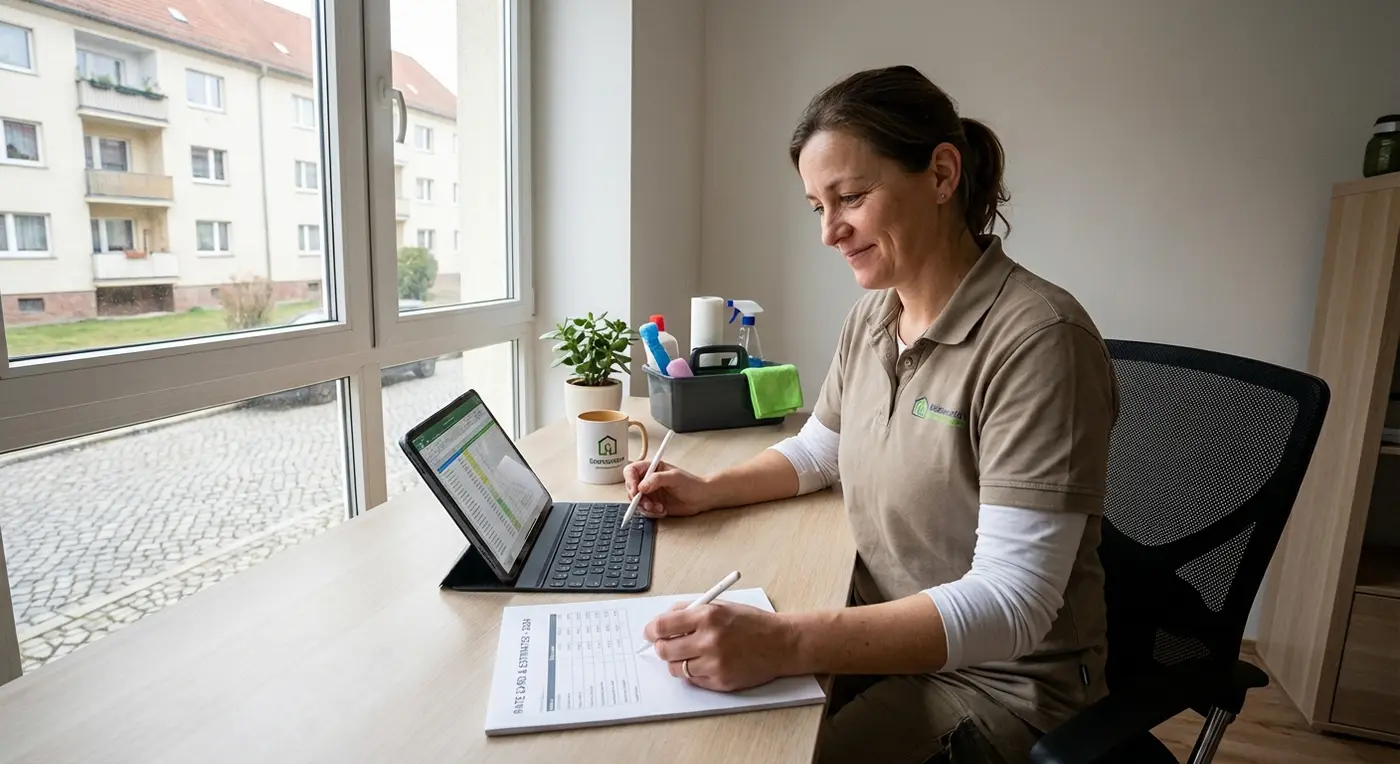
Petra, a cleaner starting out in Prague, ran into this quickly. To secure her first clients, she kept her rates low. But after a few weeks, the math stopped making sense. Travel time in traffic was adding up, she was buying her own professional supplies, and small extras like oven cleaning or interior windows kept slipping into jobs that were supposed to be simple. When she finally sat down and calculated her real costs and time, the issue was clear. She did not have too little work - she had priced that work badly.
This guide is for providers who want a realistic pricing framework for 2026 without vague promises or guesswork. We will look at average rates, the difference between hourly and fixed pricing, and why a transparent rate card helps not just your clients, but your business stability.
Average cleaning rates in 2026
The question "how much does cleaning cost" does not have a single answer. The final rate depends on location, property type, frequency, and the actual condition of the home. Even so, you need a realistic reference range to avoid undercharging or setting a price you cannot defend.
Across the Czech market in 2026, regular residential cleaning rates typically range between 350 and 500 CZK per hour. In cities like Prague or Brno, expect to be at the higher end of this bracket due to higher operating costs and travel times. Deep cleaning, one-off heavy cleaning, or move-in/move-out jobs usually start from 600 CZK per hour as they require more detail, time, and physical effort.
It is vital to explain the difference between standard and deep cleaning in concrete terms. For most, standard cleaning means vacuuming, mopping, dusting, and cleaning the bathroom and kitchen surfaces. Deep cleaning is another level entirely. It includes degreasing the kitchen, detailed bathroom work, cleaning behind furniture, doors, frames, skirting boards, and the insides of appliances. If you do not spell this out early, clients might expect a full restoration for a basic maintenance price.
Frequency also affects your bottom line. A weekly or fortnightly recurring service is usually easier to price more favourably than a one-off job in a home that has only been lightly maintained for months. Clients in major city centres are also more sensitive to professionalism - they expect a clear structure and a professional explanation of what their money buys.
Hourly versus fixed pricing: which works better?
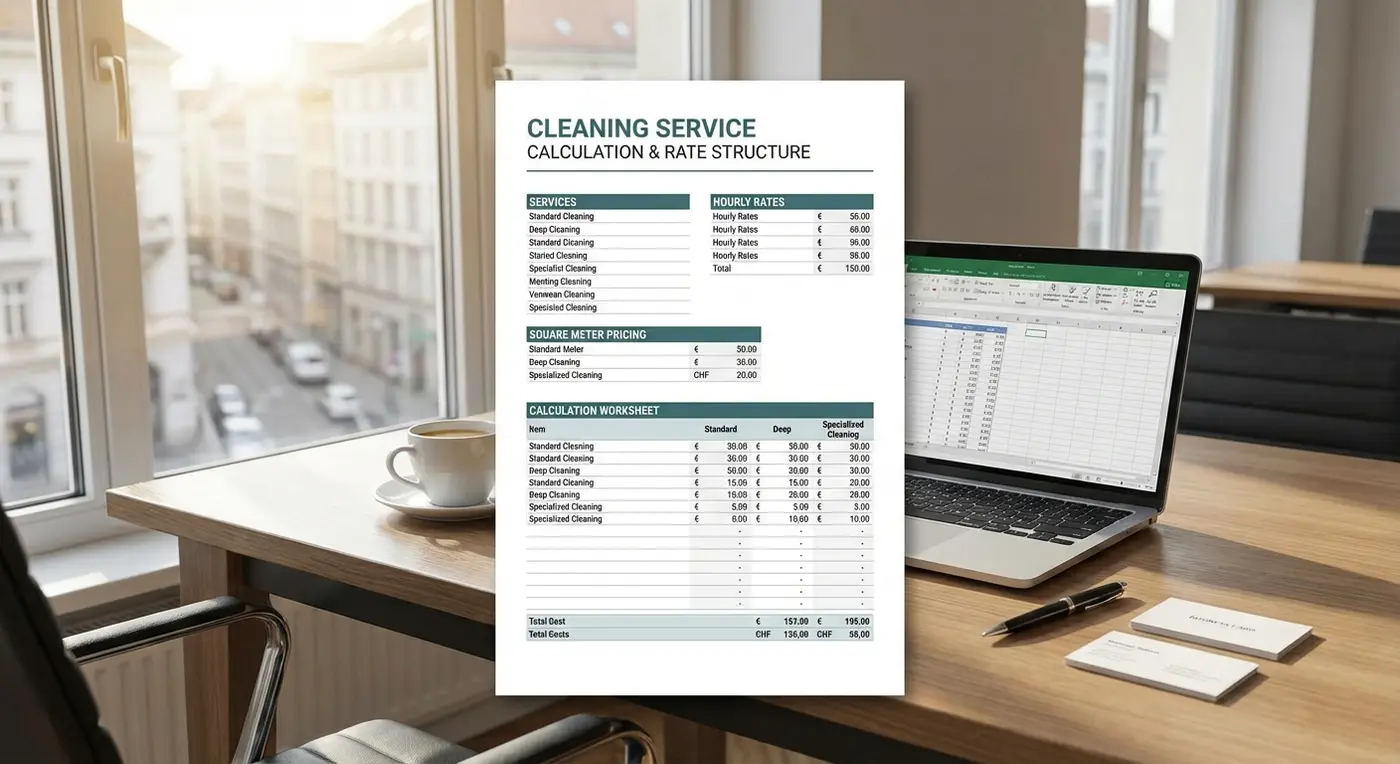
Hourly pricing is often the easiest starting point. It is simple to explain and protects you when you lack the experience to estimate time accurately for different homes. It makes sense for irregular jobs where the true condition of the space may be a surprise. If a kitchen is much worse than described, the hourly model ensures you are still paid for the extra work.
However, hourly pricing has its downsides. Clients do not always have budget certainty, and some may focus on the clock rather than the quality of the result. For experienced providers, fixed pricing often becomes the better option for repeatable services. The client knows exactly what to pay, and you are not effectively punished for becoming faster and more efficient over time.
Fixed pricing works particularly well for recurring jobs where you already know the layout and typical condition of the home. It also suits specialised services like window cleaning or a deep kitchen clean. In these cases, you are selling an outcome and expertise, not just a raw number of hours.
The most practical approach is often a hybrid model. Core services can have fixed prices based on flat size, while extras like ironing or deep appliance cleaning are charged separately. This prevents labour-heavy tasks from eating into your margin within a basic package.
If you are unsure which route to take, ask yourself: can I estimate the time and result of this service with confidence? If yes, fixed pricing feels more professional. If no, stay with hourly pricing but provide a clear list of what is included and what counts as an extra.
How to price add-on services such as windows or deep cleaning
Most pricing confusion comes from the extras, not the basic clean. This is where providers often underestimate the time involved or use vague descriptions. If you want a pricing structure that works, add-on services must be clearly defined.
Window cleaning is a classic example. There is a huge difference between standard flat windows and large French windows with blinds and difficult access. Some charge per window, others by size. Similarly, a deep kitchen clean is not just a quick wipe - it involves degreasing cupboards, the oven, fridge, extractor hood, grout, and plinths.
Your add-on pricing should reflect travel, materials, and prep time. You do not need to itemise every cent on the invoice, but you should know exactly where the price comes from. If a task involves a long journey and physically demanding work that takes half a day, a token extra fee will not sustain your business for long.
For larger properties, it is smarter to quote only after basic fact-finding. Photos via WhatsApp or a short call can prevent many arguments later. The bigger the job, the less sense it makes to guess. In a large house or commercial space, one weak estimate can lead to hours of unpaid labour.

Why a transparent rate card is an advantage on CistýKout
A transparent rate card is more than a list of prices - it is your most important sales tool. It gives clients confidence and saves you time that would otherwise be lost to endless messages explaining your rates or whether windows are included.
On CistýKout, clear pricing is the foundation of trust. It helps build rapport at the exact moment a client is comparing providers. It makes booking seamless because the differences between service levels are obvious. Instead of improvising prices every time, you work with a structured, professional menu.
A well-built rate card does not feel cold; it feels professional. Most clients appreciate not having to guess what will happen after they book. This predictability is what separates a serious business from someone who makes up prices on the spot based on how they feel that day. Set your rules early, and you will see it pay off in loyal, returning customers.
Want a professional price list that clients can trust?
Join CistýKout, set transparent rates, and present your services in a way that makes the offer clear from the start. A strong pricing structure does more than improve first impressions - it helps you win work that makes financial sense in the long run.