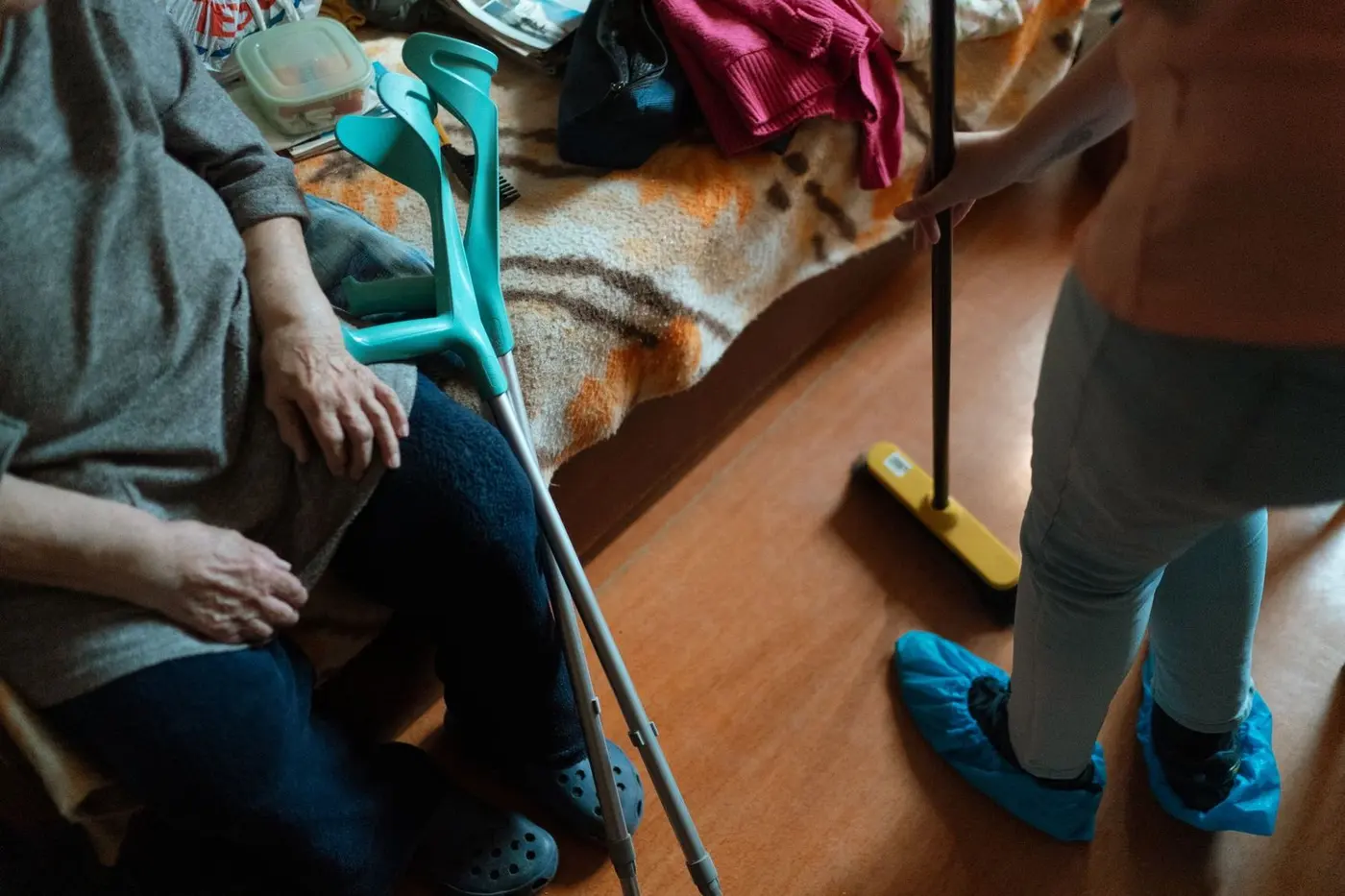
Good cleaning services for seniors are not a substitute for care or medical supervision. They are a predictable household service: the older client knows who will arrive, what will be cleaned, and who will be contacted if something practical goes wrong. That ordinary sense of certainty is what turns a few trial visits into a lasting arrangement.
A cleaning service is not a care service
Set the boundary before the first visit. A regular clean may include vacuuming, mopping, bathrooms, kitchen surfaces, dusting, changing bed linen, and taking out rubbish. You might also agree to a small household task, such as starting a load of laundry or bringing a cleaning product. It is still cleaning support.
Do not promise medication reminders, health monitoring, personal hygiene, lifting someone from a bed, or transport to a medical appointment. Those are care, social support, or healthcare tasks, with different training and liability. “I can help with anything while I am there” sounds generous. In a service description, it is far too broad.
I prefer one plain sentence: “I provide recurring household cleaning; I do not provide personal care, medical supervision, or help with medication.” Say it to the family member arranging the service and to the person whose home you are entering.
Agree on emergencies as well. If a client does not answer at the expected time, appears injured, or faces an immediate danger, a cleaner does not attempt a diagnosis. They contact the named family member and call the Czech emergency number 155 or 112 where necessary. That is basic safety during a home visit, not an extra care package.
Who books the service, and who decides at home?
These jobs often have two clients. An adult child may find the cleaner and pay the invoice, while the parent lives in the flat. The person paying does not automatically get to control everything inside someone else's home. The older resident should decide which rooms are included, where objects go back, and what stays private.
A common Prague flat may involve a daughter arranging a thorough clean while the resident wants the papers beside the telephone left untouched. The cleaner should not referee that family disagreement. She cleans around the papers and asks both sides to settle the scope before the next visit.
Write down three roles:
- who approves the work inside the home,
- who handles dates, changes, and payment,
- who should be called in the situations agreed in advance.
Choose one main contact. If a daughter sends WhatsApp messages, a son rings in the evening, and a neighbour passes instructions in the hallway, a minor request soon becomes a mess. The senior must also know what information you share with the family. Record that consent in the job notes, along with permission for any substitute cleaner to enter.
Privacy reaches into small details. Do not open drawers, rearrange medicine, or throw away receipts because they look unnecessary. In many older households, things are remembered by position: the mug sits on the left, the remote belongs by the armchair, and the cellar key stays in a particular bowl.
The first visit: safety, priorities, and a realistic scope
The first appointment is not a race. Treat it as a walk-through followed by a working session. With the client, note loose rugs, cables across walking routes, an unstable stool, heavy windows, pets, and surfaces that will not tolerate general-purpose chemicals. A Vinohrady flat may have waxed parquet and old brass handles. A small Prosek bathroom may leave no safe route around a bucket.
This is not a clinical home-safety assessment. You are organising your own work so that you do not create a fresh hazard. Keep the vacuum cable out of the hallway, mop in sections, and return products to the agreed storage place.
Start where cleaning matters most for hygiene: the toilet, basin, kitchen worktop, sink, floors, and waste. Polishing a display cabinet can wait. If the home has not been cleaned for a while, split the work across two visits. The first brings it to a manageable baseline; the next establishes the recurring routine.
Leave extra time for explanations and slower access on that first day. A buffer is not an open order for every task, though. If the family adds the oven, windows, and cellar halfway through, be specific: “We booked three hours today for the kitchen, bathroom, and floors. I can quote the oven as a separate task next time.”
Handle keys without improvising
Record the date, number of keys, who handed them over, which entrance they open, and when they must be returned. Never label a keyring with the full address. Store it separately from personal information, and do not pass it to a replacement without consent. Report a lost key immediately.
Why one familiar cleaner matters
Recurring cleaning for elderly clients depends on routine. The same weekday, roughly the same arrival time, one familiar face, and a familiar order of work all reduce uncertainty. One person may want the bathroom done first so it is free later. Another wants vacuuming to wait until a favourite radio programme ends. These are not silly demands. They are part of a well-run service.
I once heard about a company that sent four different cleaners over six weeks. Every cleaner completed the checklist correctly. Yet the client had to explain the keys, the delicate table, and the escaping cat each time. Her family eventually hired an independent cleaner who came every Wednesday. She did not win with a longer task list. She won with predictability.
You still need cover for illness and holidays. Offer two choices in advance: move the appointment, or send one named and vetted replacement. The senior should know who is coming and agree to entry. A replacement needs only the practical essentials: scope, delicate surfaces, access, pets, and safety notes. Family history, assumptions about health, and private stories do not belong in a handover.
What to report to the family, and what stays private
Some families quietly expect each visit to double as a welfare check. Do not accept that role by accident. Agree with the senior and the named contact on the situations that trigger a message or call. Reasonable examples include no answer at the agreed time, a leaking hose, broken window, smell of burning, damage caused during cleaning, or an obstacle that made the work unsafe.
Report what you observed. Write: “There was water under the sink today and the cabinet is damp. I turned off the tap, and the client agreed that I should tell you.” Do not write: “Your mother can no longer cope at home.” The first message is factual and useful. The second is a judgement you are not qualified to make.
A photo of a fault may help a plumber, but ask permission first. Photograph the hose, not the whole flat, personal papers, or the client in the background. Note who received the image and why. Never reuse pictures from a client's home for marketing without separate, explicit consent. If messages or photographs pass through a platform, follow its privacy policy as well.
After an ordinary visit, the family does not need a report on unwashed cups, visitors, or the senior's mood. A brief operational note is enough: completed work, agreed extras, any fault, and the next appointment. Housekeeping help for seniors should protect both the home and the dignity of the person living there.
Pricing the service so it can last
Your price has to cover more than active cleaning time. Include travel, Prague parking, product preparation, a short update to the family, scheduling, and any key collection. A three-hour regular booking on a sensible route may be more profitable than a higher-priced visit across the city. For the full calculation, see Čistýkout's guide to pricing a home-cleaning job without losing money.
Suppose your own rate makes a standard three-hour visit CZK 1,200. If every appointment also brings thirty minutes of unpaid calls and a detour to collect keys, the real hourly return drops quickly. Build routine administration into the price and quote exceptional errands separately. The client is not paying for “chat.” They are paying for a reliably managed service.
Separate the standard scope from extras. Bathrooms, kitchen surfaces, dusting, vacuuming, and mopping might form the recurring visit. Windows, a heavily soiled oven, cupboard interiors, or sorting possessions need their own agreement. Confirm any change before the appointment, preferably in a message with the expected time and price.
Every two or three months, check whether the frequency still suits the household. A fortnightly visit may be enough in one flat. After a hospital stay or during a family visit, another home may temporarily have more activity. Adjusting the schedule is not a diagnosis. It is ordinary job management.
A durable service comes down to a familiar cleaner, a defined scope, one main contact, secure key handling, and an agreed reporting rule. When one piece is missing, do not make a bigger promise. Fix the agreement.
If a family needs senior home cleaning in Prague, they can send a no-obligation cleaning request through Čistýkout, describe the household and contact preferences, and compare available providers.