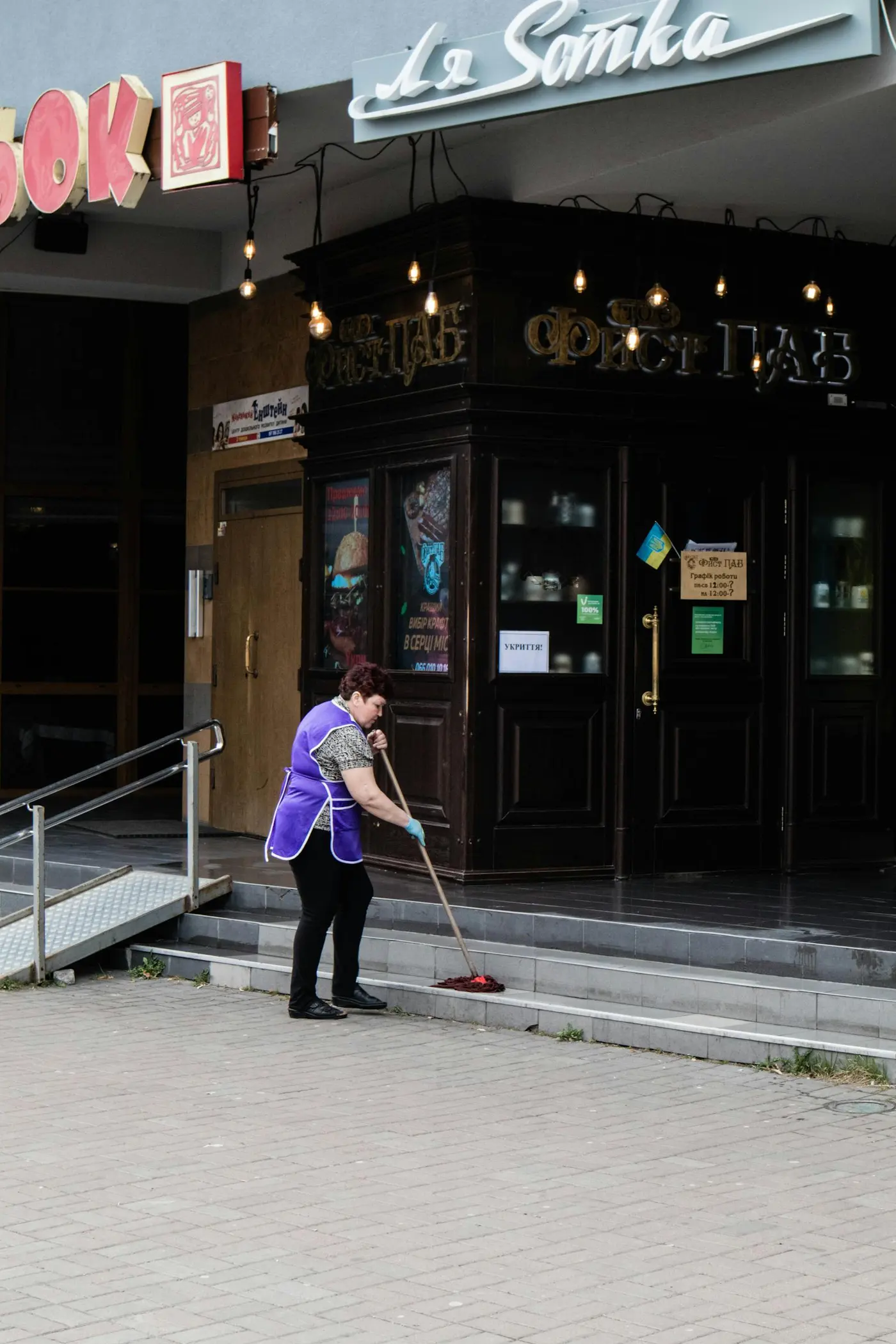
Common area cleaning for HOAs is a different game from one-off apartment cleaning. You are not only selling a clean hallway. You are selling fewer complaints, a calmer property manager, and a routine the building committee can trust. When a small cleaning team leads with “we clean from 350 CZK per hour,” it usually walks straight into a price fight. I have seen this around Prague more than once: two providers quote a similar amount, one adds a clear scope and simple reporting, the other sends only a price list. The first one often wins, even when it is not the cheapest.
Why HOAs and property managers can become stable cleaning clients
With one-off residential jobs, you keep starting from zero. New client, new flat, new expectations, sometimes a new surprise behind the fridge. Apartment building cleaning repeats. Entrance, stairs, lift, corridors, cellar hallway, sometimes garages. Once the scope and frequency are clear, the job becomes a fixed point in your week.
That matters for cash flow. One small building in Vršovice will not make anyone rich. But if it needs cleaning twice a week plus seasonal entry maintenance, you can plan around it. Three similar buildings start to cover real monthly costs. You are not forced to chase every random booking or discount your way into more HOA cleaning contracts.
The decision process is different too. A private apartment client asks whether they trust you in their home and whether the flat feels good afterward. An HOA committee cares about complaints, budget, and transparency. A property manager cares about whether you reduce their workload or create more messages to answer. The residents mostly notice the outcome: streaks in the lift, a dirty entrance mat, dust on the mailbox area.
So “we are reliable” is not enough. You need to show what reliability looks like on a Tuesday morning in a real building.
What a proposal should include so the committee understands it quickly
A good proposal for apartment building cleaning does not need ten pages. Honestly, long documents often die in someone’s inbox. A one-page summary usually works better: exact tasks, frequency, included areas, supplies, quality control, and what counts as extra work.
Start with the building, not your company. Instead of a general line about professional service, write a practical scope:
- entrance and mailboxes: sweep, mop, wipe handles and doors twice per week,
- stairs and corridors: full mopping once per week, spot cleaning as needed,
- lift: floor, mirror, buttons, doors twice per week,
- cellar corridor: sweep and check cobwebs once per month,
- unusual dirt or damage: quoted separately within 24 hours where possible.
Now the committee can picture the work. It is not only comparing hourly rates.
Include supplies. Who provides bin bags? Who pays for cleaning products? Is lift button disinfection included? Does the building have a storage room for mop, bucket, and products? Small details, yes. But these are exactly the details that later turn into “we thought this was included.”
Add a simple quality check. Not a heavy corporate form. One sentence can be enough: “After every visit, we send a short note to the property manager; for unusual dirt or damage, we attach a photo.” For a property manager, the cleaning becomes easier to manage. They do not have to wait until a resident from the fifth floor sends an angry email.
Pricing belongs in the proposal, of course. Just do not make it the only thing. Split it by service mode: basic recurring cleaning, expanded service, seasonal or extra work. If you offer only an hourly rate, you will be compared with anyone who writes 40 CZK less. If you offer a clear operating routine, the building compares service quality.
How to approach a property manager or committee without sounding desperate
Property managers receive plenty of pitches. Some are painfully generic: “Hello, we offer quality cleaning at good prices.” That email is gone in ten seconds. If you want a manager or HOA committee to pay attention, keep it short and specific.
Who should you contact? Many Czech HOAs list committee contacts on the building website, in public records, or even on the noticeboard. For larger portfolios, contact the property management company. Do not spray the same email across every address in Prague. Choose buildings you can actually serve. Local availability is stronger than many cleaners think. A team that already works around Pankrác, Budějovická, and Nusle sounds more credible for Prague 4 buildings than a vague “we cover all of Prague.”
Attach only what helps the decision:
- a short introduction and the district you normally cover,
- a typical scope for an apartment building,
- two or three references or before-and-after photos,
- liability insurance information, if you have it,
- an offer to inspect the building and price the real condition.
Photos help, but be careful. Do not send ten shiny stock photos. Two real photos of a stairwell, entrance, or lift are better, even if they are ordinary, because they show you have cleaned shared spaces before and understand the work.
A trial period can work. Just do not confuse it with a large discount. Instead of “first month 30% off,” offer “first month as a test mode; after four visits, we review frequency and scope together.” That gives the committee a sense of safety without training them to see your service as cheap.
What matters after you win the first building
The first month matters more than the proposal. Residents usually notice you when something is wrong. When the hallway is clean, almost nobody writes praise. When the lift mirror has streaks or the entry corner stays wet, the property manager hears about it quickly.
This is why property manager cleaning is mostly about consistency. Come on the promised day. Keep the same standard. Do not skip the cellar corridor because “nobody went there today.” In a private home, a client may forgive a small time shift. In an HOA, a small missed detail can become a committee topic.
Report unusual dirt immediately. Plaster dust after tradespeople, broken glass near the entrance, a dog accident on the stairs, winter salt dragged across the whole ground floor. This is often not your fault and often should not be included in the regular price. But if you simply work around it, it looks bad. If you send a photo and write, “This is outside the regular scope; we can clean it today for 450 CZK,” you look professional.
Reporting is underrated. It sounds boring. Still, boring systems keep recurring contracts alive. A short message after a visit might say:
“Today completed: entrance, stairs floors 1-5, lift, handrails. In the cellar corridor near storage unit 14 there is construction dust, photo attached. This is outside regular cleaning; I recommend an extra visit.”
The property manager has evidence. The committee has visibility. You have proof that you did not cause or hide the problem. Another discount would not give them that.
How to set boundaries so the contract stays profitable
The biggest trap in common area cleaning is not only a low starting price. It is the slow creep of extra work without extra pay. First it is “could you just wipe the cellar door sometimes?” Then “since you are already here, can you also take the garages?” Later, “the painters left a bit of dust, just wipe it down.” Suddenly the job takes a third longer and you are still invoicing the original amount.
Put boundaries into the proposal. Regular scope is one thing. Extra work is another. Regular cleaning may include mopping corridors, wiping handrails, cleaning the lift, maintaining the entrance, and basic cobweb checks. Extra work may include window cleaning in shared areas, garage cleaning, construction dust removal, post-renovation cleaning, machine floor cleaning, or clearing bigger mess around bins.
Seasonality changes the job. In winter, residents bring in salt, gravel, and water. The entrance, lift, and first floor get dirty faster than the rest of the building. In summer, there is dust, pollen, fingerprints on glass, and sometimes marks from bikes or strollers. Autumn brings leaves. If your price stays the same all year, build that into the calculation or agree on a seasonal mode.
I like a simple line: “The base price assumes normal building use. In winter, we recommend increasing entrance and lift cleaning to three times per week, or billing extra visits according to actual dirt.” That is not conflict. That is service management.
When you need to expand scope, do not only say the old price no longer works. Show why. A photo of the entrance after snow, a note on extra time, two options for the committee. Then the decision is not “pay more or refuse.” It is a choice between operating routines.
How to stand out through reliability, not discounts
The cheapest offer wins buildings that want only the lowest number in a spreadsheet. Some of those contracts are not worth the stress. A better client for a small team is an HOA or property manager who wants fewer complaints and clearer communication. That is where reliability beats discounting.
The difference does not need to be dramatic. Do a few things consistently:
- send a proposal with a clear structure,
- separate regular scope from extra work,
- arrive on time for the walkthrough,
- report more than expected in the first month,
- send photos and suggested fixes when there is a problem,
- keep the same cleaning day and roughly the same time.
This is not flashy marketing. It is operational discipline. In apartment buildings, operational discipline is exactly what property managers are willing to pay for.
If you already clean homes and want steadier monthly income, choose five to ten buildings near your real route. Look at the entrance, size, lift, and visible pain points. Then write a proposal for that specific building, not a generic flyer. You may not get an answer right away. HOA decisions often wait for the next committee meeting. But when the reply comes, it can be a completely different kind of work from a random one-off booking.
ČistýKout is a Prague-based cleaning option for people who want reliable help without chasing contacts one by one. If you are arranging cleaning for a home or shared building space, you can send a soft enquiry through the ČistýKout contact form.