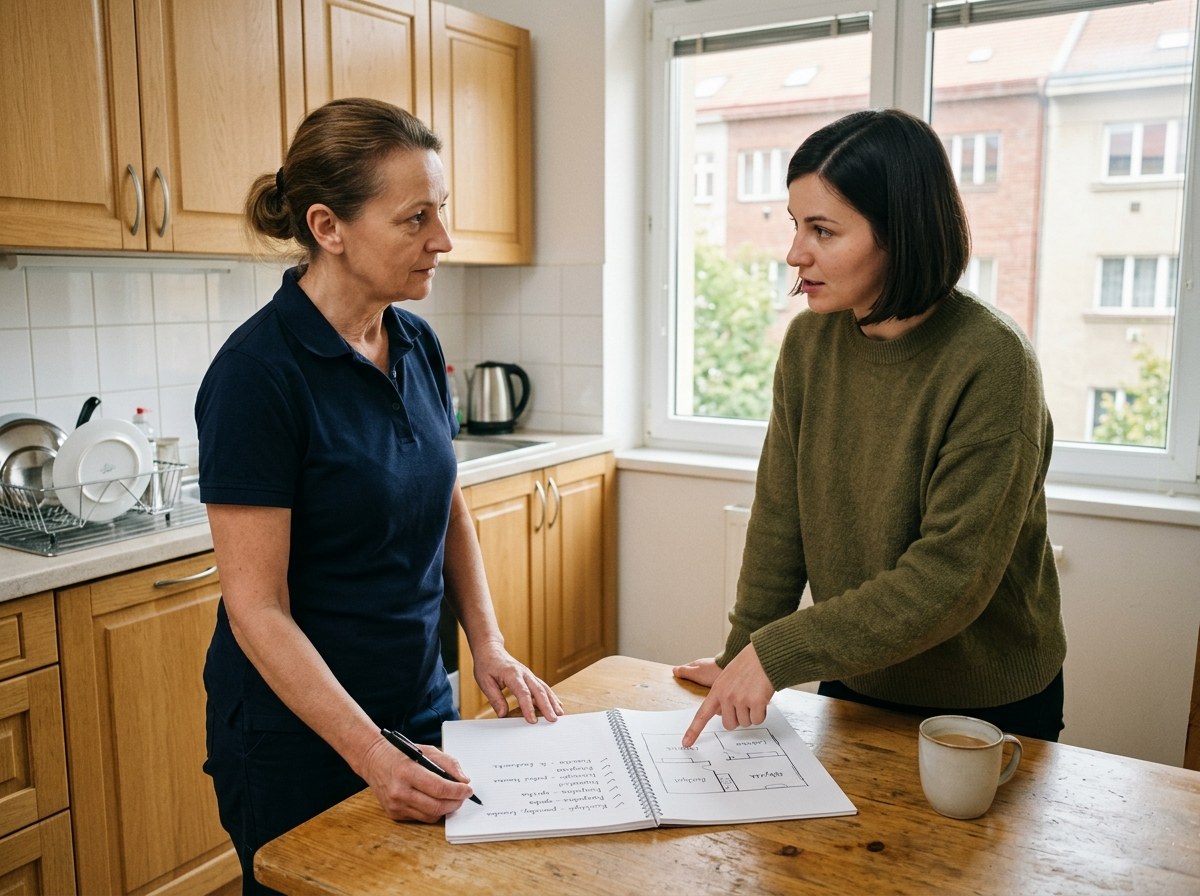
When clients start asking for 'just one more thing' for free, it usually doesn't start with a big argument. You show up for a standard job, walk through the flat, and right at the door they ask: 'Since you're already here, could you just quickly do the oven?' Five minutes later, that 'one thing' has turned into the fridge, the balcony, and maybe the windows too. This is exactly why you need to confirm the scope of work before you even leave your house. It's not about being difficult or needing legal paperwork. It's about protecting your time, your profit, and your sanity.
Why scope creep happens so often in cleaning
In the cleaning industry, clients often see the finished result but have no idea how much work went into it. That’s the core of the problem. What looks like a tiny task to them is actually a lot of labor for the person doing it. Wiping down the tops of doors, degreasing the extractor hood, or clearing off a cluttered windowsill might seem minor, but these small extras add up fast. Ten minutes here, fifteen there, and suddenly your whole schedule is an hour behind.
I see this all the time with one-off jobs and first visits around Prague. With regular clients, you have a rhythm. You know what's included and where the tricky spots are. But with a new client, they often aren't sure what a 'standard clean' actually covers. In their head, maintenance cleaning and deep cleaning just sort of blur together. Your job is to make sure they don't blur in yours.
There's also an emotional side to it. When a client stands in their own home, every little bit of dust feels important. That makes sense. But as a professional, you have to look at it differently. You need to translate every request into time, effort, and cost. If you don't confirm the scope before you start, you'll end up negotiating while you're trying to work.
A cleaner over in Prague 6 once told me something that stuck: the most expensive jobs aren't the tough ones, they're the vague ones. She's right. You can put a price on a messy apartment, but a vague job will eat your profit in tiny slices until there's nothing left.
What to confirm before you arrive
The first step is simple. Don't just ask "What do you need cleaned?" Go deeper. Ask about the rooms, the specific tasks, and what the priorities are. If a client tells you they have a "3-bedroom flat that needs a standard clean," don't take that as a final brief. It’s just the start of the conversation.
It helps to break the scope down into three parts:
- Spaces: kitchen, bathroom, toilet, bedrooms, living room, hallway, balcony, office.
- Tasks: vacuuming, mopping, dusting, bathrooms, kitchen surfaces, light switches, doors, and the outside of appliances.
- Priorities: what absolutely has to be finished today and what can wait if you run out of time.
Setting priorities is the most important part. If you’ve both agreed that the bathroom and kitchen come first, it’s much easier to say no when the client tries to pull you away to something else. You aren't being unhelpful; you're just sticking to the plan you both agreed on.
Then you have the extras. You should be almost annoying about how specific you are here. Windows, ovens, fridges, blinds, inside cabinets, changing bed sheets, or ironing. Also, mention things like heavy pet hair, post-renovation dust, or really bad limescale in the bathroom. These things only look small until someone asks you to do them for free.
I’d tell the client straight out: the price includes a standard maintenance clean based on our list. Extras like the oven or fridge are separate and need to be confirmed ahead of time. You don't need a long contract. You just need to get rid of that grey area where everyone has a different idea of what 'clean' means.
The third part is logistics. Who is bringing the supplies? Is there a working vacuum there, or are you bringing your own? How do you get in, where do you park, and are there pets? In central areas like Prague 1 or Prague 2, just finding a parking spot can mess up your whole day. If you add ten minutes of waiting at the door on top of that, your whole schedule starts to fall apart.
How to write a simple cleaning scope of work confirmation
A lot of small cleaning businesses make the same mistake. They either have nothing in writing or they send over a huge document that nobody reads. The best way is right in the middle: a short message via WhatsApp, email, or SMS.
It could look something like this:
"Hi, just confirming our cleaning job for Thursday at 9:00 AM. The scope includes: kitchen (excluding the oven), bathroom and toilet, dusting accessible surfaces, and vacuuming/mopping the whole 2-bedroom flat. Windows, fridge, oven, and the inside of cabinets are not included. Estimated time is 4 to 5 hours, price is 2,400 CZK (or an hourly rate of 420 CZK). If you'd like to add more tasks on the day, we can confirm the extra cost then."
This is the kind of confirmation that actually works. It's short, it's clear, and most importantly, you can point back to it if the client starts asking for more.
What the confirmation should include
Make sure every message includes:
- the date and time,
- a list of what you're doing,
- a clear list of what you aren't doing,
- the price or a solid estimate,
- the rule for extra work.
If you charge by the hour, give them an estimate and explain what might make it go over. If it's a fixed price, make it clear that it only applies to the agreed scope. That one sentence protects your margin better than any contract ever could.
How to respond when the client adds work on site
This is the moment that makes or breaks your profit and your relationship with the client. If you're too blunt, the client gets annoyed. If you say yes to everything, you pay for it with your own time and probably make yourself late for your next job.
The key is to avoid arguing about whether the request is fair. Instead, just bring it back to the original plan. Try something like: "We can definitely look at that. Today we have the kitchen and bathroom confirmed, but the oven is an extra. I can either add it to the bill today or we can book it for next time." It sounds professional, calm, and keeps things from getting awkward.
It only makes sense to say yes if:
- it's a tiny task that takes a couple of minutes,
- it won't make you late for anyone else,
- you're doing it as a one-time favor and you're in control of it.
You have to set a boundary when the new task changes the time, the difficulty, or how many supplies you're using. Ovens, fridges, and windows are the classic examples. This isn't about being picky; it's about being paid for the work you do.
I've found that these phrases work well because they sound like an offer rather than a refusal:
- "Sure, we can do that, it's just not in today's plan. I can price that extra for you now."
- "If we add the windows, we'll need another hour or so. Do you want to extend the visit today?"
- "To make sure I do a great job on the rest of the flat, I’d suggest we leave the oven for next time."
- "I can do either the fridge or the cabinets today. Doing both would mean I won't have time for the floors."
These aren't magic words. They just help you keep your boundaries without any passive-aggressiveness. The client sees that you're not making excuses; you're just showing them the cost of changing the plan.
How to turn this into a routine for every future job
The real relief comes when you stop guessing every time. Build yourself a simple checklist that you use for every new job. You can just keep it in the notes app on your phone.
Your checklist should have:
- job type: regular, one-off, or deep clean,
- the layout and how many bathrooms,
- what's included in your standard clean,
- any extras the client mentioned,
- who provides the supplies and equipment,
- access, parking, and pets,
- the confirmed price and time,
- what the main priority is.
For regular clients, keep some notes or even photos of tricky areas. Not to spy on them, but for your own benefit. If you know that a certain flat in Letná always has a tough shower or the office in Smíchov always asks for extra window cleaning, you won't be caught off guard. It makes your quotes more accurate and your day a lot calmer. Over time, your cleaning scope of work becomes easier to confirm because you are not starting from zero on every visit.
Having a clear scope does more than just protect your money. It builds trust. Clients are happier when they know exactly what they're paying for. And you won't walk away feeling like you did more work than you got paid for. In a small business, that makes a huge difference.
To wrap it up: being a great cleaner isn't enough. You also need to be great at setting expectations. One short message before you show up can save you more money than a hundred hours of hard work.
If you want to get your jobs in Prague started on the right foot, take a look at the cleaning inquiry form from ČistýKout. It can help you get on the same page with your clients before you even ring the bell.