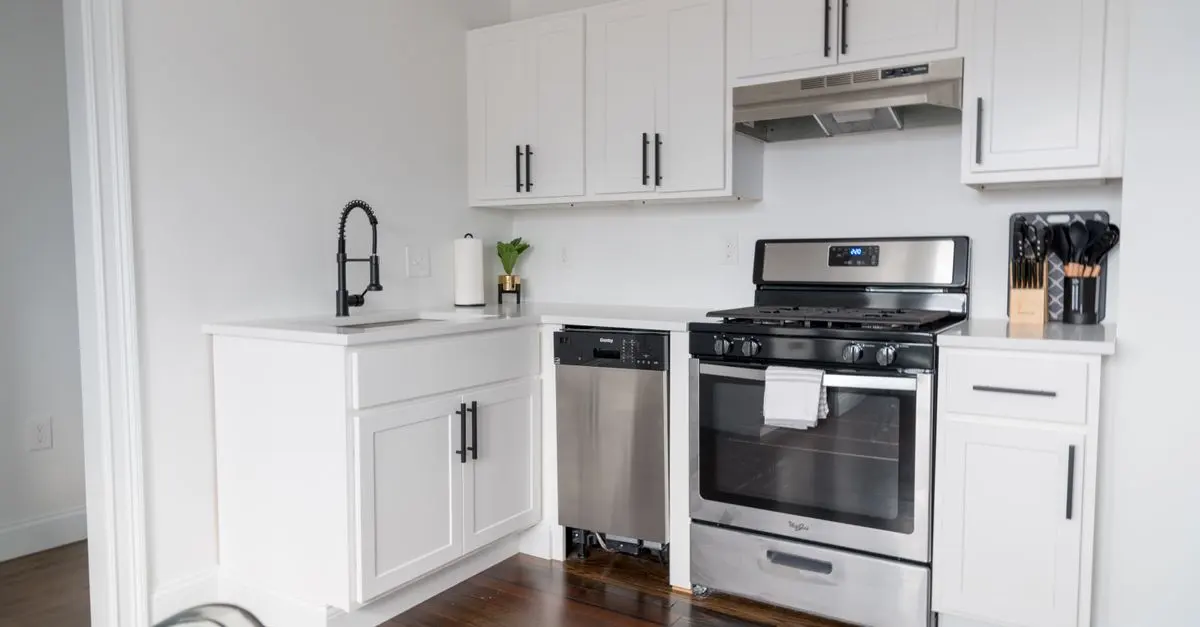
Cooking smell in apartment life gets worse in summer, especially when the kitchen is part of the room you sleep in. One evening of frying onions, fish, schnitzel, or spicy sauce can sit in a Prague studio long after the pan is washed. You open the window, the air feels better for a while, then you come back later and the flat still smells of oil, food, and stale warmth. At that point, another scented candle is not the answer. The smell is probably sitting on a surface.
Why cooking smell stays longer in a small apartment
In a small apartment, the kitchen is rarely just a kitchen. It is also the living room, the desk area, sometimes the bedroom, and often the space next to an open wardrobe. When steam mixed with grease leaves the pan, it has nowhere separate to go. It lands on the sofa, rug, curtains, dining chairs, upper cabinets, and the wall near the stove.
Greasy vapor is annoying because you often do not see it. After frying, it does not settle only on the hob. It leaves a thin film on cabinet handles, the top edge of the fridge, the microwave door, and the dusty strip above the range hood. Dust then becomes a dry carrier for odor. When the flat heats up during the day, that smell starts coming back into the air.
Summer makes the problem worse. People ventilate carefully because they do not want to heat the flat at noon. In an attic rental, a panelák studio, or a place facing a noisy street, I understand the instinct. Still, ten minutes of fresh air changes the air. It does not remove grease from a curtain.
The most common mistake is treating the room as if it only needs a nicer scent. A diffuser or fabric spray may cover onion for half an hour, but if the real source is an oily range hood filter and a rug near the kitchenette, you are just layering fragrance over old cooking residue. That never smells properly clean.
First, find the odor carrier
Start with the range hood. Not the switch, not the noise it makes, but the filter, lower edge, and surrounding cabinet area. Run a paper towel across the underside. If it comes away yellow or grey, you have your first clue. In many Prague rentals the hood is recirculating, not vented outside. Air passes through a grease filter and a charcoal filter, then returns to the room. If that filter has not been cleaned or changed for a year, the hood may be moving apartment cooking odor around rather than removing it.
Upper kitchen cabinets are the next neglected spot. The top often holds dust, grease, and a few crumbs from old cooking. One cloth with a proper degreaser can reveal the smell you thought was just “in the air.” Glossy white kitchens hide it fairly well. Wood veneer and laminate hide it even better.
Then check soft surfaces. Curtains near the kitchen window, a rug under the table, upholstered chairs, a throw on the sofa. If you are unsure, try a slightly ridiculous but useful test: leave the apartment for twenty minutes, come back, and smell the fabric before you smell the room. Fabric odor is different from a dirty counter. It is softer, more stale, usually a mix of food, dust, and trapped humidity.
Do not skip the bin and drain. Food waste changes fast in hot weather, even when there is not much of it. Onion peel, fish packaging, meat trays, and a wet paper towel can do a lot in a tiny kitchen. The drain can also hold grease and residue inside the trap. If the smell gets stronger when you run hot water, look there.
I also look at wardrobes in studios. They are often two or three meters from the stove. Clothes do not smell immediately, but after weeks of regular cooking they can hold a faint trace of oil and spice. Coats, knitwear, and scarves show it first because they are not washed every few days.
What to clean right after cooking
After cooking, you do not need a full deep clean. You need five focused minutes before the smell settles. Wipe the area around the stove, the worktop, backsplash, cabinet handles, and any splash zone near the pan. Use warm water with dish soap or a mild degreaser. A damp cloth alone mostly moves grease around.
Paper towels are useful for the first pass. That is not wasteful perfectionism; it keeps you from loading a sponge with oil and then wiping the same oil around the sink for the next week. If you used a sponge after heavy frying, wash it well in hot water with dish soap, or replace it. In summer, the sponge can become its own little odor source.
Take food waste out quickly if you cooked with onion, garlic, fish, meat, or strong cheese. In a rental without a balcony, that is annoying. Still, the under-sink bin is one of the strongest smell carriers in a small flat. If you cannot take it out immediately, close the bag, wipe the lid, and check the inside of the bin for anything stuck to the side.
Ventilate in short, strong bursts. Morning or evening is usually better than the hottest part of the day. Open the window fully and create cross-ventilation if the layout allows it. Leaving one window cracked for two hours on a hot afternoon often brings in heat and humidity without clearing much. In a studio, ten serious minutes usually beat two lazy hours.
Let the range hood run for a while after cooking. Most apartment hoods are not miracles, but they can pull away some steam before it lands on fabric. If the hood only makes noise and will not even hold a paper napkin near the intake, it is time to clean range hood surfaces, wash the grease filter, or replace the charcoal filter.
When the problem is fabric and carpet
You can tell by the way the odor returns. The kitchen is clean, the bin is empty, the drain has been flushed, and the filter is no longer sticky. The apartment smells better for a few hours. Then you close the windows, sit down on the sofa, and the smell slowly comes back. At that point I would stop circling the stove and look at the rug, curtains, and upholstery.
A rug near a kitchenette works hard even when it has no visible stains. It catches dust, crumbs, greasy vapor, and moisture from cooking. If people walk over it barefoot or in house slippers, there is another layer. Carpet smells from cooking are not usually one dramatic bad spot. They are more like a low stale note that rises during vacuuming or when the room warms up.
Fabric spray is only a short crutch here. It does not clean. It perfumes the top layer of fibers. On some sofas the result is worse: citrus, old oil, and dust in the same breath. If the sofa or rug is light-colored or made from a fabric you do not know, test any cleaner on a hidden area. Kitchen degreaser does not belong on upholstery.
Wash curtains more often than feels reasonable. In a small flat with a kitchenette, once a month during a period of heavy cooking is not excessive. Heavy curtains that are hard to dry can at least be vacuumed with a brush attachment and aired outside if you have a balcony. If they have not been washed in years, though, airing will not fix much.
Professional carpet or upholstery cleaning makes sense when normal cleaning has not removed kitchen smell and you do not want to replace the sofa or rug. Extraction cleaning can pull more out of the fibers than a household spray, especially from deeper pile carpets and older sofas. It is not magic, but with cooking odor the difference can be obvious.
How to book cleaning for a small apartment with cooking smell
When you request cleaning, do not write only “I need my studio cleaned.” That sounds like vacuuming, bathroom, and a quick kitchen wipe. If the issue is cooking smell in apartment surfaces, say so directly. A cleaner or cleaning service then knows to look for grease film, filters, fabric, and the bin, not just visible mess.
Useful details to include:
- apartment size and whether it is a studio, 1+kk, or small 2+kk,
- whether the range hood vents outside or uses a charcoal filter,
- whether you have a rug, fabric sofa, curtains, or upholstered dining chairs,
- what flooring sits next to the kitchen,
- which cooking smells linger most, such as frying, fish, curry, garlic, or meat.
Agree on scope before the visit. Standard kitchen cleaning does not automatically include sofa extraction, curtain washing, or dismantling a hood. Some charcoal filters are not washable and need replacing. Metal grease filters can often be degreased if the manufacturer allows it. Better to discuss that in advance than at the door.
For a small apartment, work in layers. First remove grease sources in the kitchen. Then deal with the bin, drain, and cabinet tops. After that, move to fabric and carpet. Doing everything at once gives the cleanest result, but even a partial job helps if it targets the right carrier. Do not treat the air as the enemy. Air is only the messenger. The source is sitting somewhere on a surface.
If you want someone practical to look at the flat, Čistýkout can help connect you with cleaning options in Prague. Use the contact form and mention that this is not just routine cleaning, but a cooking odor problem in a small apartment. Add photos of the kitchen, range hood, and fabric areas. The more clearly you describe the odor carriers, the easier it is to agree on the right cleaning scope.