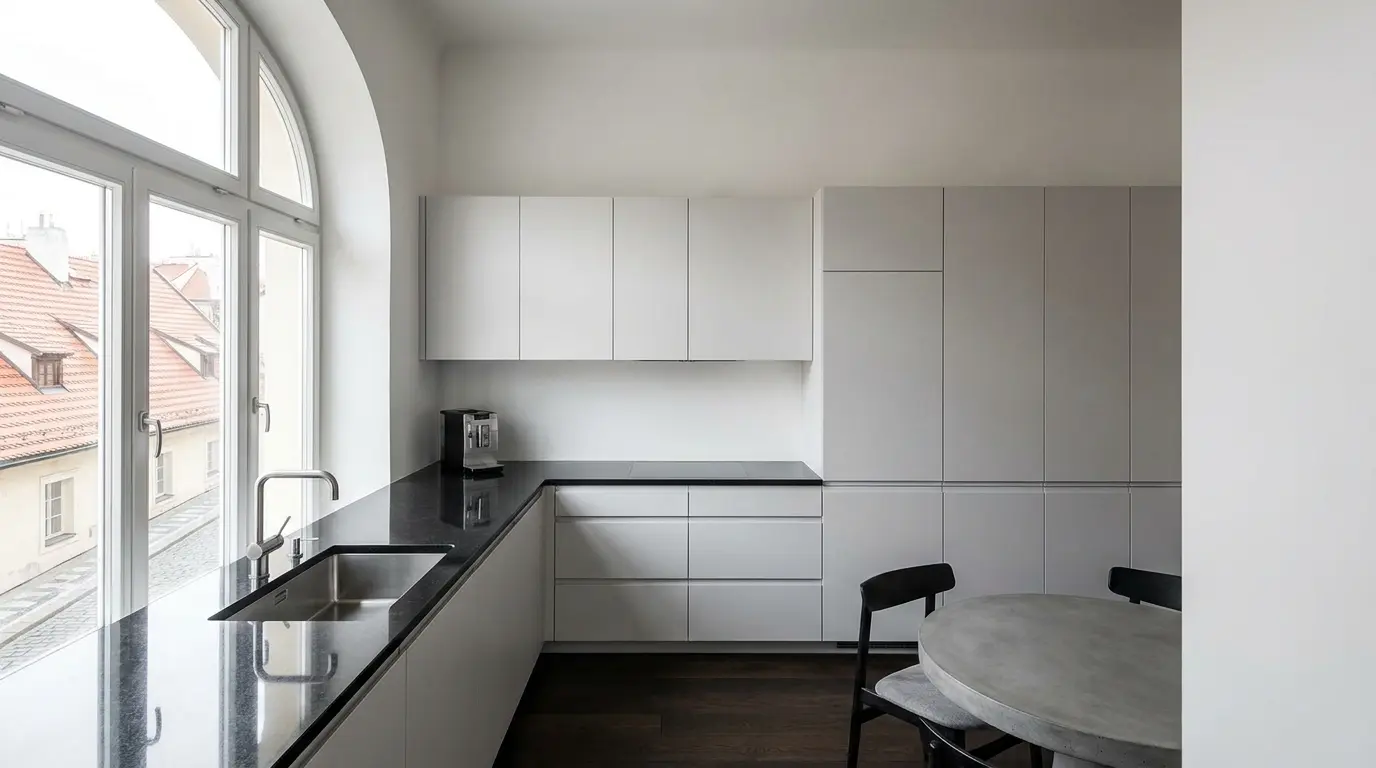
Deep cleaning a kitchen is often where the best intentions go to die. We wipe the stovetop, run a cloth over the counters, maybe empty the bin, and call it a day. But meanwhile, the oven edges stay sticky, the range hood filter gets clogged, and a thin film of grease slowly coats the upper cabinets. In Prague apartments, where open-plan kitchens are common, this buildup happens faster than most people expect.
Most cleaning guides treat the kitchen as one big task, but that is a mistake. A successful deep clean works best when you divide the work by the type of dirt. Burnt grease in the oven is one challenge, fridge hygiene is another, and that tacky film on the tiles is a third. Once you separate these zones, the job feels less overwhelming. You will also see more clearly when a quick tidy-up is enough and when it is time to bring in the pros.
Where grease and bacteria build up most in a kitchen
The dirtiest areas in a kitchen are rarely the ones we clean most often. The hob usually gets a quick wipe because spills are obvious. What gets ignored are the nearby edges, handles, switches, the sides of cabinets near the cooker, and the top line of the backsplash where cooking vapour settles over time.
The oven and cooking area usually carry the heaviest load. Whether it is a roast chicken or bubbling pasta bakes, oil splatter leaves more than just visible stains. It creates layers—a little on the glass, a little on the handle, a little on the seal. Months later, the whole zone feels grimy even if there is no single "mess" to point to.
The range hood is another classic problem spot. People often wipe the visible shell but forget the filter. That is backwards. If the filter is overloaded with grease, the hood loses efficiency, cooking fumes stay in the room longer, and the grease ends up on cabinet doors, tiles, and ceiling edges. In compact Prague rentals, this is incredibly common. You walk in and the kitchen looks fine, but every surface has that faint, tacky feel.
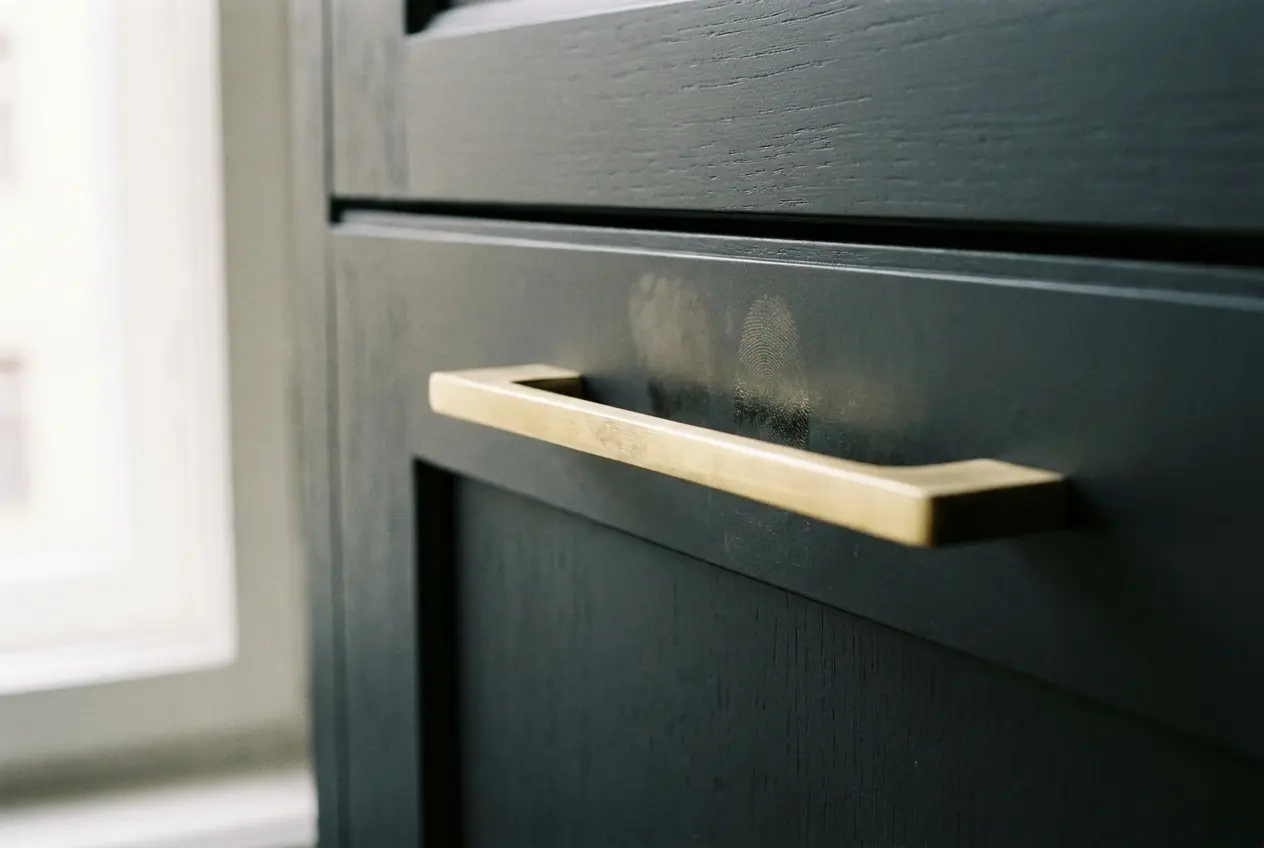
Then there are the touch points: the fridge handle, microwave buttons, light switches, drawer pulls, and kettle handles. These matter for hygiene more than most people realise. You touch them constantly while cooking—after handling raw meat, eggs, or vegetables. They become high-contact transfer points, which is why a proper kitchen deep clean has to include them.
That is the real difference between maintenance and deep cleaning. Maintenance makes the room look presentable for the evening. A deep clean resets the hidden problem zones before they turn the whole kitchen into a sticky, stale-smelling chore.
How to clean an oven without damaging the surface
If you search for "how to clean oven surfaces" online, you will find endless miracle fixes involving baking soda, vinegar, or lemon steam. While some of these can help, reality is often more stubborn. It depends on whether you are dealing with a few weeks of grease or a layer of burnt residue that has been baked on for months.
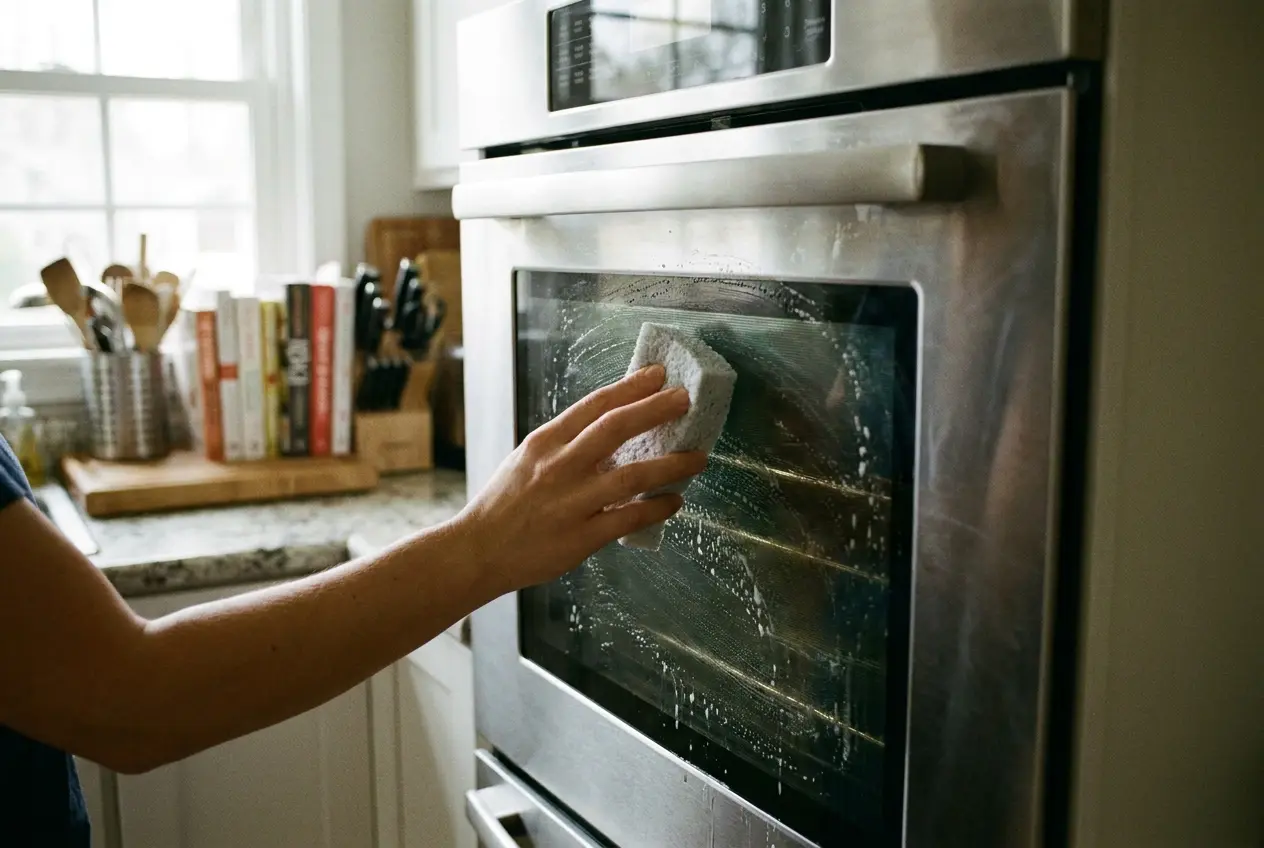
For moderate grease, a gentle approach is best. Turn the oven off and let it cool until it is just warm. Remove the racks and trays. Apply a dedicated oven cleaner or a non-abrasive degreaser to the interior. Leave it for a few minutes, then wipe with a soft microfibre cloth or a non-scratch sponge. Usually, that is all it takes.
Burnt-on buildup requires patience rather than brute force. A common mistake is grabbing steel wool or a knife to scrape away the mess. Avoid this. Oven enamel scratches easily, and once the glass on the door is marked, future grease sticks even faster. If there is a heavy layer, apply your cleaner in two rounds, let it sit longer, and use a plastic scraper designed for sensitive surfaces to gently lift the debris.
The right product choice depends on the material:
- For enamel interiors, use a non-abrasive oven cleaner and a soft sponge.
- For glass door panels, use a gentle cream cleaner or degreaser without grit.
- For stainless trim, finish with a stainless-safe cloth to avoid unsightly streaks.
- For removable racks, soak them separately in warm water and degreaser before wiping.
Self-cleaning ovens need extra caution. Pyrolytic ovens burn residue at extreme heat, while catalytic liners break down grease during normal use. Never scrub catalytic panels aggressively or coat them in strong chemicals. Also, never run a pyrolytic cycle if there is a thick layer of loose grease or cleaner residue inside. That is how you end up with a burnt smell through the whole flat.
If grease has built up between the glass panes or around the seal and the task feels overwhelming, it is often safer and cheaper to hire a professional. Risking damage to a high-end built-in appliance is rarely worth the savings.
Fridge, freezer, and pantry: a hygienic reset without chaos
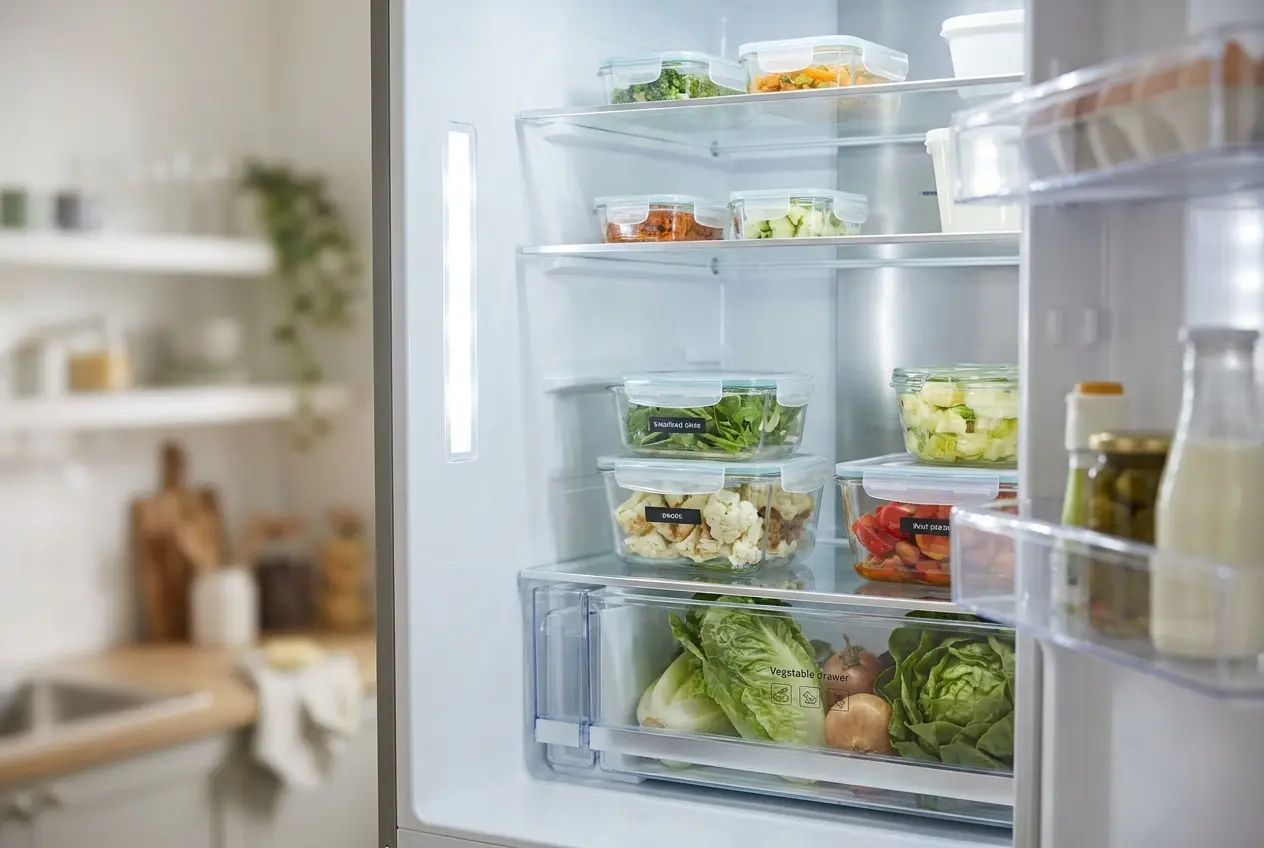
The fridge is deceptive. It often looks perfectly fine until you actually empty it. That is when you find dried sauce under bottles, crumbs in the door seals, and vegetable residue at the bottom of drawers. A kitchen deep clean simply isn't complete without a full fridge reset.
Start by removing everything—and I mean everything. There is nothing worse than trying to wipe around open jars and yogurt pots. Sort your food into three piles: keep, use immediately, or throw away. Do the same for your pantry. It is amazing how many homes hide open bags of flour, stale breadcrumbs, or spices that are years past their best.
Wash shelves and drawers outside the fridge using lukewarm water and a mild detergent. Avoid very hot water, as it can stress and crack some plastic parts. Wipe the interior thoroughly, paying close attention to corners and the drain hole. The door seal is vital; it collects moisture and debris that can lead to smells or mould. A soft brush or a cloth wrapped around your finger works much better than a quick wipe with a sponge.
Plan your freezer defrosting in advance. If you rush it, you will end up with melting bags on the counter and a wet floor. Move the contents to a cool bag, line the area with towels, and never attack the ice with sharp tools. Damaging the inner lining of your freezer is an expensive mistake that is easily avoided with a little patience.
To prevent future smells, keep it simple: don't leave aromatic foods uncovered, check the produce drawers weekly, and wipe the seals every few weeks. In the pantry, transferring dry goods into sealed containers doesn't just look better—it keeps things fresh and prevents pests like pantry moths from moving in.
Range hood, tiles, and the greasy film on surfaces
If you want to know how to degrease kitchen surfaces without leaving smears, the order of operations is key. First, loosen the grease. Then, wipe it away in sections. Finally, buff the residue. If you start rubbing a dry cloth over a greasy surface, you are mostly just spreading the film around.
For tiles, lacquered cabinets, and splashbacks, use a kitchen degreaser suitable for the finish. Let it sit for a minute, then wipe in controlled sections. Follow with a clean damp cloth and finish with a dry microfibre for a streak-free shine. This is especially important on dark or glossy finishes where every smudge shows.
Range hood cleaning has two parts: the exterior and the filter. While the shell is easy to wipe, the filter is what actually affects performance. Metal mesh filters can often go in the dishwasher, but they don't always come out perfectly clean. For heavy grease, soaking them in hot water with a proper degreaser is more effective. Make sure the edges and corners are clear of residue. Carbon filters, however, are usually replaced rather than washed.
How often should you do this? In a home where you cook a few times a week, a light degreasing every month is usually enough. If you cook daily or fry food often, you will need a shorter interval. In kitchens after a renovation or long-term tenancy, that greasy film often coats the tops of doors and even the walls—that is a job for a full afternoon, not a quick tidy.
When professional deep cleaning kitchen service is worth it
Some kitchen jobs are manageable on your own. Others are just exhausting time-sinks. A professional deep cleaning kitchen service is usually worth the investment in three specific scenarios.
The first is after tenants move out or before you move into a new place. A room can look acceptable in photos but still hide serious grease issues inside the oven, the hood, or the cabinet edges. If you are preparing a whole flat, our move-in guide can help: cleaning an apartment before moving in.
The second scenario is heavily neglected grease—the kind of kitchen where years of intensive cooking have left a tacky layer on every vertical surface and inside every filter. At that point, household cleaners often aren't enough to restore the room.
The third is when the kitchen is part of a larger general clean—after a renovation, before a sale, or simply when the home needs a proper reset. Kitchens are the slowest zone to clean because of the mixed dirt: grease, food residue, dust, and smells. Professionals have the tools and experience to do it faster and more thoroughly.
CistýKout handles these situations in Prague regularly. Whether it is a greasy kitchen after a move or a one-off deep clean, we can help. If you want to avoid losing your entire weekend to filters and oven corners, you can send a no-obligation request through our contact page. Sometimes the best cleaning tip is knowing when to save your own time and nerves.