
Most bad cleaner-client relationships do not explode on day one. They start with something small. A late-night message, a "tiny extra" request, a push for discount before you've even seen the flat, then a quiet assumption that you will just absorb the mess and keep smiling. That is usually the moment when a demanding customer turns into a difficult client. If you run a cleaning business in Prague, or even just work solo with a full calendar, this is not only about stress. It hits your schedule, your margins, your safety, and eventually your reputation.
The interest around client red flags is not theoretical. Providers clearly care about risk on the customer side, and honestly I get it. One badly framed job can poison an otherwise solid week. You lose time in messages, you lose money on scope creep, and you start carrying that tired defensive mood into the next apartment in Karlín or Vinohrady. So the real question is not whether you should always sound nice. The better question is how to decline a client without creating another hour of argument, another discount discussion, or a review problem later.
When a client stops being demanding and starts being a real problem
A demanding client is not automatically a bad one. Some people are detail oriented. They care about limescale, kitchen fronts, or whether the cleaner uses fragrance-free products because their child has allergies. Fine. That is normal. A difficult client is different. The pattern is the point.
The first red flag is repeated changes to the deal. You confirm a standard clean for a two-bedroom flat in Prague 7, then the night before the visit the client suddenly adds the oven, the balcony, the fridge, maybe "just a quick wipe" of the cellar storage too. Any one request can be reasonable. The problem starts when last-minute expansion becomes their normal way of operating. They are not clarifying. They are testing how far they can push.
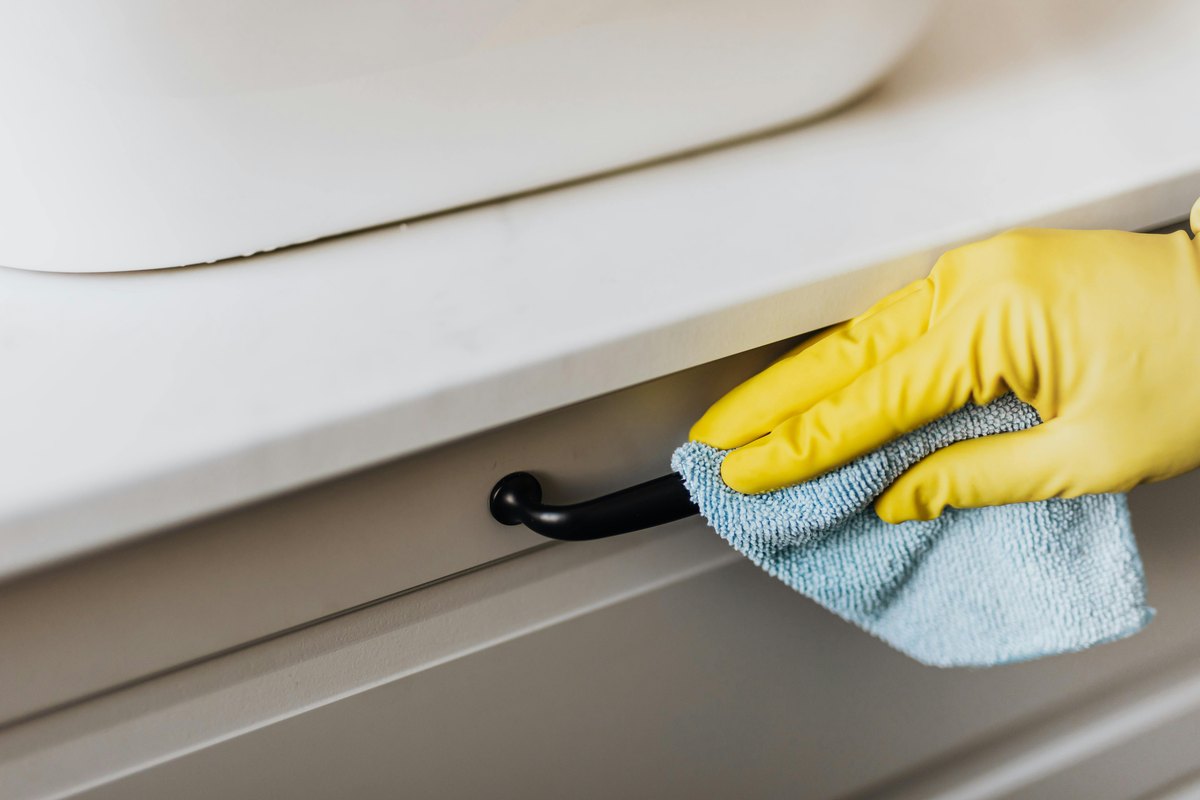
The second red flag is disrespect disguised as casual communication. They ignore confirmation messages. They expect immediate replies at odd hours. They compare your rate to some vague cheaper option. They talk as if your calendar should bend around their mood. In cleaning, that matters more than people outside the trade often realize. Work is sold in blocks of time. Every careless "it will only take a minute" cuts into the next booking.
The third issue is a blurry scope. If the client refuses to confirm what is included, or keeps everything conveniently vague, they are building room for a later dispute. I have seen versions of this many times. "Let's see when you get here" sounds flexible, but it often means the argument will simply happen on site when your cleaner is already standing in the hallway with supplies and no easy exit.
Then there is safety. I worry when providers talk about boundaries as if this is only a customer service topic. It is not. If the address changes at the last minute, if the person who opens the door is not the one who booked, if there are extra people in the property you were not told about, or if the client keeps pushing for weird arrangements, take that seriously. Boundaries in cleaning services are partly commercial. They are also basic self protection.
How to set boundaries before the first visit
Most conflicts are easier to prevent than to solve. Good clients barely notice the system because it feels normal. Difficult ones hate it because it limits the room for pressure.
The simplest rule is to confirm price and scope in writing. This does not need to sound corporate. A short message is enough: date, time, address, service type, estimated duration, what is included, what counts as extra, and how added work is approved on site. That single written recap saves an absurd amount of trouble. If someone resists that level of clarity, I would treat it as useful information.

Before arrival, confirm three practical points. Who will be there. What condition the property is in. And whether there is anything outside standard expectations. In Prague, small logistics change everything. Parking in Žižkov, no lift in an older building, pets, renovation dust, stone surfaces, key pickup from a café downstairs. None of that is dramatic on its own, but together it decides whether a job takes three hours or five.
Clear boundaries do not only protect the provider. They protect decent clients too. When the process is predictable, nobody needs to guess what happens if the cleaner is delayed by traffic, what falls under a regular clean, or when extra work is billed separately. Good customers usually appreciate that. Bad ones push back because clarity closes the loopholes.
It helps to have a few ready-made phrases before the conversation gets tense. For example: "I'm happy to add that, but it falls outside the original scope." Or: "To keep pricing fair, I need to confirm that in writing first." Those lines are calm, but they stop the drift. Cleaner-client communication gets easier when you are not improvising under pressure.
How to decline a client politely without inviting a fight
This is where many providers talk too much. They feel the need to justify the decision in detail. Usually that backfires. A difficult client hears explanation as negotiation material.
If you know you do not want the job, keep the wording short and firm. "Thank you for the inquiry. Based on our communication so far, I won't be taking this booking." Or: "In this setup, I'm not able to offer the service." That is enough. No essay. No defensive tone. No long emotional postscript.
If you want to soften the edge, give a neutral reason, not an apology spiral. "The scope and communication style are not a fit for how we work." Or: "We currently take on jobs only when the scope is confirmed in advance." That matters. An apology invites debate. A clear rule ends it.
Scripts that usually work
- "Thank you, but I won't be moving forward with this booking."
- "Under these conditions, I can't accept the job."
- "What you're asking for falls outside the services we offer."
- "You may be better served by a provider that handles one-off deep cleans on a larger scale."
What not to do
- Do not write a long message explaining that you are overwhelmed or upset.
- Do not argue over who is right.
- Do not leave the door half open with "maybe later" if you already know the answer is no.
- Do not keep replying just because the other person keeps pushing.
When should you refer the client elsewhere? When the mismatch is real and not just behavioral. Maybe they need a post-construction clean and you focus on regular household work. Maybe they want late-evening office service in Smíchov and your route is morning apartments in the wider city center. Referring them to another type of provider is professional when it reflects a service mismatch. It should not be a reward for pushy behavior.
What to do when the problem appears with a long-term client
This is the harder version. Declining a new lead is administrative. Ending a long-running relationship is emotionally messier. There is habit, maybe loyalty, and usually that little fear that a regular client will react badly if you finally draw the line.
Start with a warning conversation and a reset of terms. Keep it factual. "Over the last three visits, the scope changed after arrival and it caused problems with the next bookings. If we continue, I need the work to stay within the agreed scope unless extra time is approved first." That is not rude. It is a professional correction.

A final chance only makes sense if the client actually changes their behavior. Not if they say sorry and repeat the same thing next week. I think this is the trap many providers fall into. They look at the monthly revenue from that client and tell themselves it is still worth keeping. Then they quietly lose better things: capacity, energy, team morale, even the willingness to take on healthier clients.
If the relationship needs to end, end it with a date. "Thank you for working with us. We will close the cooperation as of 31 May. Until then, the two already confirmed visits will go ahead under the current agreement." That keeps the frame intact. No loose ends. No rolling negotiation.
If you expect the reply to get ugly, keep the whole exchange in writing. Phone calls invite emotion and make it easier to say something sloppy in the moment. A written message slows you down and gives you a record.
How to protect your reputation after the relationship ends
The final clean is not the final step. After that comes reputation management, and the smartest move is usually the least dramatic one.
Keep records of the agreed scope, changes, approvals, and key messages. You do not need a legal archive. You just need a simple system that lets you find what was agreed. If a complaint appears later, you are not forced to rely on memory.
If the former client leaves unpleasant feedback, answer briefly and factually. Something like: "We're sorry the cooperation did not meet your expectations. The agreed scope and service terms were confirmed in writing during the cooperation." That is enough. Most people reading reviews can tell the difference between a calm professional reply and a public fight.
Do not respond while angry. That sounds obvious, but it saves reputations. If a nasty message lands on Sunday evening, leave it alone for a bit. Reply in the morning if you need to. Emotion is expensive, especially in a service business where trust is half the sale.
One last thing from real life: not every difficult client writes a bad review. More often, they simply take up far too much mental space. That is why learning how to decline a client matters. You are not only avoiding a messy booking. You are protecting your standards before they erode.
Good cleaner-client communication is not about being endlessly accommodating. It is about being clear, polite, and firm, in that order. If you are looking for a cleaner in Prague and want a straightforward setup from the start, ČistýKout is a Prague-based option worth considering. You can use the contact form here for a no-pressure inquiry.