Disinfecting home after illness does not mean spending Saturday spraying every shelf, book and cushion. After flu or a routine respiratory bug, a thorough clean plus targeted disinfection of frequently touched surfaces is usually the sensible approach. Vomit, diarrhoea, blood or another body fluid calls for a stricter response. That is no longer about making the flat feel fresh; it is about dealing safely with a specific contamination.
Clean first, then disinfect
Start with the ordinary jobs. Remove used tissues and rubbish, open a window, collect dishes and wash away visible dirt, grease or dried spills. A household cleaner and water loosen and remove debris. A disinfectant has a different job: used on a clean, compatible surface, it reduces or kills the organisms named on its label.
The order matters. Dirt and organic material can stop a disinfectant reaching the surface properly. The CDC's home cleaning guidance recommends cleaning with soap or detergent first, then disinfecting where necessary. Routine cleaning is enough in many everyday situations. Targeted home disinfection makes more sense while someone is ill, when a household member has a weakened immune system, or after contamination with vomit, faeces or blood.
People sometimes ask whether every floor needs disinfectant after flu. Usually, no. The kitchen floor needs a normal wash unless something was spilled on it. The bedroom door handle, bedside light switch and the sick person's phone deserve more attention. A lived-in home cannot be kept sterile, and trying to do so only adds chemical exposure and risks damaging finishes.
Think of the work as three separate processes:
- Cleaning removes dirt, residue and a large proportion of germs.
- Disinfecting is a targeted chemical step for a suitable, already-clean surface.
- Laundry relies on detergent, movement, a fabric-safe temperature and complete drying.
Which places deserve attention after sickness
Do not begin with a generic list. Replay the sick person's day. Did they stay in bed or camp on the sofa? Did they carry one mug and their phone between rooms? That short reconstruction tells you what to disinfect after flu far better than misting the whole apartment.
Start with items touched repeatedly:
- door and window handles, switches and handrails;
- bathroom taps, the toilet flush and toilet seat;
- phone, tablet, keyboard and remote control;
- bedside table, lamp switch, thermometer and reusable drinks bottle;
- fridge handle, kettle and frequently touched cabinet pulls.
With electronics, never spray liquid straight onto the device. Check the manufacturer's instructions, apply a compatible product to a cloth without soaking it, and keep moisture away from ports. After a week of illness, the phone often matters more than a high shelf nobody touched.
In a Prague two-room flat, this need not become an all-day operation. I once helped map the contact points after a family bout of flu and we found seventeen. The owner had planned to disinfect the whole bookcase and every toy. Then she remembered the children had spent the week with their grandparents. The useful area was the bedroom, bathroom and kettle. Half the original job disappeared, and the remaining work was much more focused.
Bedding, towels and clothes without extra fuss
Laundry after illness starts with the care label, not the hottest number on the machine. Use the warmest setting the fabric can safely take, add normal detergent and dry everything completely. CDC guidance says household laundry should be washed at the recommended temperature and fully dried. For a routine respiratory illness, the sick person's washing can generally go in with everyone else's.
Avoid shaking used bedding. Fold it inwards and carry it directly to the hamper or machine. Leave enough room in the drum for the load to move. A washing machine packed solid does not become more effective because you select a longer cycle.
Treat textiles contaminated with vomit or faeces more carefully. Wear gloves, handle them without shaking, and follow both the care label and disease-specific advice. For norovirus, the CDC recommends prompt cleaning of the contaminated area and washing affected fabrics with detergent on the hottest suitable cycle, followed by thorough machine drying. Its norovirus prevention guidance is deliberately stricter than the routine after a cold.
Wash your hands after loading the machine. Wipe a plastic hamper if it is visibly dirty or held contaminated laundry. Wash a fabric bag according to its label. There is no benefit in disinfecting the entire utility corner every time you remove a towel.
Bathroom and kitchen: a short room-by-room plan
Bathroom and toilet
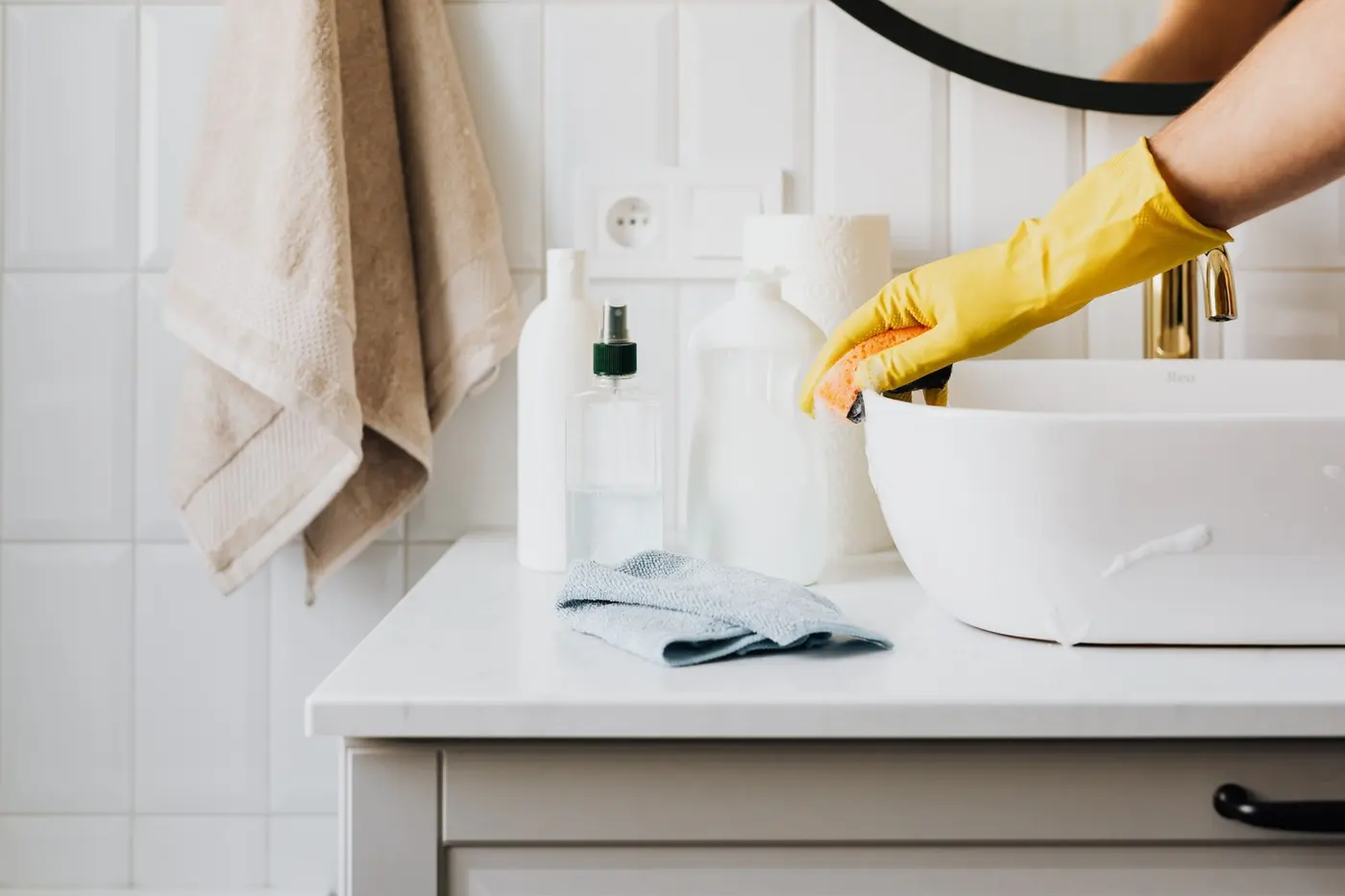
Remove rubbish and visible contamination first. Clean the basin, taps, toilet area and other used surfaces with a suitable cleaner. If you need to get through the room efficiently, follow our quick bathroom cleaning guide. Then disinfect high-touch points and any area hit by body fluid. Keep toilet cloths separate from anything used at the basin or in the kitchen. Colour-coded cloths are simple, cheap and particularly useful in shared flats where cleaning habits differ.
Kitchen
Wash used dishes with hot water and washing-up liquid or put them through the dishwasher. Clean cabinet handles, the tap, worktop and the place where drinks or meals were prepared. If the units still feel greasy, use our guide to removing grease from kitchen cabinets without scrubbing. If you disinfect a food-contact surface, read the label to find out whether it must be rinsed with drinking water afterwards. A product intended for bathroom tiles may be wrong for a chopping board or high-chair tray.
In both rooms, the surface must remain wet for the full contact time on the product label. Spraying and wiping it away immediately may smell convincing, but it might not meet the conditions for disinfection. Do not guess the dilution, either. A stronger mixture is not automatically more effective and may damage grout, stainless steel, natural stone or your airways.
The World Health Organization lists handles, toilets, taps, counters and touchscreen devices among priority high-touch surfaces. It also advises against routine indoor spraying and favours applying disinfectant with a cloth or wipe. Its guidance for non-healthcare settings was written around COVID-19, but its chemical safety principles remain useful for ordinary cleaning after sickness.
What never to mix and when to wait
Never mix cleaning products. In particular, keep chlorine bleach away from vinegar, acidic limescale remover, toilet cleaner, ammonia and any unlabelled product. Mixing them can release irritating or toxic gas. Vinegar is a familiar standby in Czech cupboards, but it has no place beside a chlorine product.
Read the label, ventilate the room and wear skin or eye protection if the instructions call for it. Keep chemicals in their original containers and out of children's reach. If your eyes or throat begin to burn or breathing becomes difficult, stop, move to fresh air and follow the product's emergency directions or seek medical help. Do not add another chemical in an attempt to neutralise the first one.
Postpone the job if you still have a fever, dizziness, diarrhoea or deep fatigue. It is also reasonable to ask for help when contamination covers a large area, you are unsure what a surface can tolerate, or someone at home is severely immunocompromised. Follow clinical or public-health advice for a known diagnosis; a routine used after influenza may be inadequate for norovirus or another highly infectious disease.
When contacting a cleaner, be precise. Say which rooms the sick person used, whether the illness was respiratory or gastrointestinal, whether body fluids are present, and which materials need treatment. The cleaner can then confirm whether they have suitable products and protective equipment. If you are in Prague, send a no-obligation cleaning enquiry to CistýKout. The honest goal is not a sterile home. It is a safely cleaned flat that can return to normal without a chemical marathon.