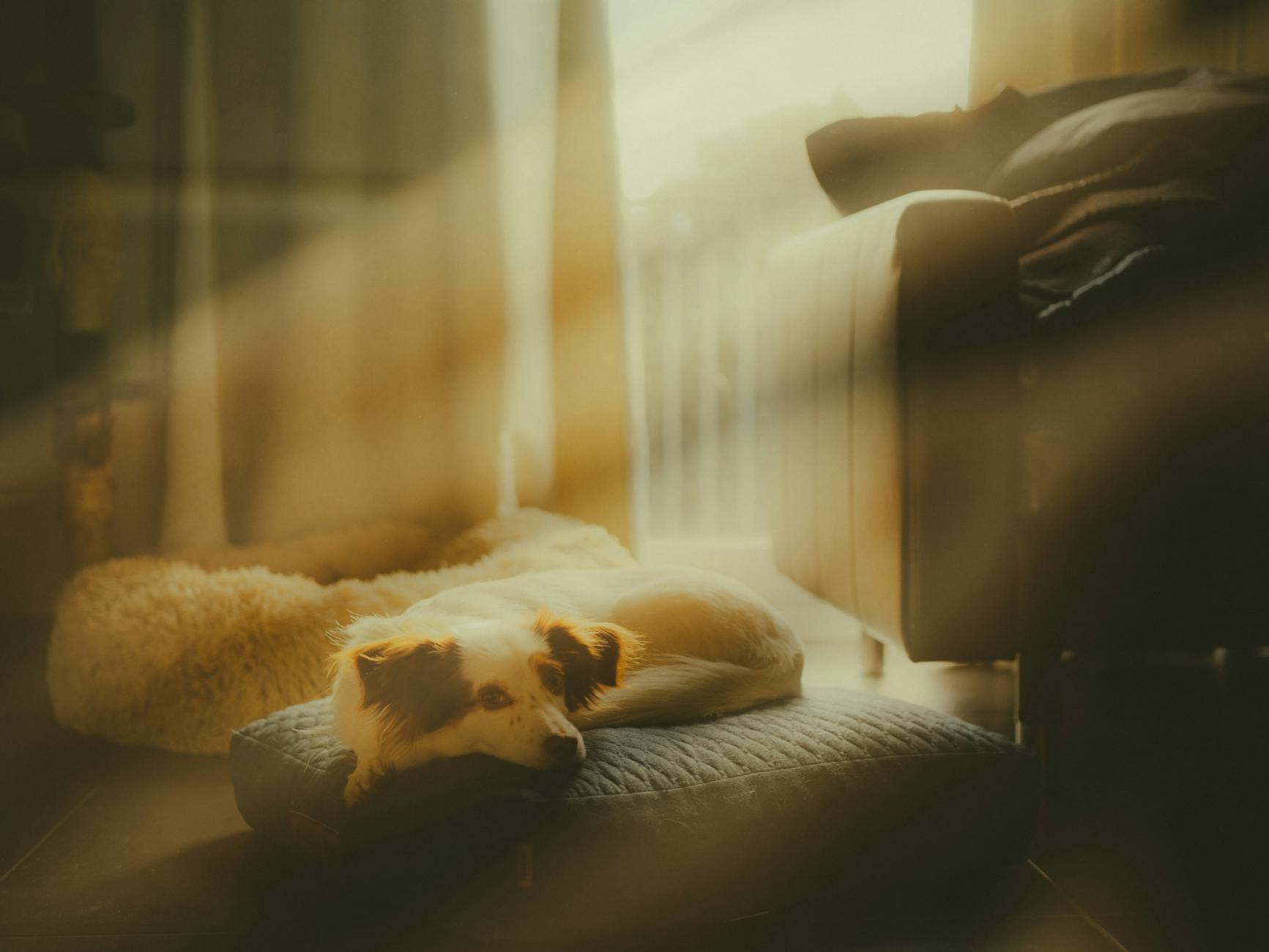
When people ask me how to handle dog smells in an apartment, the conversation usually starts with fragrances. Scented candles, diffusers, or those plug-in fresheners,sometimes all at once. The place might smell "busy" for an hour, but the same stale pet odor always finds its way back into the sofa and rugs. That’s usually the moment I tell them to stop focusing on the scent and start looking for the source.
In Prague apartments, especially smaller ones, the problem builds up quickly. A dog comes in from a wet walk, shakes off in the hallway, and heads straight for the couch. After a rainy day, they’re bringing in half the pavement from Vinohrady or Letná. If the smell lingers for more than a few hours after a walk, the air isn't the problem. The scent is trapped in fabrics, floor residue, the dog bed, or a rug that has absorbed more than it shows.
The goal isn't to create a sterile, dog-free environment. A home with a dog will naturally have a certain scent, and that’s perfectly fine. The real issue starts when the odor persists even after airing the place out, or when it flares up every time things get a little damp. If that’s happening, you don’t need a stronger perfume,you need a more systematic approach to cleaning.
Where dog odor usually starts indoors
Most people assume the fur is the main culprit, but it's usually just the messenger. The real source of that heavy indoor smell is a mixture of skin oils, dander, moisture, and dust, all trapped within soft surfaces. The dog lies on the sofa, brushes against the bed, or naps on the rug, and within days, the scent is distributed evenly throughout the flat.
In a typical Prague apartment, this happens much faster than in a large house. You have less airflow, more shared surfaces, and fewer "buffer zones" between the front door and the living area. One wet walk through the hallway in a compact Holešovice or Vršovice rental can affect the whole living space. I see it all the time.
Moisture is the big trigger. That "wet dog" smell isn't just about the dog being damp; the moisture reactivates odor molecules already sitting in upholstery, blankets, or the dog bed's filling. This is why a home might seem fine on a dry day but starts smelling rough the moment it rains.
There’s also a clear line between a normal pet scent and a hygiene issue. A healthy home has a mild trace of life with a dog. But if you're smelling sourness around the bowls, staleness in the bedding, or the sharp scent of old urine, you’re dealing with absorbed contamination. Air fresheners fail here because they just layer a floral scent over the problem. It doesn’t remove the odor; it just creates a "lavender-scented dog smell."
My simple rule: if the apartment only smells fresh for ten minutes after cleaning before the old scent returns, it wasn't truly clean,it was just masked.
What to clean first
If you only have the energy to tackle a few areas, focus on the dog bed, the sofa, the rug, and the entry zone. These are the "hotspots" where oils, moisture, and hair tend to meet.
The dog bed is usually the biggest offender. Many people wash the cover and call it a day, but the foam or filling often holds just as much odor as the outer layer. If you really want to clean dog bed odor out of the flat, you have to deal with the whole bed, not just the removable cover. If the entire bed can’t be washed properly, it might be smarter to replace it. For lower-cost beds that have seen months of use, a fresh start is often more effective than another round in the washing machine.
The sofa is next, especially if your dog has a favorite spot. The fabric might look clean, but odors settle deep into the fibers and the cushions. Vacuuming the creases and seams is vital. You also need to properly lift the hair with a rubber tool or a specialized brush rather than just wiping it around. If the covers are removable, wash them; if not, spot clean carefully based on the material.
Rugs are another common trap. The smell in a rug is rarely about one single accident; it’s a slow build-up of oils, tracked-in grime, and dust. The strip of floor between the front door and the living room usually takes the most heat, even if it doesn’t look dirty.
Finally, don’t overlook the corners and the area around the bowls. Hair gathers there, but so does a thin, greasy film of food residue and spilled water. It might seem harmless, but once the area warms up, the smell starts to travel. If you're doing a "dog-focused" deep clean, start here. The bookshelves can wait.
How to clean textiles and floors without ruining them
Different materials need different care, and this is where many people accidentally make the problem worse. Some things are safe to wash, others should only be vacuumed, and some are better left to the pros.
If it's washable, wash it. This goes for throws, removable covers, blankets, and smaller mats. Use a detergent that is effective but not heavily perfumed. In a small apartment, strong artificial scents don't stay fresh for long,they just become another layer of the atmosphere you have to live with.
If it’s not washable, vacuum it,thoroughly. I don't mean a quick pass through the middle of the room. Get into the edges, the baseboards, the seams of the sofa, and the space behind the radiator. That’s where the residue stays, waiting to be reactivated by humidity.
Steam cleaning or extraction is great for rugs and upholstery, but only if you don’t over-wet the material. A soaked rug that takes days to dry will smell worse than it did before. If you're doing it yourself, work in small sections, focus on strong suction, and ensure good airflow. Drying properly is the part where most DIY efforts fail.
Urine accidents require a specific sequence. First, absorb as much as possible,don't scrub it in. Then use a cleaner specifically designed for organic enzymes. Old accidents are tougher because the scent may have reached the carpet underlay or deep into the sofa padding. A general spray won’t reach that; it will only offer a temporary fix.
For pet-safe cleaning, stick to simple rules: low residue, low fragrance, and no random chemical mixing. Vinegar can help with some surface odors, but it’s not a magic fix, and it can damage delicate materials or stone floors if you're not careful.
A short routine that keeps the smell from coming back
Once the source is clean, you don’t need a weekly marathon of deep cleaning. A short, consistent routine will stop the buildup before it takes hold again.
Wipe paws after every walk. If it’s raining, wipe the belly and lower coat too. It sounds simple, but this habit alone makes a massive difference in an apartment. For long-haired dogs, keep a dedicated towel by the door and make it a standard part of coming home.
Wash the dog bed regularly,not just when it starts smelling from across the room. In a smaller flat, once every week or two is usually right, depending on the season and how much your dog sheds. Vacuum the sofa and rugs consistently to keep the oils and hair from settling deep into the fibers.
Ventilation is still your best friend, but short bursts of airflow are better than leaving a window cracked all day. Five to ten minutes with a real draft will reset the room. Also, if you have the heating on, remember that dust and odors settle more on textiles near radiators,check those spots a bit more often.
I also recommend a seasonal deep clean, particularly after winter or long rainy spells. This is when homes with dogs accumulate the most residue. This kind of prevention pays off much better than another bottle of room spray.
When to call in the professionals
Some problems are manageable at home, but others are just a waste of your time and energy. If a smell is deeply embedded in upholstery, a mattress, or a large carpeted area, professional extraction is often faster and more cost-effective than multiple half-successful experiments.
This is especially true for households with multiple pets. In those cases, the odors are layered, and you can easily become "nose-blind" to your own home until a guest points it out. Professional help is also a must for repeated urine accidents or for senior dogs who are struggling with hygiene. You need to pull the contamination out from the deep layers and ensure it's dried correctly.
Before a professional arrives, make the apartment easy to work in. Clear small items from the floor, take down any laundry you want to wash separately, and point out exactly where the dog spends the most time. This lets the cleaner focus on the actual problem rather than moving furniture.
If you want to truly remove dog odor rather than just covering it up, start at the source. The bed, the fabrics, the floor edges, the bowl area, and the sofa. In that order, it works.
If you’re in Prague and want to skip the trial and error, CistýKout is a local option that knows exactly how to handle these situations. You can send an enquiry through our contact form and mention where the odor is most persistent. It saves everyone time and gets you back to a fresh home faster.