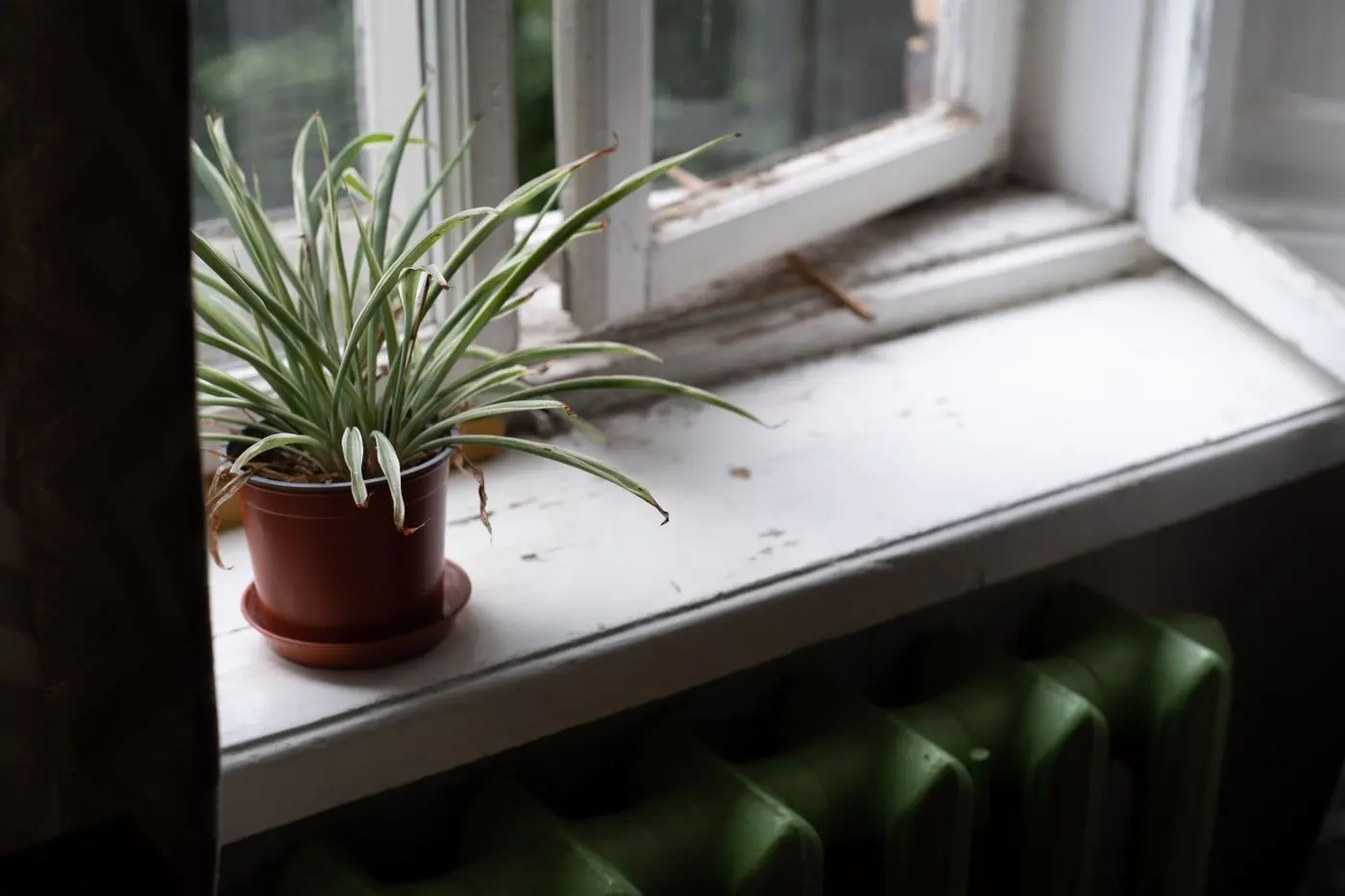
Dust after turning on heating can make a new air purifier feel like the obvious purchase. Usually, however, the heating has not created fresh dust. Warm air has lifted what spent the summer inside the radiator, along the sill, in the folds of the curtains and behind furniture. Before buying another machine, follow that route through the flat: radiator, nearby fabrics, vacuum filters, then the floor. An air cleaner can capture airborne particles, but it cannot remove settled dust from a shelf or mattress.
Check the link with heating, not only the date
Several things change at once in autumn. Windows stay closed for longer, laundry dries indoors, people spend more time at home and the radiators come on. If sneezing, irritated eyes or a blocked nose arrive at the same time, the calendar alone cannot identify the trigger. Cleaning may reduce dust and some allergens in the home. It does not diagnose or treat an allergy.
Keep a room-by-room note for seven days. Record when the heating was on, roughly how long you aired the room, where visible dust returned first and the relative humidity if you own a basic hygrometer. Compare the bedroom with the living room and home office rather than writing down one score for the whole flat.
I once saw a Vinohrady flat where a black side table beside one radiator looked dusty again within two days of the first October heating. The bedroom barely changed. That was not laboratory evidence, but it was a useful clue. We started with the radiator and the long curtain touching it. A second purifier would have been an expensive guess.
The Czech National Institute of Public Health discusses washable textiles, mattresses and carpets in its guidance on indoor allergens. Its point is sensible: reduce exposure in a way a household can maintain, rather than trying to build a sterile home. If heating season allergies bring new, severe or unexplained symptoms, discuss them with a doctor.
Clean the radiator without blowing dust across the room
For dust in radiators, turn the radiator off and let it cool before cleaning. Protect the floor with an old sheet, paper or a washable mat, and clear the window sill. For an electric heater, follow the maker's maintenance instructions and disconnect it from power where required.
Start dry, but capture loose dust as you disturb it. Use a vacuum with an intact bag or empty container, a correctly fitted filter and a narrow crevice attachment. Move slowly across the top grille, accessible gaps and the floor underneath. If you use a soft radiator brush, keep the vacuum nozzle beside it. A hair dryer or compressed air produces a dramatic cloud; in a home with an allergy sufferer, that is precisely the result to avoid.
Once the loose material is gone, wipe accessible painted surfaces with a slightly damp microfibre cloth and dry them. Do not spray water into the heater. Do not prise off grilles, covers or technical parts unless the instructions for that model say they are user-removable. Valves, leaks, bleeding and pipe connections belong to the building manager or a heating technician.
The order matters: capture loose dust, vacuum the surrounding area, wipe reachable surfaces, then mop the floor. Starting with a wet cloth turns loose dust into grey paste inside narrow gaps. Mopping first means cleaning the same floor twice.
Curtains, bedding and upholstery put particles back into the air
Dust does not stop at the radiator. The warm current rises along the sill and often passes a curtain. Pulling that curtain, making the bed or sitting down on a sofa can lift part of the settled material again. A spotless radiator next to a long curtain that leaned against it all summer is only half a job.
Do not strip every window and fill the washing machine in one afternoon. Read the care labels, check the machine load and plan enough space for complete drying. Four wet curtains in a small Žižkov flat can raise humidity just as the windows begin to collect condensation. Wash in manageable batches. For non-washable fabric, use a clean upholstery attachment at modest suction or arrange professional textile cleaning.
Treat the bed with the same restraint. Wash bedding according to its label and dry it fully. Vacuum the mattress and upholstery slowly; do not soak the filling in an attempt to make it extra clean. Trapped moisture is a worse outcome than a minor mark. The US EPA recommends damp dusting, regular vacuuming and washing bedding, while noting that vacuuming and other movement can temporarily resuspend indoor dust.
Shine a torch behind the bed and any large wardrobe placed against an outside wall. You do not need to drag heavy furniture across the room alone. You are looking for evidence: dry dust, condensation, a persistent musty smell or visible mould. Those findings are not interchangeable.
The vacuum or purifier filter may be part of the problem
An overfilled vacuum container, torn bag or badly seated filter can return fine dust to the room. Before a bigger cleaning session, open the manual. Check seals, filter order and replacement intervals. A washable filter must be completely dry before it goes back into the machine. A HEPA label cannot help if exhaust air escapes around the frame or through a damaged bag.
Give the air purifier the same inspection. When did you last clean or replace the pre-filter and main filter? Are the inlets blocked by a wall or curtain? Is the unit sized for the room? Do not wash or vacuum a filter unless the manufacturer permits it. Filter material can be damaged even when it looks cleaner afterwards.
The distinction is practical. An air cleaner works on particles that become airborne and pass through its airflow. Dust stuck to the top of a wardrobe, behind a bed or inside a curtain may stay there. The EPA guide to home air cleaners treats source control and ventilation as primary steps, with filtration as a supplement. Air cleaners are useful tools. They are not surface-cleaning devices and they do not fix damp or mould.
If possible, the person who reacts strongly to dust should stay in another room during vacuuming and return after the room has been aired and disturbed particles have settled. When that is not practical, work in small zones. Avoid creating a cross-draught until the loose layer has been captured.
A seven-day test shows whether the new routine works
If you are trying to reduce dust in apartment rooms, resist changing five variables at once after cleaning. For one week, keep ventilation roughly consistent, leave the purifier in the same place and inspect the same surfaces: the sill, a dark side table, a bedside shelf and the floor below the radiator. A photograph taken in similar daylight is more reliable than remembering that the room felt less dusty.
Judge rooms separately. If the living room improves but the bedroom does not, return to the bedding, mattress, rug and space behind the bed. If dust returns quickly beside one radiator, inspect the curtain, sill and window area. A blind deep clean of the whole flat costs energy and money. A targeted second pass teaches you more.
An allergy friendly home cleaning plan may include professional deep cleaning when the flat has extensive carpeting, several upholstered pieces or areas that cannot be reached safely with household equipment. Agree the scope in advance. A cleaning service can remove buildup from accessible surfaces and suitable textiles. It cannot service a heating system, measure indoor air professionally or treat an allergy.
When this is no longer a cleaning question
Recurring mould, a wet wall, condensation in one cold corner or a persistent musty smell may point to a building or technical fault. Czech public-health guidance says visible mould growth should not be present indoors. Painting over a patch or buying a stronger purifier will not remove the moisture source. Contact the building manager, a building specialist or a qualified indoor-air professional when the pattern keeps returning.
A noisy, leaking or poorly heating radiator needs a heating technician. Mechanical ventilation and HVAC filters should be maintained according to the system documentation. Dust is not permission to dismantle equipment you do not understand.
Breathlessness, wheezing, swelling or a sudden marked decline are not prompts for another cleaning round. Seek medical help without delay; use emergency medical services for acute symptoms. For persistent problems, a doctor or allergist can decide whether testing for particular allergens is appropriate. Your room diary provides context, not a diagnosis.
If your test reveals widespread textiles, heavy dust behind furniture and several awkward areas, ČistýKout is a Prague-based cleaning option. Send a no-obligation request through the ČistýKout contact form, and describe the rooms and access problems. Building faults still belong with the manager or technician, and health concerns with a doctor.