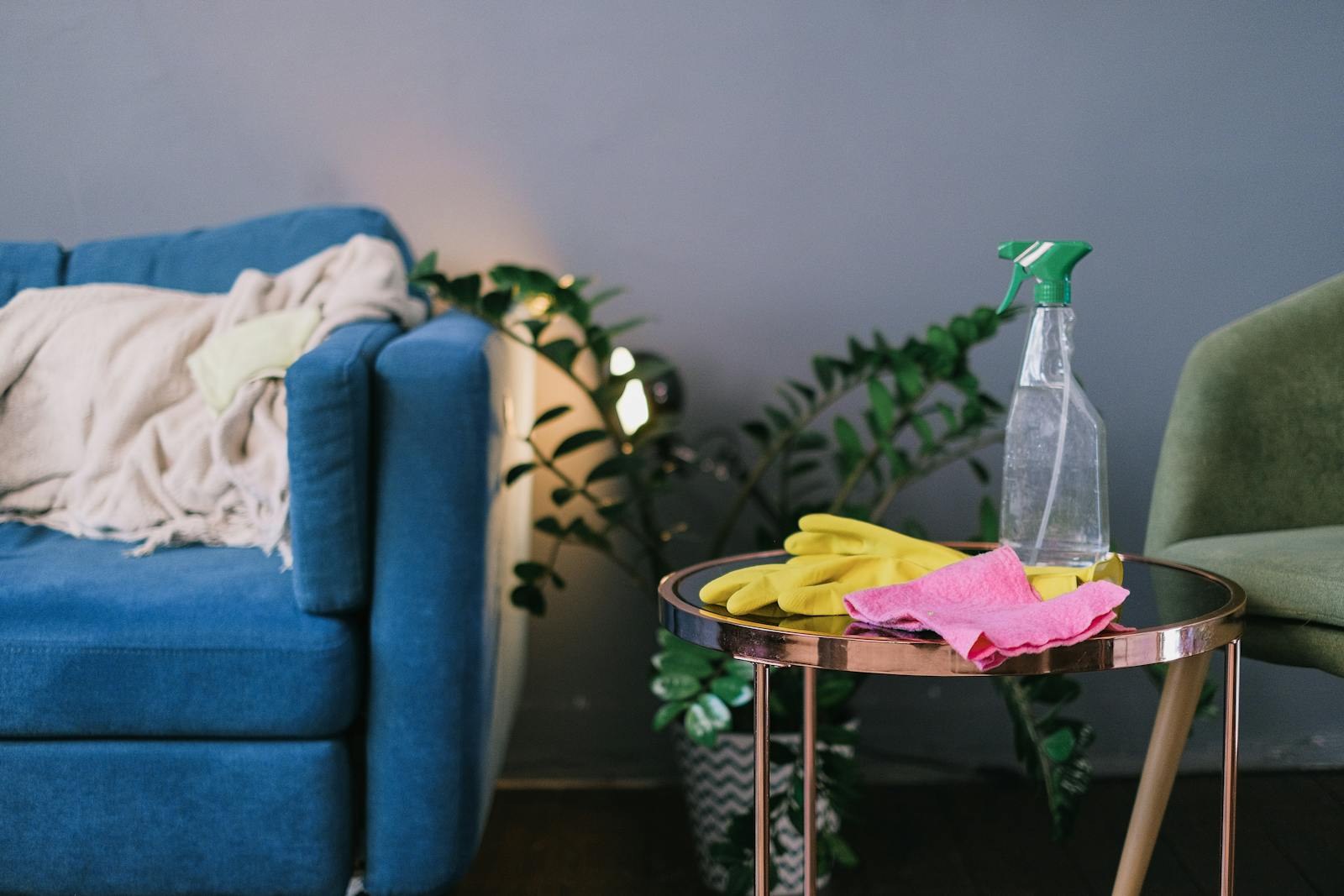
When someone tells me they have a dust problem at home, they usually don't mean that thin grey layer on a shelf. In a typical Prague apartment, the real trouble is hidden much deeper: in the fabrics, mattresses, blinds, and those high tops of wardrobes that look fine until a sudden movement sends a fresh cloud of fine dust into the air. For allergy sufferers, the answer isn't just "cleaning more"—it's about cleaning differently, in the right order, and without stirring everything up.
What people often call a dust allergy
Most people use the term "dust allergy" as shorthand for morning sneezing, itchy eyes, or a stuffy nose. In reality, the trigger is often dust mites and their allergens rather than the dust itself. This isn't just nitpicking over medical terms; for your cleaning routine, it makes a massive difference.
Dust isn't just one thing. It’s a mix of fibres, outdoor particles, pollen, dead skin cells, hair, and whatever else settles in. Dust mites thrive in this mix, especially where it’s warm, humid, and full of fabric—think mattresses, pillows, duvets, heavy curtains, and that sofa that hasn't seen a vacuum in a while. People often try to fix this with sprays or "hygienic" cleaners, but the problem isn't a lack of fragrance. The problem is that the allergens aren't being physically removed.
This is where the first mistake happens. Someone might dry-dust the shelves, run a basic vacuum through the flat, and then leave a window wide open for hours. The result? The dust just gets stirred up, half of it settles right back down, and by evening, the allergy symptoms feel even worse. To be honest, I see this a lot in homes that are actually kept quite clean, but just don't have the right system.
It’s time to rethink your routine before you buy more chemicals. If your symptoms are worse right after you wake up, when you’re changing the bed, or if your child spends a lot of time playing on the floor, the home setup is probably the culprit.
Where the heaviest load builds up in a flat
The biggest reservoir for allergens usually isn't the bookshelf or the decorations; it's the bedroom. Your mattress, topper, pillows, and headboard hold way more fine dust than most of us want to admit. If you don't wash your bedding often enough or use a high enough temperature, cleaning the living room won't help you much.
Then there are the textiles: curtains, throw blankets, fabric laundry baskets, and those soft bins in the kids' rooms. Carpets are another big one. I’m not saying you have to throw every rug out tomorrow, but a high-pile carpet in the bedroom is doing an allergy sufferer no favours. In many Prague apartments, it's a classic combo: a warm room, an indoor drying rack full of laundry, closed windows, and a carpet acting like a giant dust trap.
The less obvious spots are often the worst because they get skipped during a quick clean. The tops of doors, the slats on blinds, the skirting boards behind the bed, radiators, the space under the sofa, and the cable clusters behind your desk. Since they’re out of sight, they get left for "next time," but they're exactly where dust builds up before being blown back into the air by a draft.
Humidity and ventilation play a huge role too. A bone-dry flat isn't comfortable, but too much humidity is exactly what dust mites love. In Czech homes, this often swings with the seasons. In winter, we air less and heat more, while drying laundry inside. In spring, we open the windows but let in pollen and street dust. That’s why short, intense airing works much better than leaving a window cracked all day.
A quick practical tip: kids' rooms are often in worse shape than the living room. Soft toys, floor cushions, blankets, and low shelves full of toys are all dust magnets. If your child's allergies flare up in the evening or after playing on the rug, that's where you should start.
How to clean without sending dust back into the air
The order of your tasks matters more than you might think. The rule is simple: work from top to bottom, and from dry removal to a damp finish—but skip the dry duster. Start by clearing surfaces, then use a slightly damp microfibre cloth to wipe down shelves, ledges, and blinds. Only then should you pull out the vacuum. And the very last step? A damp mop for the floors.
The worst thing you can do is dry-dust and then follow it up with a basic vacuum that just blows fine particles back out the exhaust. For allergy-focused cleaning, a vacuum with a HEPA filter is worth its weight in gold. And use it slowly—you don't need to do ten fast passes; you just need to be thorough.
Damp wiping is the backbone of this whole routine. You don't want it dripping wet, just damp enough to trap the dust so it doesn't fly away. For things like blinds and radiators, work in small sections and rinse your cloth often. Otherwise, you're just spreading the dust around instead of picking it up.
When it comes to vacuuming, I recommend three habits. First: start in the bedrooms, not the kitchen. Second: spend an extra few minutes on the mattress, the headboard, and the space under the bed. Third: empty the bin or seal the bag immediately after you're done. It sounds minor, but it's the difference between actually removing the dust and just moving it around the house.
If someone asks me for one quick tip, it’s this: fewer decorations, fewer textiles, fewer dust catchers. It's not about being a minimalist for the aesthetic; it's just that every extra object is another surface you'll have to clean—and in a busy week, that’s usually the first thing that gets skipped.
A weekly routine that actually makes sense
An allergy-friendly home doesn't need a deep clean three times a week. It needs a routine you can actually stick to. Every day, just do the basics: air the rooms for 5–10 minutes, let the bedding breathe before you make the bed, and wipe down the most-used surfaces in the bedroom. Don't let clothes pile up on chairs or the floor.
Once a week, vacuum the whole flat with a focus on the bedroom, rugs, and under-bed area. Change the bed linen and wash it at 60°C. Wipe down the blinds, or at least the dustiest parts of them. In the kids' room, go through the soft toys and keep only the ones they’re actually using out in the open.
Once a month, go a bit deeper. Wash the curtains, vacuum the mattress on all sides, and wipe down the tops of wardrobes, doors, and light fixtures. If you have an air purifier, check the filter. And if you’re drying laundry inside all the time, see if there’s a way to change that routine to keep the humidity down.
The bedroom and the kids' room should be your priorities. The bedroom because you spend a third of your life there, and the kids' room because children are often right down on the floor where the dust settles. If you're short on time, skip the living room cabinet and focus on the bed zone instead.
And about the cost: you don't need to buy expensive antiallergic gadgets every month. Reducing unnecessary fabrics and sticking to a smart cleaning order will do more for your health than a cupboard full of specialty chemicals that you never use.
When professional deep cleaning helps
Sometimes, the home routine just isn't enough. If your textiles are heavily soiled, if the flat has only been surface-cleaned for a long time, or if a recent renovation left fine dust in every crack, a professional deep clean is the way to go.
It also makes sense for those hard-to-reach spots: high blinds, radiators behind heavy furniture, mattresses, and the space under heavy beds that nobody wants to move on a Saturday morning. It's not about laziness; it's about the fact that some places only get cleaned twice a year, and that’s exactly where the allergens hide.
When you book a cleaning service, be specific. Don't just say "we have an allergy sufferer." Tell them: "bedroom with carpet, lots of textiles, we need a deep clean of the mattress, blinds, and the space under the bed." This helps the team bring the right tools and plan the work properly.
If your dust allergies are flaring up and your usual routine isn't cutting it, you can send a no-obligation enquiry through the ČistýKout contact form. It’s the best way to reset your home so that your weekly maintenance becomes much easier to handle.