When a grey film returns to a black cabinet two days after cleaning, buying a better dust catcher for home sounds reasonable. The snag is that household dust is not one substance, and no gadget catches all of it. Some particles can be wiped away, some need suction, some can be filtered while airborne, and others merely move from the shelf into the room. A useful system has a clear endpoint: the dust finishes inside a sealed bag, bin, filter or washed cloth, not on the shelf below.
First, work out where the dust is coming from
Dust in an apartment is a mixture of fibres from clothes and bedding, hair, skin flakes, pollen, outdoor particles, crumbs and grit brought in on shoes. A flat beside Prague's magistrála gets a different mix from one on a quiet street in Bohnice. Two cats create another problem entirely: visible tumbleweed-like clumps as well as fine particles from litter and textiles.
Look for routes rather than dirty spots. A stripe across the windowsill points to an open window. Fluff behind a door or below a radiator reveals an air current. A fine coating near the bed often comes from fabrics. Crumbs beneath the table are too heavy for most air purifiers because they never reach the intake.
For a quick check, turn off the main light and shine a torch sideways while making the bed or opening a window. It is not laboratory sampling, but it reveals which activity puts particles into the air.
That is why a universal catcher cannot work. If you are wondering how to reduce dust at home, first separate settled particles, rug debris and fine airborne material: each needs a different way to be captured. My first question after any dusting job is simple: where did the dust end up?
Microfibre only captures dust when you use it properly
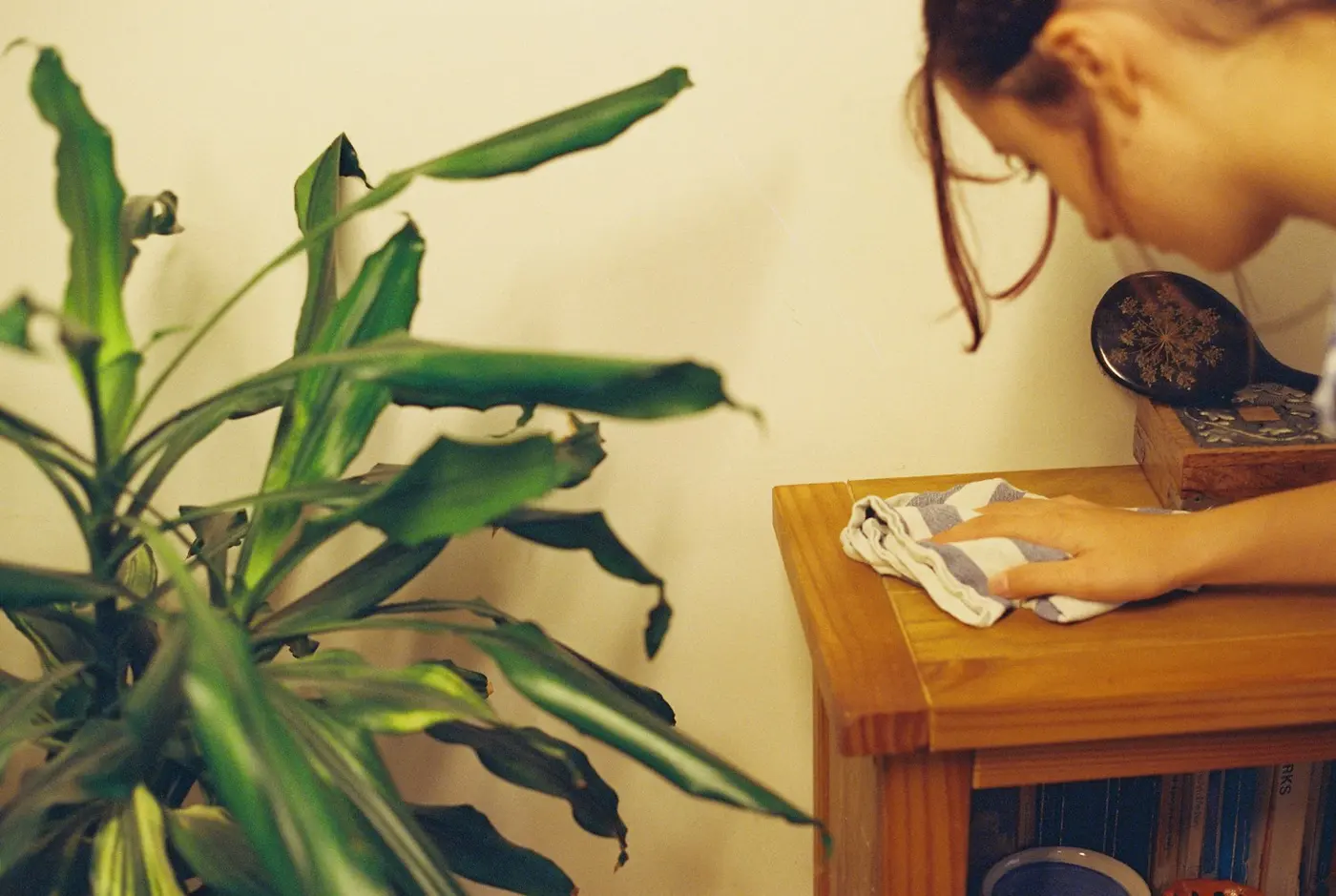
A dry feather duster is quick, but on a smooth shelf it usually lifts some dust and launches the rest. Disposable electrostatic pads hold light particles quite well until the fibres are full. For everyday furniture, I prefer a decent microfibre cloth made only slightly damp. It should not drip, and it should not leave a wet trail.
Fold the cloth into quarters. That gives you eight usable faces, so the dirty side does not keep revisiting cleaned furniture. Work from high surfaces to low ones, moving from shelves and picture frames towards tables and finally the floor. Draw each stroke in one direction, then fold the collected line of dust into the cloth. Vigorous circles look energetic but often make grey smears.
Test moisture on an inconspicuous area of wood or matt lacquer, and never spray cleaner straight onto electronics. Greasy kitchen dust needs a surface-safe degreaser followed by a clean face of the cloth.
Wash microfibre separately from lint-producing cotton towels. Skip fabric softener. It coats the tiny fibres and reduces their ability to absorb water and pick up debris; excessive detergent can leave a similar residue. A clean, well-rinsed cloth is a dust catcher. One grey rag dragged through the whole apartment is a delivery service.
A HEPA vacuum helps only if the rest of it is sealed
The word “HEPA” on a box describes the filter medium, not necessarily the whole vacuum. Air can bypass a highly efficient filter through a poorly seated bin, a full bag, tired seals or a filter that does not fit its frame properly.
Check the hose connection, bin lid, bag holder, gaskets and exhaust grille. A dusty smell or an exhaust that pushes fluff from beneath a cabinet points to leakage or poor airflow. The US EPA notes that a HEPA filter can help prevent some vacuumed dust escaping, while vacuuming itself can temporarily stir particles up.
The floor head matters too. Hair wrapped around a rotating brush cuts its performance. Too much suction can pin down a light rug, while an unsuitable hard-floor setting may blow debris away from the nozzle. Slow down. One measured pass forwards and back gives the head time to collect particles; sprinting across the room mostly makes them airborne.
Close a bag before carrying it away. Empty a bagless bin outdoors, or lower it inside a rubbish sack first. A dust cloud over the kitchen bin can undo the benefit of your HEPA filter for dust.
An air purifier catches airborne particles, not dust on furniture
An air purifier for dust is most useful where particles are actually suspended: an allergy sufferer's bedroom during pollen season, a room after bedding is changed, or a Prague flat close to heavy traffic. It cannot pull dust off a bookcase unless that dust becomes airborne again.
When comparing machines, look at clean air delivery rate, or CADR, and the stated room size. Treat a spectacular floor-area claim with caution because it may assume only one air change per hour. Allergy control usually calls for repeated air changes, not a token breeze. The EPA advises matching a portable cleaner to the room and treating filtration as a supplement to source control and ventilation.
Give the intake and outlet breathing room. Behind a curtain or hard against a wall, the purifier recycles a small pocket of air. Steady operation at a quiet speed usually beats ten minutes on turbo.
Price the replacement filters before the appliance and check their availability in Czechia. A loaded filter restricts airflow, while noise tempts people to select an ineffective speed. Purifiers can reduce airborne allergens. They do not vacuum rugs, wash bedding or wipe cabinets.
Some “catchers” merely hide or stick the dust down
An anti-static spray can slow deposition on a compatible surface, but it does not extract anything from the home. DIY glycerine mixtures and scented dryer sheets may leave a film that traps particles. The furniture looks better for a while; next time you have to remove a paste of dust and residue. Matt lacquer, natural stone and unfinished wood may also show streaks or suffer damage, so guessing is expensive.
If a glossy product demonstration shows less visible dust, ask what the camera cannot: did the particles leave, or are they merely hidden? Include any later degreasing or polishing in the comparison.
Soft furnishings have the same contradiction. A rug or heavy curtain catches fibres and pet hair but becomes a reservoir. Without washing or slow vacuuming, it releases that load when disturbed.
Quick check: captured or relocated?
- Removed: particles are visible in a bag, bin, filter or rinse water, and the tool can be cleaned without releasing them.
- Stirred up: side lighting shows more particles after the job, or dust quickly settles on a lower shelf and around the exhaust.
- Stuck down: the surface feels tacky, develops streaks or soils a fresh cloth unusually fast on the next clean.
- Hidden: the room looks tidy, but fabrics, gaps and the space beneath furniture were never treated.
A seven-day test shows whether the system works
Before spending money on another appliance, run a small home experiment. Choose two similar control surfaces, perhaps two shelves on one bookcase or a pair of bedside tables. Clean both in exactly the same way. Leave one unchanged and alter one thing only around the other.
- Photograph both surfaces in side light.
- Change only the filter, cleaning order, cloth, purifier position or vacuuming frequency.
- At the same time daily, wipe each surface once with a separate white cotton pad.
- Note fluff by skirting boards, airborne dust and how fast the tools load up.
- On day seven, compare the photographs and labelled pads.
I saw this play out in a Vinohrady apartment where a grey coating returned every morning. A new spray and a more powerful purifier achieved almost nothing. Slower vacuuming of the fabric sofa, washing the throw and moving the purifier from behind a curtain did. That is the typical answer: not one heroic gadget, but three small corrections along the dust's route.
If dust returns across the whole apartment, inspect leaky windows, ventilation filters, radiators, the mattress and washable textiles. After renovation or a long gap, a one-off deep clean can reset the space. For help in Prague, contact Čistýkout for a no-obligation cleaning enquiry and tackle the reservoirs that weekly cleaning tends to miss.