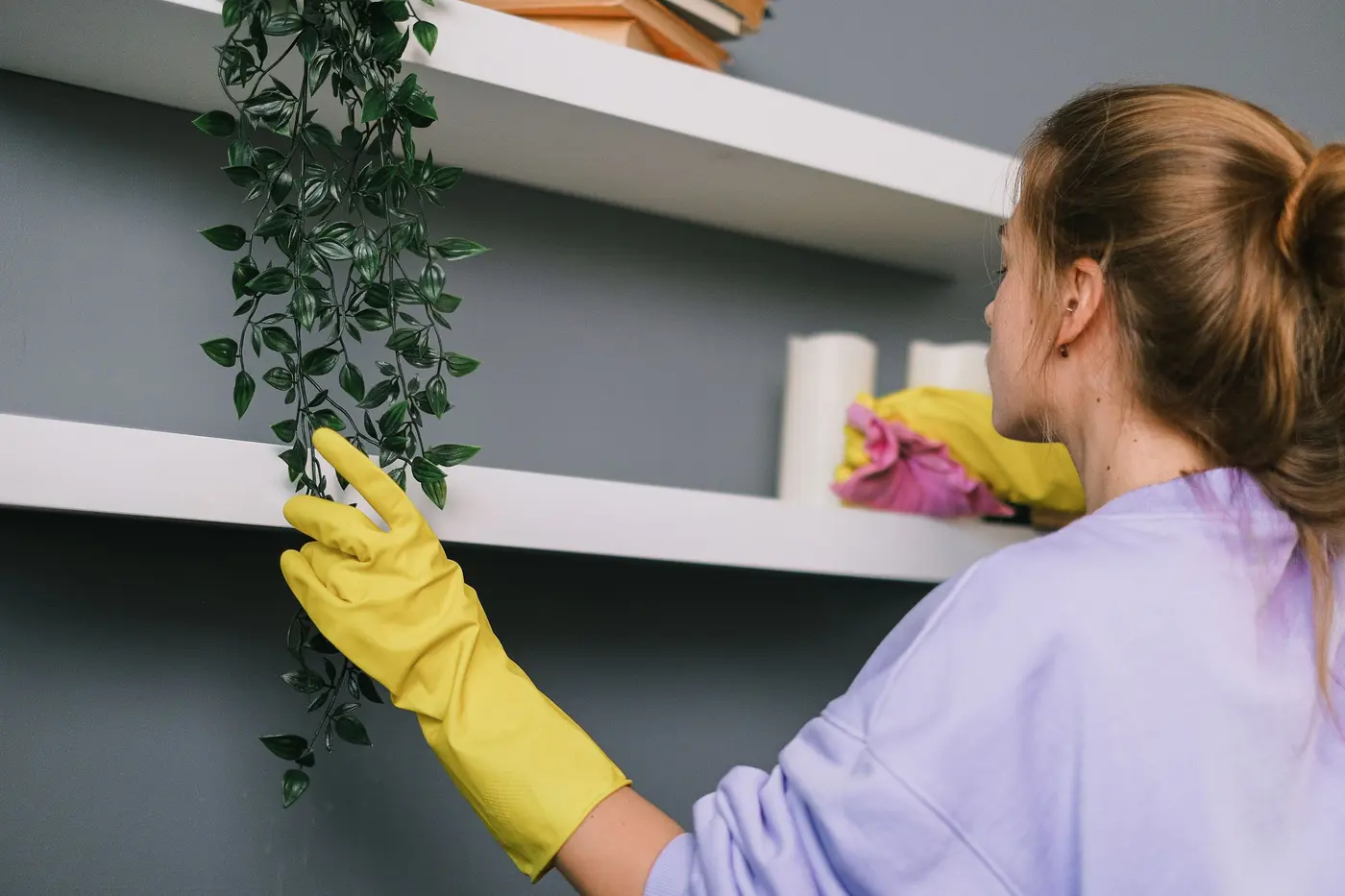
Dust in apartment living has a particularly annoying rhythm. You spend half your Saturday with a duster in hand, everything looks perfect, and then by Tuesday you run a finger across the TV stand and find that familiar gray layer. Again.
In a city like Prague, where we’re constantly mixing old-school coal soot with smog from the Magistrála and pollen from parks like Stromovka, fighting dust is basically our unofficial local sport. But here’s the thing: it’s usually not because you’re "bad" at cleaning. Dust in our apartments actually follows some pretty annoying physical laws, and if you're just pushing it around with a dry rag, you've already lost the battle.
Where Does the Dust Come From? The Real Culprits
Dust isn't just "dirt from outside." It’s actually a pretty gross cocktail of... well, everything. If you live in one of those beautiful high-ceilinged flats in Vinohrady or Žižkov, your biggest enemy might be the walls themselves. Those old lime plasters under fifty layers of paint? They’re constantly "working." Every time a heavy tram rattles past or a neighbor starts a renovation, microscopic particles of mortar and lime shake loose. You can paint over it, but that "heritage dust" always finds its way out through the cracks and baseboards.
Then there are the textiles. We love our heavy curtains, big rugs, and throw pillows. But every time you flop onto the sofa or close the drapes, you’re launching thousands of tiny fibers into the air. If you’ve got a dog or a cat, add skin flakes and fur to the mix. This is exactly why we always tell our clients that professional sofa and upholstery cleaning isn't a luxury—it’s the only way to actually get the deep-seated dust out of your living room.
And of course, there’s the Prague air. Living near the city center or the Blanka tunnel entrance means you're getting a steady supply of tire rubber and soot. If you're up by Letná, it’s pollen. Once that stuff gets inside, it binds with cooking grease and creates that sticky gray film that a simple puff of air won't move.
The Physics of Cleaning: Why You’re Probably Doing It Wrong
Most people make a classic mistake: they move dust around instead of actually removing it. Those colorful feather dusters? Or that old cotton T-shirt? They’re mostly just "dust dispersers." You swipe the surface, the dust disappears, and you feel great. But in reality, it just went airborne. It’ll float around for twenty minutes while you go make a coffee, and the second you sit down, it settles right back where it was.
The only real way to win is the "wet method." You need a microfiber cloth that’s just barely damp—not soaking, just cool to the touch. The structure of microfiber literally traps the dust inside the fibers instead of just pushing it off the edge.
Pro tip: Don’t do circles. Use the "S-technique." Pull the cloth from one side to the other in a smooth, waving motion. You’re essentially herding the dust and then trapping it at the end. It’s a game-changer if you’re trying to eliminate dust for more than twenty-four hours.
The Role of Air Purifiers and Proper Ventilation
If you live near a busy road, opening a window is a double-edged sword. You need fresh air, but some street particles come in with it. A correctly sized purifier with a HEPA H13 filter can reduce airborne particles, provided the unit is sealed well and moves enough air for the room. The distinction matters: a purifier works on dust that is still airborne. It will not remove the layer already sitting on your shelves.
But how you ventilate matters too. Leaving windows on micro-ventilation all day is rarely a good compromise in Prague. In winter it can cool the window reveals and, where indoor humidity is high, increase the chance of condensation. During pollen season it also gives outdoor particles hours to drift inside. A short cross-draught is usually more practical: open the windows wide for roughly five to ten minutes, then close them. Adjust the timing to the weather, layout and traffic outside.
Also, keep an eye on humidity. Winter heating can leave both panelák flats and tightly ventilated new builds uncomfortably dry, which makes static on textiles more noticeable. Roughly 40-60% relative humidity is a useful household range, but watch cold corners and window condensation. Do not add moisture merely to fight dust if water starts collecting around the frames.
The "Top-to-Bottom" Strategic Plan
At Čistýkout, we have one golden rule: gravity is both your best friend and your worst enemy. If you vacuum the floor first and then wipe the shelves, you’re just making double work for yourself.
- Ceilings and Lights: Start high. Cobwebs in corners and the tops of lampshades. Anything that falls now, you’ll catch later.
- The Cabinet Hack: Here’s a secret. Nobody looks at the tops of high wardrobes. Instead of scrubbing them every week, lay down some old newspapers or wrapping paper up there. Every few months, just roll them up—dust and all—and throw them away. Done.
- The Static Zones: TVs and monitors are dust magnets. Use a dry microfiber and maybe an antistatic spray to break that magnetic pull.
- Floor as the Finale: Only when everything else is done do you bring out the vacuum. Just make sure it has a HEPA filter, otherwise it’s just a very expensive dust-blower. Follow up with a damp mop to catch the last survivors.
Minimalism: Your Secret Weapon
I’ll be honest: if your living room is covered in souvenirs, knick-knacks, and open bookshelves, you’re never going to be dust-free. Every little object is a "dust magnet."
- Close the doors: If it doesn't need to be out, put it in a cabinet or a box.
- Glass is your friend: If you love your collections, put them behind glass. You get to see them, and you save hours of dusting every month.
- Audit your textiles: Swap those heavy velvet drapes for something you can toss in the wash. And those high-pile carpets? They’re basically just giant dust-storage units. A smooth floor with a small area rug is much easier on your lungs.
FAQ: The Dust Struggle is Real
Why is my new flat so much dustier than my old one? Construction dust is persistent. Drywall and concrete particles can keep surfacing for a couple of years after a building is finished.
Is my vacuum cleaner making things worse? Probably, if it doesn't have a HEPA filter. A cheap vacuum sucks in big dust and shoots the tiny, invisible particles right back out the top.
Do plants actually help? They look great and clean the air, but their leaves are giant dust catchers. If you don't wipe them down, they just become part of the problem.
Wrapping Up
Fighting dust in Prague is a bit of a Sisyphus task, but with the right technique, you can actually win back some of your weekend. It’s less about how hard you clean and more about how smart you do it. These dust prevention tips are your first step to a home where you can actually breathe.
And hey, if you look at your flat and realize you just don't have the energy for a "top-to-bottom" mission this weekend, Čistýkout is here. Our pros know exactly where the Prague dust hides, and we love making homes shine.