Dust in apartment homes does not come only from open windows or skipped mopping. A lot of it returns right after cleaning because people send it back into the air themselves. One dry swipe over a shelf, one quick shake of a blanket in the bedroom, one rushed vacuum pass, and the fine layer settles again on the dresser, TV stand, and bedside table. In a home where someone deals with allergies, asthma, or just reacts badly to stale dusty air, that cycle gets exhausting fast.
The fix is not a sterile home and it is not aggressive scrubbing. What helps is a cleaning system that lowers airborne dust, keeps textiles under control, and deals with the places where allergens actually stay. A small Prague apartment during heating season needs a slightly different rhythm than a newer flat with a dog and big windows facing a busy street. The principle stays the same: less stirring up, more order.
Why dust builds up faster than you expect
What household dust actually contains
Household dust is a mix. It can include textile fibers, skin particles, pollen, particles tracked in from the hallway, bits from outside air, and pet hair. That is why a dusty home is not always a dirty home in the lazy sense of the word. Sometimes it is simply a home with many surfaces that hold on to dust: curtains, throws, rugs, open shelves, upholstered furniture, and bedding that looks clean on top while trapping fine particles deeper down.
Why your home can look dusty again right after cleaning
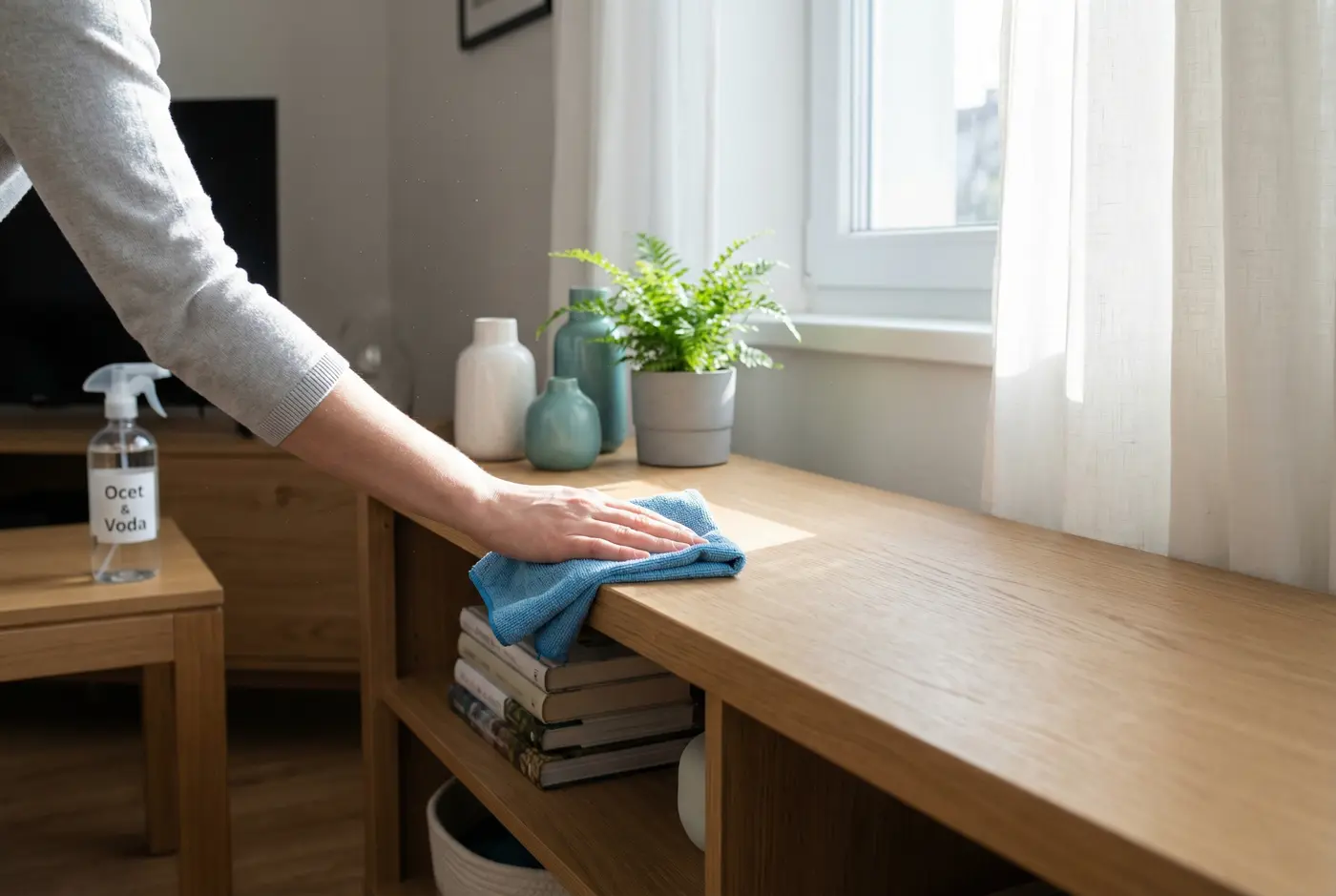
If you have dark furniture, you know the scene. You wipe a black shelf in the evening, it looks perfect for a moment, and by morning there is a pale film on it again. Usually that does not mean the cleaning failed. It means the dust was moved, not removed. Dry dusting, sweeping, or shaking blankets indoors often lifts fine particles into the room, and a compact bedroom does the rest. Visible dust on a shelf is only the easy part. Other allergens stay inside mattresses, upholstery, and fabrics where you do not notice them at a glance.
The best cleaning order for allergies
Dust the top first, handle textiles second, finish with the floor
If you are figuring out the best cleaning order for allergies, start with sequence, not products. Open the windows briefly for a strong burst of air. Clear small items off surfaces. Then wipe from top to bottom with a damp cloth. Shelves, lamps, edges of furniture, upper surfaces first. Textiles and soft furniture next. Floors come last. That order matters more than people think. If you vacuum first and dust later, a good share of what you just removed will settle right back down.
When to use a damp cloth and when a vacuum makes more sense
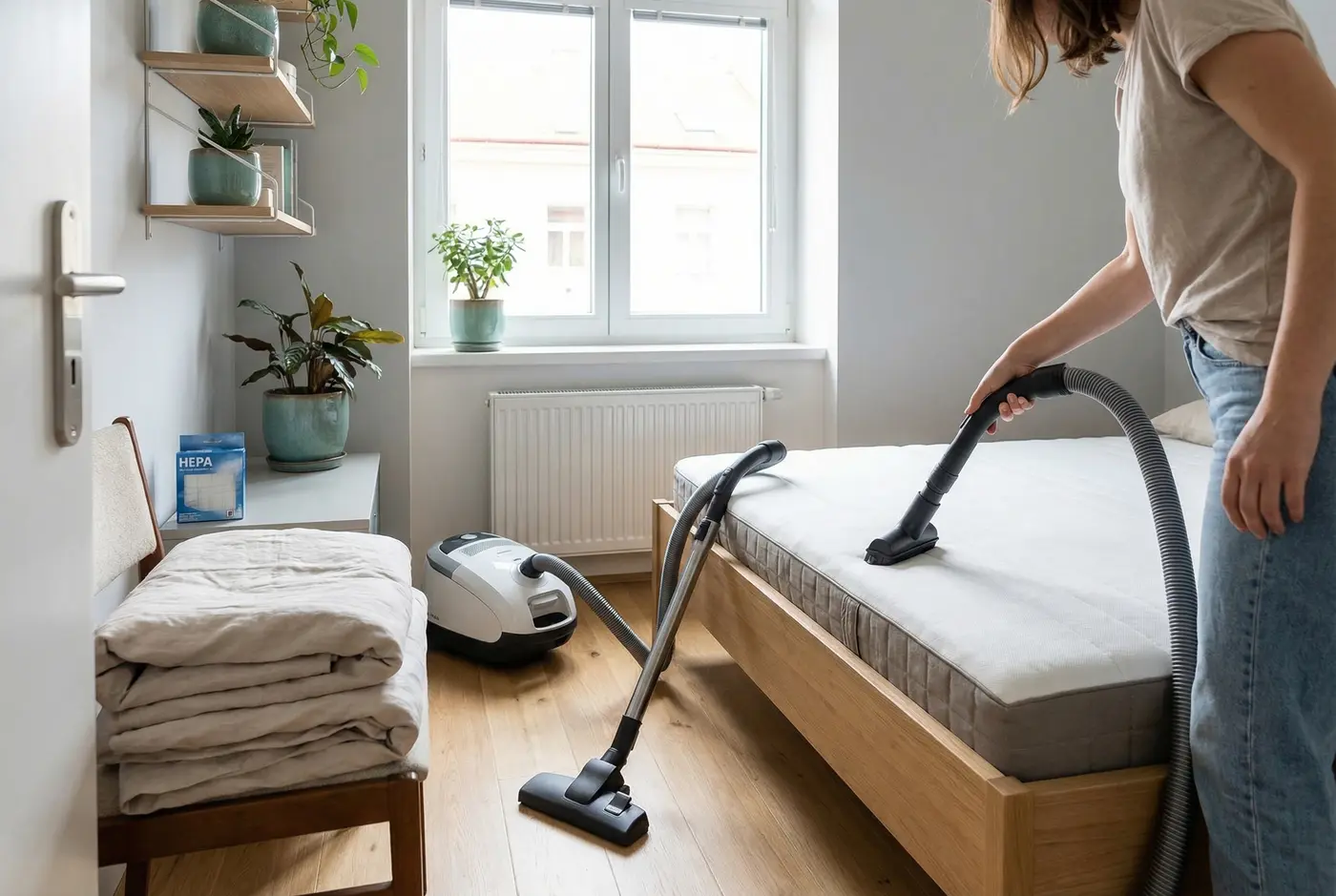
For smooth surfaces, microfiber or a well wrung damp cloth usually works better than a dry duster. A vacuum makes more sense once the loose dust on furniture is already under control and you want to remove what settled into the floor, sofa, rug, or mattress. In a sensitive home, a HEPA vacuum home setup is worth it because the filter catches finer particles instead of blowing more of them back into the room. Still, even a good vacuum loses that advantage when the filter is neglected. Honestly, that is one of the most common mistakes in normal households.
Mattresses, upholstered sofas, and rugs respond better to slow passes than to frantic back and forth movement. The quick once-over people do before lunch rarely changes much. A more realistic Saturday example looks like this: the family vacuums the floor first, then wipes shelves, then shakes out a throw over the couch. An hour later the room feels dusty again. Reverse the order and you save work and breathing discomfort.
- Do not dry sweep if dust allergy cleaning is the goal.
- Do not shake blankets and pillows in the bedroom.
- Do not start with the floor when shelves and textiles are still untouched.
- Do not forget to clean the filter in your vacuum and air purifier.
Textiles, mattresses, and rugs hold the most allergens
Why the bedroom is often the most sensitive room
People often focus on the living room when they search for how to reduce dust at home. Fair enough, that is where the dust is visible. But the bedroom is usually the more important room for a sensitive household. You spend hours there with your face close to bedding, pillows, mattress fabric, and throws. That is why dust mites mattress concerns come up so often. A room can look tidy and still carry more dust load than it should.
How to handle rugs, curtains, throws, and pet textiles
A smooth floor is easier to maintain than a high pile rug. That is not ideology, just maintenance math. Heavy curtains, decorative pillows, fluffy throws, and pet beds all collect fine dust and need a real washing rhythm if someone at home is sensitive. Bedding and lighter fabrics should be washed regularly. Pet textiles should be handled separately. Mattresses and sofas need calm, deliberate vacuuming, not rushed gestures. In many bedrooms, reducing dust traps helps almost as much as cleaning them: fewer open shelves, fewer decorative fabrics, fewer things waiting to gather a fine gray coat.
- Weekly: bedding, light throws, pet beds, and the fabrics used most often.
- Monthly: deeper vacuuming of the mattress, sofa, bed frame, and lower pile rugs.
- Seasonally: curtains, lesser used textiles, upper cabinet tops, and a deeper bedroom reset.
Humidity, ventilation, and the small habits that matter
How to tell when the air at home is too dry
During heating season, indoor air often gets too dry and dust seems to float more easily. You do not need a smart sensor to notice it. Your nose feels irritated, your throat is dry in the morning, fabrics build static, and fine dust appears almost right after cleaning. A sensible humidity range is often around 40 to 50 percent, but there is no reason to chase perfection. The point is to avoid extremes. Very dry air feels bad. Overdoing humidity can create a different set of problems.
Small habits that help over time
In a city apartment, short intense ventilation usually works better than leaving a window cracked for hours toward a busy road. That matters even more in pollen season. Indoor shoes off at the door help. So does cleaning filters in the vacuum and purifier, washing pet textiles on time, and cutting down on open decorative clutter. The difference between two homes can be surprisingly simple. One keeps a window half open all afternoon toward traffic. The other airs out briefly in the morning and evening and keeps a steady cleaning rhythm. The second one often feels calmer without any extra drama.
How often to clean if someone at home has allergies or if you have pets
A realistic weekly rhythm
Cleaning frequency depends on the household. A standard home without pets can often manage with exposed surfaces wiped once or twice a week and one solid vacuum session. A home with allergies usually needs more: contact surfaces two or three times a week, bedroom care on a stricter rhythm, and textile washing that happens because it is scheduled, not because someone finally remembers. Add a dog or cat and the load rises quickly. Hair, pet beds, outdoor dirt, and more movement through the flat all stack up. In that kind of home, short maintenance sessions matter more than one heroic monthly deep clean.
A very normal example: a working family with a dog can vacuum, mop, and change the bed on the weekend. But if nobody deals with the entry zone, couch, and pet bed during the week, dust and hair pile up faster than the weekend can fix. Consistency beats intensity. It usually does.
- Standard household: exposed surfaces once or twice a week, vacuum at least weekly.
- Household with allergies: contact surfaces two or three times a week, bedroom and textiles on a stricter cycle.
- Allergies plus pets: short maintenance cleaning several times a week, more frequent care for pet beds, sofa, and entry area.
If dust comes back faster than you can keep up with it, that does not mean you are failing. Sometimes the home simply needs a rhythm that the people living there cannot maintain on their own. That is where regular professional cleaning stops feeling like a luxury and starts feeling like support.
When regular professional cleaning makes sense
For many households, outside help is less about perfection and more about keeping the system alive. If your home needs steady bedroom care, textile cleaning, and a practical routine after pets, it helps to have reliable support. On CistýKout, you can find verified help for regular apartment cleaning based on the real pace of your household, not on some impossible spotless ideal.
What to take away if you want less dust at home
The big wins are not glamorous. Fewer dust traps. Damp wiping instead of dry dusting. Better cleaning order. More attention to textiles. Consistency. That is the core of it. The goal is not a perfectly dust free home. The goal is a home where dust rises less, settles less aggressively, and feels easier to manage week after week.
If you feel stuck in a loop of wiping, vacuuming, and seeing the same fine layer come back, change the system before you buy another spray bottle. And if you already know the system is hard to keep alone, CistýKout can help you find verified support for regular apartment cleaning that fits the way your home actually works.