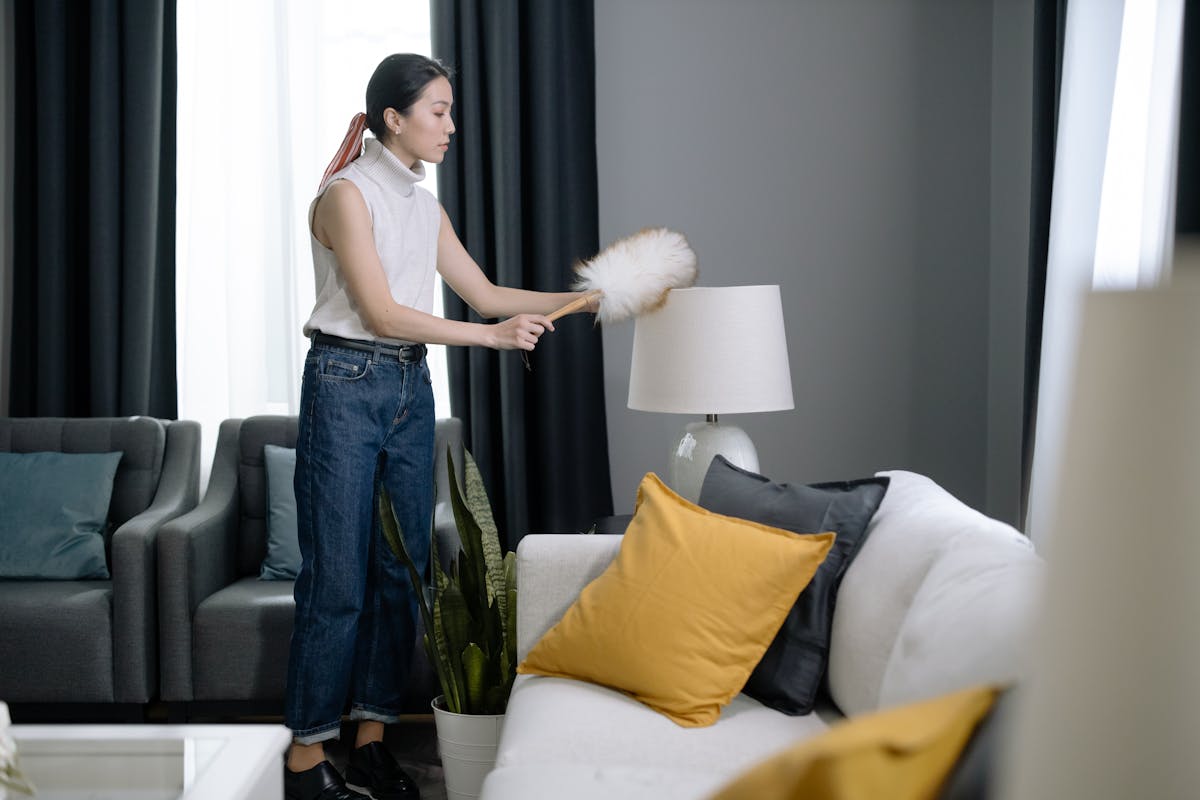
Dust in your apartment has a way of making people feel defeated. You wipe the shelves, vacuum the floors, crack the window for fresh air, and two days later the room already looks tired again. In homes with kids, pets, asthma, or a dust allergy at home, that cycle feels even more obvious. The frustrating part is that many people are cleaning regularly. They just are not hitting the places that keep feeding dust back into the room.
The goal is not a sterile home. Most families in a Prague flat, a suburban new build, or an older family house do not need that and could not maintain it anyway. What helps is lowering the overall dust load in the spots that matter most. Once you understand what household dust actually is, where hidden dust hotspots sit, and how to spread cleaning into a realistic weekly rhythm, the whole home starts feeling more manageable.
Why dust comes back so fast at home
Household dust is a mix, not one single thing. It includes textile fibers, tiny skin particles, pollen, dirt brought in from outdoors, hair, pet dander, and light debris that keeps moving through the home. In a busy apartment near a tram line, you may notice it sooner than in a detached house outside the city, but the pattern stays the same. Dust is created constantly and then pushed around by daily life.
That is why a quick once-a-week pass over visible shelves rarely solves the problem. Dust does not settle randomly. Static electricity, soft furnishings, air circulation, radiators, corners, and neglected upper surfaces all give it places to sit. A common example is a regular family in a three-room flat: the living room looks clean after Saturday cleaning, but the area under the bed, behind the curtains, and inside radiator grooves keeps holding onto fine particles that drift back out as soon as people start moving around again.
Heating season often makes the return of dust even faster. Warm air movement helps fine particles circulate. Spring does its own thing too because people ventilate more and pollen comes in with it. So the feeling that cleaning did nothing is understandable. Usually, the visible surfaces were cleaned. The real dust reservoirs were not.
Where dust builds up most: the hidden spots people skip
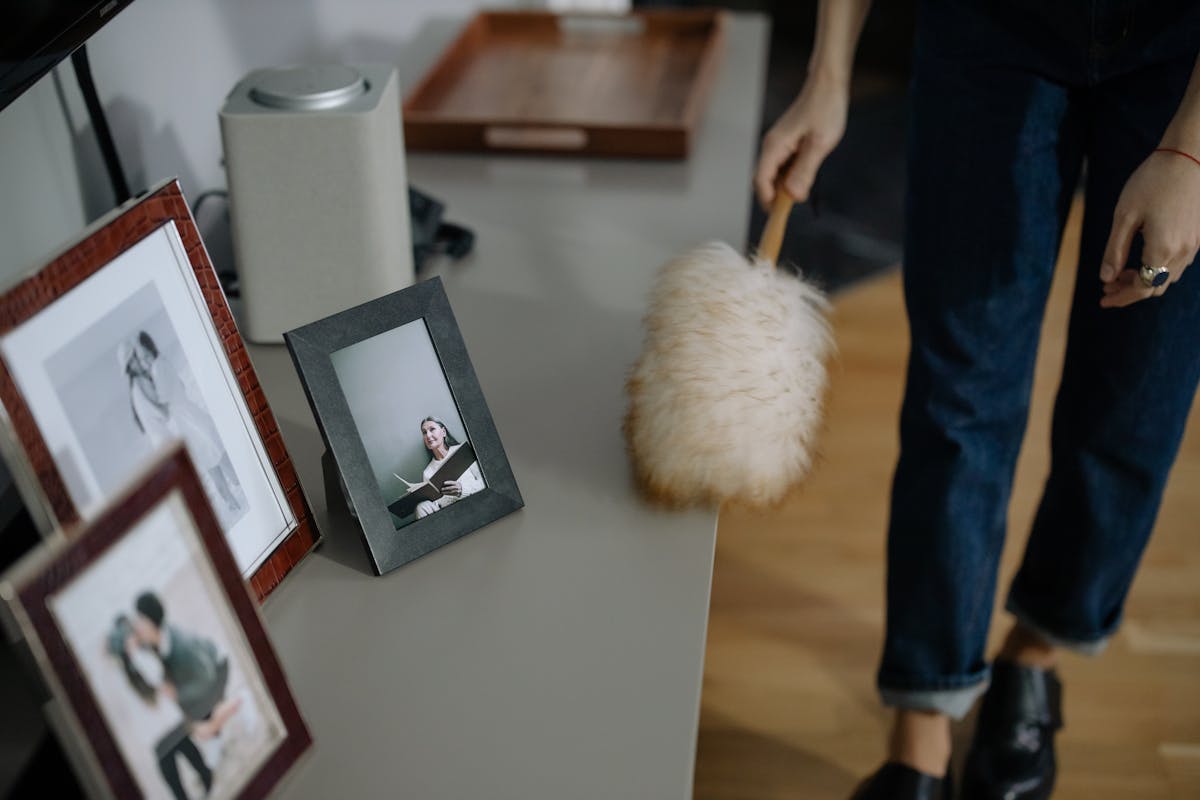
When people talk about hidden dust hotspots, they usually think of shelves or electronics. Fair enough, those do get dusty. Still, the bigger issue is often lower and less visible. Under the sofa, under the bed, behind bedside tables, or below a chest of drawers, dust mixes with hair, pet fur, and fine fibers. Every step across the room, every drop onto the couch, and every rush of air can lift part of that layer back up.
Under furniture and in hard-to-reach zones
This is the part of the home most people lose to normal life. Not because they do not care. Because pulling a sofa forward on a Wednesday evening is simply not realistic every week. Then comes the familiar moment: something falls under the couch, the furniture gets moved, and suddenly it is obvious the real problem was never the bookshelf. It was the grey film building up down by the floor.
Textiles: curtains, cushions, throws, and rugs
Textiles act like storage for dust and allergens. Curtains, decorative cushions, throws, small rugs, upholstered chairs, and carpets catch fine particles all the time. If they are washed rarely or vacuumed without the right attachment, they hold onto dust for a long time. Bedrooms feel this most sharply because you spend hours there with your face close to pillows, mattresses, and bedding.
Radiators, baseboards, corners, and high surfaces
Radiators, heating grilles, baseboards, corners, lamps, and the tops of wardrobes are another classic trap. Fine dust gathers there quietly, often for weeks, and then joins the overall circulation again when air starts moving. Older radiators with tight grooves are especially good at catching it. A fast wipe around them does not do much. They need a narrow tool or detail vacuum pass now and then.
- Under sofas, beds, and chests of drawers
- Upholstered furniture, rugs, and throws
- Curtains and bedroom textiles
- Radiators, heating grilles, and baseboards
- Wardrobe tops, lamps, and other overlooked surfaces
Dust, mites, and allergies: when it stops being just cosmetic
Dust allergy at home often feels less like one dramatic event and more like a chain of small daily annoyances. Sneezing in the morning. Itchy eyes. A blocked nose that gets worse in the bedroom. Sometimes a cough that shows up after waking. Dust and dust mites in home settings can make those symptoms more noticeable, especially when fine particles stay trapped in textiles and poorly cleaned areas.
Dust mites are invisible, but they do well where warmth, fabrics, and organic particles meet. That is why bedrooms usually matter most: mattresses, bedding, pillows, carpets, and upholstery. Honestly, wiping the coffee table more often is rarely the big fix. More relief tends to come from washing bed linen regularly, vacuuming under the bed, and reducing soft surfaces that only collect dust.
Cleaning is not the only factor, of course. Humidity, ventilation, air purifiers, and vacuuming frequency all play a role. This is not a medical promise. It is a practical observation: when the dust load goes down, many homes simply feel easier to live in.
How to clean when allergies or asthma are part of the picture
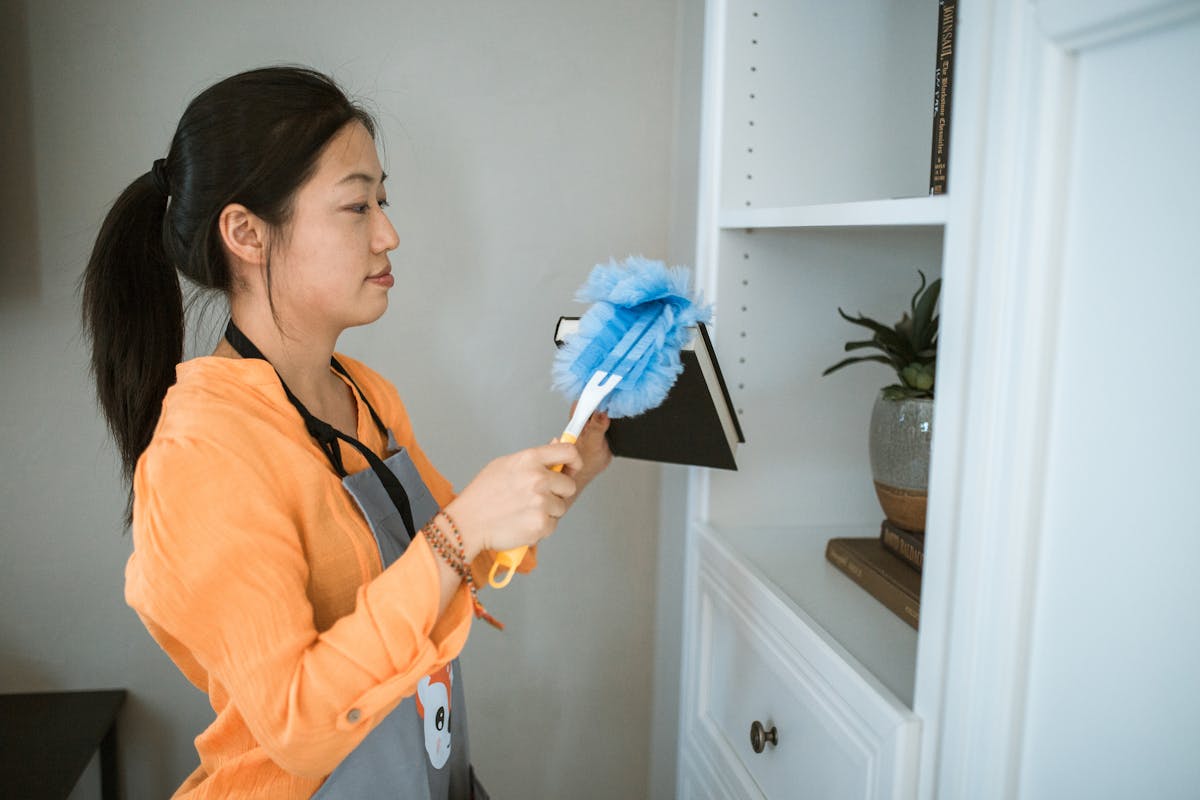
A cleaning routine for allergies works better as a system than as a heroic weekend effort. Dry dusting often just sends fine particles elsewhere. Damp wiping is usually better, and order matters. Start high and move down: upper surfaces, lamps, shelves, then furniture, textiles, and finally the floors. That way you do not throw dust back onto places you already cleaned.
Vacuuming also matters more than people think. If the vacuum has poor filtration or the wrong attachment, part of the fine dust goes back into the room. Corners, upholstery, mattresses, and baseboards need different tools than open flooring. And splitting cleaning into smaller sessions is not laziness. A two-hour Saturday sprint often ends with fatigue, stirred-up dust, and skipped detail work. Two shorter targeted sessions during the week usually work better.
- Use damp cloths instead of dry dusting
- Clean from top to bottom
- Vacuum textiles and the space under the bed
- Wash bed linen regularly
- Reduce unnecessary dust catchers where they add more work than comfort
In homes dealing with asthma or stronger allergies, practicality matters. If you know deeper zones keep getting postponed, delegating part of the work can be smarter than repeating the same exhausting routine every week.
A weekly and monthly routine that reduces dust without creating more stress
How to reduce dust at home for the long run? Not with one massive deep clean every few months. A simple maintenance rhythm works better. Each week, focus on floors, the bedroom, the most-used surfaces, and a fast check of corners, textiles, and places where hair or fine dust tends to collect.
Once a month, make room for the zones that always slip: under furniture, radiators, wardrobe tops, curtains, and detailed vacuuming of upholstery. A compact city apartment without carpets will need less. A family house with a dog, kids, and lots of fabrics will need more. That is not failure. It is just a different load on the home.
- Every week: floors, bedroom, most-used surfaces, quick check of corners and textiles
- Once a month: under furniture, radiators, wardrobe tops, curtains, detailed upholstery vacuuming
- During pollen season or with pets: adjust frequency to what your home actually needs
When regular cleaning support makes sense
If your household handles the basics but never gets properly to the bedroom, textiles, under-bed zones, or radiators, regular help can make sense. Those are often the exact spots that decide whether dust stays manageable or keeps coming back.
On CistýKout, you can find regular home cleaning support based on what your household actually needs, for example a visit every two weeks focused on bedrooms, textiles, and harder-to-reach areas. It is not about a showroom-perfect home. It is about making the place easier to breathe in and easier to live in.