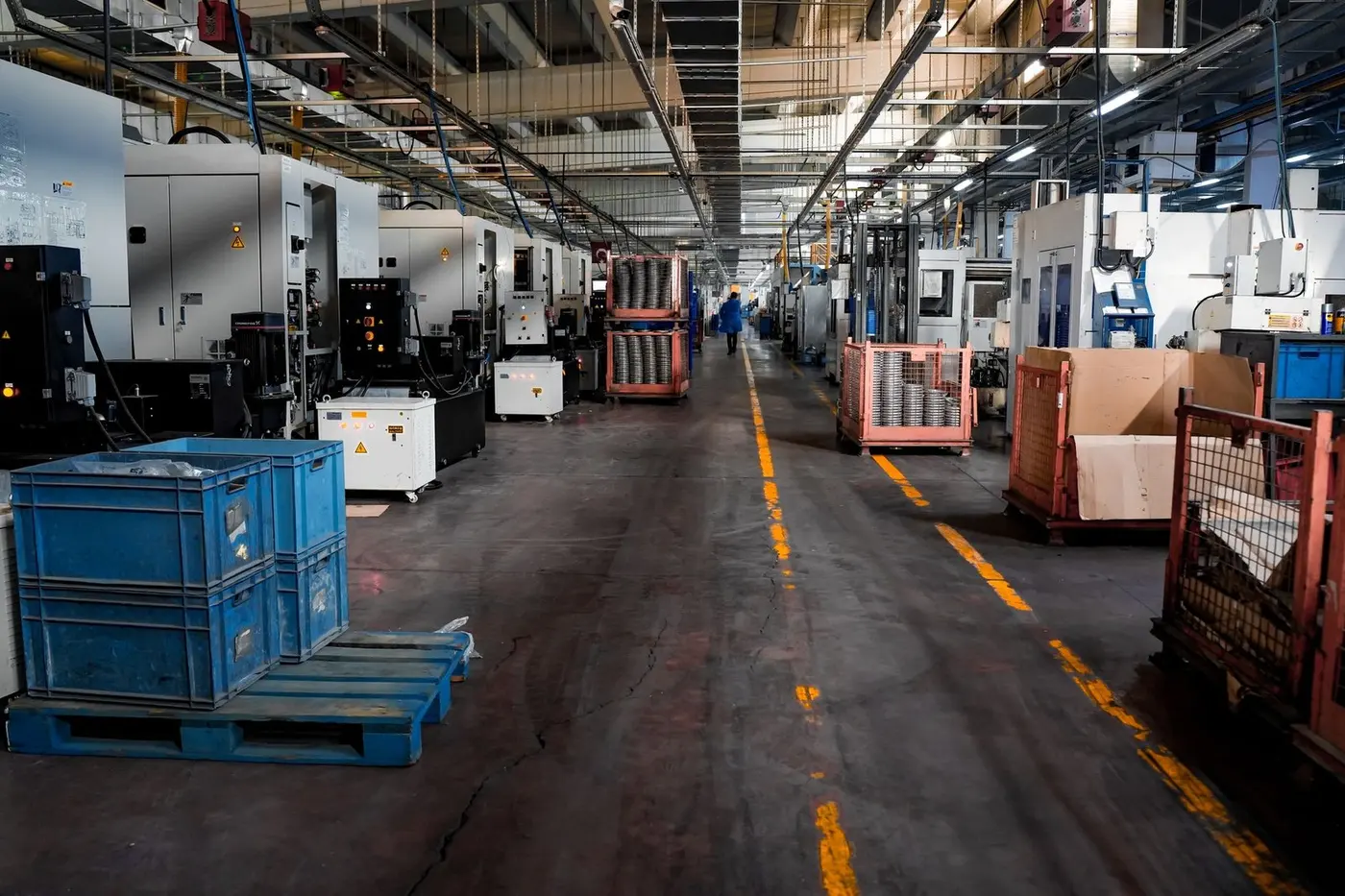
Search for “factory cleaning cost” and you will quickly find a price per square metre. It is useful as a rough reference, but it is a poor basis for selecting a contractor. Two 5,000 m² factory halls can require different crews, equipment and safety arrangements. A fair quote starts with the scope: what is being removed, while the plant is doing what, and what result the facility manager will accept.
Why two equally large halls rarely cost the same to clean
Area tells us how big the building is. It does not tell us how hard the work will be. Light packaging dust can usually be vacuumed or swept at a steady pace. Oil around machining centres needs the right degreaser, controlled application and safe recovery of the dirty solution. Metal swarf calls for suitable equipment rather than an ordinary vacuum. Post-construction residue brings fine dust, dried compounds and a real chance of damaging a new floor coating.
I often see enquiries that amount to one line: “Please quote for regular cleaning of a 4,800 m² hall.” The site visit changes the picture. Half of the floor is occupied by production cells, racks and pallets, with narrow lanes between them. A ride-on scrubber cannot turn there. The crew will clean some areas by hand, some with a compact machine and only the main routes with the high-output unit. The building is still 4,800 m². The labour calculation is not.
The source of the dirt matters as much as the dirt itself. Dust generated throughout a shift may need local attention before the evening clean. Oil mist from a line can settle on nearby structures and accessible machine surfaces, widening the scope beyond the floor. In a cleaner assembly plant, meanwhile, travel time across a long building can be a bigger cost than the actual scrubbing.
When someone asks for a warehouse cleaning cost per square meter, I want a second set of measurements: the area that a large machine can clean, the area that needs manual work and the area available only during shutdown. A square-metre rate becomes comparable only after that split.
Six details that make a factory cleaning quote usable
A sound enquiry does not need to be a twenty-page tender. It does need six clear answers. Leave one out and bidders will make different assumptions, which means the totals on the last page describe different jobs.
- What does the plant make, and what soil does it generate? List dust, swarf, oil, coolant, packaging waste or other material. Say where it gathers and whether the photos show a normal shift or several months of build-up.
- When is the hall operating? Give shift patterns, planned shutdowns and areas that can be closed. Cleaning among moving forklifts is slower and harder to coordinate than working in an empty hall on Saturday morning.
- How often is each task required? Daily traffic lanes, a weekly full-floor scrub and quarterly overhead cleaning are separate services. Put a frequency beside each one.
- What result will you accept? “Clean hall” is open to argument. A useful standard might require floors free of loose debris and oily marks, traffic lanes without deposits, and accessible horizontal surfaces free of visible dust up to an agreed height.
- Which surfaces and restricted zones are involved? Name the floor finish, sensitive coatings, ESD areas, hygiene-controlled zones, mandatory PPE and places restricted to trained personnel.
- What equipment and utilities are available? State whether a ride-on machine can be used, where water, drainage and charging points are located, whether storage is available and how equipment enters the building.
Photos help when they show scale. A close-up of an oil patch without its surroundings does not. Add a floor plan, views along the main routes, typical contamination and the available time windows. For a factory cleaning quote, a short schedule is even better: space, accessible area, method, frequency, acceptance standard and available hours.
What belongs in the base price, and what should be separate
Disputes usually start with scope, not the hourly rate. A regular cleaning price should state whether it covers the crew, routine machinery, standard chemicals, supervision and quality checks. It should also say what happens with travel, consumables and ordinary waste created by the cleaning operation.
The first visit is often a different job. A floor that has not been mechanically scrubbed for months may need slower passes, a stronger solution or repeat treatment. That is an initial restoration clean, not routine maintenance. Give it its own line. Otherwise the contractor has to hide the risk in the monthly fee or discover the shortfall on the first shift and request an extra.
Specialist equipment, access platforms, overhead work, skylights, structural cleaning and removal of process deposits are commonly priced separately. So is waste that cannot go through the normal cleaning-waste route. Night work, public holidays and a short shutdown can also change labour cost. These are not decorative extras on an industrial cleaning prices sheet. They require different resources and, at times, additional authorisation.
A useful proposal makes the split visible: one fixed price for the recurring scope, separate initial or occasional tasks, and a pre-agreed rate plus approval process for variable work.
A site survey reveals costs that photographs miss
A photograph will not show that the nearest drain is through two fire doors and 180 metres from the work area. It cannot reveal low water pressure, a missing charging socket or a route that takes the scrubber across an outside yard every shift. Small details on paper can add up to several paid hours each month.
Walk the real cleaning route during the survey. Where does the operative start, refill water, empty recovered solution and store chemicals? Measure doors and ramps. Check that the machine fits between bollards and that a goods lift can carry its loaded weight. For high-level work, establish whether an access platform can be positioned or whether production equipment occupies the whole manoeuvring area.
Then follow the safety route. The cleaning contractor needs to understand forklift movements, one-way systems, PPE, access permits and the plant procedure for process spills. If work happens while production continues, agree who closes a section and who can stop the cleaning task. Responsibility cannot be left floating between the facility manager, shift supervisor and cleaning team lead.
A trial area often gives the best evidence. Pick a representative section, not the clean straight aisle beside reception. The contractor can test a pad or brush, chemical dose, number of passes and actual production rate on your floor. You see the result before signing. At a plant outside Prague, for example, a large scrubber might clear the main aisle quickly while manual work around floor anchors takes almost as long. A desk estimate misses that. The first monthly report will not.
How to compare bids without falling into the price trap
Put the proposals side by side and cover the total price for a moment. It sounds odd, but it works. Compare scope, frequency, acceptance standard and responsibility first. Reveal the totals only when those items match.
Ask the same questions of every bid:
- Does it use the same cleanable area and include the same zones?
- Is the initial clean separate from recurring maintenance?
- Are the required machines, chemicals, travel and waste included?
- Does the plan respect shifts, safety induction and permitted windows?
- Are quality checks, complaint response and approval of extra work defined?
The cheapest hourly rate need not produce the lowest completed cost. A better-equipped crew may cost more per hour and finish an accepted area in less time. A low square-metre figure might also assume an empty hall, water ten metres away and only occasional oil. If those assumptions are not written down, that low number is what you are buying.
A fair factory cleaning cost is the price of a defined result under stated operating conditions. That gives procurement comparable bids and gives the facility team something it can manage after the contract starts.
If you need a practical review of the scope, ČistýKout is a Prague-based cleaning option. Send us a no-obligation cleaning enquiry, and we can walk through the hall, operating constraints and quote inputs before anyone promises a misleading rate.