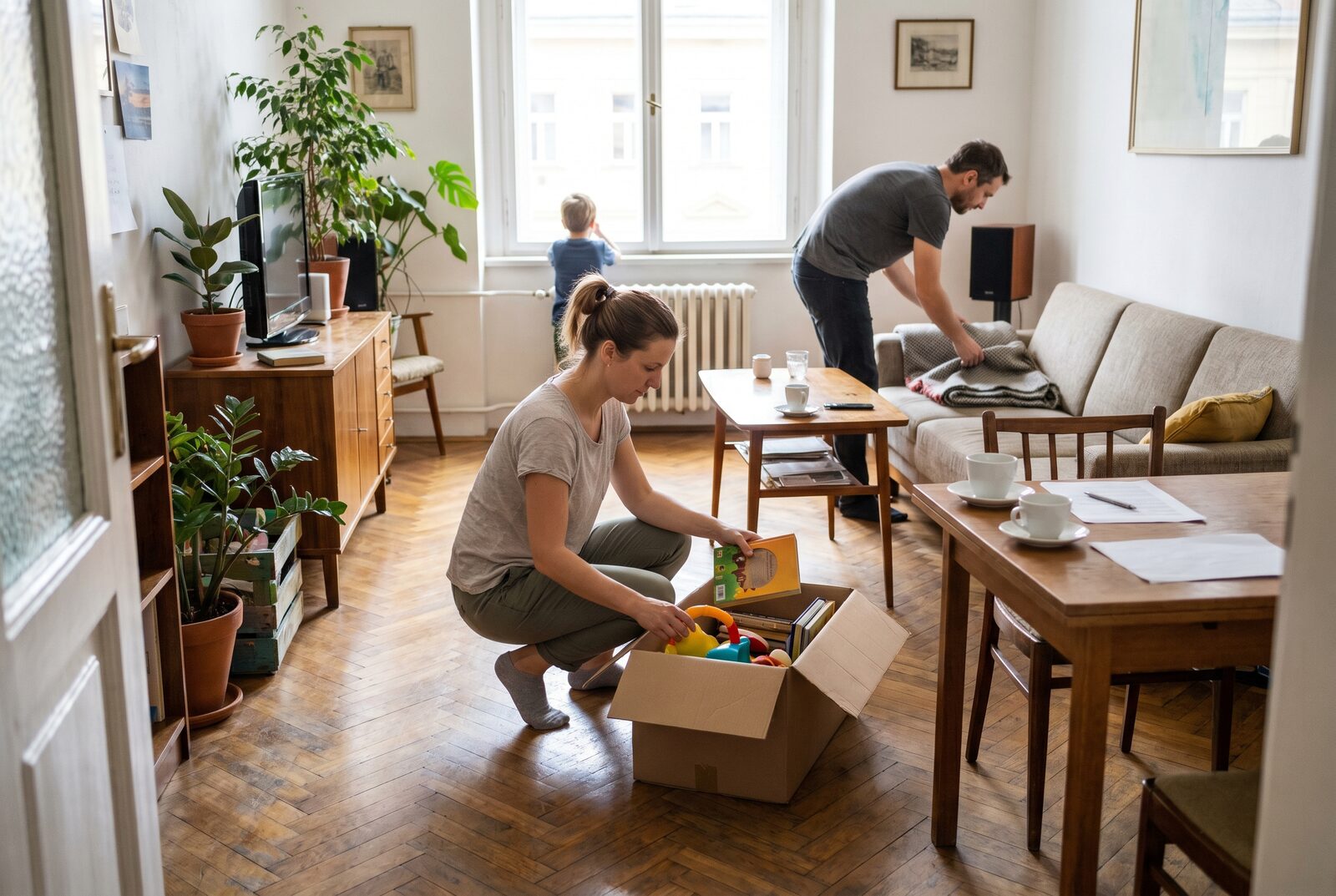
A first home cleaning visit often feels a bit awkward for one simple reason: both sides want a smooth process and a great result, but they walk in with different expectations. The client hopes the cleaner will 'somehow get everything done,' while the cleaner steps into a home where they don't know the routines, the priorities, or the tricky spots. This is exactly where confusion starts. It’s rarely about a lack of care; it’s almost always about a lack of clear onboarding. When expectations are set correctly, the first visit usually goes surprisingly well—even in a busy Prague household where mornings are a blur of school runs, work-from-home calls, and a dog that tracks half the park back into the hallway.
What to Clarify Before the First Appointment
Start with the scope of work. It sounds basic, but this is where the first home cleaning visit most frequently goes off track. Saying 'I need a standard clean for a 3-bedroom flat' can mean very different things. To one person, it’s vacuuming, mopping, and cleaning the kitchen and bathroom. To another, it includes deep-cleaning shelves, doors, baseboards, light switches, and wiping fingerprints off glass. That’s a difference of easily two hours of work.
I recommend describing your home in plain, human terms rather than using 'marketing-speak.' Try something like: 'We have a 72-square-meter flat and two small children. The kitchen and bathroom need the most attention. The bedroom just needs a quick tidy, and if you run out of time, you can skip the office today.' This gives the cleaner a real sense of what to expect, which is far more useful than a sterile list of rooms.
The second point is priorities. Many people feel that a professional clean must cover every corner equally. It doesn't have to. Honestly, it rarely makes sense to do so. If the visit is time-limited, be vocal about what matters most today. You might need the bathroom to be perfect because you have guests arriving later. Or you might need the kitchen and floors prioritized because there’s a toddler crawling around. Both are perfectly valid requests.
Be clear about the duration of the visit, too. Two hours in a small flat is a world away from five hours in a busy family home where cooking happens twice a day. In Prague, it’s common for the first clean to take longer than subsequent regular visits. This is logical—the first appointment is as much about learning the space and your habits as it is about cleaning. The details you iron out now won't need explaining next time.
Don't forget access and logistics. It’s surprising how often these details get overlooked. Will you be home, or are you handing over keys? Does the doorbell work? Is there an elevator, and where is the best place to park? If you live in central areas like Vinohrady, Karlín, or Holešovice, let the cleaner know about parking in advance. You don't want those first precious minutes wasted on logistics instead of work.
Finally, discuss equipment and supplies. Some cleaners bring their own, while others expect to use yours. Neither approach is wrong, but you need to be on the same page. If you have sensitive marble in the bathroom, oiled wooden floors, or prefer specific eco-friendly products, say so upfront. Silence often leads to unpleasant surprises for both parties.
What’s Worth Preparing (and What’s a Waste of Time)
This is usually where the nerves kick in. Many people feel embarrassed and end up 'cleaning for the cleaner.' But the real goal isn't hiding the mess—it's ensuring the cleaner can actually reach the surfaces. You don't need to do a pre-clean. Seriously. There’s no need to scrub the sink, polish the faucets, or vacuum the corners the night before just to make the flat look respectable. That defeats the entire purpose of hiring help.
What does make sense is clearing away items that physically block the work. Clothes on the floor, scattered toys, bundles of chargers under the desk, stacks of paper on the dining table, or bags in the hallway. If a cleaner spends ten minutes just moving small items from place to place, you aren't paying for a better clean—you're paying for chaos management.
One client in Prague 6 put it perfectly: 'I felt like I had to clean before the cleaner arrived. In the end, I just picked up the Lego, the laundry, and the paperwork, and suddenly the time they spent here made total sense.' That’s exactly it. When you clear the floor and work surfaces, the cleaner can do their job instead of endlessly reshuffling your belongings.
Clearing surfaces doesn't mean your home has to be sterile. Just aim for a reasonable baseline. In the kitchen, clear the pile of mail and clutter off the counters so they can be wiped down easily. In the bathroom, move the twenty bottles of cosmetics from the edge of the sink. On bedside tables, put away small valuables or personal items you’d prefer weren't moved. It makes the process more comfortable for everyone.
Where should you put the bin, the mop, or the vacuum? Right where they can be found easily. If you use your own equipment, don't just say 'it’s somewhere in the closet.' A first cleaning visit shouldn't be a treasure hunt. Have the gear out or show the cleaner exactly where everything is at the start. The same goes for cloths, vacuum bags, bin liners, and specific floor cleaners.
It's also helpful to mention what not to touch. A work laptop, sensitive documents, a fragile heirloom vase, or the dog's special diet bowl. These small notes prevent awkward moments.
Setting Priorities When Time Is Tight
On a first visit, there’s almost never enough time to do everything to perfection. That’s not a failure of the cleaner or a bad estimate by the client—it’s the reality of a home that is lived in. That’s why I recommend a simple rule: start with the high-hygiene areas, move to visible surfaces, and leave the deep details for last.
In a typical flat, this usually means starting with the bathroom and kitchen. These are the most used areas where you’ll notice the biggest difference immediately, and they offer the most psychological relief. A clean sink, counter, stovetop, and toilet do more for your peace of mind than a perfectly organized bookshelf. The bookshelf can wait; the grease on the range hood or limescale on the taps usually shouldn't.
Next, decide if you want a visible 'reset' or deep detail work. They are two different things. A visible reset means the flat feels tidy: clean floors, a fresh bathroom and kitchen, the bed made, and main surfaces wiped. Detail work involves cleaning grout, the inside of cabinets, the top of the fridge, or meticulously polishing appliances. On a limited first visit, you usually can't have both at 100%.
A simple phrase helps: 'If you run out of time, skip the office today and focus on the bathroom, kitchen, and floors.' Just like that, everything is clear. You don't need a complex home cleaning plan in a spreadsheet. You just need to decide what must be finished today and what can wait.
If you want to be truly practical, write down three main priorities in a message or on a piece of paper. Not ten—just three. It’s hard for anyone to keep more than that in mind during a first visit without constant double-checking. For example:
- Bathroom deep-clean.
- Kitchen surfaces and floor.
- Vacuum the whole flat, mop only the main living zones.
This works especially well if you aren't home and are just handing over keys. The cleaner doesn't have to guess whether the bigger issue is the streaks on the mirror or the crumbs under the dining chair.
How to Avoid Post-Clean Disappointment
Much of the frustration after a first clean doesn't come from poor work, but from unspoken expectations. The client assumes the oven is automatically included. The cleaner sees it as an extra service. The client expects the inside of the fridge to be wiped, while the cleaner is focused on a standard maintenance clean. Both parties walk away feeling like something was missed.
To avoid this, define what 'standard cleaning' means to you in advance. In the Czech Republic, this usually covers vacuuming, mopping, the bathroom and toilet, kitchen surfaces, dusting accessible areas, and wiping down standard furniture. Extras typically include windows, the inside of the oven or fridge, ironing, changing bed linens, cleaning blinds, or deep cleaning after renovations.
The worst instruction is 'just do what you can' without any guidelines. It sounds flexible, but it actually puts the burden of decision-making on someone who doesn't know your home. It’s much better to say: 'If there's time, wipe the outside of the oven, but don't worry about the inside today.' Or: 'Leave the windows for now and spend more time on the bathroom.' One clear sentence can save the whole experience.
Try to agree on a quick handover at the end. It doesn't need to be a formal inspection—five minutes is plenty. Discuss what got done, what didn't, any issues that came up, and what to prepare differently next time. For regular service, this feedback is golden because it turns a one-off visit into a functioning system.
If something in the flat is a bit tricky, speak up. A weak vacuum, a finicky shower handle, a slow drain, or parquet floors that are sensitive to water. It’s not rude to point out these complications. In fact, it’s far better than letting the cleaner discover them when they are already in the middle of the job.
Evaluating the First Visit for Future Cooperation
After the first appointment, try not to judge it solely by whether the flat 'looks clean.' That’s only part of the story. It’s more important to see if the cooperation worked. Did the cleaner arrive on time? Was the scope clear? Did the pace suit your home? Was the communication natural and easy?
I suggest writing down three things after the first visit: what worked well, what was unclear, and what you want to change next time. You might realize that polishing every trinket isn't that important to you, but you really value a thoroughly mopped floor under the dining table. Or that you’d prefer to leave out your own specific cloths for the furniture because it’s sensitive to universal cleaners.
This evaluation is what turns a first home cleaning visit into a long-term routine. The cleaner learns that the glass shower screen is a priority, and you learn that clearing the floor and sending a quick priority list is all it takes to get a great result. Suddenly, it’s no longer a stressful event but a calm, reliable routine.
One final tip: if something wasn't quite right, say it immediately and constructively. You don't have to be harsh. Just be specific: 'Next time, please focus more on the area around the stove and we can skip those high shelves in the bathroom.' Most good working relationships are built on that first round of refinement, not on silent disappointment.
A first cleaner visit doesn't have to be chaotic. The formula is simple: define the scope, clear the path, set the priorities, and do a quick debrief at the end. When both sides know what a successful clean looks like, the home is cleaner and the whole process is much lighter.
If you are planning your first home cleaning visit in Prague and want to get things right from the start, ČistýKout is a great place to start. Send an enquiry and let us know exactly what you expect from your first visit: https://www.cistykout.cz/kontakt