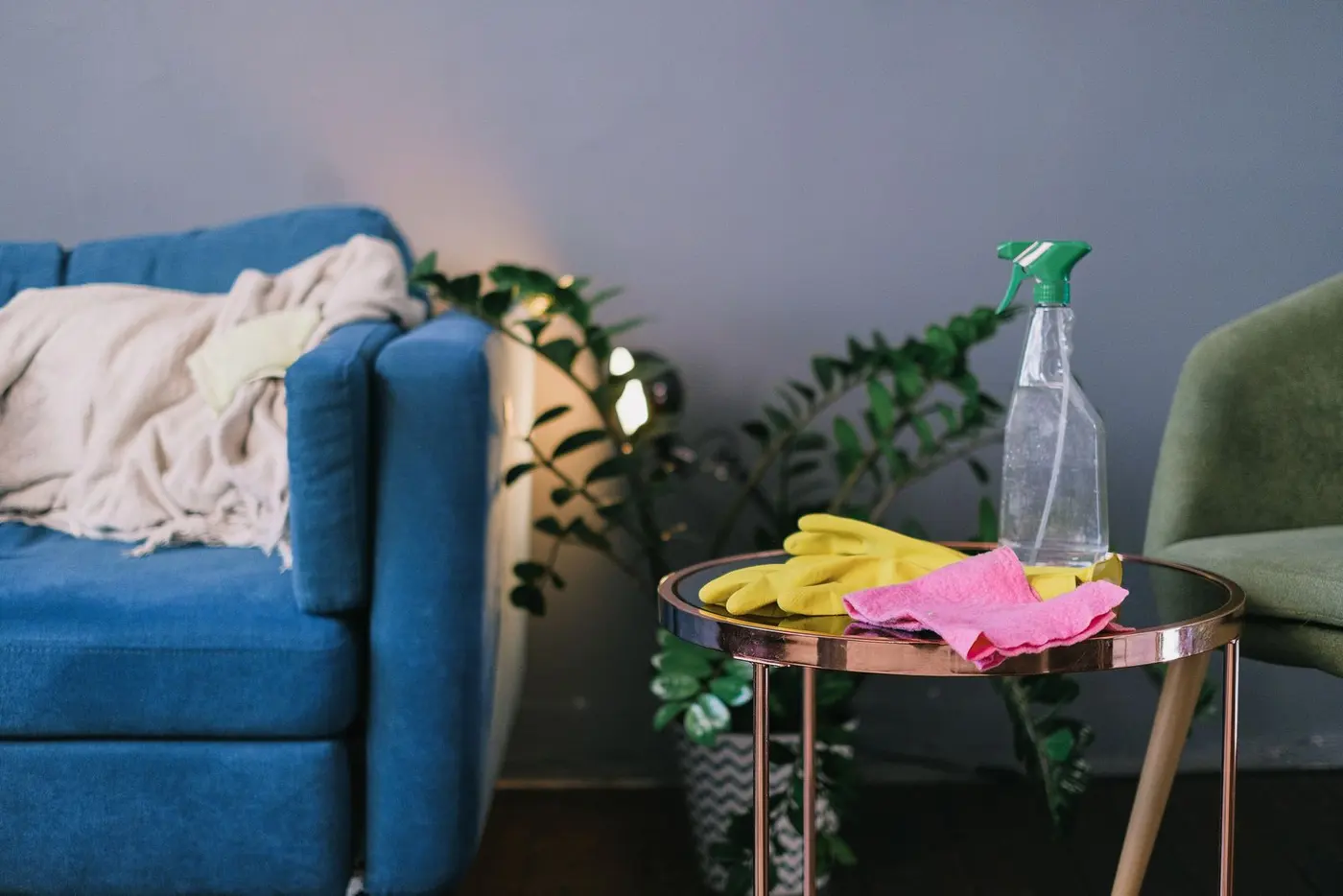
Glycerin for dust sounds like one of those cleaning tips you see in a late-night reel, save for Saturday, and then half-regret testing on the nicest table in the room. The promise is simple: add a little glycerin to water, wipe the surface, and dust will settle more slowly. I would treat that promise with care. In one Prague flat with a cat, a very weak mix looked harmless on a white lacquered shelf. The same idea on a dark coffee table left a faint tacky film that caught pet hair by the next morning. So no, this is not a magic dust prevention method. It is a small surface test, at best.
The reason the hack keeps coming back is that glycerin is hygroscopic, which means it attracts and holds moisture. That property is useful in cosmetics and in some cleaning formulations. In the wrong dose, though, it can leave residue. At home, residue is the thing you are trying to avoid. A clean surface should feel clean under your hand, not polished in a way that quietly grabs every tiny bit of lint in the room.
Why people try glycerin for dust
Dust is annoying because it makes a clean room feel unfinished. You wipe the windowsill, the sun comes in sideways the next day, and there it is again. In Prague in June, add pollen, open windows, construction dust from the street, and a dog coming back from Letná or Stromovka. No wonder people look for a trick that lasts longer than ordinary dusting.
The social media version usually skips the boring details. How much glycerin? How much water? Which surface? Should the dust be removed first? Those questions matter more than the hack itself.
The theory is not completely foolish. A barely-there film may help fine dust cling to the cloth or settle less loosely on some washable surfaces. But there is a thin line between "slightly conditioned" and "sticky". Once you cross it, the surface starts collecting dirt instead of resisting it.
There is also the shine problem. People often mistake a smooth, slightly glossy look for cleanliness. It can look better for an hour and still be holding a layer of smeared dust. If the surface was not dusted first with clean microfiber or a vacuum brush, glycerin just helps turn loose dust into a film.
My home test would be boring on purpose: one hidden patch on a washable shelf, one very weak solution, and a check after 24 and 48 hours. Not the television. Not untreated wood. Definitely not the hallway floor.
Where it might make sense
If you want to test glycerin for dust, keep it to smooth, sealed, washable surfaces. Think a lacquered cabinet top, a painted windowsill that can be washed again, or a plastic baseboard. The surface needs to be forgiving. If the experiment goes wrong, you should be able to remove the residue with warm water and a drop of dish soap.
The mix should be extremely weak. I would think in drops, not spoonfuls. Add one small drop of glycerin to a larger bowl of water, dampen the cloth, wring it out well, and wipe a small area. For anyone cleaning with glycerin for the first time, the surface should not feel greasy, slippery, or tacky after wiping. If your finger leaves a track, the mix is too strong.
Do not use it on raw wood, veneer, natural stone, lampshades, upholstery, mattresses, curtains, or anything absorbent. Electronics are a hard no in my book. Screens, speakers, keyboards, routers, and smart home devices do not need homemade glycerin spray. Use a dry microfiber cloth or the care method recommended by the manufacturer.
The order matters. Remove dust first. Use a clean microfiber cloth or a vacuum cleaner with a soft brush attachment, especially on shelves and baseboards. Only then test the weak glycerin mix. For allergy-prone homes, I would not make glycerin the main strategy anyway. You want less dust circulating through the flat, not a sticky surface holding it in place.
When glycerin does more harm
Glycerin becomes a problem when it leaves a film. Too much of it feels slightly sticky. Sticky surfaces attract fine dirt, lint, pollen, and pet hair. The dust may not fly around as much, but it can cling harder and look grimier after a few days.
Dark and glossy furniture shows the mistake first. A black coffee table, glass cabinet, polished kitchen fronts, or a dark windowsill will reveal every smear. Hard water can make it worse. So can an old cloth with fabric softener or detergent residue still in the fibers.
Touch points are another risk. Handles, chair backs, table edges, children's desks, and work surfaces should not feel slick. Floors are worse. I would not put glycerin on vinyl, laminate, tile, wood floors, or stairs. A tiny amount of slip is still too much when someone walks across it in socks.
There is a hygiene point as well. Glycerin is not a disinfectant. It does not solve dust mites. It does not remove pollen from fabrics. If allergies are the real issue, the viral dust cleaning hack is a distraction from the work that matters: textiles, filters, vacuuming, mattresses, and damp wiping.
A safer plan to reduce dust at home
When someone asks how to reduce dust, I start with sequence, not product. Work from top to bottom. Door frames, high shelves, lamp shades where safe, windowsills, worktops, baseboards, then floors. If you mop first and dust the bookcase afterwards, you have just dropped part of the job back onto the floor.
Clean microfiber is underrated. It should be lightly damp, not wet. A wet cloth often leaves grey streaks on white doors, skirting boards, and painted surfaces. For heavier dust, use the vacuum with a brush attachment before wiping. Blinds, radiators, and the tops of wardrobes are much easier that way, and you put less dust into the air.
Textiles are usually the real source. Curtains, throws, pet beds, rugs near the entrance, upholstered sofas, and the fabric headboard nobody thinks about. After renovation work, dust can hide in cracks and baseboards for weeks. In an older apartment building, it may come from shared hallways, open windows, and dry stairwells. The furniture is only where the dust lands.
Ventilation helps, but timing matters. During pollen season, short cross-ventilation is usually better than leaving a window cracked all day. If you use an air purifier, check the filter. It sounds basic, but a loaded filter is one reason people decide the purifier "does nothing".
A practical weekly rhythm:
- vacuum floors, corners, and textile-heavy areas once a week,
- damp-wipe the main horizontal surfaces once a week,
- clean blinds, radiator tops, high cabinet tops, and baseboards once a month,
- wash pet beds, throws, and small rugs more often during shedding or pollen season.
Glycerin does not sit at the center of that plan. It is a side experiment for one washable surface, not a household dust system.
When a one-off deep clean helps
Sometimes dust keeps coming back because there is simply too much of it stored around the flat. That happens after painting, window replacement, drilling, spring pollen, a heavy pet-shedding period, or months of skipping blinds and high shelves. A glycerin mix cannot fix that.
A deep clean helps when dust is layered across many places at once: shelves, windowsills, blinds, radiators, baseboards, sofa fabric, under the bed, and the floor edges. For allergy-prone homes, mattresses and the space under beds matter more than people expect. Those areas often hold fine dust even when the room looks tidy.
If you contact Čistýkout, describe the problem plainly. Instead of "I need apartment cleaning", write something like: "Dust returns quickly after pollen season, we have a cat, open shelving, blinds, and a dark floor. We need careful cleaning of windowsills, baseboards, cabinet tops, textiles, and floor edges." That tells the cleaner what kind of job it is.
My verdict is simple. Glycerin for dust may help on a small sealed washable surface when the mix is extremely weak and the surface is already clean. The moment it feels sticky, slippery, or streaky, stop. Long-term dust prevention comes from routine, textiles, filters, and cleaning in the right order. When the flat is loaded with dust, a proper deep clean will do more than another viral bottle in the cupboard.
For a Prague-based deep clean after pollen season, pet shedding, or renovation dust, Čistýkout is a practical place to start. Use the contact form and mention where the dust returns fastest.