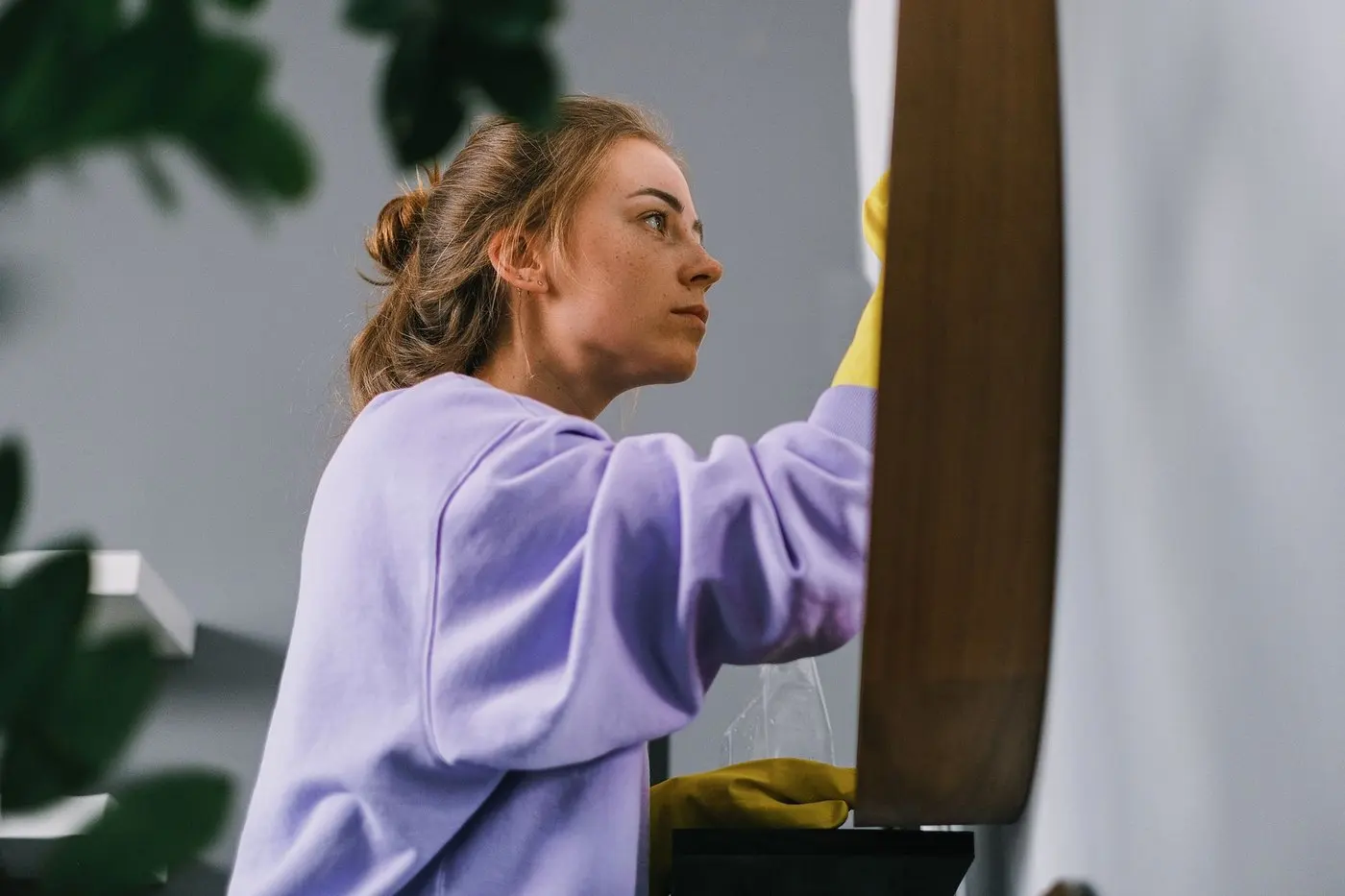
Health and safety for cleaning work is decided in the first two minutes on site more often than in a folder of paperwork. Which socket is sound? Who will walk through the hall? What is in the unlabelled bottle under the sink? A self-employed cleaner has to make those calls alone. This guide does not replace local legal documentation, training, a product label, or its current Safety Data Sheet. It is a practical way to pause, check the job, and ask the client the right questions before opening a bottle or plugging in a vacuum.
Five risks can pile up on one ordinary job
Cleaning chemicals, wet floors, work at height, manual handling, and biological waste rarely arrive one at a time. Picture a typical Prague office clean: your gloves are damp from degreaser, you are carrying a bucket around a vacuum lead, and someone steps out of the kitchenette without looking. None of the individual details sounds dramatic. Together, they are exactly how an uneventful shift becomes an injury.
A client's home is not automatically a safe workplace. An older flat in Žižkov may have a loose socket behind the fridge; a polished entrance may hide a thin film of water. In a shared building, residents can keep opening the door to the corridor you have just mopped.
Before unpacking, take a short walk through the job:
- Identify the routes used by you, the client, children, staff, pets, or residents.
- Check sockets, leads, damaged flooring, lighting, and any work above floor level.
- Confirm which products you will use and whether their labels and SDS information are available.
- Ask about heavy objects, restricted rooms, known faults, and unusual waste.
- Save the name and number of the person who can make decisions if something goes wrong.
That is a simple cleaning risk assessment. If one answer is missing, ask before starting.
Cleaning chemicals: read the label before trying a clever shortcut
Online cleaning tricks encourage people to mix whatever is already in the cupboard. A paid job is not the place to experiment. Choose a product for the task and surface, then follow the label. For professional concentrates, read the Safety Data Sheet as well. It tells you about dilution, exposure, first aid, storage, and suitable personal protective equipment.
More concentrate does not mean a better result. If the instructions specify 20 ml per litre, doubling it increases exposure and may damage a finish. Never mix products unless the manufacturer explicitly approves it. Bleach products must not be combined with acids or ammonia.
In a windowless bathroom, turn on the extraction and keep the door open only if fumes will not spread into an occupied area. Where splashing is possible, follow the label's eye and skin protection instructions.
Keep products in their original containers. Never use a drinks bottle. Label working spray bottles, close every cap for transport, and keep containers upright in a washable crate, away from food.
The European Chemicals Agency explains labels and hazard communication, but the current label and SDS for the product in your hand always come first.
Gloves are not universal protection
Nitrile is a material, not a guarantee. The correct glove depends on the substance, concentration, thickness, and expected contact time. A thin disposable glove may suit a quick wipe with a mild cleaner. It is not automatically suitable for a long session with concentrated degreaser. Check the glove recommendation in the SDS and the manufacturer's chemical resistance chart.
Replace a torn or contaminated glove. Do not keep going because only one bathroom remains: the same glove will touch your phone and door handles. Remove it without touching the outside with bare skin, then wash and dry your hands.
Repeated wet work can damage skin without a visible burn. Burning, redness, or cracks are not a normal cost of the job. Alternate wet and dry tasks, change sweaty gloves, and use an unperfumed moisturiser. Persistent symptoms need medical advice.
Wet floors and electricity: control the space, not only the finish
A wet-floor sign helps, but it cannot stop anyone entering. In a busy office, clean in sections and keep a dry route open. Agree the timing with reception or the site contact. In a home, start in the furthest room and work towards the exit. Do not mop away your only safe path out.
My two rules are simple: never leave a bucket around a blind corner, and never run a cable across a walkway when another route exists. Use the nearest suitable socket. If a socket is loose or a lead damaged, stop and tell the client.
Keep water away from mains-powered equipment. Unplug an appliance before wiping it when safe and permitted by the manual. Never run an ordinary extension lead into a wet zone or touch a plug with wet hands. Check a steam cleaner's lead, hose, pressure, and surface suitability.
The UK Health and Safety Executive advises restricting access to smooth wet floors. It also makes a useful distinction: cones warn people, while barriers or closed doors actually prevent access. Its slip prevention guidance for cleaners is practical well beyond the UK.
Ladders, step stools, and heavy objects need a firm limit
A dining chair, an upturned bucket, and the rim of a bath are not access equipment. For a light task at modest height, use a sound step ladder designed for the job on a level, dry surface. Check the feet, treads, hinges, locking mechanism, and contamination before climbing. If you need to lean sideways, climb down and move the steps. Those extra seconds are part of the job.
Work at height needs planning and suitable equipment. The HSE cleaning guidance lists falls from stepladders, overreaching, and standing on chairs or benches among recurring accidents. An exterior window without safe access is not a quick extra. Decline it or arrange specialist equipment and a competent second person.
Backs need limits too. A vacuum carried to a fourth-floor flat, a full bucket, and a sofa the client wants shifted are separate loads. Use less water, take more trips, and keep the load close. If you do not know the weight or cannot get a secure grip, ask for another person.
Saying no is part of cleaner workplace safety. Refuse a request to move a wardrobe alone, balance on a damaged ladder, treat extensive mould without assessment, or use an unlabelled chemical. A professional boundary can sound very simple: "I cannot complete that part safely with the equipment and information available today."
What to confirm with the client before the first visit
A short handover prevents most surprises. Ask about access, floor level, pets, allergies, delicate surfaces, known faults, and restricted rooms. In an office, find out when staff use shared areas and who can close a corridor.
Define the service without vague promises. Routine cleaning does not normally include unidentified potentially infectious waste, work at height without suitable equipment, moving heavy furniture, or interfering with electrical installations. If the client expects any of those tasks, agree the method, equipment, extra person, and specialist support before the booking.
If you find a needle, broken glass, or another sharp item
Do not touch it with a bare hand and do not push it into an ordinary rubbish bag. Stop work nearby, keep other people away, and inform the client or building contact. Without a puncture-resistant sharps container and an agreed disposal procedure, do not pick it up. A used needle needs specialist handling.
If a sharp item punctures the skin, let the wound bleed gently without aggressive squeezing, wash it with soap and running water, cover it, and seek prompt medical assessment. Record the time and who was informed.
Agree the incident route before starting. Save the site contact and the Czech emergency number 112. Photograph a defect only when safe and permitted. Do not restart the same activity until its cause has been addressed.
A five-minute pre-job audit
- Walk the routes and inspect floors, sockets, lighting, and access at height.
- Check labels, dilution, ventilation, and suitable gloves.
- Plan who can enter a wet area and how access will be controlled.
- Clarify heavy loads, sharp waste, and anything outside routine cleaning.
- Confirm the contact and response for injury, damage, or stopping work.
A safe job is not one where everyone assumes nothing will happen. It is one where risks are named early enough to control them. If you want cleaning support for a Prague home and prefer to agree the scope and site conditions before the first visit, send a no-obligation enquiry through the ČistýKout contact form. A clear handover protects the client and the person doing the work.