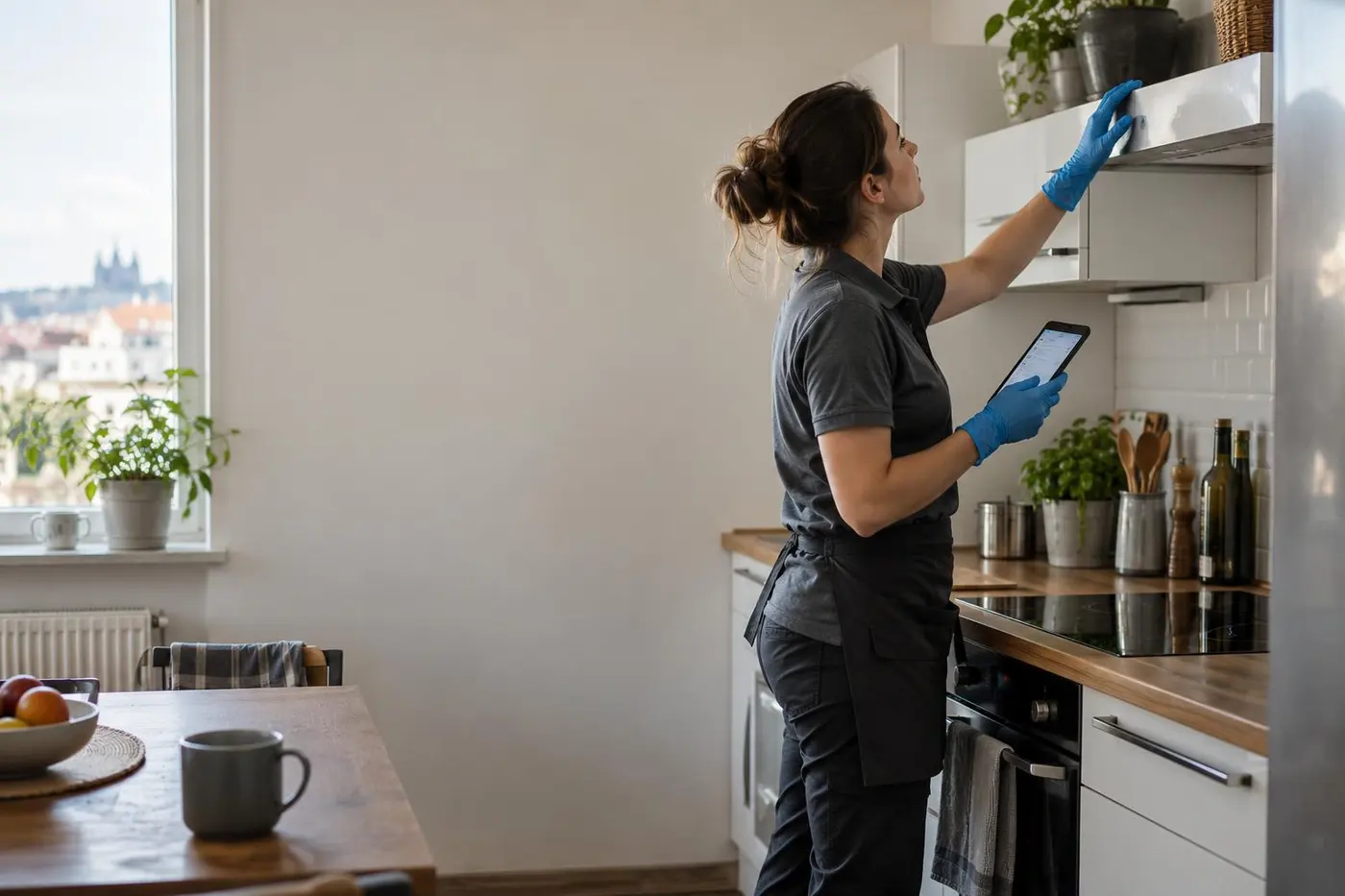
A heavy soil cleaning surcharge is not a fine for the way somebody lives. It is an agreed price for work that falls outside a normal visit. When degreasing one kitchen takes a full morning instead of an hour, neither a flat fee nor an hourly quote survives on goodwill alone. A walkthrough, observable criteria and written approval need to come first.
What no longer counts as normal soil
A maintenance clean assumes dust, crumbs, fingerprints, an oily hob and a bathroom used between regular visits. A deep clean reaches cupboard tops, skirting boards, doors and older deposits. It may include the inside of an oven or fridge. Even then, the cleaner should be able to work safely with familiar products and equipment.
The job changes when soil needs soaking, agitation and several passes before the surface is usable. Think of the sticky film on top of old kitchen cabinets. Once airborne dust has bonded to it, a quick wipe does nothing. The same applies to thick limescale, dried food, or a floor hidden beneath items that must be sorted and moved before a mop can touch it.
My practical test is blunt: can I clean this surface with the usual method in one pass? If it needs a scraper, repeated dwell time or twenty extra minutes of hand work, I record it as additional scope. Large volumes of rubbish, animal urine and sanitary fittings that have not been cleaned for years belong on the same list.
Some conditions are not a bigger cleaning job. They are remediation. Human waste, blood, needles, extensive mould, dead pests or a serious infestation require a specialist with the right training, insurance and protective equipment. Decline the work if access to water or electricity is unsafe, if sharps may be hidden, or if the client will not explain the risk. A surcharge cannot make an unsuitable job safe.
Five facts to collect before quoting
Floor area matters, but it is a weak estimate on its own. A heavily soiled apartment needs more than a floor-area estimate. A 48 m² flat in Prague 2 may take less time than a studio where boxes have covered the floor for five years. Before sending a figure, collect five pieces of information:
- Area and room count. Include bathrooms, a separate toilet, storage, balcony and stairs.
- How long the home has gone without thorough cleaning. Three years of buildup matters more than another ten square metres.
- Types of soil. Ask about grease, limescale, nicotine, pets, rubbish and renovation dust.
- Surfaces and fittings. Natural stone, timber, lacquered cabinets and an old oven cannot be treated like hard ceramic tile.
- The expected finish. “Clean” might mean a clear floor, or it might mean pale grout and a spotless oven.
Photographs work when they are recent and show both the full room and the difficult details. Ask for several angles of the kitchen, the hob, extractor, bathroom, floors and whatever the client considers the worst area. A close-up of one shiny tap will not reveal twenty bags waiting beside it.
For uncertain work, I prefer a short pre-cleaning walkthrough or a video call. The questions need not embarrass anyone. Replace “How dirty is it?” with “Which surfaces have not been cleaned in the past six months?” Ask whether your team will move belongings, sort waste or clear counters before cleaning. People usually find it easier to describe tasks than to judge their own home.
How to calculate the surcharge from time and cost
Do not choose a random 30 per cent. Begin with extra labour. Estimate how much longer each problem zone will take compared with an ordinary visit, then add the direct costs and a sensible allowance for what the photographs may have missed.
Use this working formula:
Surcharge = extra hours × your selling hourly rate + materials + PPE + disposal + equipment wear + uncertainty allowance.
Take a Prague two-bedroom flat with a base quote of CZK 2,400. The oven and extractor need 1.5 extra hours. The bathroom needs one hour, while sorting and carrying eight bags downstairs needs another 1.5 hours. At a selling rate of CZK 450 per hour, added labour is CZK 1,800. Add CZK 220 for stronger degreaser, gloves and bags, CZK 300 for disposal, then a 15 per cent allowance on those additional items. The heavy soil cleaning surcharge comes to roughly CZK 2,670. You might round the total to CZK 5,100, but show the client how you reached it.
Your selling rate is not the cleaner's wage. It also covers travel, tax and insurance, admin and margin. Charging demanding hours at wage cost can leave a busy day with no profit.
An uncertainty allowance is most useful when you have quoted from photos. Ten to twenty per cent is a reasonable internal range for the uncertain part of the job, not an automatic uplift on the entire invoice. State the price-change rule as well: once work begins, the price changes only when the client approves a defined extra task. If they do not approve it, do not perform it.
Surcharge, separate line item or higher package
A line called “extra heavy soil” is clearer than an unexplained price adjustment. A specific label is better still: repeated kitchen degreasing, heavy limescale removal, or waste handling. It tells the client what they are buying and gives your cleaning scope of work a useful boundary.
For a one-off visit, a base price plus separate additions is easy to understand. If the client wants regular service afterwards, quote the first appointment as a deep clean and later visits at the maintenance rate. Put that distinction in writing. Visit one creates a maintainable baseline; the recurring plan maintains it.
Small favours can quietly become a new standard. Clean the oven interior, remove rubbish or shift a loaded bookcase without recording it, and next time you may hear, “That was included before.” Confirm both inclusions and exclusions. The next maintenance visit follows its own agreed scope, not everything completed during the exceptional first clean.
How to explain the price without a fight
Words such as “filthy”, “neglected” or “terrible” judge the household and put the client on the defensive. Describe the surface, method and time instead. “The tiles have several layers of limescale, so I expect two treatment cycles and one extra hour” is neutral and verifiable.
A short message before accepting the job could read:
> Thank you for the photographs. The agreed base clean is CZK 2,400. The kitchen cupboards, oven and extractor need repeated degreasing, and the bathroom needs heavier limescale treatment. I estimate four additional hours plus materials, so the proposed surcharge is CZK 2,700. The maximum total is therefore CZK 5,100. If another task becomes visible after surfaces are cleared, I will send a photograph and price first; I will not do it without your approval. Hazardous-waste disposal and specialist remediation are excluded. Please confirm the scope and maximum price in writing.
Only promise a maximum price when you are prepared to honour it. Where the cleaning job pricing remains genuinely uncertain, offer a paid walkthrough or divide the work into stages, perhaps four hours followed by a new decision. “We will see when we arrive” is not a quote.
What to document before and after cleaning
Ask permission before taking photographs and explain why you need them. Capture the working area, not personal papers, faces or unrelated possessions. A useful record includes the affected surface before treatment, the result afterwards and a wider view that identifies the location. Store it with the booking under your privacy and retention rules.
Record extra work as it is agreed. A chat message saying, “Client approved CZK 450 for the fridge interior at 10:20” is far more useful than a memory a week later. Note defects that cleaning cannot remove too: damaged coating, permanently stained silicone, or limescale that has already etched a tap.
At the end, confirm what was completed, what remains and why. The record supports a complaint response, but it also improves your next estimate. After two or three similar jobs, you will stop pricing a greasy kitchen by instinct. You will know how many hours, cloths and litres of degreaser it tends to use.
A well-explained surcharge protects both sides. The client knows the ceiling and controls extra work; you do not absorb an exceptional cleaning scope in unpaid time. Clients who would rather have a Prague professional assess and carry out the work can send a no-obligation enquiry to Čistýkout. The condition of the flat and desired result can be clarified before the booking is confirmed.