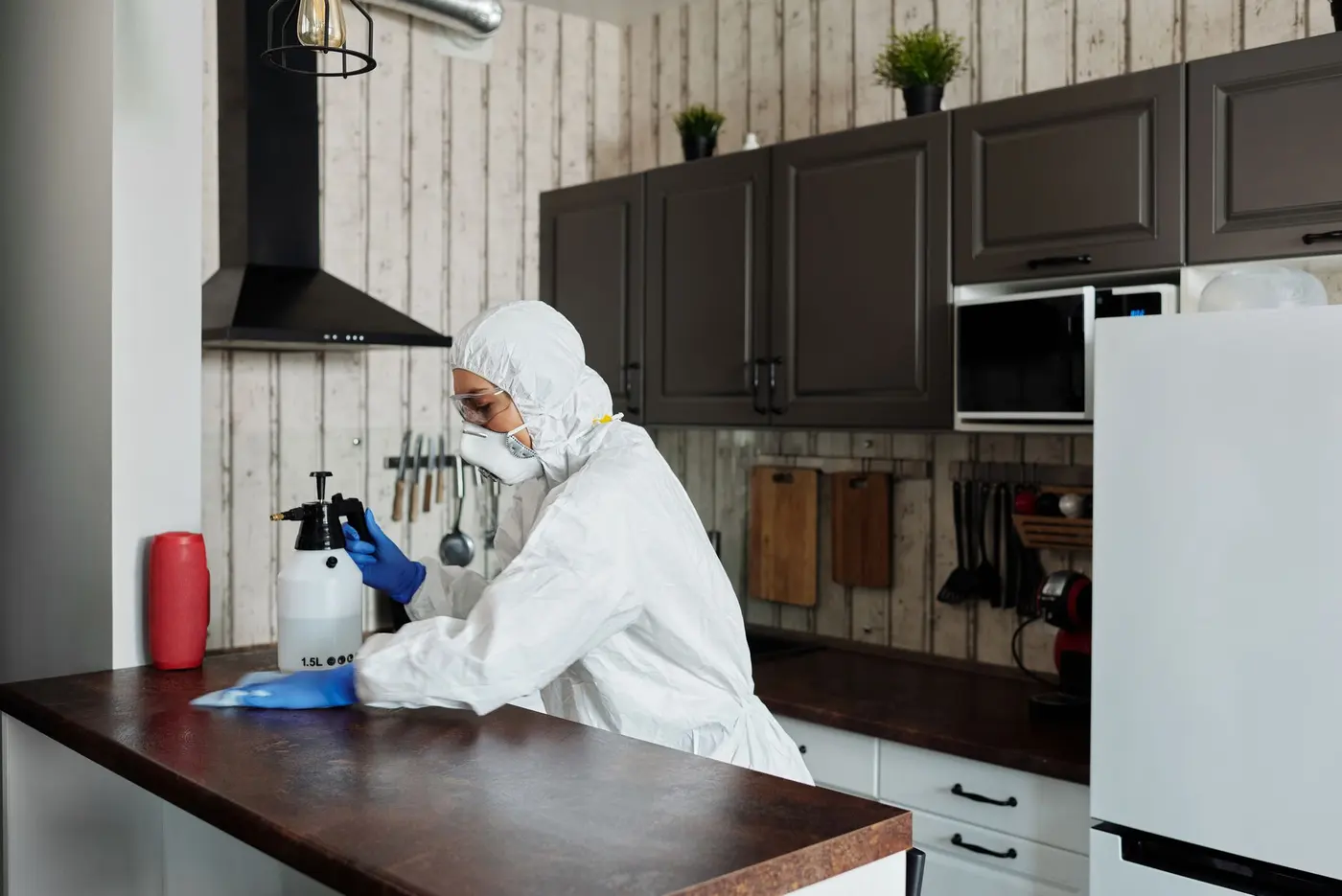
A homemade cleaning solution may be useful, but vinegar, rubbing alcohol, dish soap and fragrance do not turn into an all-purpose disinfectant just because they meet in a spray bottle. I use a simple check before mixing anything: what is the dirt, what is the surface, and which ingredient is meant to do the work? It takes half a minute. It can spare a worktop, a screen, or your lungs.
First decide what the mixture is supposed to do
Grease beside a hob is not the same problem as limescale around a tap. Neither is the same as a hygiene concern on a door handle. Degreasing loosens fat; descaling deals with mineral deposits. Ordinary wiping removes soil. Disinfection is a separate, controlled job with a stated concentration and contact time.
People often start at the wrong end. They save a DIY all-purpose cleaner from social media, put five ingredients in a bottle, then search the flat for somewhere to use it. Start with the mark in front of you. Warm water, a clean microfibre cloth and a little pressure handle plenty of fresh dirt.
In a Žižkov flat you might find mug rings on the table, greasy haze on the ceramic hob and white scale in the shower. One bottle sounds convenient. I would still treat those as three jobs.
My check is uncomplicated. Name the soil. Identify the material and finish, rather than settling for “stone” or “wood”. Pick an ingredient suited to that job, check the maker's care instructions, then try a coin-sized hidden patch. If the contents of any cleaner are unclear, I do not combine it with anything.
What vinegar, alcohol and dish soap actually do
A vinegar cleaning solution can help with some mineral deposits because acetic acid reacts with scale. It may suit ceramic around a tap if the manufacturer permits acid. It is not a magic degreaser, nor is it a direct replacement for an approved disinfectant. Czech spirit vinegar can also be darker and more pungent than clear distilled white vinegar; our Czech guide to vinegar types explains the distinction in more detail.
Alcohol is a solvent and evaporates quickly. It lifts some oily marks. The percentage matters, however. Dilute isopropyl alcohol with guessed amounts of water, vinegar and detergent and you can no longer calculate the final strength. Nor can you rely on a suitable wet contact time. The mere presence of alcohol proves nothing about disinfection.
Dishwashing liquid contributes surfactants. These help grease leave the surface and travel with the water. On a mildly greasy counter, a couple of drops may do. A generous squeeze usually buys foam, streaks and a tacky residue that attracts dust.
Ingredients do not pool all their strongest qualities. Acid, solvent and surfactant together may clean something, but the bottle has no tested performance simply because the recipe sounds scientific.
Cleaning combinations that do not belong in one bottle
Never mix chlorine bleach with vinegar, another acid, ammonia or another cleaner. This is the line worth remembering. Sodium hypochlorite in bleach can release toxic chlorine gas on contact with acid. Ammonia and bleach can produce dangerous chloramines. CDC guidance for household bleach is intentionally broad: do not mix bleach or disinfectants with other cleaners.
Using products one after another can still bring them into contact. If chlorine toilet gel has gone into the bowl, do not follow it immediately with vinegar for the scale. Read the label, rinse as directed and ventilate. After an accidental mixture, a harsh smell, coughing, burning eyes or difficulty breathing means fresh air and emergency help. In Czechia call 155 or 112; the Toxicological Information Centre also advises on poisoning exposure.
Two commercial cleaners are no safer to combine. “Bathroom” and “extra strength” on the front do not tell you every reactive ingredient. One could be acidic and the other chlorine-based. Use each on its own, following its label.
Tea tree oil mostly changes the smell. It does not establish concentration, contact time, even distribution or verified antimicrobial action. Essential oil cannot turn a rubbing alcohol cleaner into dependable disinfectant. It can also bother sensitive skin and airways, and it needs careful storage around children and pets.
Surfaces that deserve a patch test first
I would keep vinegar away from natural stone that has not been identified. Marble and travertine contain minerals that acid can etch, leaving a dull patch that no amount of wiping will fix. Timber, lacquer and sealed grout bring different uncertainties: changed sheen, a swollen joint, softened finish. Stainless steel is less forgiving of residue than many recipes suggest.
Screens require their own instructions. A manufacturer may allow a particular alcohol wipe on certain hard, non-porous parts. That is not permission to mist a homemade mixture over the display. Liquid finds openings; dish soap leaves film. Check the device maker's advice; Apple's device-cleaning guidance shows how specific those limits can be.
For a patch test, put a little liquid on the cloth and work on a hidden area about the size of a coin. Treat it as you would during the full clean, including rinsing if that is part of the plan. Wait until it is completely dry and look across it in good light.
Stop at lost gloss, changed colour, roughness, softened lacquer, a raised edge or sticky film. Also inspect the cloth. If it has picked up colour or finish, the test has answered the question. A clean-looking patch is reassuring, but it cannot promise that repeated treatment will be harmless.
Labelling, storing and dosing a DIY mixture
An unmarked bottle beside food is an unnecessary gamble. Write down every ingredient, the rough quantity, the date and intended job. Mark it “DO NOT DRINK” and note known incompatibilities. A drinks bottle is never suitable.
Keep the spray away from food, children, pets, sunshine and heat. Alcohol burns, so an alcohol mixture has no place beside a lit gas hob, candle or hot appliance. Open a window and keep spray mist away from your face.
Home recipes have not been stability-tested like commercial formulas. Make a small batch for a specific task and use it soon. Separation, a new smell, colour change or solids are reasons to stop, not invitations to add another ingredient. Dispose of the liquid according to its contents and local advice.
Less detergent is usually better. Apply the mixture to a cloth where mist could be inhaled or liquid could enter joints and electronics. Gloves make sense for sensitive skin.
When a tested commercial product is the better choice
Use an approved product when disinfection is the actual requirement. Its label should name suitable surfaces, dilution if needed and contact time. Remove visible soil first. A disinfectant wiped off straight away may not have done the job claimed on its label.
I would not experiment on costly stone, waxed parquet, matte lacquer, antique furniture or specially coated displays either. The right product, or one useful answer from the manufacturer, costs less than restoration. When you cannot identify the material, professional judgement beats a viral recipe.
A homemade cleaning solution has a place when its purpose is modest and every ingredient has a job. If you prefer to leave the assessment and cleaning to someone else, send ČistýKout a no-obligation enquiry. We are based in Prague and match the method to the home, rather than forcing one spray onto every surface.