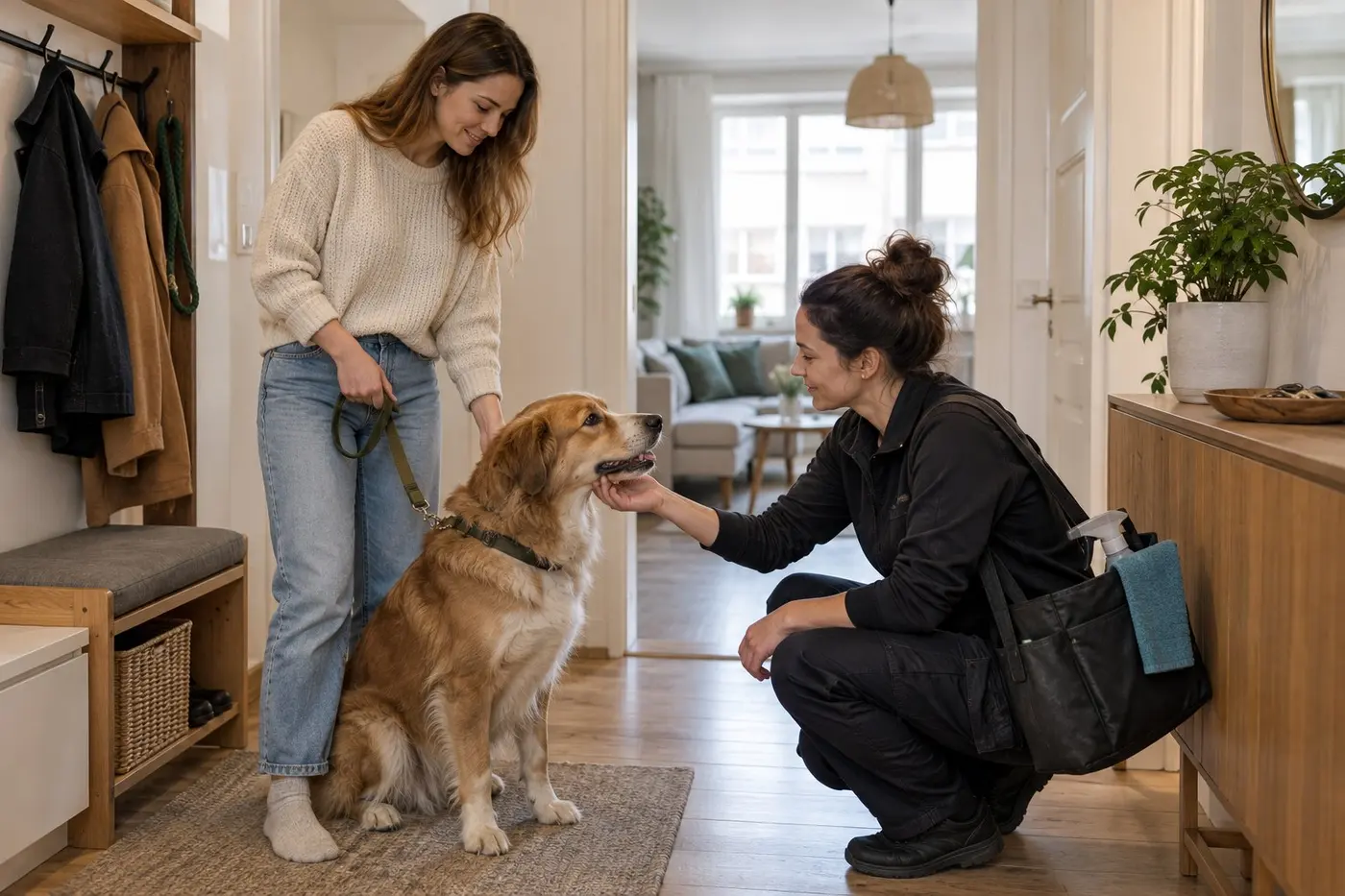
A first visit from a house cleaner can feel slightly awkward even before a dog enters the picture. Add a 30-kilo rescue who greets strangers by jumping at their coat, or a dachshund who can slip through the front door in two seconds, and “we have a dog” is not enough information. A five-minute agreement before the appointment protects the client, the cleaner and the animal.
Mention the animal when you enquire, not at the front door
Your first message should say what animals live in the home, how many there are, roughly how large the dog is and how they usually react to visitors. “One 32 kg Labrador, friendly but jumps up” is useful. “Don’t worry, he never does anything” is not. Mention the cat who hides under the bed, the puppy who cannot be left alone yet or a bird that must be kept away from draughts.
Ask whether the house cleaner has an allergy, a fear of dogs or another reason the job may not be suitable. This is not a test of character. A severe allergy does not disappear because the dog waits in the bedroom; hair and allergens remain on soft furnishings and move through the air. A cleaner who is genuinely frightened will struggle to work while a curious dog follows the vacuum around.
For a first cleaner visit, I recommend staying home for at least the first ten or fifteen minutes. Introduce everyone, point out the restricted rooms and explain the routine without rushing. In a Prague apartment building, the cleaner may also need to know whether the main entrance closes by itself, which door leads into the courtyard and where the dog must never be allowed to go.
A message you can copy
Keep it plain: “We have an eight-year-old border collie, about 20 kg. He is calm with visitors but reacts to the doorbell. I’ll be home at the start and will take him for a long walk while you work. Do you have any allergy or concern around dogs?” That one note prevents more trouble than a long list of bathroom requests.
Decide where the dog will stay during cleaning
There is no universal answer. A settled dog may sleep in the study while the rest of the flat is cleaned. A sociable, restless dog may be happier on a long walk. Boarding or a sitter can be the kinder option for a fearful or territorial animal. Base the plan on the dog's real temperament, including how they behave when you are not standing beside them.
Do not shut the dog in the bathroom if the bathroom is next on the cleaning list. The cleaner then has to move the animal, improvise or skip the room. A safe zone needs a closed door, water, the dog’s bed and, ideally, nothing that is included in the agreed cleaning scope.
Walk through the entry routine too. Who opens the flat? Could the dog bolt while keys are being handed over? May the cleaner open the balcony door? Is there a second gate in the hall? I once heard about a calm dog in a Vinohrady flat who seemed entirely relaxed until the vacuum started. He then made straight for an open door onto the shared gallery. He was not aggressive, only scared. From the next visit onward, one rule fixed it: lock the flat door immediately after entering.
If the cleaner will use a key or building code, agree who checks the door and where the dog will be before arrival. Do not leave a key under the mat. A handover in person, a lockbox with a changeable code or another agreed method is safer.
Hair, pet beds and accidents need a separate agreement
Ordinary floor vacuuming is not the same job as removing embedded dog hair from an entire corner sofa. Upholstery may need a rubber squeegee or brush before the vacuum can pick anything up. That can add half an hour. Washing a pet-bed cover, treating a mattress or extracting a rug also sits outside many standard cleaning visits.
When you prepare for a house cleaner, explain where the hair collects and what result you expect; this is the practical preparation step most often missed. If regular service should include the sofa, say so. During shedding season, it may make sense to remove embedded hair every second visit and pick up only loose hair in between. The time and price stay predictable.
Report urine, vomit, blood or faeces before the cleaner arrives. Biological mess may require different gloves, separate tools and a product suited to the particular material. Some cleaners do not offer this work. A surprise on arrival creates the worst starting point: the client assumes stain removal is included, the cleaner has no suitable equipment and the rest of the appointment begins with an argument.
Confirm extra time and cost before work starts. Upholstery hair removal and accident treatment are not tiny favours simply because they concern one corner of a room.
Clear the floor without disguising the real state of the home
Good preparation removes obstacles, not evidence that a dog lives there. Pick up leads, scattered toys, waste-bag rolls, charging cables and light bowls from the route the vacuum will take. Move a full water bowl to an agreed place so nobody kicks it over.
Do not frantically vacuum the hair or wipe every mark around the bowls before the first appointment. The cleaner needs to see the flat as it usually is. That is the only honest way to judge whether two hours will be enough and which areas need attention during regular cleaning. A hidden problem returns next time, but the booking will not contain extra time for it.
Point out vulnerable or damaged surfaces. Claw scratches on parquet, swollen laminate beside the water bowl, a loose threshold or an old carpet mark can change appearance when damp. A quick photo during the handover helps both sides if anyone later wonders when damage occurred.
Choose products and tools for the way your pet uses the space
Tell the cleaner where the dog eats, sleeps and licks the floor. A puppy that finds every crumb beneath the kitchen units creates a different risk from an older dog who never enters the kitchen. Choose each product for the surface, its label directions and the way it will be used. The word “natural” on the front of a bottle is not a safety assessment.
Agree how the rooms will be ventilated and when the animal may return. For some products, keeping the dog away until the floor is fully dry may be enough. Other labels call for rinsing, ventilation or a longer exclusion period. Follow the actual instructions. If you are unsure, leave out the product you normally use and its label. The cleaner should say what she plans to bring as well.
“Non-toxic cleaning” sounds reassuring but is too vague to manage. Do you need fragrance-free products because the dog is sensitive? Should the floor around the bowls receive a clean-water rinse? Do you want to avoid sprays? A concrete request can be checked. A broad marketing term cannot.
Keep supplies out of reach during the appointment, not only afterwards. A bucket of used mop water is not a drinking bowl. Pods and product-soaked cloths should not remain on the floor while the cleaner moves into the next room.
Adjust the rules after seeing what actually happened
After the visit, ask more than whether the bathroom looks clean. How did the dog react? Which doors had to be opened? How long did the sofa take? Did the safe room work? Perhaps the dog slept through the vacuum. Perhaps the puppy barked every time someone crossed the communal hall. Either answer is useful.
Write the settled routine in one short note: enter through the main door, dog out for a walk from 9:00, bedroom closed, balcony door stays shut, sofa hair every second visit, key returned to the lockbox. For recurring house cleaning with dogs, that note is far easier than sending five messages before every appointment and gives pet friendly house cleaning a repeatable routine.
If the first session ran over because of hair, change the frequency or the scope. Weekly cleaning can sometimes take less effort overall than a longer visit every fortnight. In another home, skipping the study and spending that time on the sofa will work better. The point is not to design perfect rules in advance. It is to find a routine in which the home gets cleaned and the dog stays settled.
The five-minute checklist before a first visit
- Pet: species, number, size and usual response to strangers.
- Cleaner: allergy, fear or other limitation confirmed in advance.
- Movement: safe room, walk or sitter, plus rules for doors and gates.
- Scope: floors, hair on upholstery, pet bedding and any accidents.
- Products: who supplies them, where they are used and when the pet may return.
- Access: whether you will be home, key handover, locks and closed rooms.
If you need a house cleaner in Prague and want to agree the dog routine before the first appointment, send a no-obligation enquiry to Čistýkout. Add a short note about your pet. It is a small step that can prevent a very uncomfortable first visit.