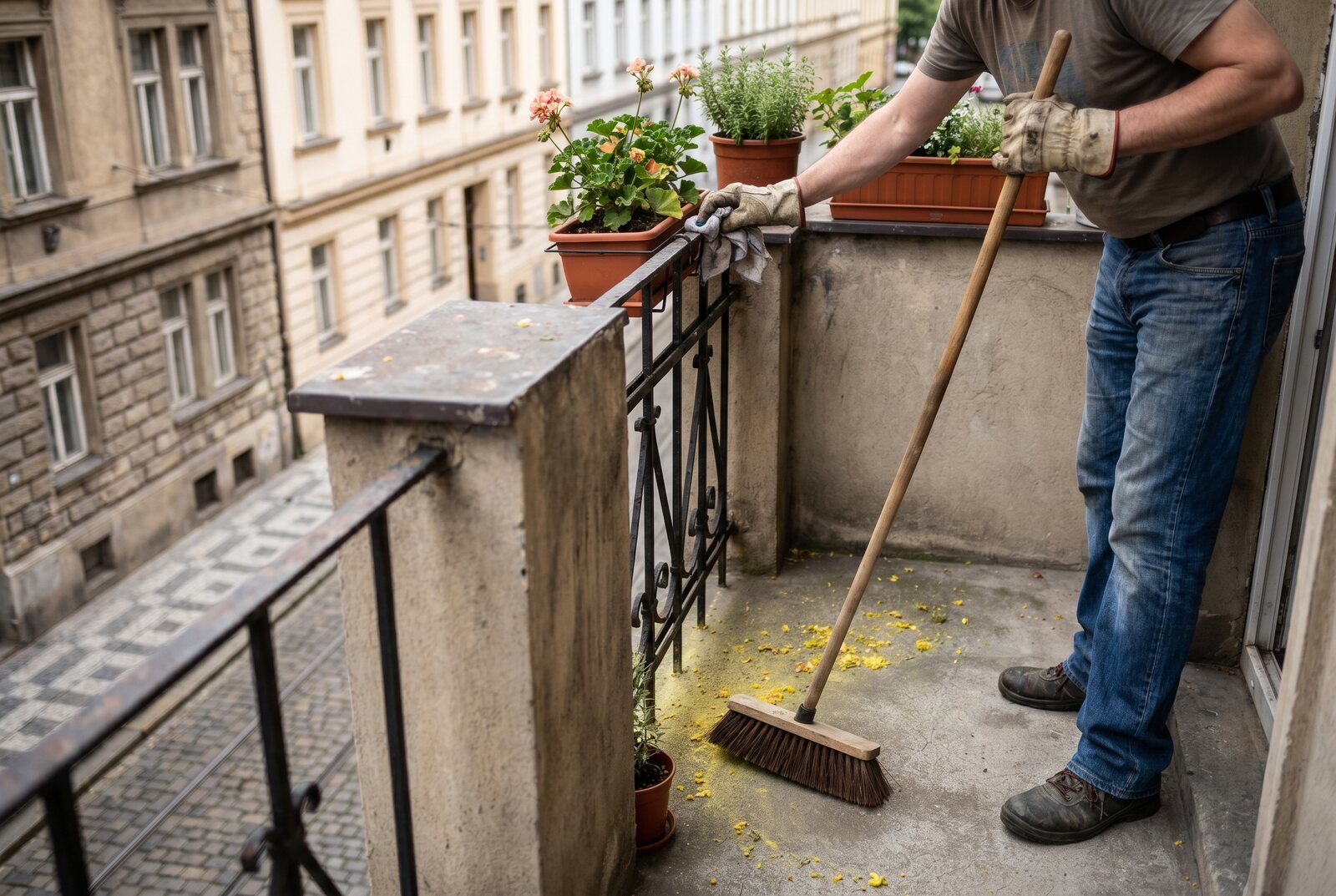
Looking at a balcony in central Prague in early May usually reveals three distinct layers of grime. Yellow pollen coats the railings like fine powder, black traffic soot sticks to the corners, and underneath it all, you often find old pigeon mess from the winter. At this point, how to clean a balcony isn't about choosing new plants - it’s a hygiene job. Before you bring out the cushions, the space needs to be safe and sanitized.
If you live in a typical Czech "panelák" or apartment block, you can't just throw a bucket of water over the side. You'd ruin your neighbors' day and end up spreading a grey, greasy film across your own tiles. The biggest mistake people make is starting with water too soon. When dealing with city dust and pollen, there’s a much more efficient way to do it.
The main issues after winter and pollen season
Everything looks equally dirty at first glance, but each layer needs a different approach.
Pollen is light and tricky. As long as it's dry, it just floats away. But as soon as you add water, it turns into a sticky yellow paste that clings to window frames and plastic chairs. In Prague, this is worst during dry spells when pollen season meets peak traffic dust. A balcony in Karlín or near the Vinohrady main road will get covered much faster than a quiet loggia on the outskirts.
City dust is a different beast. It's not just "dust" - it’s soot, microparticles from tires, and oily residue from the air. If you use a wet cloth on a busy street-facing balcony without sweeping first, you’ll just grind that grey film into the grout.
Then there are the pigeons. This is where it gets serious. Dried droppings break into tiny particles that you can easily breathe in. That’s why you should never scrape them off dry or use a stiff broom. A few fresh spots are manageable, but if you’re dealing with an old nest or a thick layer, it’s a health risk, not just a cleaning chore.
I’ve seen plenty of balconies that look "fine" until you move a chair or lift a rug. Last week I looked at one on Žižkov that seemed lightly dusty from the doorway, but the track by the balcony door held a dark sticky line of grime that would have smeared everywhere with one careless rinse. That’s the moment to stop improvising and get a system.
Preparing your balcony without making a mess for the neighbors
Clear the space first. You don’t need to strip it to the bare concrete, but furniture, cushions, and planters need to be moved so you can reach the corners where the real grime hides.
What you’ll need for a proper balcony cleaning after pollen season:
- A mask or respirator (crucial if there's dust or droppings)
- Rubber gloves
- A small brush and dustpan
- Microfiber cloths
- A spray bottle with lukewarm water
- A mild multi-purpose cleaner
- A dedicated trash bag for immediate disposal
Don't forget the neighbors. Sweeping dust over the railing is a no-go, even if it "looks like just a bit of pollen." Collect everything inward. If you’re rinsing surfaces, use minimal water and work in small sections.
The golden rule: collect dry debris first, soften the rest, then wash. Skip this order and the job will take twice as long.
Safely removing pollen and city dust from floors and railings
When figuring out how to remove dust from balcony surfaces, start dry and gentle. Avoid heavy brooms that just kick the dust into the air. For tiles, use a hand brush. For smooth surfaces like parapets or tables, a dry microfiber cloth is your best friend - it traps the dirt instead of spreading it.
Only once the loose layer is gone should you bring in the water. Use a spray bottle to dampen the surface rather than flooding it. Lukewarm water with a drop of cleaner is usually enough for tiles. For metal railings, use a lint-free cloth. Be careful with plastic furniture - abrasive sponges will leave tiny scratches that catch even more dirt later in the summer.
A foolproof sequence:
- Collect dry debris from the floor, corners, and drains.
- Wipe dust from railings and ledges, working from the top down.
- Lightly dampen small sections.
- Wipe them clean with a fresh cloth or mop.
- Change your water as soon as it turns grey.
- Dry the surfaces to prevent streaks.
In loggias, dust also hides on side walls and in the tracks of sliding doors. If you only clean the floor, the wind will blow the dust back down in two days. Always work from the top down.
Handling pigeon droppings without the health risks
Don't try to be a hero here. A few spots are easy to handle, but if your balcony has a thick, dried layer mixed with feathers, professional cleaning is a much smarter move.
The main rule: never scrape it off dry. Spray the droppings with water and let them sit for a few minutes. This prevents hazardous particles from becoming airborne. Then wipe it up carefully with paper towels and throw them away immediately.
Once the mess is gone, disinfect the area. You don’t need to drench the whole balcony in bleach - just target the affected spots and the immediate surroundings. Be strict with toys, pet bowls, or cushions. Wash anything textile on a high-heat cycle and consider throwing away anything heavily contaminated.
Check the grout lines and drain corners. That’s where pigeon residue sticks even when the surface looks "clean." This is usually where DIY efforts fail. One or two spots are fine, but a neglected balcony is a job for someone with the right gear.
Ask yourself:
- Is it just a few spots, or a solid layer?
- Is it fresh, or months-old dried residue?
- Can I reach every corner safely without leaning over the railing?
If you hesitate on any of these, call in the pros.
Cleaning balcony furniture and details for the summer
Once the floor is done, it’s all about the details. This is what makes the space feel like a place you actually want to spend time.
Plastic furniture cleans up easily with warm water and a soft brush. For metal, be gentle to avoid chipping the paint. Wood and artificial rattan need more care - wood shouldn't stay wet, and rattan weave is a magnet for pollen. A soft brush and some patience are better than brute force.
Parapets and railings often need a second pass. The first wipe just loosens the city grime; the second one actually removes it. I always finish with a dry cloth to make sure there are no streaks.
Don't ignore the drains. Leaves, grit, and pollen clog them easily. During the first summer storm, a clogged drain means a flooded balcony. In modern buildings, these channels are often quite narrow and need regular checking.
Before you enjoy your first morning coffee, check:
- If the floor is slippery.
- If handles and railings are actually clean to the touch.
- If cushions are fully dry and fresh.
- If the pigeons are trying to come back to the same spot.
If you don't discourage the pigeons, your hard work will be undone in a week.
When to hire a professional cleaning service
DIY cleaning is fine for a bit of seasonal pollen. It stops being efficient when the mess is heavy, risky, or just too much to handle.
Call the pros if you’re dealing with a serious hygiene issue like old pigeon droppings or nests. It’s also worth it for the time saved - instead of spending half a Saturday lugging furniture and cleaning your bathtub afterward, you can have it done properly in a fraction of the time. Plus, it’s much easier to bundle it with window and frame cleaning.
When asking for a quote, be honest. Tell us if it’s a balcony or a loggia, how high up it is, and whether we’re looking at dust, pollen, or a pigeon problem. Send photos of the corners and floor - it helps us give you an accurate price.
If you’re in Prague and want to skip the grime, you can send a no-obligation request to ČistýKout through the contact form. A few clear photos and a short description will usually tell us whether this is a standard seasonal clean or a heavier hygiene job.
A dirty balcony doesn't have to ruin your summer. Just follow the right order: safety first, dry cleaning before wet, and focus on the details. That’s how you get a balcony that’s actually clean.