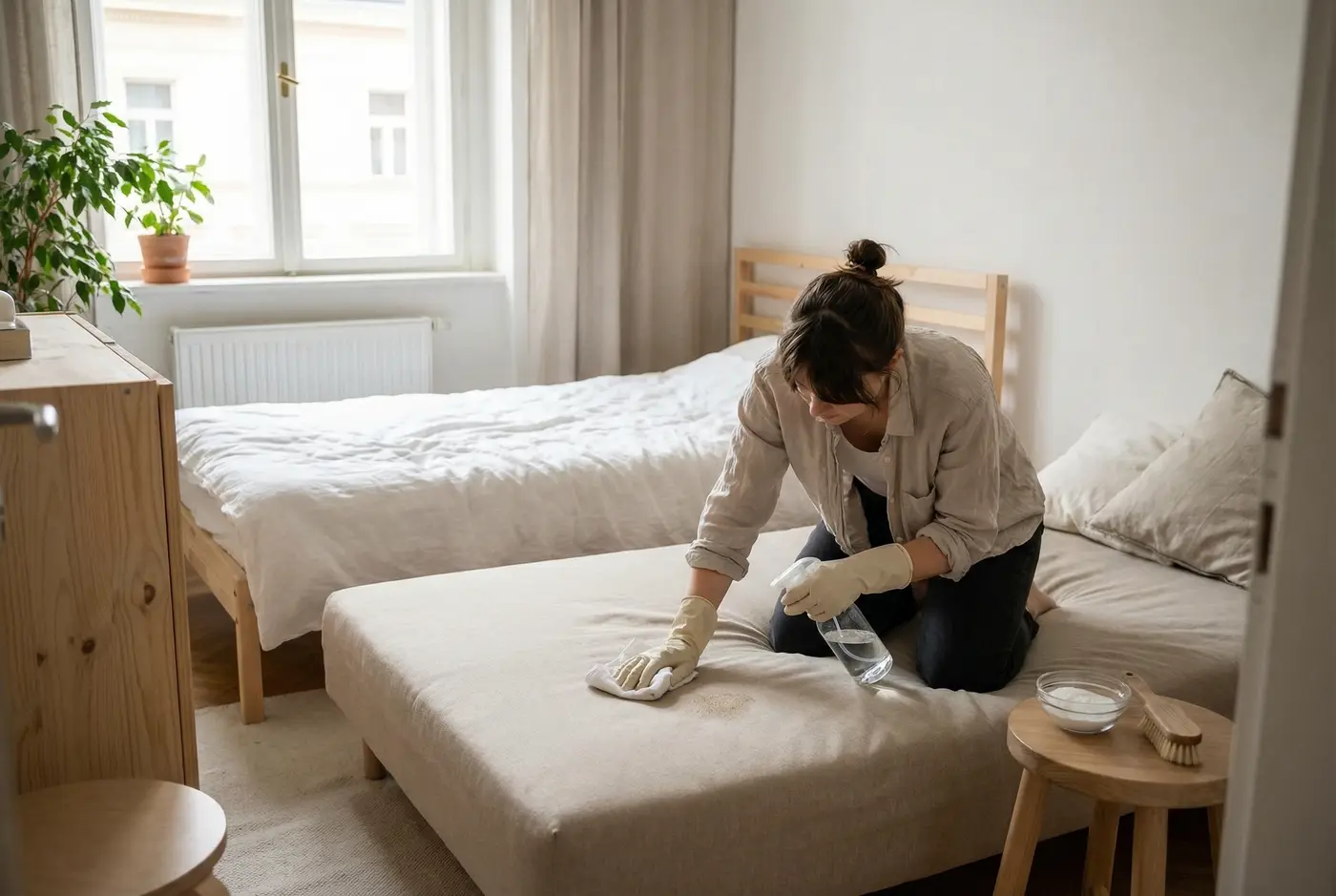
Mattress cleaning usually gets postponed until the evidence becomes hard to ignore: a sweat stain, a strange smell, or a spill from coffee in bed. The problem is that a mattress is not a chair cover. If you soak it or attack it with random online hacks, you often create a bigger mess. Klára in Brno learned that the hard way while trying to rescue the mattress in her child’s room. She used too much water, closed the window, and woke up to a damp core and a stale smell the next day. With mattresses, gentle cleaning, speed, and proper drying matter more than force.
Work out what kind of problem you are treating
General yellowing from sweat needs a different approach than a fresh spill or an older embedded odor. Strip off the protector and bedding first, vacuum the surface carefully, and check the manufacturer label if it is still readable. Some materials do not respond well to strong foams or heavy scrubbing. With most foam and spring mattresses, the safer path is small amounts of cleaner and work in limited sections.
- vacuum the surface and seams before you touch any moisture
- blot a fresh stain with paper or a dry cloth instead of pushing it deeper
- always use a lightly damp cloth, never a soaked sponge
For sweat and dullness, calm cleaning works best
For a basic refresh, lukewarm water, a small amount of gentle cleaner, and a clean microfiber cloth are often enough. Wipe lightly rather than scrubbing hard. If odor is the main issue, a thin layer of baking soda on the dry surface can help. Leave it for at least half an hour, ideally longer, and then vacuum thoroughly. It is not magic, but in real bedrooms it often makes a noticeable difference where sweat, dust, and stale air have built up over time.
Treat stains by type, not with one universal trick
Coffee, urine, blood, and oily creams do not behave the same way. Biological stains usually need quick action and cooler water rather than heat, which can set them deeper. Greasy marks often respond better if you first absorb the residue with paper before cleaning. This is where people get impatient. They want the mark gone in one pass. On a mattress, two gentler passes are usually safer than one harsh attempt. The result may not look like a showroom photo, but you are less likely to damage the filling.
What is usually safe at home
- cool or lukewarm water instead of hot water
- a gentle textile cleaner or a very mild soap solution
- a white cloth so you can see what is actually lifting out
- immediate airflow after cleaning
Drying is half the job
A mattress needs to dry as quickly as possible after cleaning. An open window helps, but in flats with limited airflow a fan or dehumidifier often makes the real difference. If you are cleaning late in the evening or on a humid day, it may be smarter to wait. In older buildings and ground-floor flats, mattresses dry more slowly than people expect, and that hidden moisture causes more trouble than the original stain.
When home treatment is no longer enough
If the mattress is deeply soaked, has a long-standing smell, or you are dealing with repeated accidents or illness, home cleaning may not be enough. At that point, professional treatment or even replacement can be the more sensible choice, especially if the mattress is already old. There is no prize for saving a piece of bedding that no longer feels hygienic. CistýKout can help with a deeper bedroom reset and related textiles when you need the whole room to feel properly fresh again.