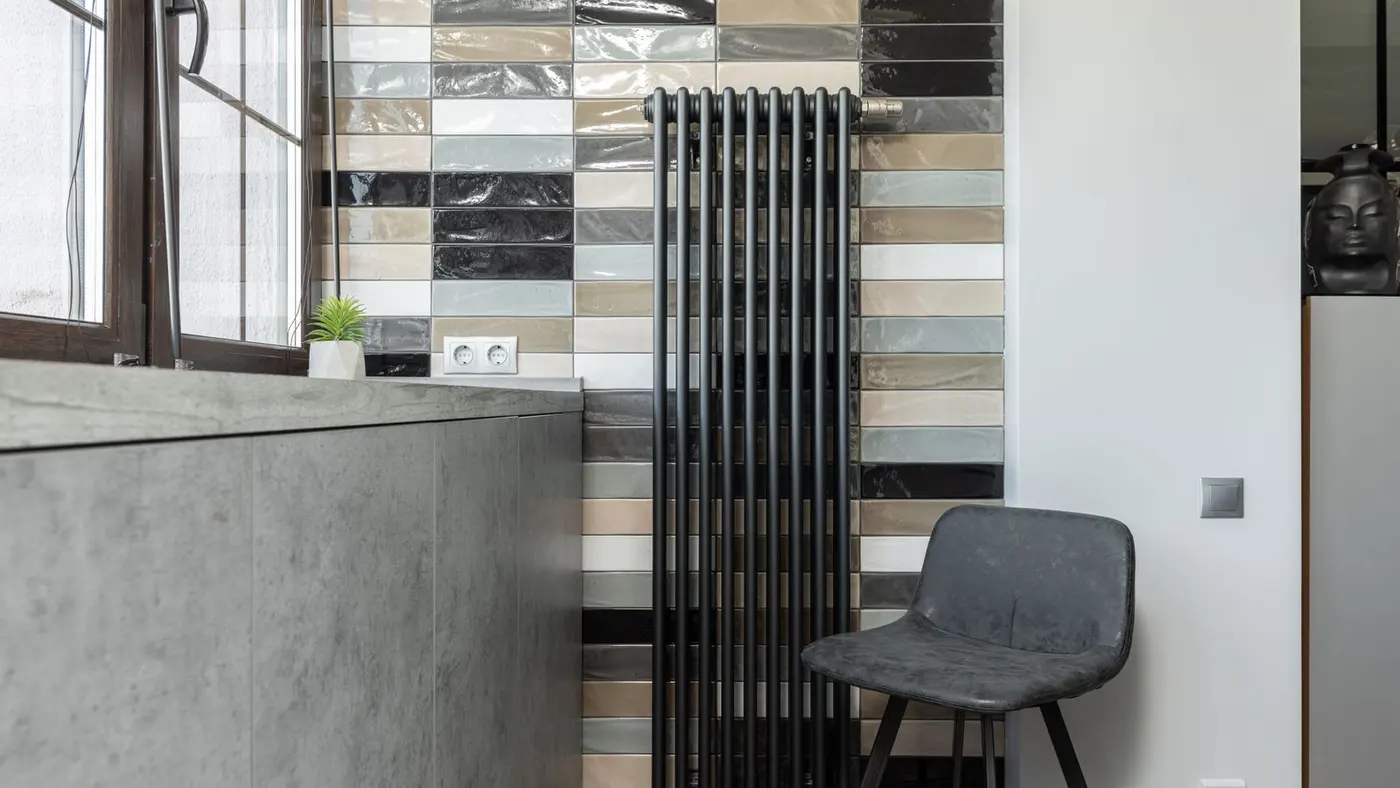
The first cold morning arrives, someone turns the thermostat, and the room suddenly smells faintly burnt. I have met that smell in plenty of Prague flats. Usually nothing is burning. Summer has simply left a layer of fibres, hair and greasy dust inside the radiator, and warm air is carrying it back into the room. If you want to know how to clean a radiator, you do not need to dismantle it. Work in this order: vacuum loose dirt, loosen what remains while the vacuum is running, catch debris underneath, then finish with a barely damp cloth.
Why remove dust before switching the heating on
A radiator warms more than its metal surface. Cool air enters low down, passes between panels or cast-iron sections, heats up and rises. Light debris caught inside can travel with it. You may not see anything on a white windowsill, but somebody with a dust allergy can notice the effect quickly.
Cleaning before heating season is easier while the unit is completely cold. You can work around it without burning your hand, and a damp mark does not dry before you wipe it away. In a Czech apartment block with centrally managed heating, do the job in early September rather than waiting until the whole building starts its system.
There is also a useful boundary. Removing lint, hair and an ordinary film from painted metal is cleaning. Rust around a joint, droplets below a valve, a seized thermostatic head or a radiator that only heats in one patch is a maintenance problem. A clean grille cannot repair poor circulation, and a cloth cannot seal a valve.
Prepare the area so dust stays off the wall and floor
Turn the radiator off and check the inlet pipe as well as the panels. Both must feel cold. Slide an old towel, flattened cardboard box or split refuse sack underneath. A slightly damp bath towel hung behind the unit catches fine dust and protects pale paintwork. Loosely shield the thermostatic head with a cloth, but do not wrap it tightly or take it apart.
Gather a vacuum with a clean filter and crevice nozzle, a long soft radiator cleaning brush, two microfibre cloths, lukewarm water with one drop of washing-up liquid, and a shallow tray. For wide gaps, a wooden spoon wrapped in cloth works surprisingly well. Leave wire brushes in the toolbox; they scratch the finish.
For an allergy-sensitive home, use a well-sealed filtered vacuum and consider a mask. Fresh air is helpful after the job, but avoid a cross-draught while dust is loose. I once saw a spotless radiator in a Žižkov flat paired with a grey fan-shaped mark on the wall. The balcony door had been open throughout.
Move curtains, toys and pet beds out of the way. Shift furniture only if you can do it without pulling on pipes. Safe preparation is not a test of strength.
Panel radiator: clean from the top down without needless dismantling
Start by vacuuming the top grille, side panels and floor below. That removes loose material before you disturb the dust inside. On some panel radiators, the grille and side cover lift off without tools; on others, clips hold them in place. Check the manufacturer's instructions. If the cover resists or you cannot see how it releases, leave it alone. Routine dust is not worth bending painted sheet metal.
Hold the crevice nozzle above the openings without forcing it into the fins. With your other hand, guide the long brush from top to bottom. Use short, calm strokes and keep suction close to the point where debris comes loose. This small detail separates actual cleaning from creating a grey cloud.
The towel or cardboard underneath is your second line of defence. Anything the nozzle misses lands there. For a heavy build-up, hold a shallow roasting tin or plastic tray below the section you are working on and move across in narrow strips. Wipe the brush on a damp cloth every few passes. Otherwise, it merely carries dirt from one fin to the next.
Online advice on how to clean a radiator often suggests a hair dryer. I would skip it. Weak airflow can help only when a vacuum and damp towel are already positioned to catch everything. A brush paired with suction takes longer, yet it saves a second round of dusting in a compact Prague home.
Once the dry dirt is gone, wipe reachable painted areas with a thoroughly wrung-out cloth. Keep wet fabric away from valves and joints. Dry the surface with your second cloth, then vacuum the floor and clean behind the radiator where the crevice tool reaches without striking the wall.
Cast-iron radiators and bathroom towel rails need a different method
Older cast-iron radiators in Vinohrady tenements have wide channels, shaped surfaces and, quite often, several coats of paint. Begin behind and between the sections. Keep suction low while the brush travels downward. A narrow strip of cloth around a wooden spoon reaches broad gaps. Do not press against flaking paint. A loose chip may expose corrosion that the building manager or a heating engineer should inspect.
Kitchen radiators often carry a film that is part dust, part grease. Vacuuming removes hair and loose clumps but leaves the grey-brown coating. After the dry pass, wipe it with lukewarm water containing only a small amount of washing-up liquid. The cloth should be damp, never dripping. Remove detergent residue with another damp cloth, then dry every reachable groove.
A bathroom towel rail looks simpler, but dust collects near the wall, inside mounting corners and around lower joints. Vacuum its back from top to bottom. Next, wrap the cloth around each bar and wipe it in one movement. Keep an old towel below to catch drops. If the rail includes an electric heating element, isolate it as the manufacturer directs and keep water away from the electrical connection.
Dry joints matter on both designs. Do not switch the radiator back on until all damp areas, recesses and fittings have dried completely.
What not to use on a radiator
Steam and running water make dramatic cleaning videos. Inside a finished home they are a poor bargain. Water can travel towards a valve, behind a cover, into the flooring edge or onto absorbent wall paint. A steam cleaner may also affect the finish while releasing more dirt than you can control.
Avoid chlorine products, abrasive powders, scouring pads and powerful kitchen degreasers. Painted metal may turn dull, discolour or scratch. Diluted washing-up liquid is enough for an ordinary greasy film; test it on a hidden area first.
Compressed air, a high-powered dryer and a vacuum's blower setting simply relocate dust to bedding, curtains and walls unless you contain it. For parents of a young child or anyone with allergies, that defeats the purpose. Do not loosen a valve, bleed screw, bracket or pipe connection to improve access either. Household cleaning stops wherever heating water could begin to escape.
When to stop cleaning and call the manager or a heating engineer
Stop if you find a damp patch, fresh rust, a droplet near a valve, damaged pipework, a loose unit or cracked electrical insulation. Photograph the area, place a tray below it if that is safe, and contact the building manager, landlord or heating engineer. Never dismantle a fault in a rented Prague flat without the owner's agreement.
Knocking, gurgling, a cold upper section or markedly uneven heat also needs a different response. Air in the system, valve settings, pressure or circulation may be involved. A resident can sometimes bleed a radiator after receiving the correct instructions, but centrally heated buildings have their own procedures. That is technical work, not an extension of dusting.
A professional seasonal clean can include vacuuming radiator grilles, brushing accessible internal fins, wiping cast-iron sections and towel rails, cleaning behind units and protecting the floor. Tell the cleaner beforehand how many panel radiators, cast-iron units and rails you have. Valve repairs, leak investigation, bleeding and removal belong in a heating engineer's brief.
When everything is dry, fold protective sheets inwards so debris stays inside, vacuum the floor and briefly ventilate during the first heating cycle. If you would rather not tackle the brushes and narrow gaps yourself, send a no-obligation cleaning request through Čistýkout. Čistýkout is a Prague-based option, and radiator dusting can be named explicitly in the seasonal cleaning brief.