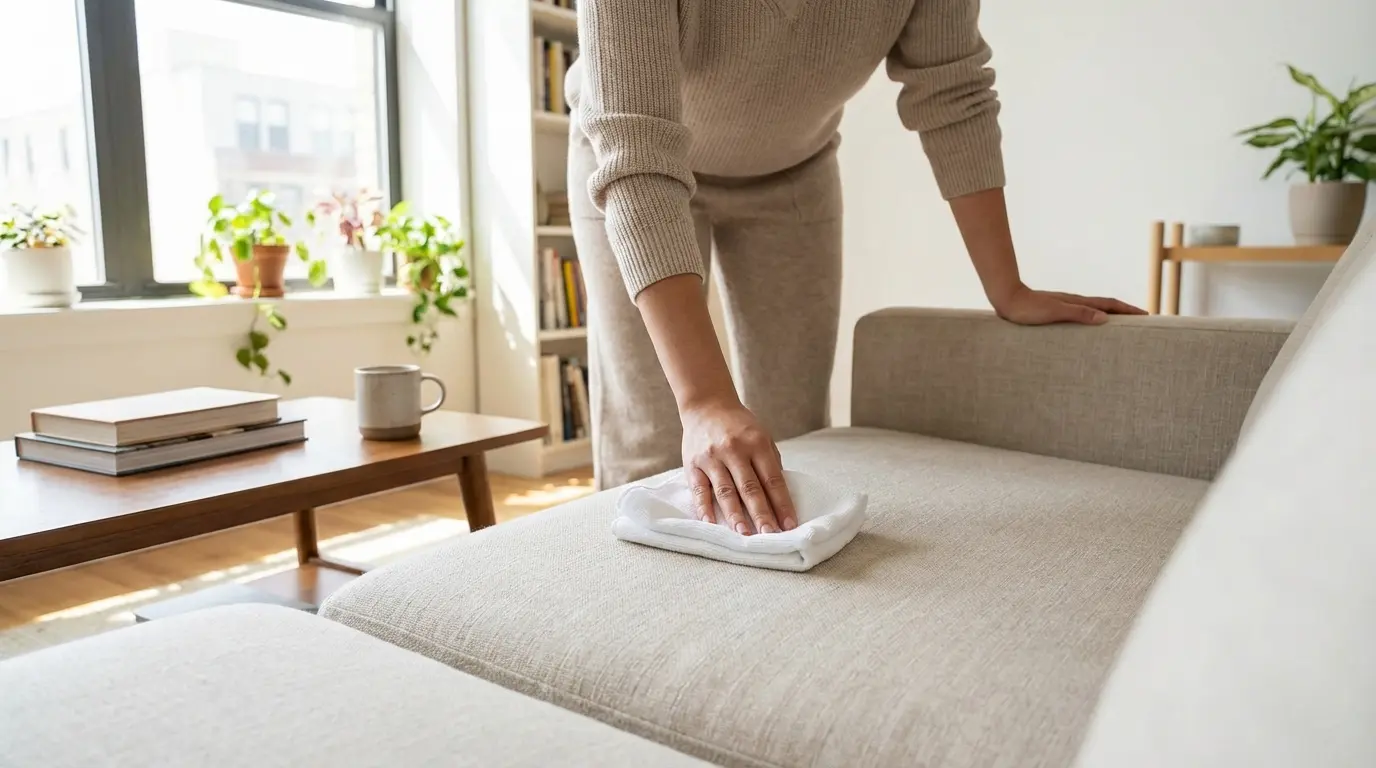
When people search for how to clean a sofa at home, they usually want to fix a spill, dull fabric, or a tired smell without bringing in a machine or calling a professional straight away. That is often possible. The big mistake is using too much water. Over-wetting is what turns one stain into a pale ring, a rough patch, or a sofa that smells damp the next day.
A safe home method is simple: start dry, clean locally, and dry the area properly. You do not need an extractor machine for every mark. You do need to know when to blot, when to stop, and when another DIY attempt is likely to make the sofa look worse.
Why sofas get water marks and why home cleaning often makes them worse
Water marks show up when one part of the fabric gets wetter than the area around it. As that patch dries, dissolved dirt moves outward and settles at the edge. That leaves a visible ring or a lighter-looking patch. Tight, even weaves show it most, especially on beige, light grey, and similar fabrics.
Home cleaning goes wrong when someone attacks one small stain too hard. The classic example is coffee on a seat cushion, a sponge full of foam, and five minutes of determined scrubbing. The next day the original stain is less obvious, but the pale ring around it steals the show. The wrong product makes it worse. Strong all-purpose sprays or too much dish soap can leave residue that grabs fresh dust, so the sofa looks cleaner for a moment and then turns dull again.
Slow drying causes the smell problem. In a normal flat, the surface can feel nearly dry while the filling underneath still holds moisture. That stale odor often appears later, not right away. So if your goal is to clean sofa without water marks, moisture control matters more than aggressive cleaning.
How to clean a sofa step by step
Vacuum first
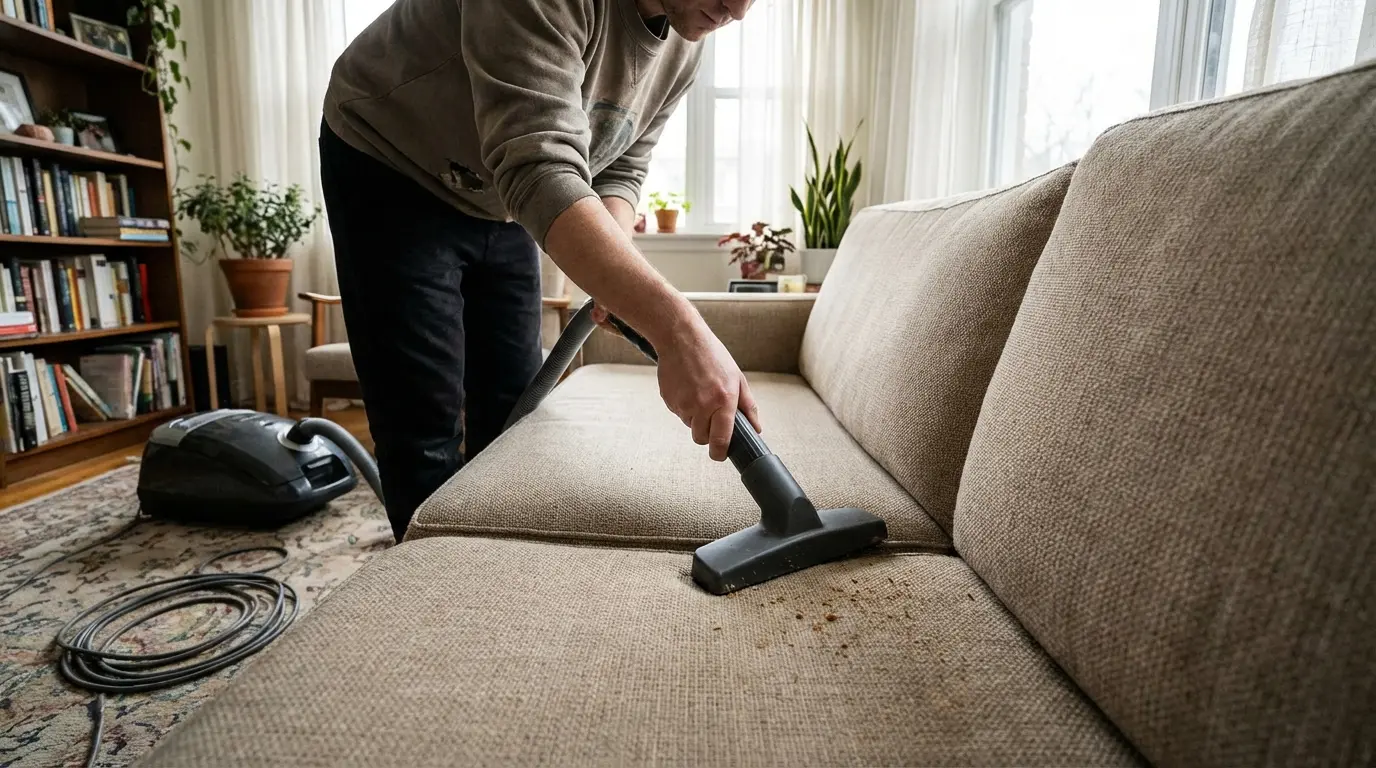
Always start dry. Vacuum the sofa with an upholstery attachment, including seams, corners, and the gaps between cushions. If you skip this, you will just turn fine dust and crumbs into dirty smears once moisture gets involved. In homes with children or pets, there is usually more hidden dirt in the sofa than people expect.
Test a hidden spot
Before using any solution, test it near a leg, under a cushion, or on the back of the sofa. Use a white cloth and a tiny amount of lukewarm water with a drop of mild detergent. Check whether the fabric releases colour and whether it dries darker, stiffer, or patchy. On a plain light-coloured sofa, this small test can save the whole job.
Local stains
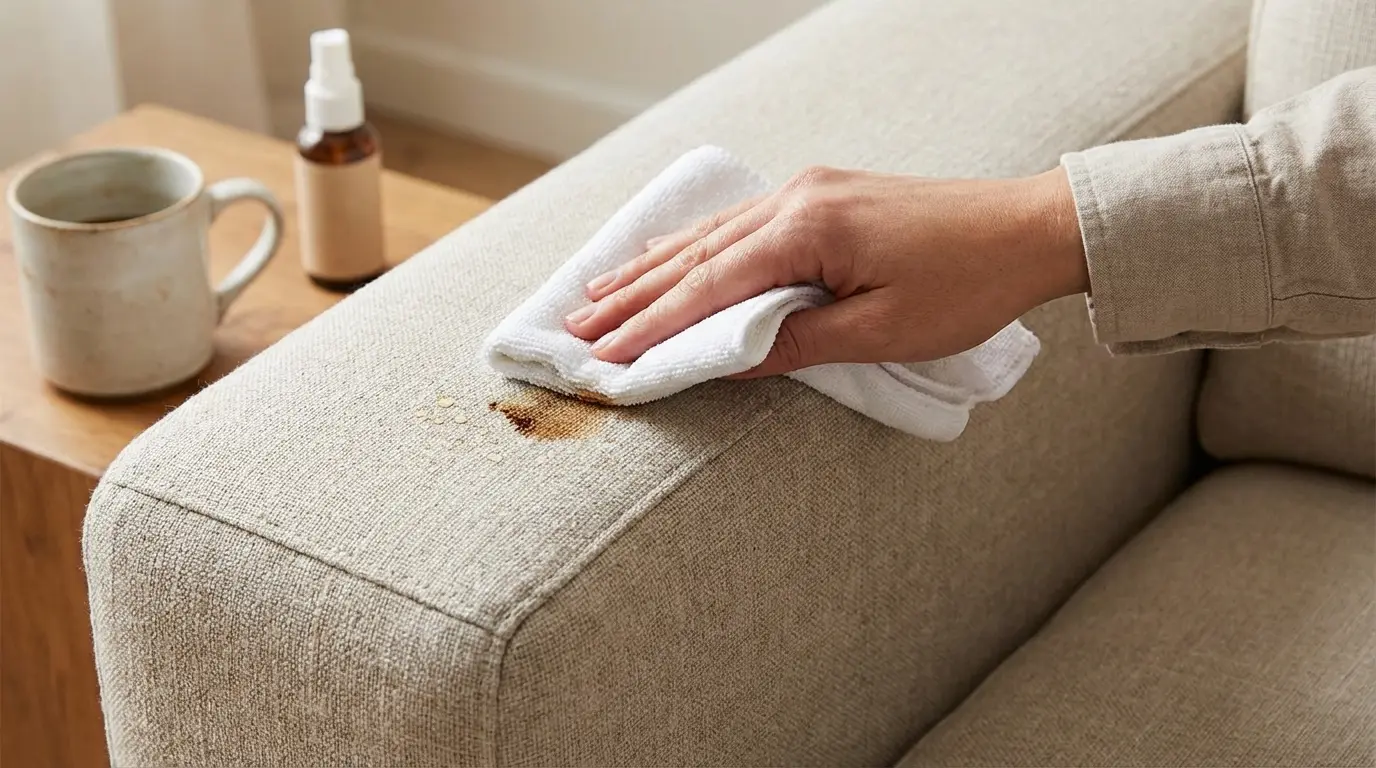
When you need to remove sofa stains, absorb as much liquid as possible first with a dry towel or kitchen paper. Then use a lightly damp cloth. Work from the outer edge toward the centre and blot rather than scrub. The solution goes on the cloth, not straight onto the sofa. You are not trying to wash the upholstery. You are trying to lift the dirt with very little moisture.
In a real evening cleanup without an extractor machine, that often means three rounds: dry towel, damp cloth, dry towel again. For tea, cocoa, or juice, that is safer than one thorough soaking. If a sharp outline stays visible, lightly treat a slightly larger area around it so the transition is softer.
Drying
After cleaning, press a dry terry towel onto the area to pull more moisture out. Then open a window, create airflow, or use a fan. Pull the sofa slightly away from the wall if you can. This is not a bonus step. Drying is what decides whether the sofa feels fresh tomorrow or becomes a sofa smell removal problem instead. Do not sit on the damp area straight away. Pressure pushes moisture deeper.
What to do for different types of stains
Coffee and tea: act fast, blot, clean lightly, then dry again. Red wine: get as much liquid out as possible first, and do not throw salt at every fabric by default. Grease: begin with an absorbent dry step such as paper towel or a little baking soda, then clean carefully. Pet accidents: do not just cover the smell with perfume - blot, clean gently, and dry thoroughly. Old mystery marks: expect improvement more often than perfect removal. Older sofas usually carry a longer history than the internet cleaning trick promises.
How to remove odor and freshen a sofa without soaking it
If the sofa is not badly stained but smells a bit tired, do not start with wet cleaning. Vacuum it thoroughly first. Then sprinkle a thin layer of baking soda over the dry surface, leave it for a few hours, and vacuum it off properly. For ordinary stale upholstery smell, that is often enough.
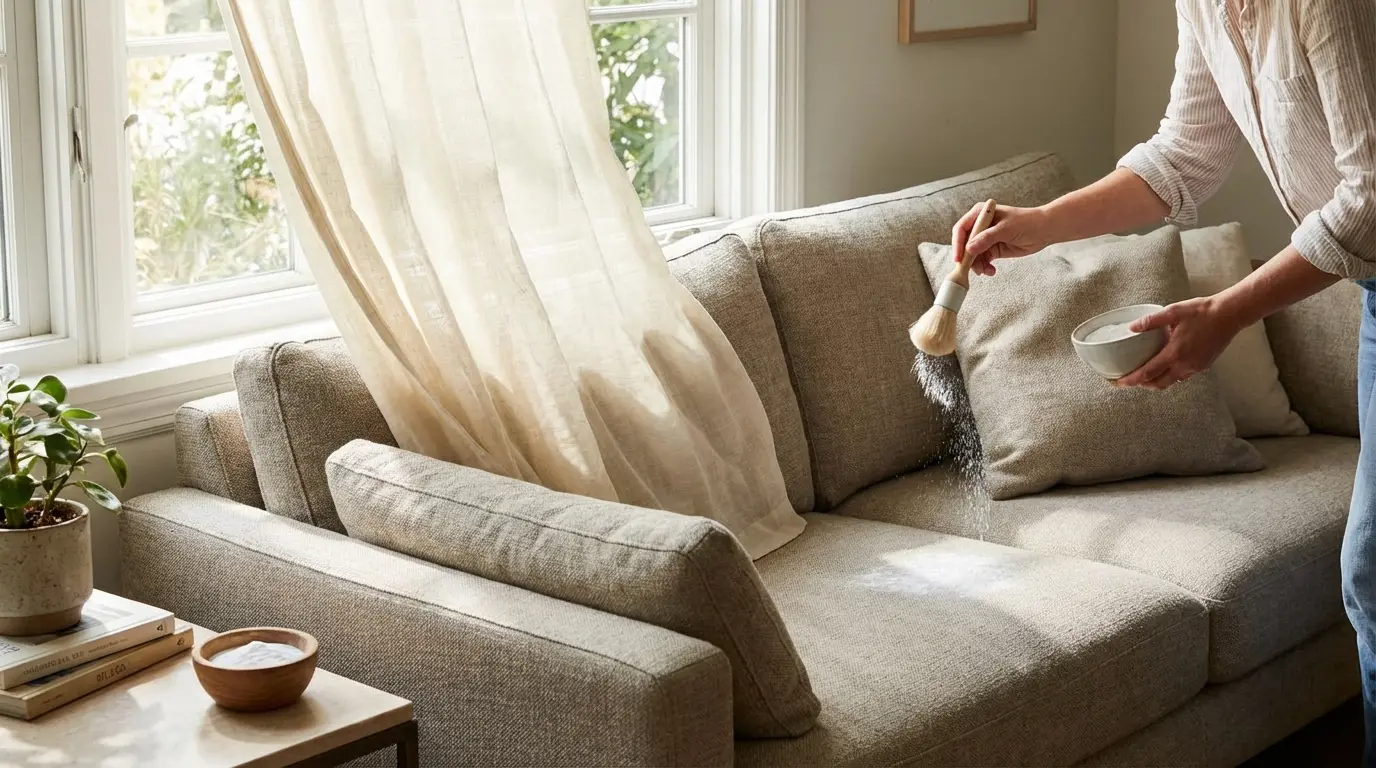
Ventilation helps more than people think. A sofa pushed tightly against a wall and radiator is harder to freshen and harder to dry. I would also be careful with scented fabric sprays and homemade oil blends. Some only mask the smell. Some leave residue. Some are irritating around children or pets.
When professional upholstery cleaning makes sense
Home care makes sense for small stains, mild dullness, and light odor. Once the affected area is large, the smell comes back after drying, the sofa uses expensive fabric, or several DIY attempts have already failed, it is smarter to stop. Another home round often adds one more visible mark and not much else.
That is where CistýKout fits naturally. If your upholstery is already beyond safe home maintenance, trusted professional help is usually cheaper than making the whole sofa look worse or giving up on it too early.