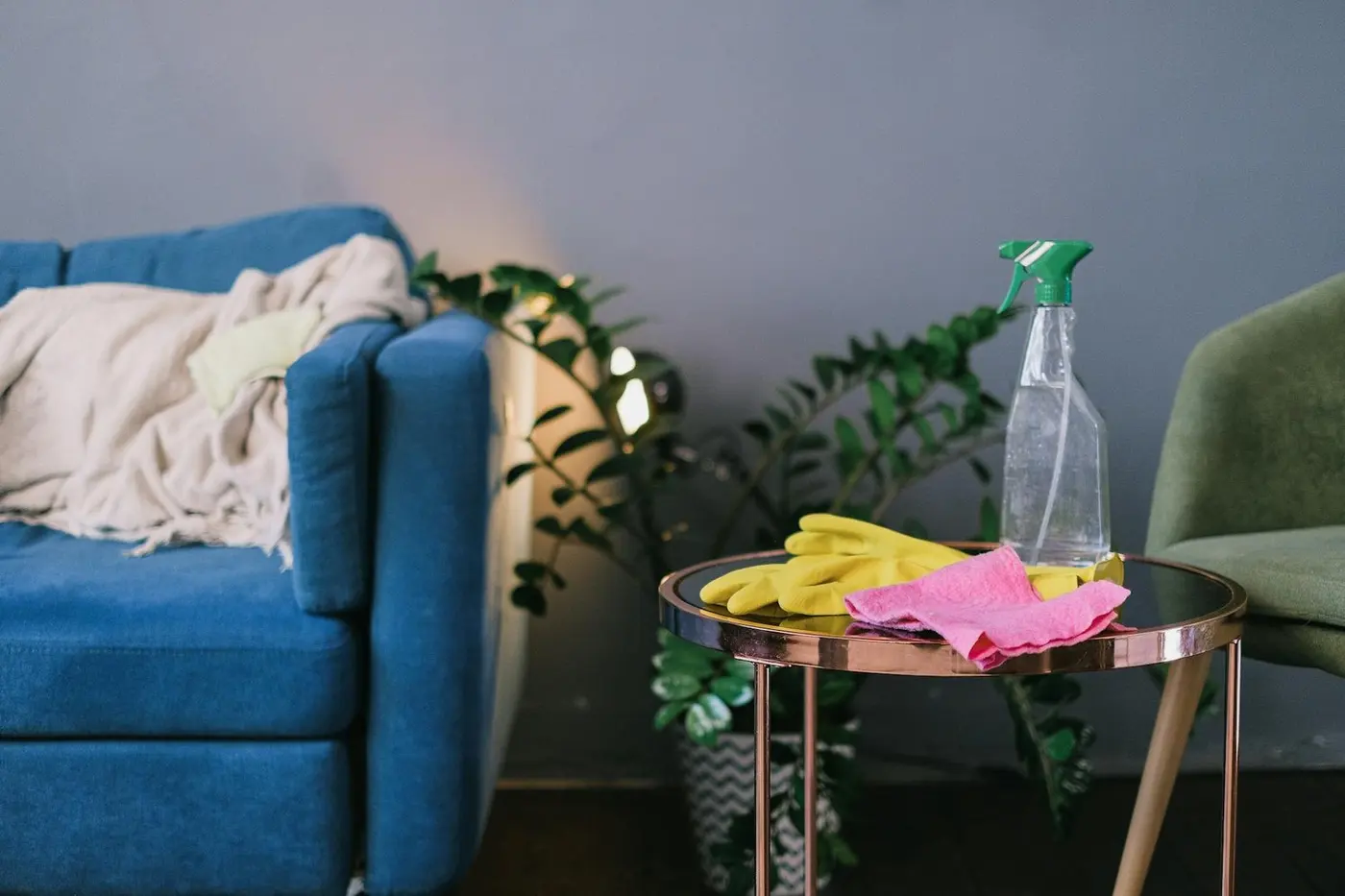
Once the weather warms up and the windows stay open longer, a sofa suddenly tells the truth. The armrest looks dull, the seat where everyone collapses after work smells faintly sour, and that old splash mark from juice or coffee is somehow more obvious in the daylight. This is where most people make things worse. They grab a can of foam, over-wet the fabric, and scrub too hard, usually ending up with a bigger watermark than the original stain. If you are wondering how to clean a sofa before summer, the real question is not which product to buy. It is about the material, the type of soil, and how much moisture the furniture can safely handle.
In Prague flats, the pattern is almost always the same. Older apartments in Vinohrady or Žižkov often have heavier upholstery and slower drying, especially if the sofa sits against a cool wall with limited airflow. Newer flats may dry faster, but the furniture often sees harder daily use. Kids jump on it after the playground, someone sits down sweaty after a tram ride home, and over time the fabric collects body oils, salts, dust, and pollen. What looks like a single stain is often a mix of layers built up over months.
I would not treat this as another list of homemade hacks. Sometimes the right move is quick first aid at home. Other times, the fabric only needs careful surface cleaning and a proper dry-out. But if the real problem is already inside the padding, repeated DIY attempts will only push moisture deeper and make odor removal much harder.
What to check before you start cleaning
Start with the upholstery, not the cleaner. Fabric cleaning depends entirely on the cover material, the weave, and the dye stability. Polyester blends, microfiber, chenille, and removable covers all behave differently when moisture hits them. If you still have the care code from the manufacturer (W, S, or WS), use it. If not, always test any solution on a hidden area behind a cushion or along the back edge.
Then figure out if the issue is on the surface or deep in the filling. A surface stain usually has a clear outline and responds predictably to light blotting. A deeper issue feels broader, smells stronger, or seems to return as soon as the room warms up. When a cushion feels heavy or slow to rebound after you press it, that is a warning sign. You are likely dealing with more than just a cosmetic mark.
This is the part most people underestimate: over-wetting is often worse than the dirt itself. The top layer might look dry while the foam underneath stays damp for hours. That is how mustiness starts. It is also why people often start a second round of cleaning because the sofa still smells "off," which only feeds the problem. Before you touch a stain, have your setup ready: white microfiber cloths, paper towels, a vacuum with an upholstery tool, and enough time for the piece to dry completely.
It also helps to identify the problem correctly. Sweat marks are not the same as coffee. Grease is not the same as juice. Biological spills bring both staining and odor. The more specific you are at the start, the less likely you are to soak the whole seat with the wrong product.
How to treat fresh stains without leaving watermarks
With fresh sofa stains, blotting always beats scrubbing. Press a dry cloth straight down and lift. Repeat with a clean section. The goal in the first minute is removal, not friction. Scrubbing pushes the liquid sideways and drives moisture deeper into the cushion fibers.
Sweat is tricky because it often looks mild at first. The real issue is the mix of oils and salts left behind. For headrests and armrests, use a lightly damp cloth with a tiny amount of upholstery cleaner, then blot repeatedly until the area is nearly dry to the touch. You are not washing the whole panel; you are simply lifting the residue back out.
Drink spills need a fast response. Coffee brings pigment and milk fat, while cola brings sticky sugar. Many people reach for vinegar because it is a common online tip, but be careful. On some fabrics, it can leave its own smell or shift the finish just enough to create a permanent ring. A mild textile cleaner used sparingly is much safer, provided you keep blotting as you go.
Grease requires restraint. Water alone will not do much, but a harsh kitchen degreaser can strip the color or leave a pale patch on darker upholstery. For a small greasy spot, start dry to lift what you can, then use a dedicated upholstery cleaner rather than a random spray from under the sink. Light fabrics show detergent residue quickly, while dark fabrics show bleaching. Household chemistry is rarely a smart gamble here.
Biological stains, like vomit or pet accidents, are a two-part problem: the stain and the odor. This is where many DIY attempts fail. People rinse heavily to get the visible mark gone, but the smell stays trapped in the padding. If you clean a spot and the odor returns a few hours later, the problem is deeper than the fabric surface.
How to remove odor and stale smells from a sofa
Odor removal starts with one question: is the smell on the surface or inside the upholstery? Surface odors usually improve after thorough vacuuming and light spot treatment. Deep odors behave differently. They might fade for a while, then return with body heat, humidity, or when the sun hits the room.
If anyone in your home has allergies, do not skip vacuuming the sofa before any damp cleaning. Upholstery collects pollen, dust, and pet hair faster than you might realize. A slow, thorough pass with an upholstery nozzle often does more good than a rushed wet clean.
For stale smells, moisture control is more important than fragrance. Air fresheners are usually a temporary fix. A better routine is to separate loose cushions, pull the sofa away from the wall, and open windows to create a cross-breeze. In ground-floor flats or older buildings, slow drying is often the main reason a sofa keeps smelling tired.
Homes with kids or pets need a regular system. Vacuum weekly, rotate the cushions, and deal with accidents immediately. If a pet sleeps in the same corner every day, protect that spot with a washable barrier rather than expecting the entire sofa to stay spotless all summer.
Watch for the specific smell of lingering dampness. If the sofa smells like a towel that never dried properly, stop experimenting with perfumed sprays. That usually points to moisture trapped in the filling. At that point, you need to decide if the sofa requires professional extraction and controlled drying.
When home extraction cleaning makes sense
A home carpet cleaner or a small extraction machine can be useful, but it has limits. On a lightly soiled sofa in a flat with good airflow, it can work well. But on a large sectional with thick cushions and a history of odors, hobby machines often put in more moisture than they can actually pull back out.
The drying question is critical. Can the sofa dry in moving air for at least 8 to 12 hours without anyone using it? If the answer is no, think twice. Thick upholstery and humid rooms significantly raise the risk of the furniture becoming musty.
The mistakes are usually predictable: too much solution, too many passes over one spot, and weak extraction. Cleaning late in the evening or trying to solve everything with one general-purpose product also causes issues. Once you see a larger watermark than the original stain, that is your sign to stop.
A friend in Prague 6 tried this on a pale corner sofa after a season of kids and pets. The stains lightened, but the seat pads stayed damp into the next morning. By the second evening, the whole area had that heavy, stale smell that tells you moisture is trapped below the surface. She ended up booking professional cleaning anyway, but the job was much harder by then.
Home extraction makes sense if the dirt is even, the sofa is not already oversaturated, and you have the conditions to dry it quickly. It makes much less sense when odors keep returning or when the fabric is sensitive.
How to keep the sofa cleaner through summer
Summer maintenance works best when it is small and regular. Vacuum the gaps and armrests once a week. Let throws and blankets come off occasionally so the fabric can breathe. Do not leave damp towels or sports clothes pressed into the cushions every day. It sounds obvious, but that is exactly how stains and sour smells build up in the heat.
Blankets only help if you wash them regularly. Otherwise, they just become an extra layer holding sweat and dust. In homes with pets, a designated washable cover for their favorite spot is usually better than repeated full-sofa cleanings.
Also, pay attention to the environment. Drying laundry right next to the sofa raises humidity. Pushing it tight against a cool wall slows down ventilation. Vacuuming only the top surface leaves crumbs and allergens packed into the seams where odors develop.
The line between DIY and professional help is practical. If stains keep returning, if the sofa takes too long to dry, or if odors come back when the room warms up, you have hit the limit of home care. At that point, another spray bottle usually costs more time and money than it saves.
If you want the sofa properly refreshed before summer without gambling on water damage, CistýKout is a reliable local option to consider. An expert can usually tell very quickly whether your sofa needs careful spot work, full extraction, or simply a better drying plan. That diagnosis is half the battle. The other half is getting the moisture out instead of leaving it behind.