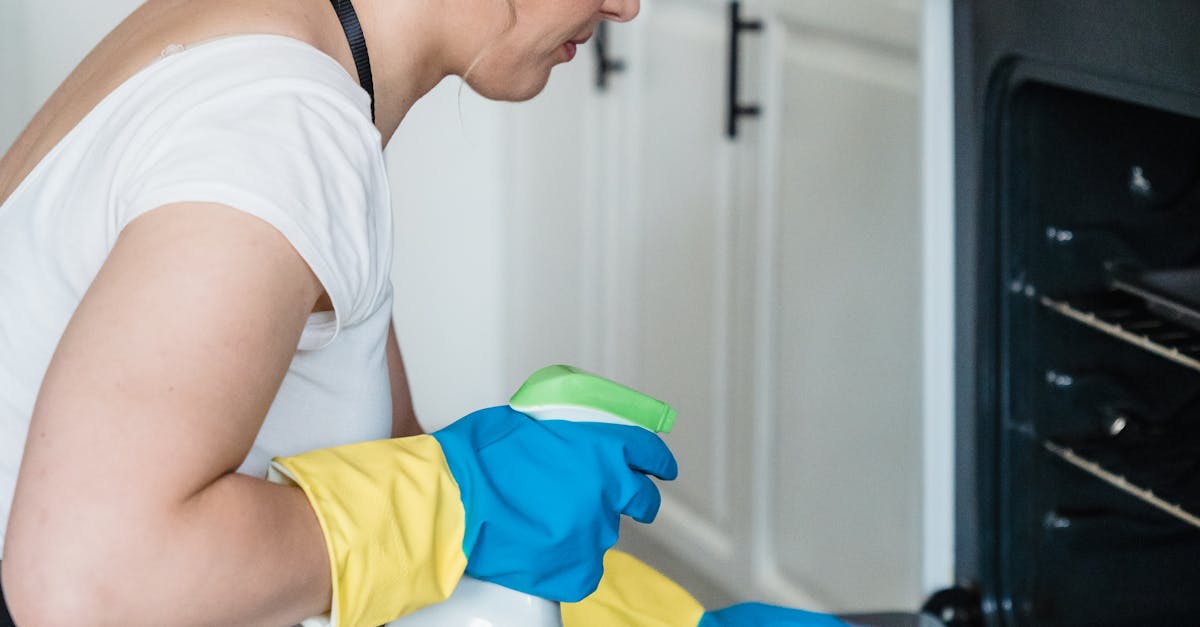
If you are searching for how to clean an oven, you are probably no longer dealing with a light wipe-down. Usually the search starts when the oven smells stale every time you open it, the bottom looks almost black, and the door glass has gone cloudy enough to make the inside look permanently dirty. That is the point where a lot of online advice becomes too generic to be useful.
The usual internet formula is simple: baking soda, vinegar, scrub, done. Real ovens are less cooperative. Burnt sugar behaves differently from old meat fat. Sticky grease on enamel behaves differently from carbonized residue fused into the floor of the cavity. And glass, seals, trays, rails, and enamel should not all be treated as if they are the same surface.
I see this most often during deep kitchen cleaning and move-out jobs around Prague. Someone puts oven cleaning off for months, then suddenly needs a good result fast because guests are coming, the flat is being handed over, or they are simply tired of the smell. They buy the strongest spray they can find, grab a rough pad, and start scrubbing hard. That can remove some grime, sure. It can also dull the enamel, scratch the glass, and leave you with an oven that still looks tired even after the dirt is gone.
So my advice is less dramatic and more useful. Before you touch a cleaner, work out what kind of dirt you have, what surface you are cleaning, and whether the next step will actually remove grime or just increase the risk of damage.
First, figure out what you're actually cleaning
Start with the residue itself. A soft grease film on the walls and inner glass is not the same problem as burnt drips baked into the bottom panel over dozens of cooking cycles. The first usually softens with heat, moisture, and patience. The second may need repeated softening, targeted degreasing, and the discipline not to attack it too early with force.
Most ovens in Czech homes have enamelled interiors. Enamel is durable, but it is not indestructible. It does not respond well to steel wool, metal scrapers, or strong alkaline products left sitting for too long. Once the finish is dulled or etched, it never quite comes back. Worse, a roughened surface grabs the next layer of grease even faster.
There is also a difference between a lightly greasy oven and one with years of baked-on grime. The door glass deserves separate attention. It is tempting to treat those brown dots like something you can simply scrape off, but glass picks up micro-scratches surprisingly fast. You may remove the speck and still end up with a finish that looks worse in daylight.
Do not forget the seal around the door. Many people do. That rubber edge collects sticky dust and grease, but it is far more delicate than the enamel cavity. Too much aggressive product, too much rubbing, or too much moisture trapped around it can shorten its life and reduce how well the oven closes.
Self-cleaning functions also need context. Pyrolytic cleaning can work brilliantly as maintenance, but I would not treat it as a rescue option for a heavily neglected oven. If the interior is full of thick grease, crumbs, and old cleaner residue, high heat may just turn the whole apartment into a smoke chamber. In an older Prague rental with a tired seal, that is not a pleasant experiment.
A safe home method, step by step
The safest way to clean starts by removing what you can. Take out the racks, trays, and side rails. Trying to clean everything inside the oven in one go usually makes the job harder. You smear grease from one area to another, work in an awkward position, and start pushing harder than you should.
Soak the removable parts separately in hot water. If you want to clean an oven without harsh chemicals, start with warm water, time, and a mild baking soda solution. That is often enough for moderate buildup. For older greasy layers, the main ingredient is not a miracle product. It is time. Give the grime half an hour, an hour, sometimes more, to soften before you touch it.
For the oven cavity, begin with steam. Put a heat-safe dish of hot water inside, warm the oven gently for a few minutes, then switch it off and let the moisture sit. This first step matters because it lifts the top layer of grime without friction. After that, wipe once with a soft microfiber cloth or a non-abrasive sponge. You are not trying to finish the job in the first pass. You are trying to lower the resistance.
Now pick your product carefully. Baking soda and vinegar are useful, but they are not universal answers. Burnt oven residue that has been baked over for years often needs a proper kitchen degreaser used in a controlled way. For enamel, I prefer a mild soda paste on local spots or a gentle degreaser designed for kitchen grease. Leave it on for ten to fifteen minutes for lighter grease, or up to thirty minutes for heavier buildup. If it starts drying, dampen it again rather than scrubbing harder.
Work in sections: the bottom panel, the corners, the back wall, the inner door. Wipe, check, soften again, repeat. During one handover clean in Vinohrady, the tenant was convinced the oven was beyond saving. It looked awful, honestly. But after two patient rounds of softening and degreasing, most of the blackened grime released without a fight. Had they started with a metal scrubber, the enamel would have lost long before the dirt did.
Treat the glass as a separate task. If your model allows safe disassembly, you may be able to clean between the panes. If you are not sure, stop there. A badly reassembled oven door is a far more expensive problem than a few remaining marks. On the outer and inner glass surfaces, repeated softening is almost always safer than force.
Quick call: DIY or professional help?
DIY cleaning is usually enough when:
- the grime is mainly surface grease rather than thick carbonized layers
- the glass is dirty but not scratched, and the seal still looks healthy
- you have time to let moisture and cleaner work before wiping
Professional help is usually smarter when:
- the oven has not had a proper deep clean in years
- dark baked-on residue is packed into corners, rails, or around the fan
- you need a reliable result for move-out, handover, or property photos
- the next step in your DIY process would mostly be harder pressure and higher risk
The fastest ways to damage your oven
The most common mistake is impatience. People want results quickly, so they reach for rough pads, steel wool, or a very strong chemical product and assume speed equals efficiency. Sometimes it does remove dirt faster. It also removes the margin of safety. Fine scratches make the next round of greasy oven cleaning harder, not easier, because fresh grease sticks to damaged surfaces more readily.
Another bad habit is mixing products. Baking soda, then vinegar, then a degreaser, then something disinfecting "just in case". That usually creates more mess than progress. Even if the surface looks cleaner, leftover chemical residue can burn during the next cooking cycle and fill the kitchen with an acrid smell.
Glass and seals are where overconfidence causes trouble fastest. A scraper, abrasive cream, or too much pressure can leave the door permanently marked. Too much liquid around hinges and seals can also cause lingering odours or affect how the door closes. And remember that the control panel, display, and outer trim are a different cleaning zone altogether. Do not use the same greasy sponge on them and hope for the best.
When professional degreasing is worth it
There is a point where home cleaning stops being economical, even if it is technically still possible. If the oven has years of heavy residue, if grease is packed into the fan area and corners, or if the appliance needs to look genuinely presentable for a move-out or sale, professional degreasing becomes the lower-risk option.
At that stage, the question is no longer only how to clean an oven. The real question is how much time you want to spend, how much risk of surface damage you are willing to accept, and how important the result is. A whole Saturday can disappear into trial and error. Sometimes that is fine. Sometimes it is the most expensive "saving money" decision in the room.
At CistýKout, we see this during deep kitchen cleaning jobs across Prague, from compact rentals in Žižkov to larger family flats in Stodůlky. The pattern is almost always the same. The owner or tenant is not lazy. They just let the oven slide from manageable to unpleasant, then from unpleasant to intimidating. Once you are at that point, outside help can be the more rational choice.
How to keep your oven cleaner without heavy scrubbing
The boring answer is the right one: small maintenance beats heroic rescue cleaning. Once the oven cools, wipe off fresh splashes, especially fatty drips on the bottom. Fresh mess usually comes away easily. Reheated mess turns into tomorrow's project.
Simple prevention helps as well. If you are roasting meat, baking something likely to bubble over, or cooking with sugary marinades, place a tray underneath where practical. Use baking paper or a liner when it makes sense for the food. None of this is revolutionary. It just prevents the kind of buildup that later convinces people they need to attack enamel with force.
I also like a monthly two-minute check. Look at the glass, the seal, the racks, and the floor of the oven. If you can see the first sticky film forming, deal with it then. A dirty oven does not usually happen in one dramatic moment. It happens because for six weekends in a row we decide it is still probably fine.
And if it is no longer fine, do not turn the repair into damage. If your oven is in the stage where you dread opening it, or you need it properly cleaned before handing over a flat, send a no-pressure enquiry through CistýKout. It is especially useful when you are already planning deep kitchen cleaning or move-out handover cleaning in Prague. With ovens, the expensive mistake is often not the dirt. It is the overconfident scrubbing that comes after it.