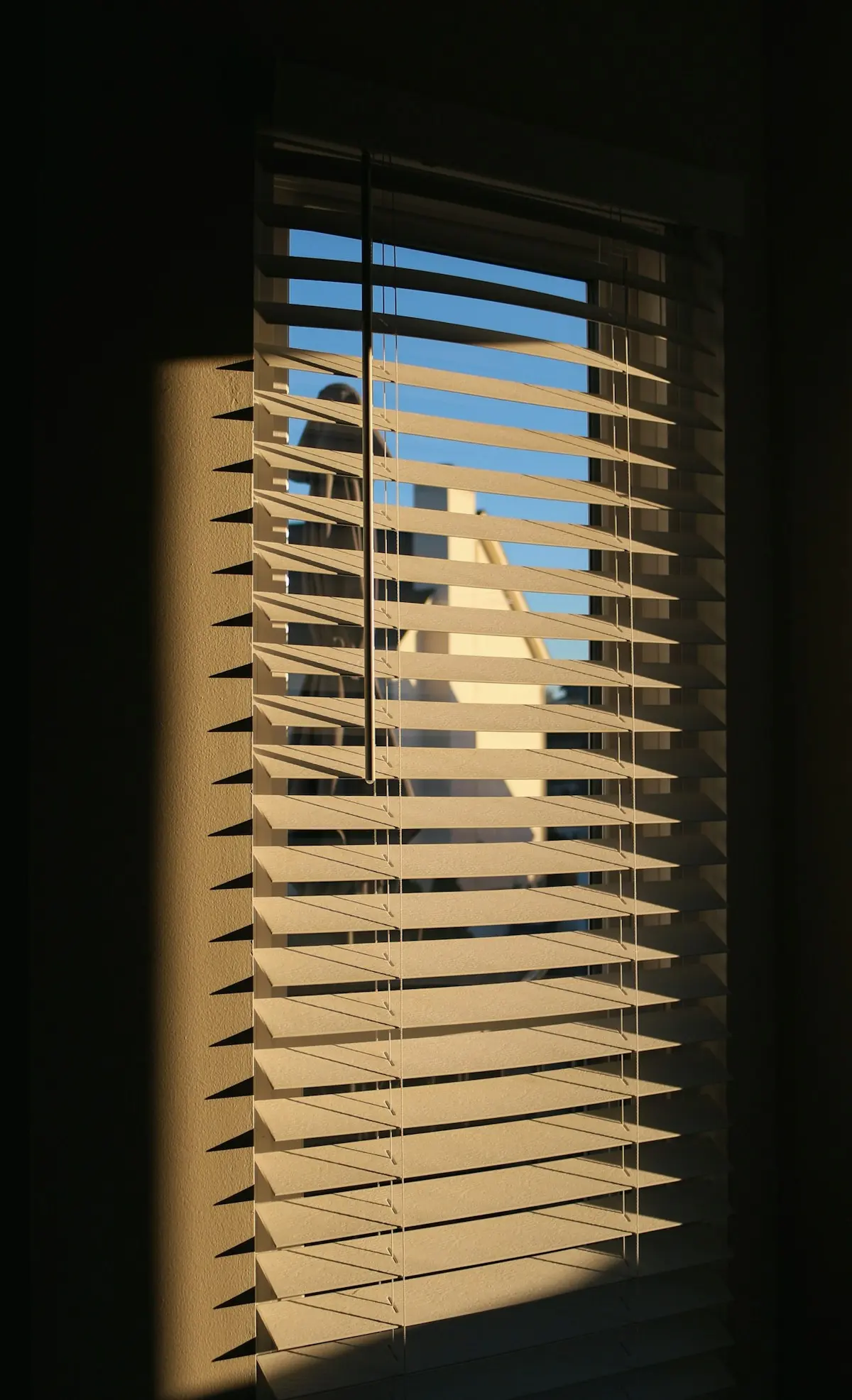
If you are searching for how to clean blinds in spring, the real problem is usually not the blind itself. It is the fine layer sitting on it. Pollen, road dust, soft indoor fluff, sometimes a bit of kitchen grease too. The moment you wipe it the wrong way, half of it floats back into the room. In Prague flats near busy roads, I have seen that happen over and over again: the blinds look cleaner for five minutes, but the air feels worse straight away. It is especially obvious in street-facing rooms along roads like Vinohradska, Plzenska, or Argentinska, where one warm day with the window cracked open can leave a thin yellow-grey skin on the slats by morning.
One rental flat in Nusle stuck with me because it showed the problem so clearly. White horizontal blinds, dark sill, traffic-facing bedroom. The tenant used a fluffy duster, thought the job was done, then watched the same dusty veil settle over the desk and duvet almost immediately. That is the whole issue in one scene. Blinds dust cleaning goes wrong when the first step spreads the mess instead of collecting it.
The method below is built for that exact situation. If you are looking up how to clean blinds without making the room feel dirtier right after you finish, this is the sequence that usually works best in a normal Prague flat. First you collect the loose pollen and dust without stirring it up. Then you finish the slats with as little moisture as possible. Finally, you clean the nearby surfaces that would otherwise send the same mess right back onto the blinds tomorrow.
Why blinds fill up with pollen and fine dust in late spring and early summer
Blinds catch everything that moves through an open window. Tree pollen, grass pollen, city dust, soot, kitchen residue, insect debris, the ordinary grey dust that settles in every lived-in home. In theory that sounds useful, almost like the blinds are protecting the room. In practice they become a storage surface for irritants.
That is especially obvious in flats near busier roads, tram lines, or older Prague streets where you get both airflow and traffic residue. Leave the window cracked open for a few warm afternoons and the slats often develop that familiar yellow-grey film. Run a finger across it and you see a clean line. That is not harmless cosmetic dust. It is exactly the kind of indoor buildup that makes an allergy-sensitive home feel stuffy fast.
Blinds are awkward for allergy sufferers because they hold dirt on thin, layered surfaces. A shelf is easy. One wipe and you are done. Blinds are different. Every slat has an upper side, a lower side, edges, cords, and a top rail where the loose debris hides. When someone grabs a fluffy duster and moves quickly, most of the particles are not removed. They are redistributed.
That is why a quick wipe often does not solve anything. It may improve the look from across the room, but it does very little for air quality. If your bigger issue is seasonal buildup across the whole flat, our guide to spring apartment cleaning for allergy sufferers is a useful next step.
What to prepare so you do not spread pollen through the whole flat
You do not need a cupboard full of specialist products for blinds dust cleaning. For spring blinds cleaning, what matters far more is the right sequence and a small set of safe tools: a vacuum with a soft brush attachment, one dry microfibre cloth, one lightly damp microfibre cloth, a bowl of lukewarm water, and a mild cleaner with no heavy fragrance.
What should you avoid? Strong degreasers are usually too harsh for aluminium finishes. Overly wet cloths are bad news for almost every blind type because water runs into the top rail, cords, or folds and leaves marks behind. On fabric and pleated blinds, too much moisture can distort the material or create water stains that are harder to fix than the original dust.
Before you start, clear the windowsill completely. Move plants, candles, paper, and anything decorative. Put an old towel on the sill and another one on the floor underneath if the area is dusty. If curtains hang close to the blinds, pull them away. Otherwise they will collect the particles you just removed.
Starting dry instead of wet matters more than most people think. Loose pollen plus a wet cloth becomes paste. Paste gets dragged into corners, around cords, and into the edges of the slats. Remove the loose debris first and the damp step becomes short, controlled, and much cleaner.
If you are working out how to clean blinds without turning that dust into sticky streaks, this dry-first order matters more than the product brand.
I also close the window before cleaning. It feels counterintuitive, but during heavy pollen hours there is no point removing one layer while the next one keeps drifting in.
People on higher floors often assume they are dealing with less of this. Sometimes the residue is lighter, yes. That does not mean it is absent. In newer Prague buildings around Vysocany or on higher floors in Smichov, the film can be less visible and easier to ignore. It still settles there.
Step-by-step method for cleaning horizontal blinds
Horizontal blinds are where the sequence really counts. Once you rush, the room pays for it.
1. Tilt the slats to an almost closed position
You want a broad surface you can reach, but not a tightly pressed stack. If the slats are fully shut against each other, dust hides in the edges and the vacuum brush cannot reach properly.
2. Vacuum the first side on low suction
Use the brush attachment and turn the suction down. Strong suction makes the slats chatter and pushes light dust sideways. Work slowly from top to bottom, then across. A calm pass removes more than a frantic one.
3. Follow with a dry microfibre cloth
After vacuuming, run the dry cloth along the length of each slat. Not in circles. Not back and forth wildly. Just steady strokes from one side to the other. That picks up the residue the vacuum leaves behind.
4. Turn the blinds and repeat the second side
This is the part people skip. One side looks clean, so they stop. Then the first time the blinds move, the other side sheds dust back into the room. Both sides matter.
5. Use a lightly damp cloth only for the remaining film
Lightly damp means exactly that. If the cloth leaves visible water behind, it is too wet. Wipe small sections, then go over them with the dry part of the cloth. That is the easiest way to stop dirty water from running onto the sill.
6. Treat kitchen buildup differently
In kitchens, pollen often mixes with grease. That changes the job completely. You are no longer removing dry dust. You are loosening a sticky film. Use a mild diluted cleaner on the damp cloth, lift the film, then dry the slat immediately. If you keep moving one wet cloth over the same greasy area, you just smear it.
Check the edges, cords, and top rail before you finish. A dark line left there will come loose again with the next draft. Visible dust on blinds is usually the signal that the dry-first routine has been left too long. In homes with asthma or strong seasonal allergies, that detail matters more than the shine.
What to do differently with vertical, fabric, and pleated blinds
Not every blind can be treated like a standard aluminium Venetian blind. Vertical, fabric, and pleated styles need a gentler hand and much less moisture.
Vertical blinds
Clean each strip from top to bottom. Vacuum first, then wipe with a dry cloth if needed. Hold the lower end lightly so the strip does not swing around. If you squeeze too hard, the edges can curl or lose shape.
Fabric blinds
Fabric blinds are where people often over-clean. Spot cleaning is usually enough unless the manufacturer says otherwise. If you soak a larger section, water marks can appear once the fabric dries. In rental flats that tends to create a second problem nobody wanted.
Pleated blinds
Pleated blinds trap pollen inside the folds. A soft vacuum pass is often the safest thing you can do. A little targeted wiping on accessible edges is fine, but once you push moisture into the folds, the material can stretch or warp.
When is local cleaning enough? When the buildup sits mostly on lower edges, corners, or around cords and the fabric still looks even. When is professional cleaning or replacement the better option? When the material smells stale, holds greasy residue, shows permanent water marks, or starts to fade or shed colour.
Honestly, older fabric blinds are not always worth a heroic rescue mission. Sometimes the practical answer is to clean them gently, buy some time, and plan a replacement.
How to reduce pollen coming back after you clean
This is the part many people underestimate. The blinds are clean, but the source around them is still active.
Start with ventilation timing. In allergy season, a short burst of airing out early in the morning or just after rain is usually kinder than leaving one window cracked all day. In a flat facing a busy street, the difference is easy to spot on the sill. In real life, that often means opening the window wide for eight minutes, then shutting it instead of letting traffic dust drift in for the next three hours.
On high-pollen days, that shorter ventilation routine is easier to justify. The Czech Hydrometeorological Institute's pollen forecast is a useful local check, and the EPA also notes that outdoor particulate matter gets indoors through open windows and doors. In a Prague flat facing traffic, that is exactly why a cracked-open window can work against you.
Then deal with the surfaces around the blinds. Windowsills, insect screens, frames, handles, curtains, and the floor below the window all collect the same material. If you clean the slats and leave the sill dusty, the room resets itself almost immediately. That is why I treat the window zone as one small system, not five separate tasks. If dust keeps returning across the room, our guide on how to clean with a dust allergy at home covers the broader routine.
The routine itself does not need to be dramatic. If you are collecting allergy cleaning tips for spring, this is one of the most useful ones: for many homes, five minutes once or twice a week is enough during peak pollen season. Close the window, vacuum the slats on low power, wipe the sill and frame, and remove what settled below. Small, regular work beats a heroic scrub every six weeks.
One more practical point: do not throw the window wide open for half an hour the second you finish just because the area looks clean again. On high-pollen days that undoes part of the work almost immediately. Finish the sill, vacuum the floor below, let the disturbed particles settle, and only then air the room out in one short, deliberate burst.
If that still feels like too much, especially in a family flat with a child who is sneezing through spring, this is usually the point where people stop asking how to clean blinds on their own and decide they would rather outsource the fiddly window zone. ČistýKout is a Prague-based cleaning option worth considering. You can send a no-pressure cleaning enquiry and hand the window zone to someone else for a change.
Quick FAQ about blinds, pollen, and dust
How often should blinds be cleaned during pollen season?
In a typical flat, a dry pass once a week and a light damp finish every two to three weeks is a sensible starting point. If you live near heavy traffic, keep windows open often, or have strong allergies at home, shorter intervals make sense.
Is it better to clean blinds dry or wet?
Dry first, always. Remove the loose pollen and dust before you bring in moisture. A damp cloth should only deal with the remaining film.
If someone asks me how to clean blinds in an allergy-sensitive home, I usually give the same short answer: keep the suction low, keep the cloth only lightly damp, and finish the sill before the dust settles again.
How do you remove pollen indoors without making it worse?
If you are specifically asking how to remove pollen indoors, think beyond the blinds. Clean the sill, frame, insect screen, nearby textiles, and the floor under the window. Otherwise the same particles come straight back into circulation the next day.