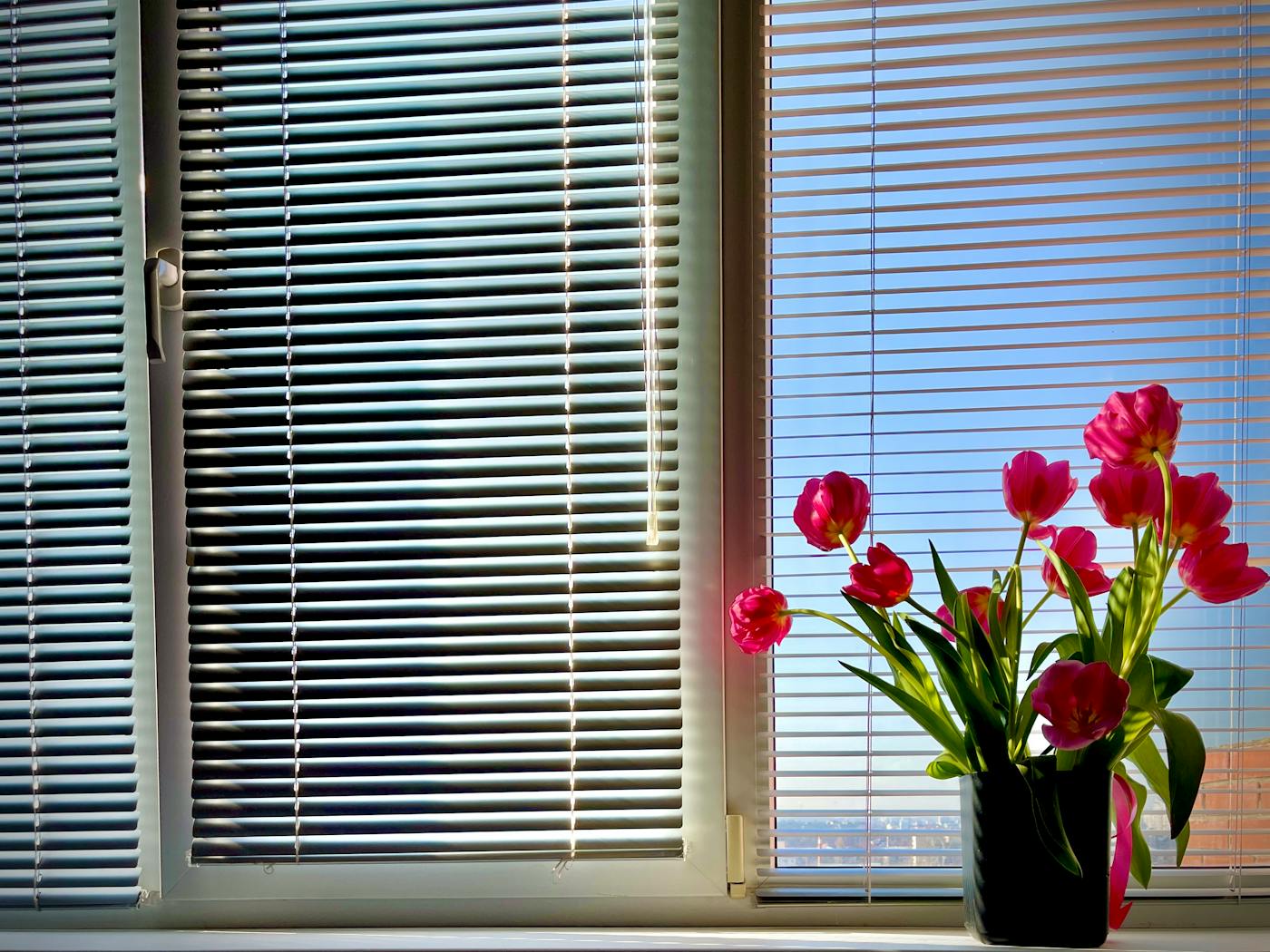
When people ask me how to clean blinds in the spring, they usually aren't chasing perfection. They just want to get rid of that fine, yellow-grey layer without launching half of it back into their living room. In Prague flats near busy roads, and honestly in most family houses too, blinds collect a nasty mix of pollen, city dust, grease, dead insects, and everyday fluff. For allergy sufferers, this mix turns a cosmetic annoyance into a real breathing hazard.
Why blinds become a problem in late spring and early summer
Blinds basically act as a giant filter during pollen season. The problem is that nobody replaces that filter. The slats catch whatever drifts in through the open window and hold onto it. If you leave the window open in the evenings, you get pollen, fine dust, greasy cooking residue, and bits of soot stacked up week after week.
Cleaning blinds for allergy sufferers requires a completely different approach than a normal wipe-down. A standard quick clean just aims to make things look better. An allergy-minded clean has to trap the layer without stirring it up. If you grab a fluffy duster and go fast, you definitely move the dust. It just doesn't leave the room. It drifts sideways, settling on the windowsill, the sofa, and eventually back into your lungs.
I've seen this constantly in flats where people ventilate well but feel like the room never quite settles down in May and June. They suspect their open shelves or bedding are the problem. Meanwhile, the real culprit is sitting right at the window. Run a finger over the slats, and you'll get your answer immediately.
This is exactly why I don't treat blinds as a once-a-season chore. During heavy pollen weeks, a calm, five-minute routine beats one massive, dramatic scrubbing session after the slats have already turned sticky and grey.
What to prepare before you start
You don't need a cupboard full of specialty products. The best setup is surprisingly simple: one dry microfiber cloth, one lightly damp microfiber cloth, a vacuum with a soft brush attachment, a bowl of lukewarm water, and a mild cleaner. Keep it gentle.
This isn't the time for aggressive degreasers, strong fragrance sprays, or soaking wet sponges. Heavy chemicals can easily leave permanent marks on aluminum or painted surfaces. Worse, excess moisture creeps into the cords, the headrail, and the edges - creating a sticky trap where new grime settles even faster.
Clear the windowsill first. Move the plants, papers, and toys. I always put an old towel on the sill and another on the floor directly beneath the window. If you have curtains nearby, pull them completely aside. If there's an upholstered chair, throw a cover over it. It feels a bit fussy for a two-minute prep, but it saves you from pushing allergens right back into your soft furnishings.
One more detail: close the window while you clean. I know it sounds counterintuitive when you're dealing with stale indoor dust, but cleaning during a high-pollen hour with the window wide open entirely defeats the purpose. Finish the job, wipe the nearby surfaces, and ventilate later when the air is calmer.
Dry removal of pollen and dust, step by step
Always start dry. This is the exact step people skip when they're in a rush, and it's why they end up with floating dust everywhere.
Tilt the slats almost closed so you can reach their surface without stressing the mechanism. Turn your vacuum to a low setting. Your goal is to lift loose debris, not violently shake the blinds. Work slowly from top to bottom, and from one side to the other. Random, back-and-forth scrubbing spreads fine dust far more than a steady, predictable sequence.
I usually do a first pass with the soft brush attachment, follow up immediately with a dry microfiber cloth to catch the leftovers, and only then turn the blinds to clean the other side. Flipping the slats back and forth after every single swipe creates a massive amount of airborne dust.
If your room is very dry, dust tends to stay light and mobile. To counter this, wipe the sill and floor immediately after the dry pass. The idea isn't to wet the blinds, but to control exactly where the falling dust lands.
The trickiest spots are always the corners, the cords, and the top rail. Don't scratch at compacted grime with your fingernail. Fold the cloth, hold it firm, and draw the dirt slowly toward you. It takes a little extra patience, but it keeps the room from getting that faint, dusty haze you only notice when sunlight hits the window.
Direction matters more than people think
Clean each slat along its length, not in circles. Circular motions just smear the residue and shove it deep into the edges. Straight passes lift it and pull it off. For horizontal blinds, lightly support the slat through the cloth while moving from one end to the other. For vertical blinds, hold the lower part steady so they don't swing around and shake dust loose.
Wet finishing without streaks or damage
Once the loose layer is gone, move on to the wet finishing pass. The key word here is damp. Not wet. If you can squeeze a single drop out of the cloth, it's too wet.
For standard aluminum blinds, lukewarm water with a tiny drop of mild cleaner does the trick. Dry each section soon after you wipe it. Plastic blinds are a little more forgiving, but the rule against soaking them still applies. Fabric blinds are an entirely different beast - I'd stay conservative, follow the manufacturer's guidance, and stick to vacuuming and very limited spot cleaning.
Kitchen blinds often collect the absolute worst combination: fine dust mixed with a greasy film. That layer doesn't lift easily if you rush. Two passes work best here. First, use a lightly damp cloth to loosen the film. Then follow straight after with a dry cloth. If you just keep wiping with the same damp cloth, you'll get terrible streaks and they'll look dirty again by tomorrow.
After the wet pass, double-check the corners, lower edges, cords, and headrail. That's exactly where the residue hides. In homes with allergy sufferers, that hidden line of grime matters. It's the first thing to break loose the next time a breeze comes through.
When to stop pushing for a deeper clean
Older blinds can look a lot sturdier than they actually are. In rental flats especially, the surface finish might already be heavily worn. If you notice color rubbing off, or if the slats feel brittle, back off. A gentle, frequent clean is much safer than one heroic scrubbing session that leaves bent edges, damaged cords, or permanent marks.
Common mistakes that make allergies worse
The biggest mistake is grabbing a fluffy duster before you vacuum. It feels fast, but it's a wildly efficient way to launch pollen across the entire room.
The second mistake is using too much water. Excess moisture drags dirt right into the cords and the top rail, where it dries into a crust and waits for the blinds to move. Then people wonder why their windows still seem dirty a day later.
Another classic error is bad timing. If the pollen count is peaking, the wind is blowing, and your windows are fully open, you're just cleaning in the middle of fresh exposure. It's vastly better to clean early in the morning after a calm night, or right after a heavy rain when the outdoor pollen pressure drops.
I also see people chasing a glossy shine when they should just be chasing removal. Blinds don't need to gleam. They just need the allergens removed without turning them into an indoor cloud. A heavily perfumed cleaning spray might smell fresh for ten minutes, but it won't actually improve the air quality.
I remember a family in Dejvice who wiped their blinds every single Saturday, yet still dealt with severe evening sneezing. The issue wasn't a lack of effort; it was their method. They used a dry duster with the windows wide open, and completely ignored the sill and floor. Once they switched to a gentle pre-vacuum, closed the window during the clean, and wiped the surrounding surfaces immediately after, the room finally settled down. It wasn't magic, just a smarter way to handle the mess.
How often to clean blinds during pollen season
For an average household, I recommend a light dry clean once a week during pollen season, followed by a damp finishing clean every two to three weeks, depending on exposure. If you live near heavy traffic, keep windows open constantly, or have shedding pets, you'll need to do it more frequently. If you're cleaning for an allergy sufferer, a quick, five-minute routine twice a week makes a massive difference during peak season.
That's the part I can't stress enough: a short routine always beats an occasional overhaul. Five minutes spent on the blinds, sill, and the floor right below the window does far more than a stressful, hour-long session once the dirt has bonded with kitchen grease.
And when you do clean the blinds, wipe the nearby surfaces too. The sill, the window frame, and that small patch of floor matter. If you skip them, half the dirt you just removed will simply drift right back up.
When it makes sense to bring in help
Sometimes you just have to admit that the job is bigger than a ten-minute weekly routine. Large window areas, a ton of blinds, peak pollen weeks, young kids, pronounced allergies, or a mix of heavy curtains around the windows can turn this into a frustrating, repeating battle.
That's exactly where a professional clean steps in. Done right, it's not just about making the slats look tidy. It's about systematically reducing the allergen load around the windows without pushing it all back into your living space.
If you want help staying on top of it, ČistýKout is a Prague-based cleaning service worth considering. You can send a no-pressure enquiry through their contact form and see if regular support would finally make your spring routine manageable.