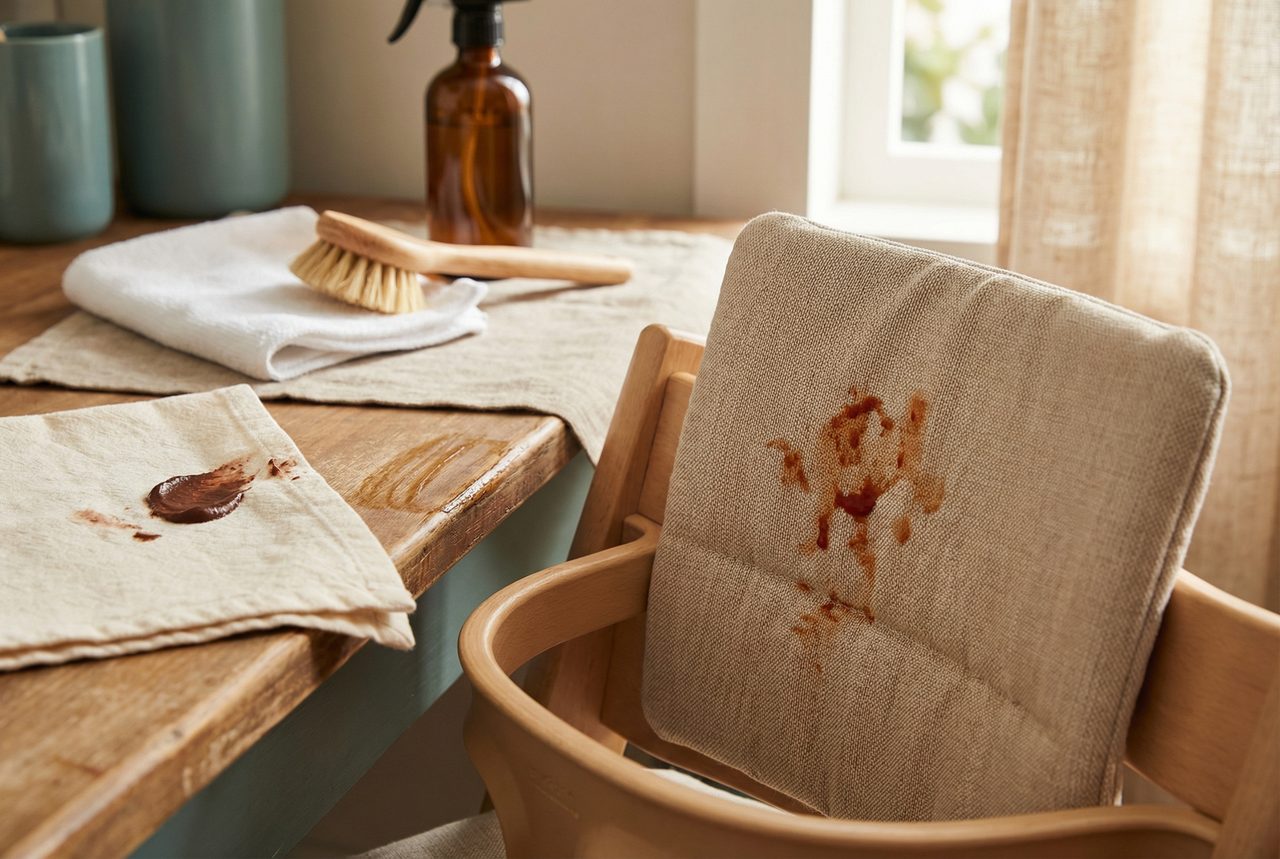
Dried food stains are usually harder than fresh spills for one simple reason: once sauce, yogurt, soup or oil has dried, it bonds to the fibers or surface and forms a tougher residue. A lot of people then make the same mistake. They grab the strongest degreaser they own, a rough sponge, and start scrubbing. The stain may fade a little, but the fabric turns fuzzy, the wood loses its finish, and the sofa ends up with a dark water ring around the original spot. With dried stains, brute force is rarely the answer. Order matters more.
Think of a normal weekday evening. A parent is feeding a toddler tomato sauce, answering a call, unloading the dishwasher, and trying to stop the dog from cleaning under the table. The next morning there is a dried orange smear on the dining chair, ketchup on the tablecloth, and some mystery baby food on a sweatshirt sleeve. That is exactly when a simple system helps. Not a miracle spray. A sequence you can trust: loosen what is dry, soften the residue, choose the right cleaner for the stain, and avoid setting the pigment for good.
Start with the safest method first
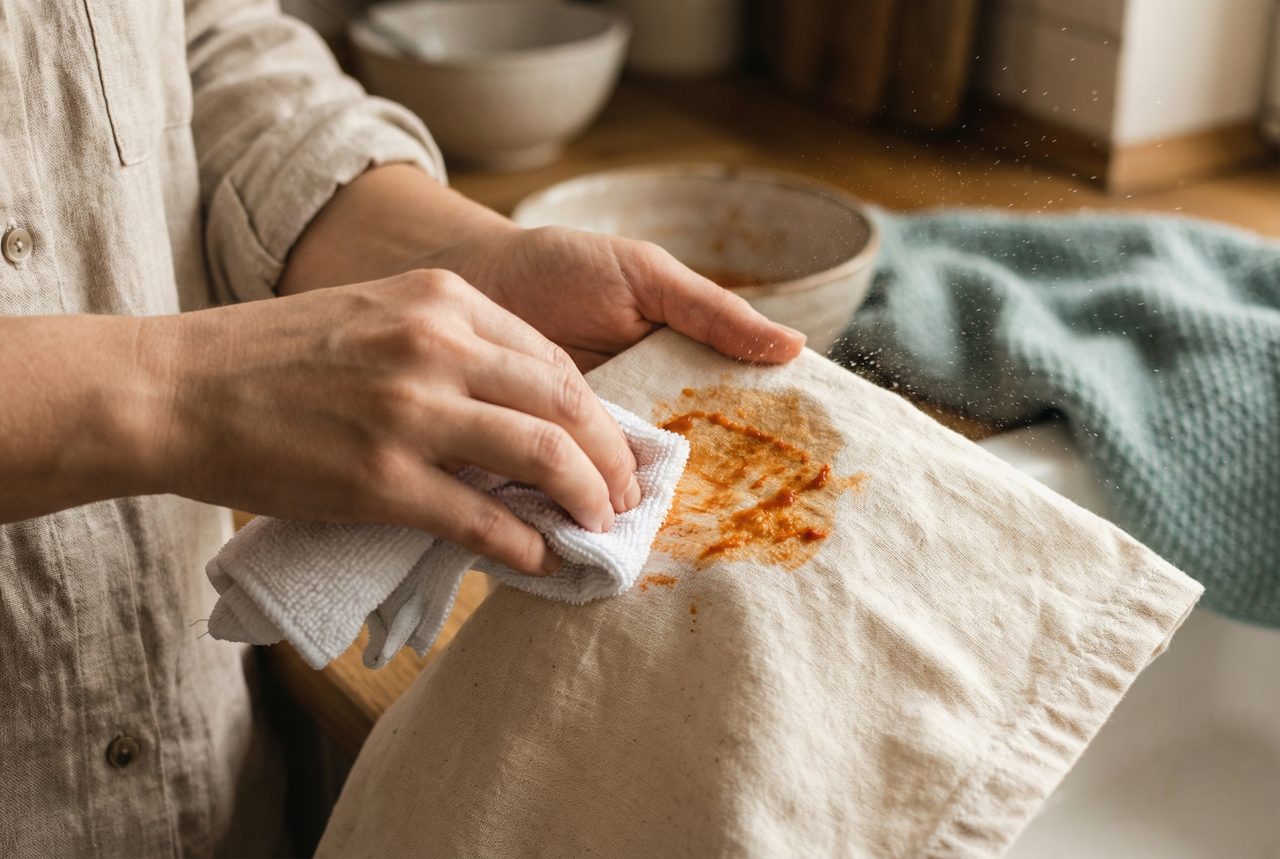
Most dried food stains respond well to the same logic. Remove the crust gently with a spoon edge, a plastic card, or a blunt knife. Then soften the stain instead of flooding it. Use lukewarm water and a cloth or spray bottle. Give it a minute or a few minutes to release. Only then decide whether you need dish soap for grease, laundry gel for washable fabric, or an enzyme cleaner for mixed food stains that include protein, sugar and fat.
- Always test first on a hidden area, especially on upholstery, wood, wool and colored fabric.
- Avoid hot water on dairy, egg or creamy food stains because heat can set proteins.
- Work from the outside in so you do not spread the stain wider.
- Do not mix cleaners blindly. Vinegar, bleach, degreasers and disinfectants are not a smart combo.
- Do not use heat to dry until the stain is truly gone. A tumble dryer can lock in what is left.
What to keep nearby before you start
You do not need a full professional kit. Two white microfiber cloths, a soft brush, an old toothbrush for seams, mild dish soap, laundry gel, baking soda, paper towels, and a bowl of lukewarm water cover most household cases. If you deal with kids, creamy sauces, fruit pouches or yogurt a lot, an enzyme stain remover is worth having. Those stains usually contain a messy mix of sugar, fat and protein, and enzymes handle that mix better than a random all purpose spray.
For sofas, mattresses, carpets and car seats, keep a dry towel ready as well. Too much water is often the real problem. The surface gets wet all the way through, takes hours to dry, and leaves a ring even after the original stain is mostly gone.
A quick guide by surface
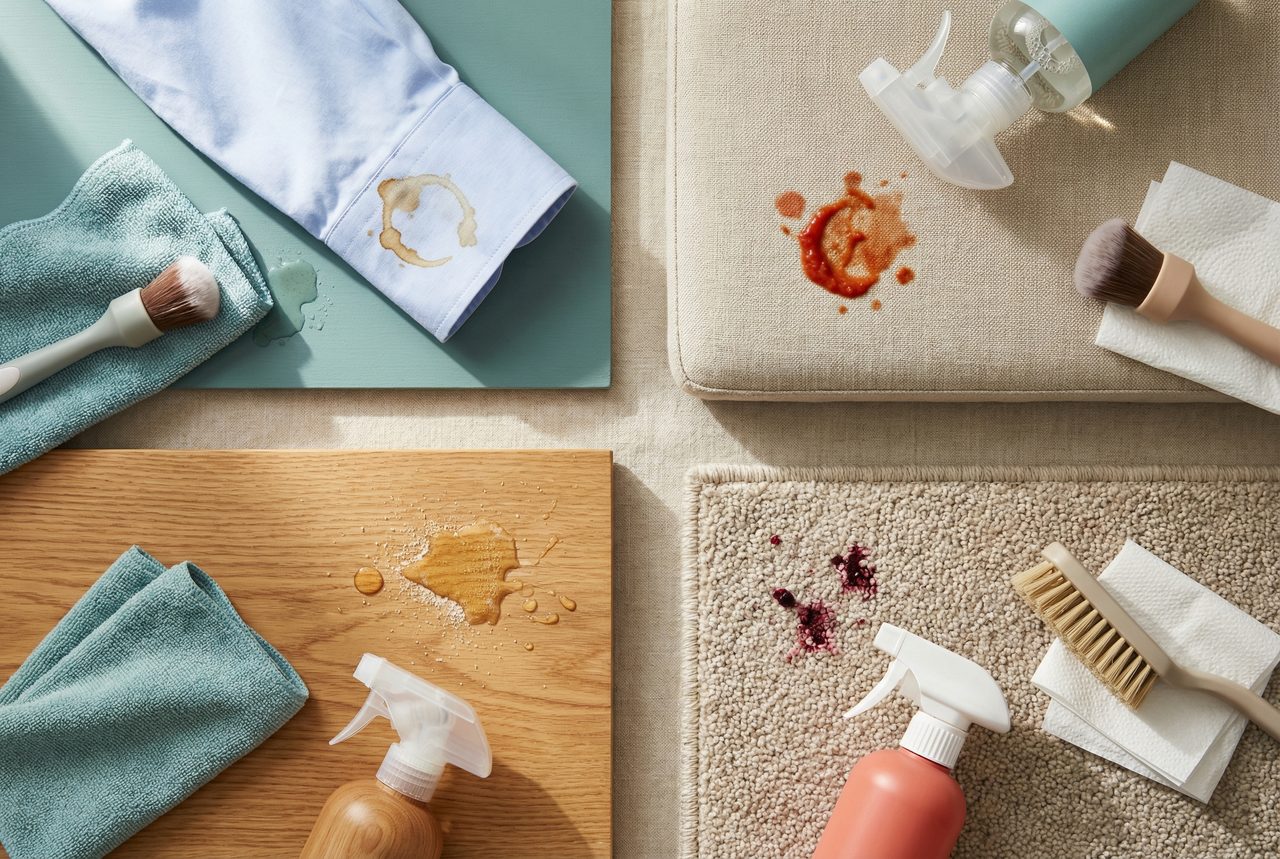
- Clothes and table linens - flush from the back whenever possible so the stain moves out, not deeper in.
- Sofas and mattresses - use much less water and spend more effort on blotting than scrubbing.
- Wood and laminate - short contact with moisture, then dry the area right away.
- Carpet - work in small passes and remove leftover cleaner before you walk away.
If you are unsure where to begin, use one practical rule: the slower the material dries, the more conservative you should be with water. A shirt can handle more moisture than a sofa cushion that may stay damp until the next day. That is often the difference between a cleaned stain and a new ring.
Tomato sauce, ketchup and other red sauces
Tomato based stains usually combine color pigment and grease. On a cotton shirt or tablecloth, scrape off any dried residue first. Rinse from the back with lukewarm water so part of the stain is pushed out of the fibers instead of deeper into them. Then apply a small amount of laundry gel or stain remover, massage it in gently, let it sit for about ten minutes, and wash according to the care label.
On upholstery, go lighter. Mix a few drops of dish soap with water, dampen a cloth, wring it out well, and blot. If the cloth starts lifting orange or red color, keep switching to a clean part of the cloth. If a shadow remains after the first round, use an upholstery cleaner or an enzyme product. Bleach is a terrible shortcut on colored furniture.
Grease, oil, butter and creamy sauces
Grease stains often look dry when they are not really gone. Oil remains inside the fibers even when the surface no longer feels wet. That is why a shirt can come out of the wash with a dark ring still visible. For washable textiles, pretreat with dish soap. Work a drop into the stain, leave it for five to ten minutes, rinse with lukewarm water, and then wash. Older greasy stains may need two rounds.
On wood, cabinet fronts or a dining table, use much less liquid. Wipe with a cloth and a tiny amount of dish soap, then wipe again with clean water and dry immediately. The goal is to remove the food residue, not soak the finish.
Chocolate, cocoa pudding and baby food
Chocolate is a classic mixed stain. It brings fat, sugar and color all at once. Remove the dry layer first, then clean with cool to lukewarm water and a small amount of laundry gel or dish soap. On washable light fabrics, an oxygen based stain remover can help after the first round if the care label allows it. On wool or silk, keep things much gentler.
Fruit puree pouches, yogurt and baby snacks are often discovered late. By evening they have turned into a hard glossy patch. An enzyme cleaner helps here. Place a towel underneath the fabric, dampen the stain, apply the product, let it work, then loosen and rinse. On a sofa, repeat the same logic with less moisture and more blotting.
Rice, mashed potatoes, soup and dried starch
Starchy food dries into a thin film. Think rice pressed into carpet fibers, mashed potatoes on a bib, or noodle soup on a tablecloth. Softening is the key. Lay a damp cloth over the area for two or three minutes, then lift the residue with a soft brush. Scrubbing dried starch while it is still hard usually drives it deeper into the fabric.
On carpet, work in small cycles: dampen, blot, use a little soapy water, blot, then go back with clean water and blot again. Removing cleaner residue matters almost as much as removing the food. If detergent stays behind, the spot can dry stiff and attract fresh dirt faster.
Coffee, tea, cocoa with milk and breakfast spills
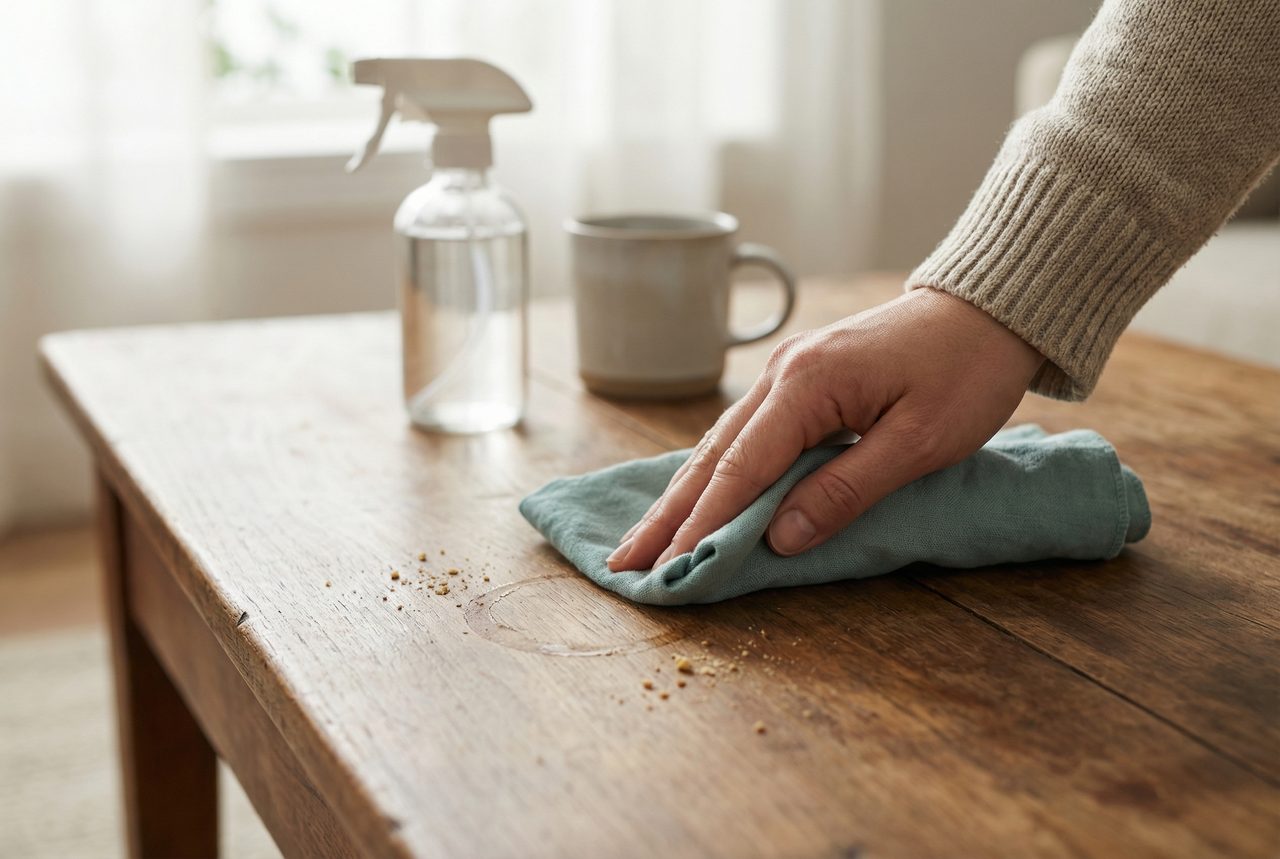
Black coffee is one case. Milky coffee or cocoa is another because now you are dealing with protein and fat as well as color. On a sofa, start with cooler water and blotting. Then use a mild cleaning solution. If a brownish shadow remains on washable light fabric, an oxygen cleaner may help. For upholstery, a purpose made fabric cleaner and a light hand are safer.
On a wooden side table, the bigger issue is often the heat ring from the mug rather than the drink itself. That needs furniture-safe care, not aggressive stain removal.
The hardest places: sofa, mattress, carpet and car seat
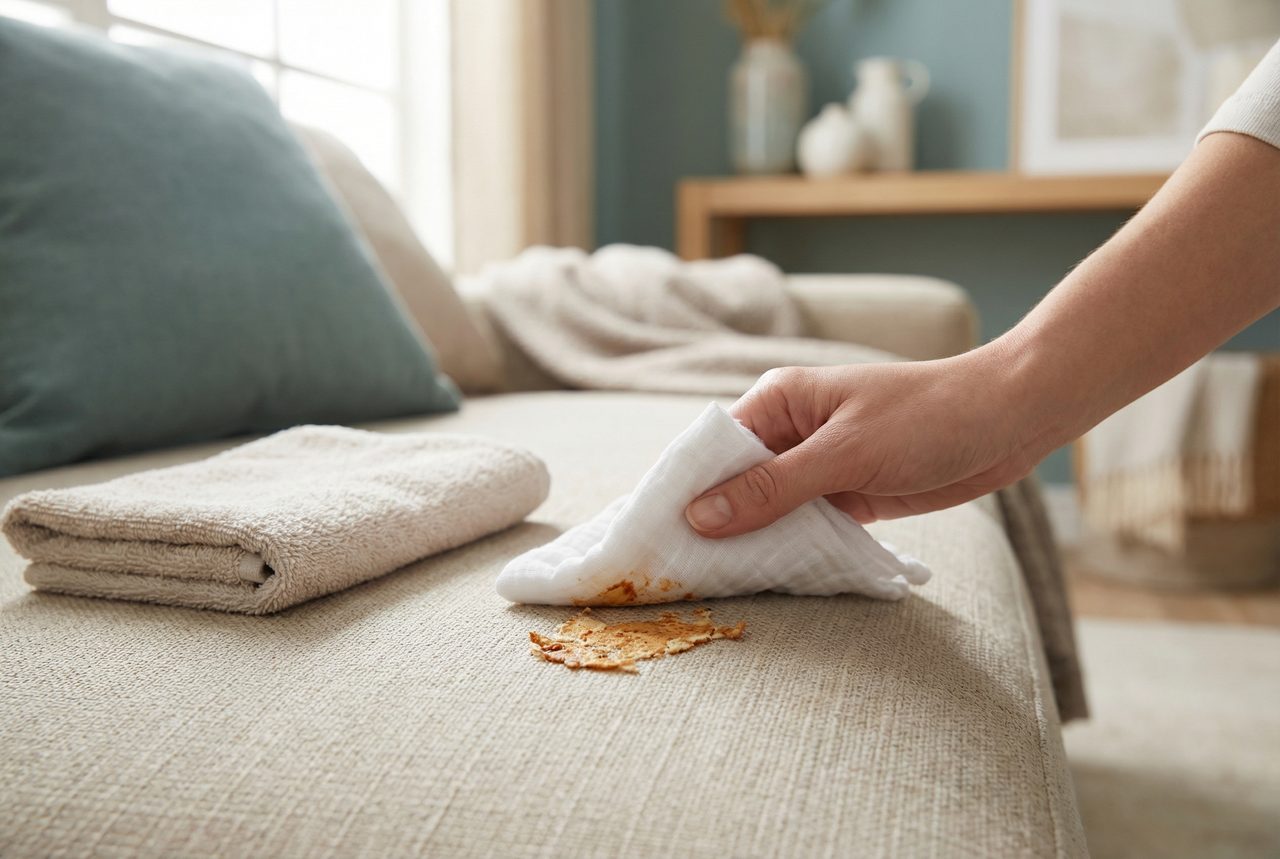
Anything that cannot simply go into the washing machine needs a bit more discipline. Vacuum crumbs and dry residue first. Dampen the affected area lightly. Apply the cleaner. Blot with a dry towel. Let it dry with airflow, not close heat. That order reduces rings, odors and over-wetting.
Mattresses deserve extra caution. If creamy sauce or yogurt has soaked inside, home cleaning can only do so much. You may improve the surface, but residue deeper inside can start smelling after a few days. That is where professional extraction cleaning becomes the smarter option.
Materials that need extra caution
- Wool and silk - use cooler water and very gentle products only.
- Natural stone - avoid vinegar and acidic cleaners.
- Unsealed wood - use very little water and dry quickly.
- Velvet and delicate upholstery - avoid hard rubbing and over-wetting.
- Unknown old stains - test first before cleaning a larger area.
What internet hacks often get wrong
Baking soda is useful, but it is not a magic reset button for every dried stain. It can help with odor and some grease support work, but it will not solve dried tomato sauce or yogurt in carpet on its own. Vinegar is similar. Cheap and sometimes helpful, yes. Safe for every surface, no. And toothpaste on upholstery? I would leave that one to social media, not to a real sofa.
When it makes sense to call in professional help
If the stain is weeks old, spread over a large area, sitting on expensive upholstery, or has already turned into a water ring after DIY cleaning, calling in professional help is often the cheaper decision in the long run. Professional cleaners have extraction equipment and material-specific chemistry that remove what home cleaning often only loosens and spreads.
If you are unsure, start gently: scrape, soften, loosen, blot, dry. That sequence saves more fabrics and furniture than ten viral cleaning tricks. And if the stain still refuses to move, CistýKout can help you find a reliable cleaner or a specialist for deeper fabric cleaning without the guesswork.