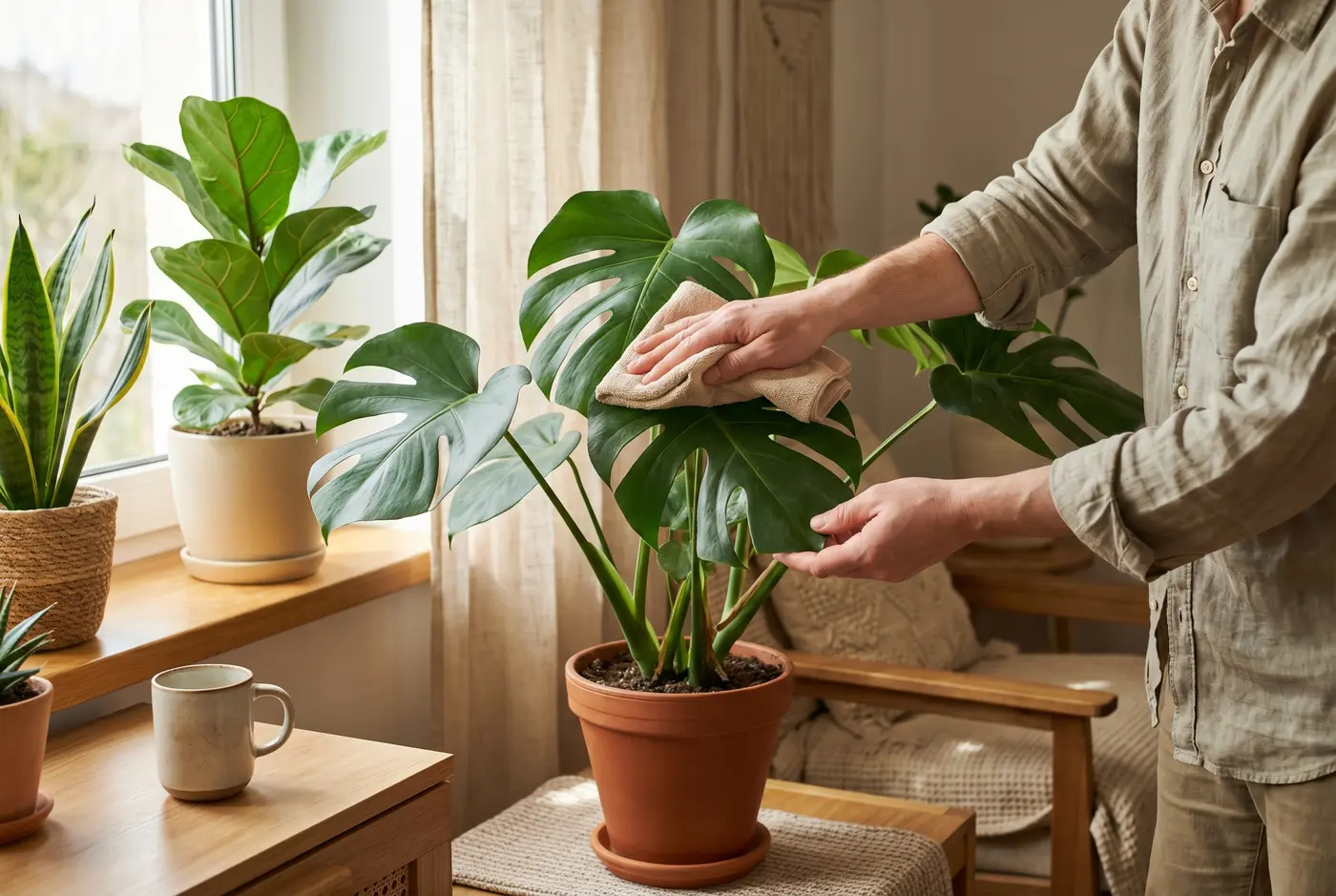
After winter, houseplants often look the way a flat looks at the end of heating season: dusty, a little tired, and not quite themselves. Leaves lose their shine, dry tips show up out of nowhere, and the soil stays wet longer than expected. That is usually when people panic and start doing everything at once. More water, more fertilizer, a hard trim, a bigger pot. If you want to clean houseplants after winter without harming them, the better move is slower and gentler: remove dust first, check the leaves, trim only what is truly dead, watch for pests, and ease the plant back into spring.
Look first, act second
Before you touch the watering can, spend a minute actually looking at the plant. Not in passing. Properly. Winter leaves clues everywhere.
A rubber plant may have a chalky film from hard water. Monstera leaves can carry a layer of dust thick enough to mute their color. Snake plants often hide old dry sheaths near the base. ZZ plants are especially sneaky. They may look fine from a distance, then you touch the potting mix and realize it has stayed cold and damp for far too long.
That small pause matters. A tired-looking plant does not always need more care. Sometimes it needs less interference.
The safest way to remove dust from leaves
Dust is not just cosmetic. A dirty leaf catches less light, and in kitchens it can also hold onto a thin greasy film. Still, cleaning should be gentle. A spring refresh is not a scrubbing job.
Use lukewarm water and a soft cloth for most plants
For broad-leaved houseplants, a soft microfiber cloth works well. An old cotton T-shirt works too. Dampen it lightly, support the leaf from underneath with one hand, and wipe from the base toward the tip with the other. No pressure. No polishing. Just enough to lift the dust.
Plants like monstera, philodendron, pothos, rubber plant, and schefflera usually handle this well. More delicate foliage, like calathea or maranta, needs a lighter hand. If the leaf feels thin or velvety, slow down.
!Gently wiping dust from houseplant leaves with a soft cloth
One thing people underestimate: repeated dry wiping can mark the surface. If a leaf is really dusty, do not keep rubbing. Wipe it once with a slightly damp cloth and leave it alone.
A shower helps, but not with every plant
A gentle lukewarm shower can be useful for sturdier plants. It is especially practical when winter dust has settled into every fold and the plant is too large to wipe leaf by leaf. Keep the water pressure low and avoid soaking the potting mix if you can. You do not want the spring clean to turn into overwatering.
But fuzzy or textured leaves are different. African violets, some begonias, and other soft-leaved plants often hate water sitting on the foliage. It can leave marks and create the kind of stale moisture that invites trouble. In those cases, a soft brush or a barely damp cloth is safer.
Skip the home remedies that promise shiny leaves
Milk, oil, beer, leaf shine sprays. They come up every year and they are still not a good idea. Yes, some of them make leaves look glossy for a day or two. They also leave residue, attract more dust, and can interfere with the leaf surface. Honestly, most houseplants do not want to be shiny. They want to be clean.
Trim dry damage, not your patience
By early spring, a few dry tips or tired lower leaves are normal. That does not mean the whole plant needs a dramatic haircut. One of the most common mistakes is trying to force a "fresh start" with heavy pruning.
How to trim without making the damage worse
Use clean scissors or small pruners wiped with alcohol. If you are dealing with brown tips, cut only the dead area and follow the original shape of the leaf. If you slice into healthy green tissue, the edge often browns again and looks even rougher a few days later.
!Trimming dry brown leaf tips with clean scissors during spring plant care
Remove a full leaf only when it is mostly yellow, soft, collapsed, or clearly done. In many Czech homes, especially older flats where winter light is weak, plants shed a few older leaves simply because the season was dark. That is not a disaster. It is winter doing winter things.
When trimming is not the real answer
If several leaves are damaged at once, do not stop at the scissors. Ask why. Brown edges may come from dry heated air, but they can also come from inconsistent watering. Yellowing may mean an old leaf, or poor drainage, or roots sitting wet in a decorative cover pot. The visible damage is not always the main problem.
Check for pests before they get comfortable
Pests often show up right as spring growth starts. More light, softer new growth, warmer windowsills, and suddenly the problem that was hiding in February becomes obvious. Spider mites, thrips, and mealybugs are the usual suspects.
Where to look
Check the undersides of leaves, new growth, stems, and the top of the potting mix. Look for fine webbing, silver streaks, sticky spots, or little cottony clusters. If your eyes get tired, use your phone light and take a close photo. That trick catches more than people expect.
!Inspecting the underside of houseplant leaves for pests near a bright window
What to do if you find something early
Move the plant away from the others first. Not forever, just enough to stop the problem spreading across the whole shelf. Rinse what you can with lukewarm water and wipe the leaves down. Sometimes early mechanical cleaning is enough. If not, use a treatment made for indoor plants and follow the timing properly. One rushed spray and then forgetting about it rarely solves anything.
This is the boring part of plant care, but it is the part that saves you later. Ignore early signs for two weeks and you may end up treating every plant in the room.
Overwatering is still the main spring mistake
A plant looks weak after winter, so people give it more water. The logic feels kind. The roots often disagree.
During early spring, light improves before growth fully catches up. The top of the plant may look ready for action while the root zone is still moving slowly, especially if nights are cool and the pot sits near glass. That is why potting mix can stay damp far longer than your spring mood suggests.
How to tell when it is actually time to water
Forget rigid schedules. Touch the soil. For many common houseplants, the top few centimeters should dry out before the next watering. Succulents and ZZ plants want even more drying time. Peace lilies and ferns prefer a bit more moisture, but even they do not want permanently soggy soil.
The weight of the pot helps too. Once you learn how a watered pot feels versus a dry one, you stop guessing as much. It is a small habit, but it prevents a lot of mushy roots.
Hold back on fertilizer if the plant is stressed
If the plant is dusty, damaged, or showing possible pest issues, fertilizer can wait. Clean first. Observe. Let it settle into better light and a steadier watering rhythm. Fertilizer is not a rescue move. On stressed roots, it can do the opposite.
Gentle spring refresh steps that actually help
Not every houseplant needs repotting in spring, and not every plant benefits from a bigger pot. People often mean well here and still make the plant's life harder.
What is worth doing
- Rotate the plant if it leaned strongly toward winter light.
- Remove dead leaves and old debris from the soil surface.
- Check that water is not standing inside the decorative cachepot.
- Loosen only the very top layer of compacted soil if needed.
- Repot only when roots are crowded, the mix has broken down badly, or water runs straight through without soaking in properly.
I once saw a lovely old ficus in a Prague apartment nearly get wrecked by overenthusiastic spring care. It was showered, trimmed hard, repotted, fertilized, and moved closer to a radiator for "more light" all in the same week. Within days it dropped leaves everywhere. Not because winter had been harsh. Because the plant got hit with five changes at once.
That story stays with me because it sums up the season well. Spring is not an order to restart everything. It is more like basic maintenance done with decent timing.
Different plants, different cleaning needs
Large tropical foliage plants usually appreciate regular leaf wiping and brighter spring light, but they hate cold water and sharp drafts from an open window. Succulents and cacti are better cleaned with a soft brush than a wet cloth. Orchids need extra care around the crown, where trapped water can cause rot. Herbs on a windowsill often need pruning and better light management more than any actual cleaning.
If you grow plants in a dry flat with strong radiator heat, the issue may not be dirt at all. It may be winter stress that simply becomes more visible in spring. That is worth remembering before you treat every brown edge as a cleaning problem.
When the problem is deeper than a spring tidy-up
If leaves are going soft at the base, the soil smells sour, or the plant does not respond at all after a few weeks of brighter days, stop thinking in terms of surface care. That is when it makes sense to slide the plant out of the pot and inspect the roots. Healthy roots feel firm. Brown, mushy, smelly roots are telling you something else entirely.
And if you have a lot of plants at home, do not try to "fix spring" in one Sunday afternoon. Split the work. Bedroom windowsill today. Living room shelf tomorrow. It is easier on you, and on the plants.
The simple version to remember
If you want to clean houseplants after winter without damage, keep it calm. Remove dust gently. Check leaves and stems before reaching for scissors. Trim only what is fully dry. Look for pests early. Water according to the soil, not the calendar. Skip the dramatic makeover.
Most plants do not need a spring performance. They need a bit of attention and a steady hand. That is usually the difference between a real refresh and a well-meant mess.