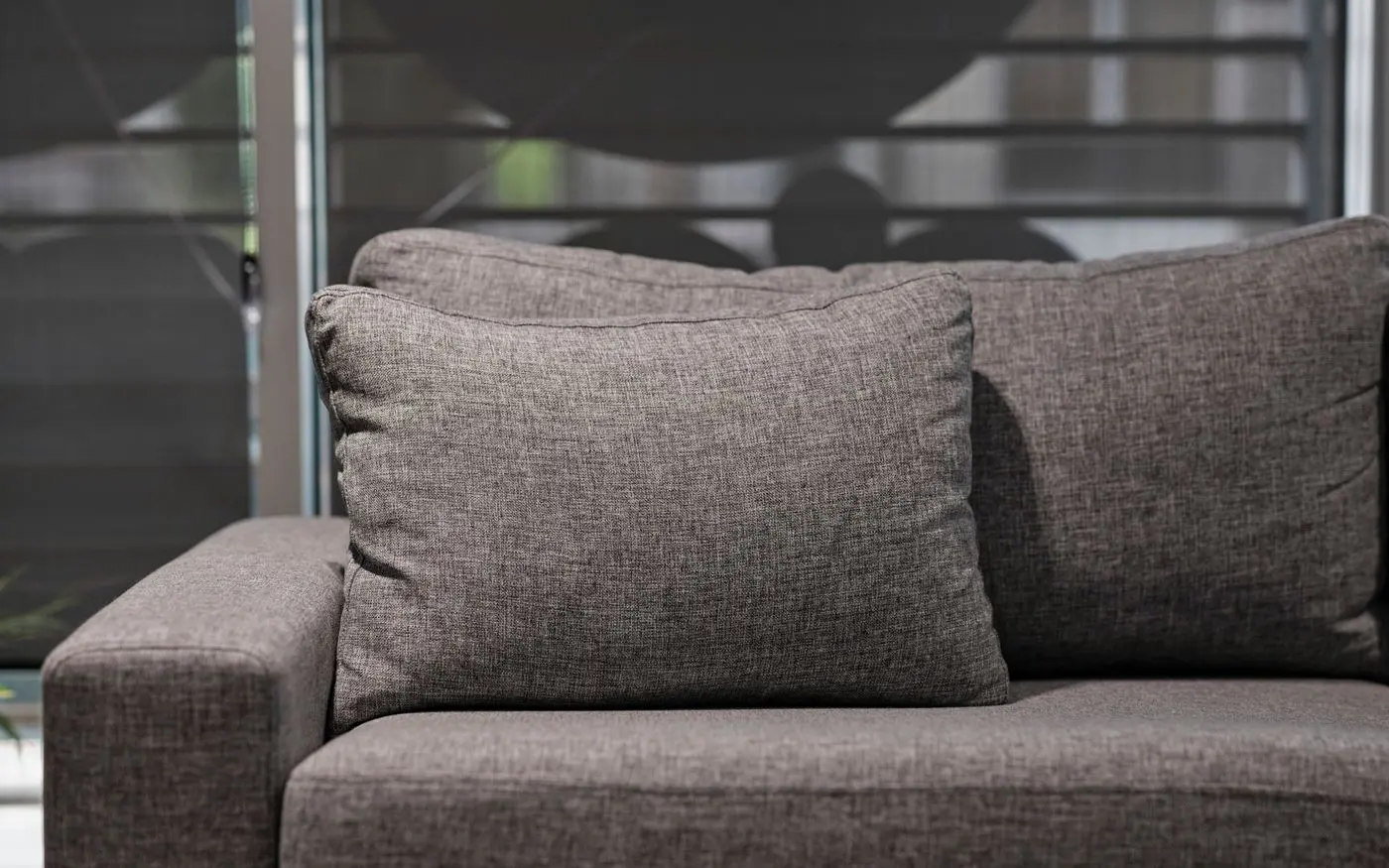
If you are searching for how to clean urine from a couch, resist the urge to grab a scented spray and scrub. The first 15 minutes are about removing liquid before it travels farther into the cushion. Breaking down the residue comes next; drying comes last. Mix those jobs together and you can end up with a watermark on top and an odour that returns two days later.
The first 15 minutes: blot the liquid, do not spread it
Move the child or pet away, take off any throw, and clear the seat. Pick up solid material with a paper towel if necessary. Do not spray anything yet. Extra liquid dilutes the urine and enlarges the affected area, making it harder to tell where the wet patch ends.
Place a folded white absorbent cloth or plain white kitchen towel over the spot. White matters because transferred dye will be visible immediately. Press firmly with your palm. For a sturdy removable cushion, you can put a clean towel under a flat board and press down with your weight. Do not rub. Rubbing pushes moisture sideways and can distort the pile or weave.
Work from the outside towards the centre, changing the towel as soon as it becomes wet. Keep going until the next towel picks up very little moisture. If the cushion comes out, check and blot its underside too. I often see a seat that feels almost dry on top while the bottom fabric is still damp and the foam is holding most of the accident.
At a flat in Prague 7, a fresh palm-sized patch on a pale grey sofa had been treated with half a bottle of general-purpose cleaner. By the time I saw it, the wet ring was nearly half a metre wide. The cleaner was not necessarily poor. It was simply used before dry towels had done their job.
Check the fabric and find out how far the urine travelled
Look under the cushion or around the frame for the care label. Upholstery may carry a W code for water-based products, S for solvent-based products, W/S for either, or X for vacuuming and professional care only. These codes are not universal on European furniture, so the sofa maker's instructions always take priority.
What sits under the cover matters just as much:
- A removable cover may be washable, but only when the label says so. An unapproved wash can shrink it or leave it lighter than the rest of the sofa.
- Polyurethane foam draws liquid inward. The face fabric can feel dry while the source of the smell remains below.
- Feather or mixed filling dries slowly and may clump. A generous home soaking is particularly risky here.
- A fixed cushion gives you no access from underneath. With a larger accident, surface treatment can only reach part of the problem.
Patch-test any product behind or beneath the cushion. Apply a tiny amount as directed, allow it to dry, and then check both colour and texture. Looking at a wet test patch is not enough; some changes only show after the fabric has dried fully.
Remove the source of the smell, not just its scent
Urine is not simply coloured water. Once moisture evaporates, organic residue and salts remain in the textile. A perfumed spray does not break those materials down. It adds another smell for a few hours. Frankly, artificial lemon mixed with stale urine is often worse than the original odour.
For wet-cleanable upholstery, an enzyme cleaner for urine designed for textiles and the relevant type of accident can be useful. Enzymes help act on the material behind the odour. More product does not mean better cleaning, though. Read the label, follow the dilution and contact time, and treat the affected area with only the specified overlap.
There is an awkward balance here. The treatment needs to reach as far as the urine did, but you do not want to flood the seat. A controlled dose may be enough for a small surface accident. If the foam is demonstrably soaked, spraying from above may miss part of the source; pouring in litres will not fix that. Extraction or professional access to the cushion may be needed.
Do not mix an enzyme product with vinegar, chlorine disinfectant, peroxide, or a general-purpose cleaner. The combination may stop the product working, alter the dye, or create hazardous fumes. If you have already applied something, note the name and approximate amount. A professional cleaner will need to know.
What about baking soda?
On a completely dry surface, and only where the manufacturer permits it, a small amount may absorb some odour temporarily. It does not remove urine. Do not pour it into a wet patch: it turns into a paste that lodges in seams and may leave a pale edge. Loose powder is also a poor idea where a toddler or pet can reach it.
Avoid steam, heat, and too much water
A steam cleaner looks efficient, but I would not use one for the initial urine treatment. Heat can set odour and colour components in the textile, while pressure and condensation drive moisture farther down. Skip a hair dryer on its hottest setting, hot water, and placing the cushion directly against a radiator for the same reason.
“Rinsing it really well” is another common mistake. Without effective extraction, the rinse moves contamination into the filling. Excess water can weaken adhesive between layers, and uneven drying can leave tide marks on some fabrics. In a Prague flat with no balcony, a deeply soaked cushion may stay wet beyond a day and start to smell musty too.
If you need to clean a couch without an extractor, be conservative. A dry towel removes liquid; every pull of a spray trigger adds it. After a controlled application, return to clean absorbent towels unless the product instructions explicitly require a different method.
Dry the couch and judge it only when dry
Create airflow through the room. In winter, brief wide-open ventilation is usually more helpful than leaving a window tilted for hours. Aim a fan across the fabric rather than blasting one small spot at close range. If you use a dehumidifier, close the windows and follow its operating instructions.
Stand a removable cushion upright so air can reach both sides. Do not put it back on the frame until the underside is dry as well. Keep people off the seat and leave blankets elsewhere. Sitting can squeeze hidden moisture back towards the cover, while a throw slows evaporation.
Judge the result only after full drying. Wet textiles smell different, and the cleaner's fragrance can hide urine temporarily. Check the face fabric, seams, and underside in the morning and again after the room warms up. If you remove urine smell from the couch only to have it return in humid weather or when someone sits down, residue probably remains in the filling.
Deal with any visible tide mark after the odour is controlled and the seat is dry. Making the colour even may require cleaning the full panel from seam to seam rather than chasing the edge of one spot. Check the care code again first. Trying to erase a faint ring can create a much larger one.
When to stop home treatment and book extraction cleaning
Home treatment is reasonable for a small, fresh accident on a compatible fabric. Stop when the patch is old, accidents have happened repeatedly in the same place, liquid has passed through the cushion, or the seat contains fixed or feather filling. An X-coded cover, a delicate blend, or dye transfer during the patch test also calls for professional advice.
When requesting a quote, send one photo of the whole sofa and one close-up. Include the brand and model if known, the care code, approximate patch size, and time since the accident. Say whether the urine came from a child, adult, or pet and list every product already used. A fresh mark on a removable cover is a different job from three older accidents inside fixed foam.
Professional extraction is not magic, and one pass may not rescue deeply affected foam. Its advantage is controlled application followed by immediate removal of the solution. A capable technician can also recognise when further wet treatment risks damaging the sofa.
If you are in Prague and would like the sofa assessed, Čistýkout can help you find a suitable cleaning option. Send photographs and the basic details through the no-obligation contact form; you will get a clearer view of whether extraction cleaning is appropriate.