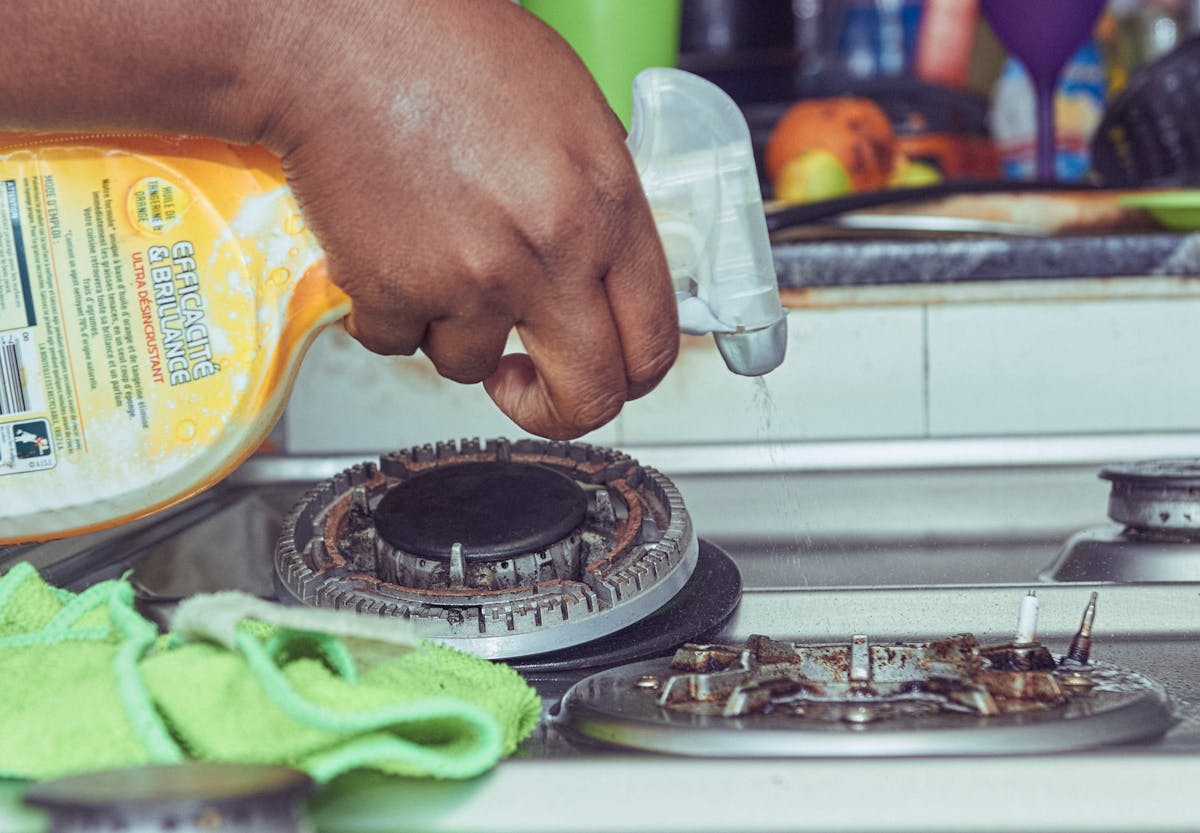
The kitchen is the heart of the home, but it is also the place where grease and cooking fumes settle most stubbornly. The worst part is that thin sticky film that slowly builds up on upper cabinets, handles, the range hood area, and the edges around the stove. If you try to wipe it away with a damp cloth alone, you often just smear it. And if you attack it with the rough side of a sponge, you can easily dull a glossy finish or scratch laminate.
The good news is that degreasing kitchen cabinets does not have to mean hard scrubbing. In most homes, the real solution is choosing the right cleaner for the surface, letting it sit for a few minutes, and wiping the grease away once it has softened. That is what saves both your cabinets and your hands.
Real kitchens usually do not look like the spotless before-and-after photos in cleaning ads. A common situation is a small family kitchen where the cabinet fronts look fine from a distance, but the handles, the upper edges, and the area beside the hood feel sticky the second you touch them. That is the point where many people reach for very hot water and the abrasive side of a sponge. It feels productive, but it often creates dull patches instead of solving the problem. A slower method works better: soften first, wipe second, repeat only where needed.
Why Kitchen Grease Sticks So Hard
Kitchen grease is not just oil. It is usually a mix of cooking fat, moisture, dust, and tiny particles from frying and boiling. Warm air from cooking carries those particles upward, where they settle on cabinets and other nearby surfaces. Over time the layer becomes tacky, then dense, and eventually surprisingly stubborn.
This is why plain water rarely works well on its own. Water and fat naturally repel each other, so without a degreasing agent you are usually just moving the residue around. A better approach is to use something that breaks down the oily bond first: dish soap, a gentle kitchen degreaser, steam, or a mild homemade solution. Time matters as much as product choice. A cleaner that sits for two to five minutes can loosen grease far more effectively than aggressive scrubbing done immediately.
Before You Start: Three Rules That Prevent Damage
Before cleaning, keep these basics in mind:
Remove dry dust first. If you clean a dusty cabinet with liquid straight away, you create muddy streaks.
Always spot test first. This matters especially on wood, veneer, foil-wrapped doors, and high-gloss finishes.
Do not soak the surface. Too much moisture can seep into edges, joints, or seams.
Set yourself up with two microfiber cloths, a bowl of lukewarm water, one dry cloth for finishing, and your chosen cleaner. That small bit of preparation makes the job faster and keeps the product from drying where you do not want it.
Safe Degreasing by Cabinet Material
Not every cabinet finish responds the same way. The safest method depends on what your kitchen is made from.
Glossy and Lacquered Cabinets
These surfaces look great, but they also show every streak and scratch. Avoid abrasive sponges, strong powders, and aggressive degreasers.
What usually works best:
- lukewarm water
- a few drops of dish soap
- a soft microfiber cloth
- a very small amount of white vinegar if needed
Spray the solution lightly onto a cloth or directly onto the cabinet, let it sit for one or two minutes, then wipe gently. Finish with a dry microfiber cloth to remove moisture and prevent streaks. On glossy cabinets, drying is part of the cleaning process, not an optional last step.
Wood Cabinets and Veneer
Wood dislikes excess moisture and harsh chemicals. If the finish is oiled or waxed, strong degreasers can strip the protective layer.
What usually works best:
- a mild dish soap solution
- a small amount of baking soda paste for stubborn spots
- a soft toothbrush for grooves and corners
For older grease, some people use a paste made from baking soda and a little oil. It can help loosen sticky buildup, but it should be used carefully and only on problem areas. Wipe it away thoroughly and do not leave the surface wet. When in doubt, follow the cabinet manufacturer’s maintenance advice.
Laminate and Plastic Cabinets
Laminate is often more forgiving, but the weak point is usually the edges. Too much moisture can still cause swelling over time. In lower-cost rental kitchens, that edge protection is often already slightly compromised, so gentle repeated cleaning is safer than one harsh pass.
What usually works best:
- a gentle kitchen degreaser
- dish soap or soft soap
- steam used carefully
A steam cleaner can be effective because heat softens the grease fast. Just avoid concentrating steam on seams or holding the nozzle too close to one spot for too long. After steaming, always wipe the surface dry.
Homemade Options That Actually Help
For light to moderate grease, you often do not need anything complicated.
Dish Soap
This is the most reliable starting point for everyday grease. It is designed to break down fat, it is easy to dilute, and it is safe for many washable cabinet surfaces.
White Vinegar
Vinegar can help with dried-on residue and lingering cooking smells, but it is not ideal for every finish. Use it sparingly and avoid it on natural stone or very sensitive coatings.
Baking Soda
Baking soda works best as a gentle paste on local sticky patches, not as a dry abrasive scrub. If you press too hard, it can still mark delicate finishes.
Steam
Steam is excellent for softening grease without heavy chemical smell. Still, it is not automatically safe for every cabinet type, especially older foil finishes or weak seams. Start gently.
A No-Scrub Step-by-Step Method
If your cabinets feel sticky and dull, follow this order:
Dust the surface first with a dry cloth.
Apply the cleaner in a thin layer.
Let it sit for two to five minutes. This is the part many people skip.
Wipe with microfiber using light pressure.
Repeat on stubborn areas instead of scrubbing harder.
Dry the surface completely, especially around edges and handles.
If grease remains around handles, carved details, or corners, use a soft brush or cotton swab to lift it out. Those small areas collect the worst buildup because they combine kitchen grease with fingerprints and everyday touch.
The Spots People Forget Most Often
When people think about greasy kitchen cabinets, they usually clean only the visible front panels. The worst build-up is often somewhere else: the top edges of upper cabinets, the strip beside the hood, the underside of cabinets near the stove, the area around handles, and the joint where the worktop meets the splashback. Those zones collect grease plus dust, which is why the residue turns dark and tacky so quickly.
A useful quick check is to run a white paper towel across the top edge of an upper cabinet. If it comes back yellow-grey, you are not dealing with light daily residue anymore. You are dealing with accumulated grease that needs dwell time, not force. It is also a good reality check before booking a professional cleaner.
Common Mistakes That Make the Job Harder
Most people do not fail because they picked the wrong product. They fail because the method is rushed.
- They wipe immediately instead of letting the cleaner work.
- They use the rough side of a sponge.
- They focus only on visible fronts and forget top cabinet edges.
- They use too much water.
- They leave the cabinets to air dry and end up with streaks.
If you want cabinets to stay clean longer, reduce the source of the problem. Run the range hood even for short cooking sessions, clean its filters regularly, and wipe nearby surfaces soon after frying. Thirty seconds of maintenance after cooking is worth far more than a long weekend deep-clean.
When Professional Cleaning Makes Sense
Sometimes the grease is simply too old or too layered for a quick household wipe-down. That often happens on top cabinets, above the hood, in neglected corners, or in kitchens where frying is frequent. Professional help also makes sense if you are dealing with expensive finishes and do not want to risk damage.
People often call for help after moving out of a rental, after months of heavy home cooking, or right before property photos or a flat viewing. The kitchen is not disastrous, but ordinary wiping no longer changes much. In that situation, trying three aggressive products in a row is usually a mistake. One badly chosen cleaner can leave more visible damage than the grease itself.
The real advantage of professionals is not only stronger equipment. It is knowing how to clean each material safely. A good cleaner will know when one careful pass is enough, when a second gentle round is smarter than using force, and which surfaces should never be treated aggressively.
How to Prevent Grease Build-Up
The easiest way to avoid scrubbing is to stop heavy buildup before it starts.
- Turn on the range hood every time you cook.
- Wash or replace hood filters regularly.
- Wipe the area around the stove after frying.
- Clean handles and touch points more often than the rest.
- Dust upper cabinet edges weekly so grease has less to cling to.
These small habits make a real difference. When grease never gets the chance to harden, cabinet cleaning becomes quick routine maintenance instead of a frustrating major job.
Final Takeaway
If you want to degrease kitchen cabinets without scrubbing, focus on the right cleaner, a short dwell time, and gentle wiping with microfiber. Gloss and wood need extra care, while laminate benefits from controlled moisture and steady maintenance. In many homes, that simple combination is enough to remove the sticky film without damaging the finish.
And when the buildup has gone too far, there is no reason to fight it for hours. CistýKout connects households with trusted cleaning professionals who can handle heavy kitchen grease safely and efficiently, especially when ordinary wiping has stopped being enough.